
+1 (520) 780-6269 investment@latamfdi.com
Medical Device manufacturing in Costa Rica can move to the next level

Medical Device manufacturing in Costa Rica can move to the next level

For medical device manufacturing in Costa Rica to continue as a pillar of the economy, issues such as regulations must be improved.

Medical device manufacturing in Costa Rica will continue to grow at a double-digit rate over the next five years. This assessment is according to an estimate by Pedro Beirute Prada, General Manager of the Costa Rican Foreign Trade Promotion Agency (Procomer).

In this regard, it should be noted that Precision and Medical Equipment is the leading export sector in the country. In 2021 it comprised 36% of the country’s exports, equivalent to 5.2 billion dollars. According to the Costa Rican Coalition of Development Initiatives (CINDE) data, this figure is correct. This represented a growth rate of approximately 30% compared to the previous year.

The future of exports of medical devices manufactured in Costa Rica is optimistic. This is because each year, the cluster of this class of manufactured products develops a little more. The sector for medical device manufacturing in Costa Rica presently consists of more than 90 companies. As a result, its ecosystem comprises global leaders and small and medium-sized local companies that act as industry suppliers.

“We continue to see growth in exports this year. And perhaps what is most relevant to this optimistic vision that I have of the sector is that it is an expanding industry. Global demand will continue to grow as the population increases, as longevity and health services increase,” says Beirute Prada.

Innovation is vital for medical device manufacturing in Costa Rica

During the last few years, the country has transitioned from predominantly agricultural exports with little added value to manufacturing-based exports with a high level of sophistication.

This is the specific case of medical device manufacturing in Costa Rica. Currently, its portfolio is made up of multiple products. Among them are kits for medical use, parts, accessories, needles, catheters, prostheses, and serum infusion and transfusion equipment. In addition, to the list must be added diagnostic devices, contact lenses, implants, and heart valves, among others.

In terms of value, of the total exports of Precision and Medical Equipment, 70% of the exports are very sophisticated, points out the Procomer executive.

“Costa Rica is a more boutique country, characterized by generating a lot of sophisticated medical products. It is a country that has responded well to the demands for complexity, let’s say, of medical devices. Companies have found that Costa Rica is a country where they can make the most complex products. This is because of the human resource talent, the inputs, the experience, and the educational level of the engineers, the assembly workers, the managers, etc.,” he points out.

Reference companies and products

From his point of view, among the most complex products that companies manufacturing medical devices in the Central American nation are:

  • Medtronic manufactures spinal devices. These implants treat traumatic fractures of the spine and cervical diseases.
  • Boston Scientific makes a spinal cord stimulator. They also function for deep brain stimulation. Additionally, the product reduces symptoms of diseases such as Parkinson’s or hereditary tremors.
  • The domestic company Establishment Labs produces the latest breast implants in the world. It is recognized for its drop-shaped implants. These have unique silicone and a texture well-recognized by surgeons around the world. They are also known for their safety.
  • CooperVision’s contact lenses are distributed worldwide due to its innovation.

What improvements does medical device manufacturing in Costa Rica require?

The director of Procomer attests to the fact that the medical device sector in Costa Rica aims to develop the most complex and sophisticated products in the world. He emphasizes that the country is an excellent place for prototyping and manufacturing but also a suitable environment for research and development.

For this to happen, he believes that it is necessary to improve in the following areas:

  • Maintain legal certainty, develop human resource talent, and offer incentives and a business climate conducive to investment.
  • Reduce bureaucracy. This will allow companies to operate more agile, safer, and transparently.
  • Make regulatory improvements. Therefore, it is necessary to update the legislation around clinical trials for this to occur.

Regarding this last bullet point,  Beirute Prada explains that it is necessary to make clear what can and cannot be done when testing medicines, products, or devices, with the risk that they may or may not work.

In this sense, the products must be approved by the Food and Drug Administration (FDA) of the United States Government. However, they must undergo validation processes for functionality and side effects, among others, for this to happen.
What are the main Chilean exports?

What are the main Chilean exports?

Because of sound economic policy choices that have been made over the last several decades, Chile has managed to consolidate a stable macroeconomic climate and a favorable environment for business. This has positioned the country as one of the most attractive nations in the region for the export of goods and services. As a result, Chilean exports are sold globally.

Chile is a global trading partner

A  recent report by Allianz Trade predicts that foreign direct investment will continue to be Chile’s primary external financing source in the medium term. In addition, Chile’s access to international markets will continue to be solid thanks to the facilities that the country offers through its many free trade agreements (FTAs). Among the FTAs that Chile is currently a party to are the following:

Pacific Alliance: Chile is a member of the Pacific Alliance, which is a trade bloc made up of four Latin American countries – Chile, Colombia, Mexico, and Peru. The bloc has eliminated tariffs on 92% of goods traded among member countries.

Free Trade Agreements with other Latin American countries: Chile has also signed Free Trade Agreements (FTAs) with other Latin American countries such as Argentina, Bolivia, Brazil, Ecuador, and Uruguay.

FTAs with North American countries: Chile has FTAs with North American countries such as the United States and Canada.

FTAs with Asia-Pacific countries: Chile has FTAs with Asia-Pacific countries such as China, Japan, South Korea, Australia, and New Zealand.

FTAs with Europe: Chile has FTAs with European countries such as the European Union (EU), Switzerland, and Norway.

Chile export environment:  a stable macroeconomy

Chile’s record of prudent macroeconomic and fiscal management “has underpinned stability and resilience to shocks,” according to the Allianz Trae report. A rule-based fiscal policy helped contain budgetary deficits, which averaged 2.2% between 2014 and 2019, and public debt levels, which stood at 28% of GDP in 2019.

Real GDP growth was moderate in the last five years leading up to the coronavirus pandemic, with an average year-on-year increase of +2.0%. However, Chile’s robust macroeconomic policy framework has contributed to the country’s resilience to shocks, including the 2019 social unrest. Moreover, due to the adoption of prudent policy, sales of Chilean exports have thrived.

The business climate is one of the best in the region: Chile ranked 59th in the World Bank’s Doing Business 2020 survey, scoring high in minority investor protection, contract enforcement, insolvency resolution, company creation, and processing of building permits.

In addition, the country boasts a very open economy: it is currently subscribed to 31 free trade agreements that facilitate Chilean exports and sustain clear competitive advantages over other, much more restrictive countries.

According to data from the World Bank, it is highly dependent on international trade, representing 57.8% of the country’s GDP in 2020.

Chilean exports: advantages 

Chile has critical competitive advantages that increase its attractiveness as an exporter:

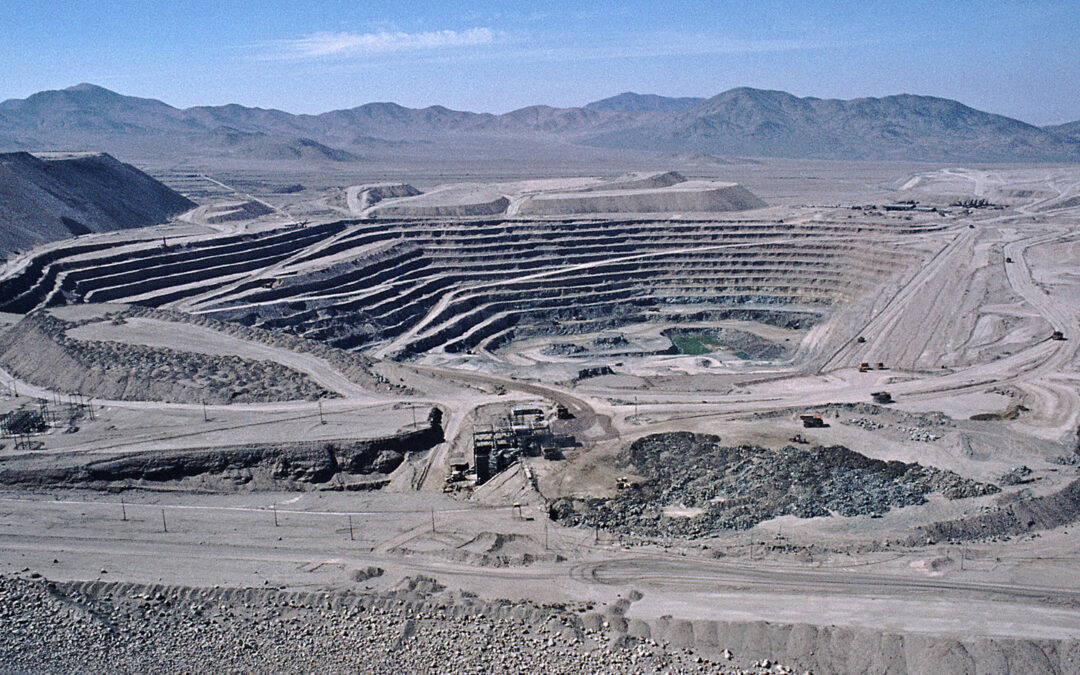
  • Plentiful natural resource base: Chile is the world’s largest copper producer but also benefits from other minerals, forestry, and agriculture.
  • Strong growth is expected in the medium term.
  • Business-friendly environment.
  • Solid macroeconomic policy framework.
  • A widely accepted democratic political system with successive peaceful transfers of power.
  • It is classified as a high-income economy by the OECD.

What are Chile’s main exports?

As mentioned above, Chile is rich in natural resources, although it has also learned to position itself in other industries.

The main Chilean exports are:

  1. Metalliferous minerals (mainly copper): 30.1%.
  2. Non-ferrous metals: 25.6%.
  3. Fruits and vegetables: 9.8%.
  4. Fish, shellfish, and derivatives: 7.6%.
  5. Cellulose pulp and paper for recycling: 4.5%.

To which countries does Chile export the most?

The main destinations for Chilean exports are America and Asia. However, China and the United States are the big players in Chile’s trade balance and place first and second (respectively) in the ranking of export destination countries and leading importers.

This is the ranking of destination countries for Chilean exports:

  1. China: 39%
  2. United States: 13.2%
  3. Japan: 8.7%
  4. South Korea: 5.7%
  5. Brazil: 4.2%

Although the outlook for Chilean exports is positive, it depends on several factors, including global demand for its products, changes in trade policies of key trading partners, and domestic economic conditions. In addition, Chile has been working to diversify its export base and move up the value chain, which could help it weather any potential disruptions in its traditional markets for Chilean exports.

The Brazilian automotive industry: its history and evolution

The Brazilian automotive industry: its history and evolution

The Brazilian auto industry has a long history in the country. The first automakers arrived in the country in the 20th century. Before that, the first motorized vehicle arrived in Brazil in 1891 in the port of Santos (SP). The Peugeot Type 3 model was the first car to move on the roads of Brazil. It was imported by the Brazilian inventor of the airplane, Santos Dumont. Later, another model arrived in São Paulo brought by the family of the founder of the São Paulo Military Police, Tobias de Aguiar. However, the first car was licensed in the country in 1903. Plate number 1 belonged to Count Francisco Matarazzo.

The history of the Brazilian automotive industry reveals a lot about the country’s technological, economic, and social evolution.

First cars in Brazil

In the first decades of the 20th century, São Paulo received the factories of Ford and General Motors, both based in the capital of São Paulo. The first to arrive was Ford. It established itself in the country in 1919, when it began assembling its Model T. In 1925, General Motors made its entrance into the Brazilian automotive industry. During this decade, the first paved highway was constructed between Rio de Janeiro and Petrópolis. Between 1920 and 1939, the number of cars increased from 5,000 to 43,000 in São Paulo.

The Automotive Revolution of the 1950s

At the end of the 1940s, Brazil maintained an aging fleet of American and European cars and trucks from the 1930s. However, from 1941 until the end of World War II in 1945, the number of auto parts factories increased in the country, reaching 50. This scenario gave origin to a series of suppliers that would later come to supply the local manufacture of automobiles in the growing Brazilian automotive industry.

However, until the middle of the 20th century, it had only one automotive assembly plant. As a result, there was no total local production of vehicles. This began to change under President Getúlio Vargas. Two crucial initiatives were the opening of  The Brazilian national steel company, Companhia Siderúrgica Nacional (CSN), and its national motors factory, Fábrica Nacional de Motores (FNM). Both of these entities were located in the state of Rio de Janeiro.

From 1947 to 1952, the Brazilian government took action intending to restrict imports of motor vehicles and auto parts. As a result, it invested more in the Brazilian automotive industry than importing oil or wheat. Even so, given the exchange rate favorable, the Europeans occupied a significant share of the market in Brazil. If previously the streets were filled with American cars, in the 1950s, British automobiles were commonly seen on Brazilian roads.

In the government of Juscelino Kubitschek, in 1956, the Executive Group of the Brazilian Automotive industry was created (GEIA) by decree nº 39.412. The organization was put under the command of Admiral Lúcio Meira to make national car production initiatives a reality. At the time, the Brazilian fleet had 800,000 vehicles, and cars and trucks had a huge demand. As a result, Brazil established ambitious nationalization goals for the industry.

Manufacturing was one of the policy pillars of the Kubitschek government. The promise of 50 years of progress in five had industry and transport as two support pillars. The focus was to leverage domestic industry, creating an industrial park of factories, a network of auto parts suppliers, and peripheral infrastructure services.

Thus, the first 100% Brazilian-made national car appeared in 1956. It was made by a company called Romi, which manufactured lathes and agricultural equipment. The Romi Isetta had an engine that was similar to that of a motorcycle, small wheels, and two doors. The National Motor Factory and Vemag launched nationally produced cars the same year. However, these were licensed copies of European and North American models.

With the 1953 ban on importing fully manufactured autos, Volkswagen, Mercedes-Benz, and Willys-Overland established factories in Brazil. In addition, the GEIA showed that, by 1960, 90% of the trucks and utility vehicles sold in Brazil should have domestic components. These goals have been met and exceeded, thus strengthening the Brazilian automotive industry.

Eventually, the dominant manufacturers began to produce modern vehicles that were more compatible with the demands of the Brazilian driver. As a result, the industry started to coalesce in São Bernardo do Campo, São Caetano, and Santo Andre ́, also known as the ABC region of São Paulo. In the 1970s, new assemblers emerged in the Brazilian automotive industry, establishing themselves in other areas of the country, emphasizing Fiat Automóveis SA in Minas Gerais, Agrale in Rio Grande do Sul and Volvo in Parana ́.

The Brazilian automotive industry today

In the 1990s, vehicle imports rose again when the Brazilian automotive market opened. Currently, Brazil has 20 companies that compete domestically. The Brazilian automotive industry comprises 65 factories in 11 states, with an installed capacity of 4.5 million vehicles annually. In addition, the country currently has approximately 5,500 dealerships. Brazil exports about 22% of its automobile production, and the industry employs approximately 126 thousand workers.

After a period of recession, the recovery of the Brazilian economy should signal the automotive sector’s return to a path of growth. The industry closed 2018 with a growth rate of 16%, and in 2019 the industry’s expansion exceeded 12%.

Overcoming a recession is not easy for any sector of an economy, including the automotive industry. However, some experts believe that the Brazilian automotive industry has a promising future even though they may think that the government must improve incentives to the sector. One of these initiatives is “Rota 2030,” a government program defining vehicle production rules in Brazil for the next 15 years.

Divided into three periods of five years each, the program predicts how much manufacturers will need to invest in research and development in Brazil. The goal is that, by 2022-23, companies will use 1.22% of their invoicing for R&D activities. In return, they can deduct from 10.2% to 12% of the amount invested in income tax.

Rota 2030 will also require greater energy efficiency, and vehicle safety, in addition to stimulating the creation of future solutions for mobility, autonomous vehicles, and professional training.

The Brazilian automotive industry will remain very important to the nation’s economy. It is one of the country’s largest manufacturing sectors and is crucial in generating employment and promoting technological development. Today, Brazil is also one of the world’s largest producers of automobiles, and many of the major global automakers have production facilities in the country. Among the vehicle models manufactured in Brazil today are the Fiat Pulse, Jeep Compass, Peugeot 2008, Volkswagen Gol, Honda HR-V, Chevrolet Tracker, Land Rover Discovery, Mitsubishi Outlander, Hyundai HB20, and others.


The main industries in Argentina

The main industries in Argentina

Argentina is a very heterogeneous country in terms of geography, climate, and soil type. It is also very diverse in terms of production. Industries in Argentina are extensive and cover activities of all kinds. Some productive activities include food (agricultural, fishing, dairy, wine, and food processing), forestry, mineral origin (mining, steel, refineries, oil, and gas), and electronics, among many others. This post will discuss the leading industries in Argentina, what they consist of, and in which areas they are developed.

Argentine national industry

Argentina’s national industry is essential for the growth of the country and is one of the most important in South America. It is characterized by the transformation of raw materials into finished products for direct consumption or intermediate products to be later applied in other industries. This is due to the wealth of natural resources that is characteristic of Argentina, which allows the extraction of a great diversity of raw materials.

In a word, the distinctive feature of Argentine industry is the value chain that characterizes it. Different actors are involved in production to obtain final products.

Principal industries in Argentina

Automotive Industry

Argentina’s automobile industry is an important sector of the country’s economy. The industry began in the early 20th century and is one of the largest in Latin America. The leading manufacturers in Argentina include General Motors, Ford, Volkswagen, Renault, Toyota, and Fiat, among others.

The Argentine automotive industry produces a wide range of vehicles, including cars, trucks, buses, and motorcycles. The industry has benefited from significant government support, including tax incentives and subsidies for both manufacturers and consumers. In addition to producing vehicles for the domestic market, the Argentine automobile industry also exports to other countries in the region and beyond.

Food industry

The food industry is one of the primary industries in Argentina, if not the most important. The food industry is what distinguishes the country for its quality and innovation. It covers the following industrial sectors: agriculture, livestock, fishing, food, and beverages.

In the agricultural industrial sector, cereals, oilseeds, fruits, and vegetable production stands out. In addition to this, Argentina produces sugar, grains, and tobacco crops. Livestock farming focuses mainly on beef, although lamb and pork are also produced, while the fishing industry is highly developed thanks to Argentina’s long Atlantic Ocean coastline.

Pharmaceutical industry

The pharmaceutical industry is also one of the most critical industries in Argentina. Almost 70% of the industry is domestic. More than half of the drugs for internal use by the country’s citizens are produced by Argentine companies. Although Argentina receives imports of medicines that are not manufactured locally, the sector also exports. Significant investments have been and are being made in the pharmaceutical industry for biotechnological and bioengineering development.

Oil and mineral industry

The oil industry is one of the leading industries in Argentina. This is due to the large amount of oil and mineral reserves that the Argentine soil possesses for the production of fuel and natural gas.

This sector requires significant economic investments for its development and safe exploitation. It also requires specialized labor and large-scale, heavy machinery.

Main industrial areas of Argentina

The main industrial areas of Argentina are located throughout the country. To a large extent, it depends on the sector and the activity carried out in the region. The prominent locations of industries in Argentina are considered below:

Cuyo Industries

The Cuyo region is made up of the provinces of San Luis, San Juan, and Mendoza.

There, viniculture for wine production is dominant. The wines produced in the Cuyo region are internationally renowned and are intended for both domestic and foreign consumption. The wine industry is principally concentrated in the provinces of San Juan and Mendoza.

The region is also known for its fruit and vegetable agroindustry and processed food products.

Patagonian Industries

Argentine Patagonia is made up of the provinces of Tierra del Fuego, Santa Cruz, Chubut, Neuquén, and Río Negro.

As for the food industry, this region produces the so-called “fine fruits,” or forest fruits, and cattle and sheep farming. The province of Río Negro is the leading producer of pears and apples in the country. Part of the production is intended for the preparation of food and beverages, as well as for export.

Most of the oil industry is found in this region, especially in the province of Neuquén. Tierra del Fuego is home to a large part of the country’s industrial electronics factories and the fishing industry, thus positioning Ushuaia and Río Grande among Argentina’s most important industrial cities.

Industries of the Northeast or Mesopotamia

The provinces that make up the Argentine Northeast are Misiones, Corrientes, and the north of Entre Ríos.

The region’s food industry is dedicated to the production of rice, tobacco, sugar cane, cassava, and citrus. In addition, cotton for use in the country’s textile industry is produced in this region.

Northwest Industries in Argentina

The Argentine Northwest, which is the NOA by its Spanish acronym, includes the provinces of Tucumán, Salta, Santiago del Estero, Catamarca, Jujuy, and La Rioja.

Agroindustry is also developed in this region. The Northwest harvests sugar cane, tobacco, vegetables, fruits, and spice crops. In addition, the province of Salta is home to part of the country’s petrochemical industry, with its oil and lithium distilleries.

Industries of the Pampas Zone

The Pampas region covers the provinces of Córdoba, La Pampa, Buenos Aires, Santa Fe, and part of Entre Ríos.

This area is part of the sectors that develop agroindustry and livestock. It is where oilseeds, cereals, and grains are produced and where manufacturers of vegetable and animal products are produced. The meat processing, dairy, and fishing industries are also present in the region. Córdoba and Buenos Aires provinces also have a large concentration of the clothing and textile industry. The forest industry and paper production are also carried out in Santa Fe and Buenos Aires. Factories in Buenos Aires concentrate a large part of the industries in Argentina.

Contact LATAM FDI for more foreign direct investment investment information.

An agreement on nearshoring and investment between the United States and Guatemala advances

An agreement on nearshoring and investment between the United States and Guatemala advances

The Guatemalan Minister of Economy, Dr. Janio Rosales, and Foreign Minister Mario Búcaro, Minister of Foreign Affairs, participated in a meeting on Monday, February 14th, with the United States delegation led by Lindsey Zuluaga, Principal Advisor for Economic Affairs of the Office of the Vice President of the United States, Kamala Harris.

Also participating in the meeting were: Ryan Gwinn, Central America Strategist, Office of Central American Affairs and Office of Western Hemisphere Affairs; Jonathan Fantini Porter, Executive Director, Association for Central America; Mark Lopes, President/COO of the Partnership for Central America; Ann Marie Brouillette, Director of Programs, Alliance for Central America; Danielle Orihuela, Program Manager, Alliance for Central America, Whitney Dubinsky from USAID and John Szypula from the US Embassy in Guatemala.

The joint agreement on nearshoring and investment between the United States and Guatemala will trigger increased foreign direct investment

The joint agreement on nearshoring and investment between the United States and Guatemala will strengthen the attraction of foreign direct investment. This result will come to fruition through the new Central America Forward Plan. The plan maps out a course of action that includes a series of investment events and economic tours in the United States and Guatemala. These activities will strengthen economic and trade ties between the two nations.

Likewise, the Government of Guatemala is working together with its country’s private sector within the framework of the plan Guatemala No Se Detiene (Guatemala Does Not Stop). Guatemala No Se Detiene has prioritized attracting foreign investment to generate more opportunities for Guatemalan workers. With this program, economic officials seek to increase the country’s competitiveness.

Guatemala-based companies can reduce supply chain risk

The global economy is highly interconnected, and disruptions in one region can significantly affect businesses and economic conditions in other regions. In particular, opportunities have been identified in the joint agreement on nearshoring and investment between the United States and Guatemala for companies with a nearshoring model in the textile, mining, medical device, and food safety sectors, among others.

During his speech, the Minister of Economy thanked the attendees for their presence and the support received from the United States. Also, he highlighted the work of Ambassador William Pop for his commitment to Guatemala. Ambassador Pop commented, “all these important advances and the achievements that we are having in economic matters are of great value. We need to continue working on actions to strengthen the Guatemalan economy. This will improve the living conditions of Guatemalans and will generate more prosperity, security, and a better future”.

The United States is helping transform Guatemala

The United States government has been a crucial part of this transformation. It has contributed to the economic development of Guatemala by building walls of prosperity by attracting more foreign investment. The companies that aim to supply important markets and implement a nearshoring model are significant ones.

From this account, progress has already been made in the joint agreement on nearshoring and investment between the United States and Guatemala. But, most importantly, it promotes the creation of jobs. In addition, it addresses the fundamental causes of migration within the framework of “good governance and good jobs.” With this in mind, it seeks to increase supply chain resilience through a strategy directed by the Guatemalan Ministry of Economy and the country’s Office of the Executive.

Alliances such as the Centroamérica Adelante (Forward Central America) initiative and Vice President Harris’ Call to Action are essential to future economic growth. They aim to strengthen the commitment of companies that invest in and support the comprehensive development of people and their families in the region.

The goal is to generate stable, long-term supply chains

The nearshoring model and the diversification of sources of raw materials and components is an essential additional step in the growth of companies. Achieving this will contribute to the long-term stability of corporate supply chains by investing in local suppliers and developing local production capacities.

For example, companies such as Walmart, Pricesmart, Nestlé, Millicom, Nextil, Target, and Yazaki have trusted in the productivity of the Guatemalan workforce and have benefited from the country’s strategic location.

As indicated, strategies to attract important companies have also been developed between the Ministry of Economy through PRONACOM and the Project Creating Economic Opportunities of USAID. This alliance has led to the establishment of Guatemalan operations by companies such as Yazaki, which has pioneered the country’s move toward more sophisticated industrial sectors with trained and qualified human resources.

During the meeting on the joint agreement on nearshoring and investment between the United States and Guatemala, various American Guatemala-based companies testified to the excellent business climate they have encountered while doing business in the country.