
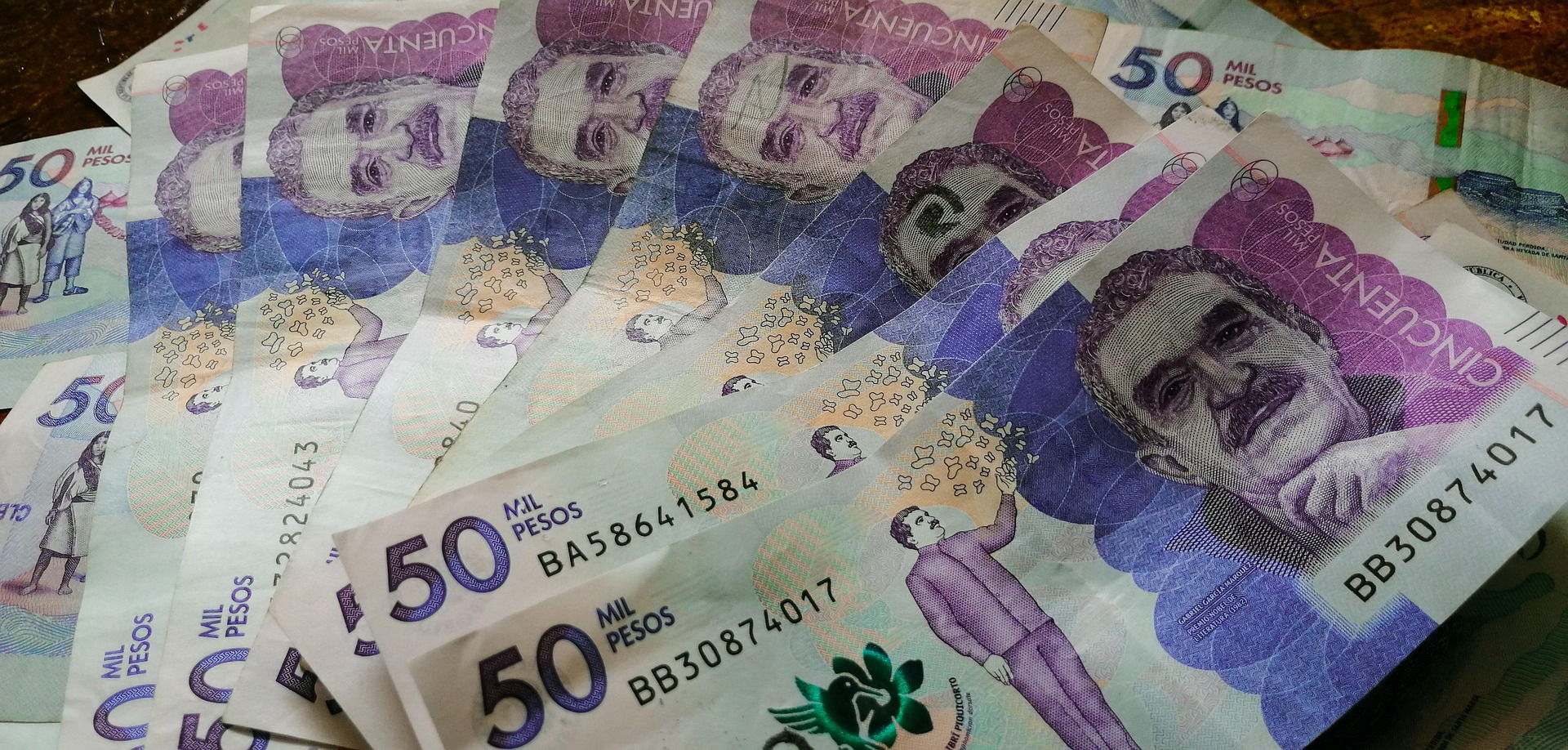
With almost 13% accumulated appreciation at the end of January 2022, the Colombian peso continues to be on par with currencies like the Mexican peso, the Chilean peso, and the Brazilian real as one of the strongest currencies in Latin America.
“The main driver of dollar behavior against the Colombian peso has been the generalized weakening of the dollar against most major emerging economies around the world. In that sense, key messages that have taken strength during this scenario are dollarizing to take advantage of the environment to diversify portfolios as well as having a long-term view,” are the keys for investors seeking to invest wisely in currencies in Latin America.
Within this context and during the last year, while the Mexican peso posted close to 15% appreciation according to the Skandia report quoted by El Nuevo Siglo newspaper, the Chilean peso and Colombian peso posted gains of around 13%, and the Brazilian real just over 10%. On the other hand, the DXY index, which measures the dollar’s value against currencies such as the euro, Swiss franc, British pound, and Japanese yen, depreciated around 10.7% during the same period due to low US interest rate expectations, fiscal conditions, and decreasing international appetite for the greenback. As a result, safe-haven investments such as gold and currencies with strong economic fundamentals have increased worldwide demand from central banks and retail investors, reshuffling capital flows towards currencies in Latin America.
The report further points out that the Colombian peso has been additionally boosted by:
- Remittances growth
- The growth of coffee and other commodities
- Foreign currency inflows due to an increase in tourism, among other factors
- Foreign direct investment flows into Colombian public debt and equity markets
- Central Bank monetization of external government debt to cover liquidity requirements
Expectations of future dollar inflows from pension funds (resulting from the announcement of plans to repatriate these resources, which are currently under regulatory review) have also contributed to market expectations.
What should investors do?
From a financial education perspective, dollar depreciation could be seen as an opportunity to improve the global diversification of their portfolios. By reaching levels near COP 3,600 per dollar, international assets become cheaper, allowing investors to strengthen long-term investment strategies.
“We invite investors not to focus on dollar levels per se, but rather to take scenarios like these as an opportunity to diversify portfolios and make decisions aligned with long term financial goals,” says Catalina Tobón, Investment Strategy Manager at Skandia Colombia. “That is, not to let short-term market movements cause them to take impulsive actions that go against their financial plans.”
However, one of the most frequent errors is to make decisions based on short-term market noise, acting emotionally, and abandoning their medium and long-term financial goals.
If we think about investment decisions, in the short term, a weaker dollar could lead investors to:
- Purchase imported goods
- Travel more abroad
- Allocate more capital towards foreign assets
The recommendation would be not to adjust structured savings or investment financial plans based on what could be merely temporary movements. In addition, analysts highlight that when looking to take advantage of dollar depreciation, investment decisions should go beyond FX levels. For instance, they mention that during periods of a weak dollar, emerging market equities, commodities, and local currency debt tend to perform well since investors have more appetite for risk and capital tends to flow into emerging markets.
However, above and beyond identifying assets that could have relative outperformance during periods of dollar depreciation, investors should focus on how these moves fit within their well-diversified and coherent investment plans. By diversifying across different markets, currencies, and asset classes, investors can also help smooth out FX volatility and not have all their eggs in one basket.
Imports
Thinking long-term is perhaps the key message once more. Dollar appreciation and depreciation cycles are usually cyclical, but financial decisions with a longer horizon, such as diversification and financial discipline, are what really make a difference for wealth accumulation.
On the other hand, analysts remark that peso appreciation is positive for consumers and importers since they can buy more with less money. However, it also hurts exporters since they receive fewer pesos for every dollar sold, leaving them with less money to cover costs.
If the Colombian peso appreciated almost 15% in the last year, every box of flowers and every container of coffee sold internationally in dollars translates into fewer pesos in the companies’ cash flows. This is known as the deterioration of the peso’s real effective exchange rate, and it is an underlying dilemma that affects more than those two sectors. Together they represent around one-fifth of total Colombian exports (17.9%). “Colombia exports a lot, and a large portion of our exports come from companies that are price takers,” says Hernando Zuleta, Dean of the Faculty of Economics at the University of the Andes.
Impact
This means that they do not have the power to set prices and are obliged to accept the market prices.
Coffee exporters, for example, have been affected by the exchange rate movement against the dollar. “Each load of coffee (cup on the coffee market is a 125 kilogram container) sold at the international level lost somewhere between 500 thousand and 550 thousand pesos just due to the effect of the exchange rate.”
The international price of coffee is influenced by more than the exchange rate against the dollar. High-quality Colombian coffee (Arabica type, Colombia’s most produced variety) trades on the New York Exchange (dependent on futures contracts), where prices have actually gone up more than 16% in the last 6 months.
Flowers, on the other hand, have a direct link with peso appreciation. They are not traded on international markets, and roughly 95% to 98% of flowers produced in Colombia are exported. Thus, the impact of the exchange rate movement is fully transmitted to the producer.
In any case, Colombia’s peso appreciation has fueled conversation about hedging foreign exchange exposure. Currency hedging is similar to insurance, where exporters can lock in today the dollar price they would receive in a couple of months. If the peso continues to appreciate and they sell dollars that were “sold” months ago, they will have to cover the difference. On the contrary, if the peso depreciates, the company profits from the difference. The main reason why few exporters use this tool is due to the additional cost.