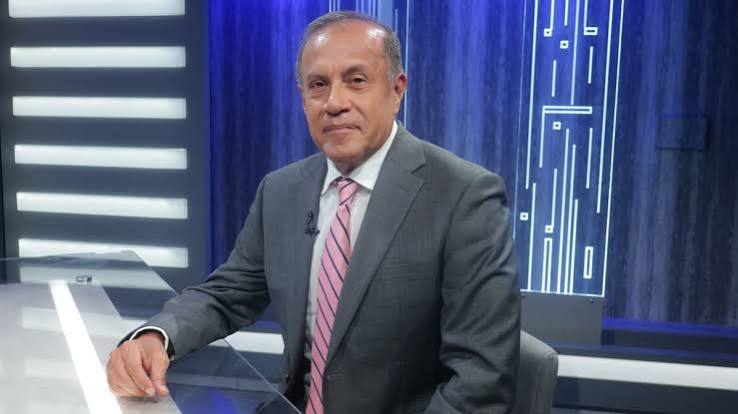
Horacio Estribi
Economic Policy Advisor and Consultant
+507 6379 1454
LATAM FDI: Horacio Estribi is with us. Horacio, how are you today?
Horacio Estribi: I’m very good. I’m excellent. Thank you for your interview.
LATAM FDI: Well, listen, um, I think that it would behoove the audience to explain a little bit about yourself.
Horacio Estribi: All right, I’ll try to keep this short. I’m an undergrad from BU. I also have a master’s degree from the Kennedy School in Cambridge, Massachusetts. The main areas of my work have been— I was a public servant for quite a while. Additionally, I’ve served as an international and national consultant for various banks and industries. I’ve also been in academia for a few years. These things have kept me quite busy for the past 35 years.
LATAM FDI: Okay. Well, today we’re going to talk a bit about Panama.
Horacio Estribi: That’s correct.
LATAM FDI: And more specifically, we’re going to talk about foreign direct investment in Panama. Let’s start off the interview by asking, “What’s the importance of FDI to Panama, Horacio?”
Horacio Estribi: FDI has been a key factor in Panama’s growth and economic model for many years. It contributed directly to creating employment, to building infrastructure, and to expanding the service and banking sectors. Of course, foreign direct investment in Panama has mainly targeted sectors such as tourism, banking, and real estate. It’s been a crucial aspect of our economic model. But looking ahead, we have to be a little more selective about the foreign investment we bring to Panama. And that’s what I can explain to you in the next few minutes.
LATAM FDI: Well, looking at all the sectors in Panama, I’m thinking Panama is best known, obviously, for the Panama Canal, but there must be other sectors, in addition to the Panama Canal and logistics, that receive significant foreign direct investment in Panama. Tell us a little bit about those sectors, if you would, please, as well as the importance of the Panama Canal.
Horacio Estribi: Okay, sure. Well, as I said, so far, foreign direct investment in Panama has been allocated mainly towards logistics, transportation, ports, real estate, and finance. And as for the canal, yes, the canal has undergone important, massive, I should say, investments, mainly the widening of it. Actually, a new lock was built. For Panamax ships, which are larger than usual ships, it has been a great success. These investments have been carried out mainly by the canal itself, using its own funds. But yes, there is a connection between the canal and other activities such as ports, logistics, and so forth, and the latter has definitely benefited significantly from attracting foreign investment.
LATAM FDI: What other sectors besides those related to the canal, you mentioned, for instance, tourism, as one sector that’s fairly active? Could you tell us a little bit about the importance of that economic activity to Panama’s economy?
Horacio Estribi: Well, yes, obviously, Panama competes with other countries in the region, but in a different way. We don’t pretend to be Costa Rica or the Dominican Republic. We have different attractions, and therefore we need a different strategy. So far, a large part of that strategy has been built on shopping, conventions, and visits to the canal and to the diversity of Panama’s natural ecosystem. Also, Panama has been quite successful in developing large quantities of hotels, mainly in the capital. And the strategy seems to be shifting now towards building hotels mainly in the rural areas, which means outside Panama
City and the Panama Canal Zone. And that’s where the emphasis is currently being placed. So that’s where you’ve also seen a lot of development in apartment construction. As you know, we attract lots of what we call the silver economy, people who come from abroad, who are of an advanced age of 60 or more.
LATAM FDI: That’s very interesting.
Horacio Estribi: And also, in that respect, foreign investment in Panama has played an important role, although it’s not the only one. We also have other important areas of attraction for foreign investment, such as the Canal Free Zone and SEM, a multinational regime that has attracted many companies. And that is true also for the Canal Free Zone, which is mainly aimed at companies that re-export goods in the region.
LATAM FDI: You just mentioned the SEM. I think it would be good if you could explain to the listeners what that acronym stands for and what it actually is.
Horacio Estribi: Okay, SEM is a multinational and, in Spanish, stands for “Multinational Headquarters Regime.” And it’s been quite a successful initiative. We’ve been able to attract large companies such as Mars, Dell, Nestlé, BMW, Procter & Gamble, and Samsung. The advantages are that the cost of establishing almost 200 multinational regional headquarters has been borne by the companies. The reason for that is mainly Panama’s connectivity. Essentially, we’re lucky enough to have good connections, air connections. We have a good airport. We obviously have a good geographical position with regard to two oceans and two hemispheres. And good hotels. And this is obviously a good banking sector. There’s a good ecosystem of experts, both Panamanians and foreign expats.
LATAM FDI: Yes.
Horacio Estribi: We have quite a flexible immigration system for people to come from abroad and for expatriates to establish themselves in Panama, operate in Panama, and buy houses in Panama. This essentially explains the success we’ve had with some of these initiatives, including the SEM, the so-called multinational headquarters regime. There is, obviously, a fiscal incentive component, but that is only part of the attraction we offer. The others are the ones I just mentioned: mainly our connectivity with other airports and important regions in the area, as well as companies within the region that have operations.
LATAM FDI: You briefly mentioned the financial sector. I know that foreign direct investment in Panama is also known for its financial services. Can you expand on that a bit?
Horacio Estribi: Certainly, yes. Well, to begin with, maybe we should mention that Panama is a fully dollarized economy. We use the dollar as the legal tender, and that’s been true for quite a few years. And, unlike other countries that have experimented with and made progress in this regard, using the dollar. Panama has done this successfully for many years.
Panama is a very open, outward-oriented economy, mainly focused on exporting services related to logistics, the canal, and so forth. And that has allowed us to use the dollar. Other than that, we also have one of the most modern and progressive banking sectors in the region. And as I said, we’ve had this advantage in our regional connectivity, and these factors have contributed significantly to the development of our banking sector, which is based on quite flexible rules. This has given Panama a big advantage in terms of investment facilities and low risk, because you don’t have to face other countries’ exchange-rate risks. So that’s one of the main reasons we have a strong banking sector. Of course, we’ve also had to make progress in complying with many international standards for preventing money laundering and so forth.
Foreign direct investment in Panama has also been making significant progress in that sense.
LATAM FDI: Can you share some success stories related to foreign direct investment?
Horacio Estribi: As I said, we’ve been able to attract lots of companies, multinational headquarters. That is also true of the Colón Free Zone, the largest free zone in the area, or perhaps in the Western Hemisphere. I can also mention Panama Pacific. Panama Pacific was essentially a military compound before the 1977 treaties were signed, which caused many areas to revert to Panama. These areas have essentially been used for investment in the academy, research and development, manufacturing, and so forth. Well, Panama Pacific is one example, a good example of that. We’ve been able to attract companies such as Dell, 3M, Caterpillar, Pepsi-Cola, PriceSmart, and others. And the reason for that is, well, several key factors. One of them is that it’s close, very close to the city. It’s also very close to the canal and all the infrastructure it has, including ports, airports, and so forth. The country has developed a modern system of offices, industrial facilities, and logistics facilities. Also, very importantly, we’ve been able to attract significant foreign direct investment in Panama by using the so-called one-stop shop system, called ventanilla única in Spanish, where you can find solutions to various problems or bottlenecks, such as immigration, labor, and customs issues, and so forth.
All those are connected to one another in a single one-stop shop system.
LATAM FDI: Have you learned anything from other countries in Central America? Did they have successes and other issues in Central America? What lessons has Panama learned from its neighbors?
Horacio Estribi: It’s a very interesting question because we need to look at our neighbors and learn from their successes, but we also need to internalize that and adapt it to our own reality and future. I was precisely going to mention that the interview so far has centered on the importance of foreign direct investment in Panama for economic growth, employment generation, value added, and infrastructure development. But now I should say that, although Panama still has a high growth rate, and even compared to other countries in the region, you must admit that Panama is growing less than it did. This means we need to evolve. We need to move to make some adjustments. I’m not saying that we should change our economic model completely. No, we should learn from what we’ve been successful with, but we need to fine-tune a few things. And one of the things we need, as I mentioned, is to attract foreign investment primarily to strengthen our knowledge, foster innovation, development, technology, and the digital economy.
LATAM FDI: That makes a lot of sense.
Horacio Estribi: Even perhaps getting involved in some of the logistics chains related to the manufacturing and distribution of chips. So that’s where we should focus our interest, and, in that regard, Costa Rica has been quite successful in attracting these sorts of companies. We have to look into what they’re doing, but essentially, they have been successful in customizing their treatment for big companies. They go and knock on the doors of the companies they want to attract. And they have also developed an important pool of high-quality, knowledgeable human resources, especially bilingual personnel. And that’s what we have to look into.
LATAM FDI: If a company wants to set up in Panama, is there a government or other entity that offers training programs for workers?
Horacio Estribi: Yes and no. There is one especially aimed at plumbers and this sort of short tradesman profession, short-term professions that assist people in teaching them how to build a house, and so forth, and it’s been quite successful. Now we need to use the same model to strengthen the training of youth in this sort of skills, soft skills on one hand, and on the other hand, we need to train people in terms of using artificial intelligence, English, and being able to solve problems by themselves, seen from a skill perspective, not from a knowledge perspective only. So yes, we should strengthen our ability as a society to train people exactly for what this new economic activity will demand, one that is increasingly knowledge- and digital-economy-based. There isn’t one institution, I should say, but it is important. There is one called ITSE, Instituto Tecnológico Superior de Educación. That’s one that pops to mind right now, although it’s not the only one.
LATAM FDI: Beyond training for industries of the future through certain government mechanisms, what other institutional changes are currently being implemented to attract foreign direct investment in Panama?
Horacio Estribi: That’s a very interesting question, Steve, because, from my perspective, you know, Panama relied heavily on fiscal incentives. Which we will still depend on, and it will offer that advantage. But we also need to offer other things that aren’t fiscal incentives. And I mentioned a moment ago the need to simplify, speed up, eliminate cumbersome processes, and remove bottlenecks. And I think this is where the country is starting to make important progress in offering non-fiscal incentives through one-stop systems, among other measures, such as simplifying laws and reducing bureaucracy. And all this time, trying to capitalize on all the things that Panama did before, in which we’ve been very successful, is to continue developing our connectivity, continue maintaining our stability, our good reputation towards the US, towards Europe mainly, and be a little bit more aggressive in terms of trying to attract this specific sort of foreign investment we need to bring to the country.
LATAM FDI: Does Panama have a national economic development organization that people can contact for information about the country?
Horacio Estribi: Well, yes, I would say that there is a— I don’t remember the name right now, but there is a specialized institution that operates under the Ministry of Commerce, and I think it’s called Panama Export. I’m not sure. I would have to check that. But yes, that would be a specialized office serving companies interested in pursuing foreign direct investment in Panama.
LATAM FDI: Yeah, I actually think the organization’s name is ProPanama.
Horacio Estribi: ProPanamá, that’s correct. Yes.
LATAM FDI: And, you know, one of the things I’ll include in the transcript section of this interview is a link to ProPanama.
Horacio Estribi: Okay.
LATAM FDI: And that leads me to another very important point. When we do these interviews with people throughout Latin America, I often receive questions about the conversations I’ve had with them. And what I like to do is direct those questions to the person that I interviewed.
Horacio Estribi: So why not? I’d be happy to do that. It sounds like—sounds like a great opportunity for me, and I guess it is, too.
LATAM FDI: Well, what I’d like to do is, first of all, have you explain how someone can get in touch with you if they have a question about Panama?
Horacio Estribi: How should I do that? Should I offer my LinkedIn? Should I offer my email?
LATAM FDI: All of those, all of the above.
Horacio Estribi: Okay, I will. I would send you—make sure I send you my email, my link, my LinkedIn, and what else should I send you?
LATAM FDI: Well, that’ll be fine. What I’ll do is I’ll leave your email address at the top of the transcript section of the page, as well as a link to your LinkedIn profile. That way, anyone who wants to get in touch with you with a question can do so easily.
Horacio Estribi: That sounds good, you know, because I have to say something you probably know, but, uh, and it sounds like a, like a probably here, like a commercial, but it isn’t. Panama has many attractions for foreign investment, but it’s also quite tricky to get around once you’re here. You know, people feel that Panama is such an open, outward-oriented country, and that makes things simple. Well, that helps, but you still have to be familiar with all the characteristics of our institutional system. I’ll leave it at that.
LATAM FDI: Yes, if someone needs a guide, would you be open to that?
Horacio Estribi: Yes, I would, and I think it’s fair we work together, Steven. I think that’s perhaps the whole purpose of this exercise. Okay, at least it’s one of them.
LATAM FDI: Okay, well, thank you very much for joining me today. Everybody’s going to listen to this on different days, but today we’re recording this on a Friday, so I hope that you have a good weekend.
Horacio Estribi: Oh, thank you very much. I wish the same for you, Stephen, and I will. I’m here with my wife at the beach, and believe it or not, I’m supposed to be taking a few days off.
Thank you very much, Steve.
LATAM FDI: Thank you for joining me