
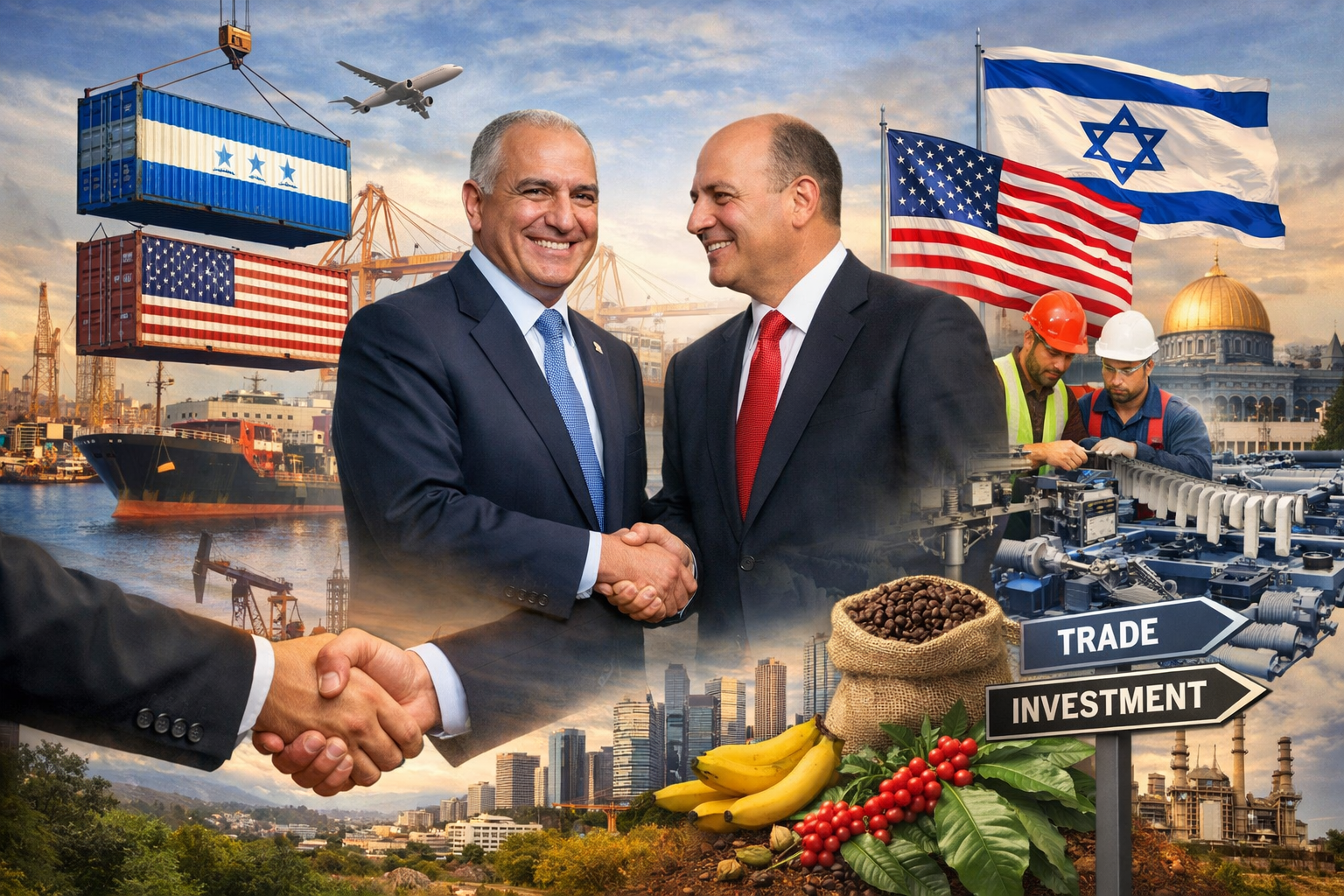
President-Elect Nasry Asfura of Honduras recently met with U.S. Secretary of Commerce Howard Lutnick in what is becoming a clear articulation of foreign policy priorities before his January 27 inauguration. Trade, investment, and job creation will be central themes of President-Elect Asfura’s economic diplomacy moving forward, a message that he communicated strongly during his meeting with Secretary Lutnick. This early outreach underscores a broader strategy focused on Honduras strengthening trade and investment relationships with key international partners, particularly the United States.
Trade and investment take on added importance considering the economic realities in Honduras. Informality, unemployment, and migration remain significant challenges. Trade agreements and mutually beneficial foreign investment can play an outsized role in creating jobs and improving the livelihood of Honduran citizens, especially as the country seeks to integrate more deeply into regional and global value chains.
Bilateral trade with the United States
The primary topic of discussion between Secretary Lutnick and President-Elect Asfura centered on bolstering Honduras’ trade relationship with the United States. Expanding trade flows, providing better access to U.S. markets, and strengthening supply chains were all topics discussed in depth during the meeting. Secretary Lutnick noted that Honduras has an opportunity to play a larger role in supply chains as companies rethink their geographic footprint post-pandemic, a shift that aligns closely with efforts aimed at Honduras strengthening trade and investment through nearshoring.
In particular, Lutnick and Asfura discussed the potential for Honduras to benefit from nearshoring as companies look to diversify their supply chains by moving production closer to the United States. Mexico and countries throughout Central America are well-positioned to benefit from increased trade and investment as a result of nearshoring trends. Countries with free trade agreements with the United States, like the members of CAFTA-DR, will be especially competitive.
Honduras is no stranger to export manufacturing. The country has a robust history in apparel manufacturing and agriculture. Honduras also has an existing maquiladora sector that could provide ready capacity for companies looking to relocate nearshore production closer to home.
Investment for Development and Job Creation
Job creation was another major theme that came up during President-Elect Asfura’s meeting with Secretary Lutnick. Nasry Asfura has made it clear that attracting foreign direct investment will be one of the priorities of his administration. “For me, investment has to bring jobs,” Asfura said. “That is how we are going to increase the quality of life.”
Secretary Lutnick reiterated President Trump’s commitment to expanding trade and economic cooperation with countries that promote mutual economic benefits. “We want to engage with countries that want to open their markets to U.S. businesses, as well,” Lutnick said. “The days of one-way streets are over. We want to grow commerce in a way that creates real growth and real jobs for America too.”
Investment can do more than provide an initial influx of capital to jumpstart the economy. By connecting Honduran producers to international markets and expertise, FDI can provide a platform for sustainable development and economic prosperity. These linkages will be essential as Honduras works toward long-term competitiveness and inclusive growth.
Attracting investment will require reforming Honduras’ investment climate. Asfura has promised to take steps to improve legal certainty, administrative efficiency, and public-private coordination. By instituting reforms that make Honduras a more attractive destination for investment, the Asfura administration hopes to provide more jobs and improve the quality of life for Hondurans.
U.S.-Honduras trade relations
The United States is Honduras’ most important trading partner. In fact, about half of Honduran exports go to the United States. Honduras relies heavily on remittances from citizens living abroad, with the United States serving as the source of the majority of remittances sent to Honduras. Likewise, most foreign direct investment in Honduras originates from the United States, reinforcing the importance of Honduras strengthening trade and investment ties with its northern neighbor.
Honduras’ top exports to the United States are apparel, coffee, bananas, electrical equipment, and maquiladora production. Conversely, the United States exports consumer goods and services to Honduras. American companies are major investors in Honduras across a range of sectors including manufacturing, agriculture, and energy. U.S. businesses also provide vital services that enable economic activity in Honduras.
“I think that relations with the United States are very important,” Asfura said in an interview with El Heraldo. “Investment, trade, development aid, all of these things go hand in hand.”
Investment and nearshoring opportunities in Honduras and Central America
Honduras’ proximity to the United States and access to skilled, affordable labor make Central America an attractive option as companies seek to nearshore production. Strengthening trade ties and attracting investment will be critical to positioning Honduras as a leading destination for foreign companies.
Nearshoring could provide a boost for export manufacturing in Honduras. By improving upon factors that businesses care about when choosing a place to operate, Honduras can attract investment and generate badly needed jobs, particularly in industrial corridors with existing infrastructure.
Improving diplomatic ties with Israel
President-Elect Asfura has stated that one of his first trips abroad as president will be to Israel. The Honduran president-elect will seek to improve Honduras–Israel relations by restoring the nations’ relationship to an ambassadorial level. Honduras downgraded diplomatic ties with Israel to the charge d’affaires level in 2025.
As part of his trip, Asfura will also visit Grupo Xalia, a Mexican company with strong ties to Israel’s agricultural exports sector. Grupo Xalia will give the President-Elect an opportunity to learn about Israeli agricultural technology that could have applications in Honduras.
Israel is no stranger to providing development assistance in Honduras and Central America. If done correctly, strengthening Honduras-Israel ties could be mutually beneficial and help Honduras strengthen trade and investment ties abroad.
Conclusion
Overall, the proactive outreach to high-ranking U.S. government officials by President-Elect Nasry Asfura early on in his transition is already indicative of his administration’s commitment to adopt a foreign policy with an outward-looking orientation, centered on economic diplomacy. Seeking to expand trade relations, attract foreign direct investment, and create jobs through linkages with international markets will be vital tools to put Honduras on a sustainable growth path that can begin to reverse decades of high unemployment, informality, and emigration from the country.
Deepening economic relations with its biggest trade partner will also provide Honduras with many opportunities to further integrate into regional value chains, benefit from nearshoring, and expand and upgrade its export sectors. Likewise, Asfura’s goal of improving the investment climate will be necessary to ensure that, beyond trade agreements and geographic proximity, legal certainty, efficiency, and coordination between the public and private sector will allow Honduras to reach its growth potential. In that sense, re-establishing diplomatic relations with Israel and outreach to other partners will contribute to diversifying the country’s economic ties while also attracting technology, knowledge, and investment.