
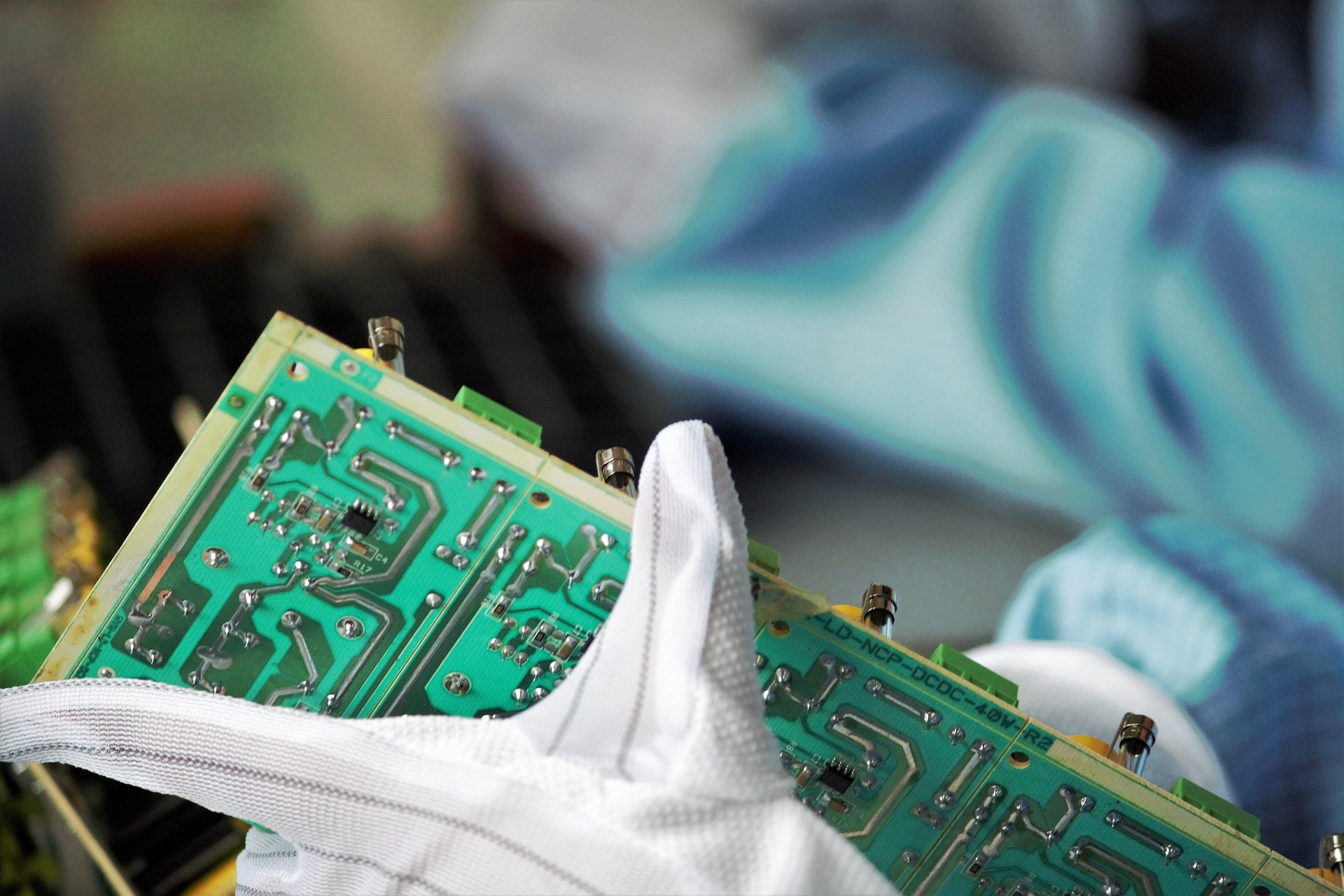
Arizona is earning its nickname “Chip Corridor” as the epicenter of a new semiconductor boom across the United States. Announced expansions, investments, and job projections have flooded the headlines of Arizona business news since 2020.
But this is not a playbook for Guatemala to start making chips. It’s a playbook for how Guatemala can enter through Arizona’s door by aligning to standards, training technical talent, and building credibility as suppliers in the portions of the value chain where global buyers are already sourcing today.
Opportunities for Guatemala Start with Arizona
Arizona represents a realistic opportunity for Guatemala to participate in the semiconductor supply chain. The secret? Don’t try to announce a mega-project. Focus on compliance, training, and the kind of execution buyers take for granted.
How is Arizona Becoming a Semiconductor Cluster?
The semiconductor corridor is an actual industrial cluster. This means anchor companies and suppliers are clustering near one another around Phoenix, Arizona. The resulting density breeds repeat demand for services, technicians, and suppliers that can demonstrate compliance.
Guatemala does not need to start making “the chip” to break into the semiconductor value chain. As long as Guatemala plays to its strengths in services and support, there are many ways to plug into the growing semiconductor corridor from assembly and packaging to testing, logistics, and technical services.
In Arizona alone, there have been over 60 semiconductor-related expansions since 2020, according to the Arizona Commerce Authority. Industry investors have announced USD 205 billion in total planned investment, with roughly 25,000 total jobs expected to come online.
Semiconductor companies still account for 50.4% of global sales, yet U.S.-based manufacturing has shrunk from 37% in 1990 to approximately 10% in 2022. Arizona’s semiconductor boom and accompanying reshoring policies reflect this shortfall in a semiconductor global market expected to hit USD 701 billion in sales by 2025.
Anchor companies like TSMC (Taiwan Semiconductor Manufacturing Company) and Intel are also attracting ancillary firms, including packaging companies, equipment manufacturers, and materials suppliers.
“There is a ripple effect coming from TSMC.” Stated Wendy Mena, Strategy and Promotion Manager of Invest Guatemala
Ripples create more business, but they also create procurement budgets, certified suppliers, and industry standards that dictate who can participate in the semiconductor supply chain and who can’t.
Compliance is the Barrier to Entry
The excitement around Arizona’s semiconductor cluster is fantastic publicity. The reality of participating in the semiconductor supply chain is dominated not by press releases but by fabs turning on production.
Chip fabrication occupies hundreds of precisely controlled steps, including clean rooms, chemicals, water quality, and even electricity. “Standards” are not political speaking points: they are the literal barrier to entry for any company trying to build a semiconductor fab from scratch.
That’s why the trusted publication Arizona Republic features companies like Amkor Technology, a testing and packaging company. “Packages” are the finishing layer of semiconductor hardware: not every company needs to make wafers, but every company in the semiconductor supply chain must understand traceability, quality control, and industrial operational excellence.
Semiconductor fabrication takes weeks, sometimes months, depending on the process. The environments needed to build chips are some of the most meticulously controlled spaces on earth. That’s why compliance isn’t nice-to-have: security, standardized repeatability, and documentation often matter more than price.
What Matters to Guatemala
Guatemala will not be building semiconductor fabs overnight. If Arizona is the gateway, Guatemala must identify its insertion point into the supply chain and climb the learning curve as quickly as possible. Invest Guatemala suggests two tracks:
- Replicate U.S. technical training models
- Identify where Guatemala can insert into existing value-chain opportunities
Guatemala is not looking to produce semiconductor chips. It is looking to produce technical profiles and fill tasks that the industry is already buying.
Short-Term Entry Points Matter
In the near term, Guatemala should look no further than its own educational ecosystem. By training to global standards that align with industry requirements, there is less guessing. When hires are not trained “for chips” but for process control, quality, equipment maintenance, and automation, Guatemala ups its chances of meeting procurement requirements from day one.
Value chain segments ripe for near-term entry include:
- Packaging
- Assembly
- Testing
- Distribution / Logistics
- Sub-assembly for electronic components
Starting at the assembly or sub-assembly level allows Guatemala to build credibility and standards as a supplemental supplier to the semiconductor supply chain.
“It’s socio-technical, and it cuts across many disciplines. You need a pyramid of technical talent,” states Gabriela M. Bethancourt, National Secretary for Science and Technology (Senacyt), Guatemala
This pyramid starts with operators and extends to maintenance technicians, quality specialists, automation engineers, and data analysts.
Without staffing pyramids that support the semiconductor supply chain, countries will not meaningfully insert themselves into it.
Proof, Not Promises
Proof. That’s what Arizona is going to ask of Guatemala. Megaprojects may win press releases, but they do not win market access. Arizona may be Guatemala’s ticket into the semiconductor supply chain, but that ticket will only be stamped by demonstrating what the market recognizes: standards, provable capacity, and reliable delivery windows. Ask, “What can Guatemala prove it can do right now?”
- Talent
The first step to entry is integrating existing talent pools AND ensuring Guatemala can competitively close any access gaps.
“We are not starting from zero,” Senacyt clarifies.
That means leveraging existing talent with industry-recognized certifications and the ability to meet employer demand.
Key capabilities include:
- Industry-certified technical skills
- Industry-connected vocational training programs
- Apprenticeships and dual education programs
- Minimum Viable Standards
The second step is ensuring minimum infrastructure actually meets industry standards.
- Laboratories for metrology and calibration
- Prototyping centers connected to industry partners
- QA assurance and traceability software
These levers convert technical talent into auditable capacity.
- Logistics Are Product
Finally, prove your operational reliability on a national level. For logistics and service providers, time is your product.
Delivering on time once does not prove you can access a market. Access is proven by consistent on-time deliveries, without renegotiating windows every month. If your country cannot do that, it is immediately devalued in the semiconductor supply chain.
Why This Matters
Countries like Guatemala have an opportunity to integrate into semiconductor supply chains by meeting the needs of global companies looking to diversify their supplier base and friend-shore production. Companies operating in this space face heightened geopolitical risk, creating demand for compliant suppliers with technical capacity.
Other segments ripe for Guatemala include:
- PCB assembly
- Precision metalworking/plastics
- Clean-room garments and materials
- Maintenance, repair, and operations (MRO) services
- Technical writing and regulatory compliance services
Some of these segments require fabs to operate, but they all require ISO-class quality management systems such as ISO 9001, ISO 14001, and IATF 16949.
The lowest-cost labor will not win in semiconductors. Predictability will.
Nobody wants to be Timex if they’re buying Swiss watches. THAT is why Guatemala must focus on certifiable consistency if it wants to enter the semiconductor supply chain.