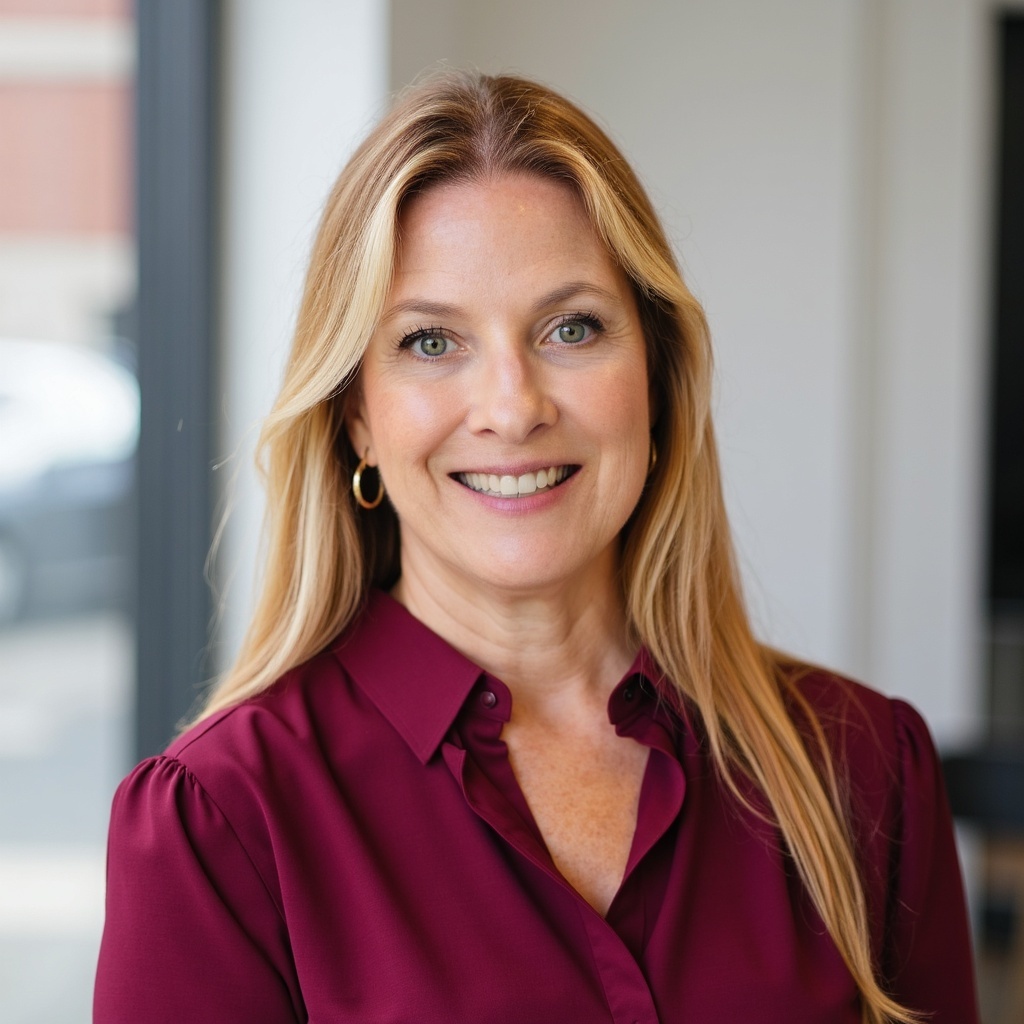
Pilar Madrigal
Expert in Foreign Direct Investment
CINDE
pmadrigal@cinde.org
LATAM FDI: Today, we have Pilar Madrigal with us. Pilar, welcome. How are you? Could you please tell us a little bit about yourself and about the organization that you represent?
Pilar Madrigal: Yes, absolutely, Steve. Thank you so much. It’s always a pleasure speaking with you and being part of your program. Honestly, your newsletter and podcasts always provide a lot of insight. So, it’s an honor to be here. I work for Cinde. Cinde is an organization that has now, actually, been around for 45 years. It’s going to be our 45th anniversary. We have been operating for 45 years and have been solely focused on attracting foreign direct investment. Out of those 45, I’m happy to say that I’ve been part of it for 28 years. So, I’ve had the opportunity to be part of a transition and an evolution of the country, seeing how the industries that we target started, how they were a few years ago, and where they’re going now. It’s been an honor, and it has allowed me to meet very, very interesting people such as you, and I’m very happy to be here.
LATAM FDI: Well, thank you for the compliment. I know you travel a lot, so you must see and learn a lot from the people you meet. I have half a dozen questions for you today. If you would like, we can start with the first one. In recent years, there’s been a lot of discussion about a slowdown in foreign direct investment. From CINDE’s perspective, what’s really happening here?
Pilar Madrigal: Well, clearly, global FDI is going through a much more complex cycle. It’s shaped by, as we all know, geopolitical movements, shifts in supply chains, tariffs, and, definitely, more cautious investment decisions by multinational companies. So, it’s been several years now that we’ve seen some sort of disruption from the pandemic all the way to what we’re living in today, right? There is much more geopolitical fragmentation. And so, companies are reassessing their expansion strategies. They’re looking at really reassessing topics such as risk, resilience, and proximity to the markets they want to reach. So as a result, I think investment decisions are taking longer, they’re more strategic, and the companies are evaluating locations that offer first and foremost stability, a country that can offer long-term competitiveness, that is, is really always looking as to what’s next as a, as a country. And obviously, that’s preparing talent for this. So, we’re not seeing simply a slowdown; we’re seeing a broader reconfiguration of where and how companies invest.
LATAM FDI: Would it be safe to say that we’re going through a period of structural change in how and where companies decide where to invest?
Pilar Madrigal: Well, I think that companies are increasingly prioritizing resilience, adaptability, and diversification when making this investment decision. So, in a, in a more uncertain global environment, firms are, are definitely looking to reduce the risk by diversifying operations, maybe not only in one country, but in, in, in a couple, and strengthening that regional supply chain. So, this has accelerated trends such as nearshoring. We’re very lucky to be in this part of the world, and we’re seeing how they’re regionalizing their operations. So, they seek locations that allow them to be closer, while still maintaining efficiencies. And so, I do, I do believe that there is a little bit of a shift and that, quite honestly, today we, for the purpose of nearshoring, are in a very, very good position.
LATAM FDI: When you look at global sector trends, what are the main opportunities that you see emerging today? How’s Costa Rica positioned to take advantage of what’s in the landscape at the moment?
Pilar Madrigal: Well, you know, Costa Rica has successfully positioned itself in the life sciences and medtech sector. We are the second-largest exporter of medical devices to the United States, and we also offer knowledge-based services such as shared services, digital technology centers, and advanced manufacturing, right? Anything that, that includes some sort of electronic expertise. And that’s largely due to the strength of our talent and to our growing integration into global value chains. So, we’re now not only seeing the OEMs, but also clearly the suppliers or their service providers, all creating an ecosystem that mirrors the ecosystems in the markets these companies are targeting. So, this trajectory has not only attracted investment but also enabled us to evolve toward higher-value activities within those same multinationals. So, for example, multinationals that started with simple assembly may now have R&D hubs, centers of excellence, and more, producing more sophisticated products. So, I do see that, globally, things are going to continue that way. Those sectors, healthcare, medtech, obviously advanced manufacturing, and anything that is knowledge-based, are what we will continue to see grow.
At least in Costa Rica. There are other sectors, of course; if you look at some studies, you’ll see that they’re also being targeted, such as data centers and related areas. In, in our case, we focused on this. Obviously, we always analyze other sectors, but as of today, this is our strategy, which has successfully positioned us in the three sectors I mentioned.
LATAM FDI: One thing that everybody’s talking about these days is artificial intelligence. How is AI changing operations for the global service centers that you have contact with, and what does that mean for Costa Rica?
Pilar Madrigal: You know, um, it’s a great, great question because we were talking about that today. Artificial intelligence is really not eliminating the services sector. It’s really rather transformative, you know, into much more complex and higher-value types of operations. As AI tools become integrated into everyday business processes, many routine, repetitive tasks that were automated have enabled those who were continually working on them to focus on more strategic, analytical, and decision-oriented activities. With these new types of functions, the biggest difference is that they all require context. As of today, we see AI tools as very good at creating and optimizing paths and strategies. But they need a context that only we, as humans, can provide. So, these people have really been experts in that process. And now they have been moved into a role where they provide the context for automating those processes. So, we do see the transformation. And we see a lot of innovation happening. It is, it is a, a different role, but we see, therefore, that these companies are becoming more and more sophisticated.
LATAM FDI: If operations that you see are becoming more digital and cognitive, what type of talent do the organizations need to find to be able to run their businesses, and how does that look in Costa Rica?
Pilar Madrigal: Well, yeah, you’re right. I mean, talent remains the central enabler of competitiveness in today’s global economy. That’s for sure. As operations become more digital, data-driven, and knowledge-intensive, companies are increasingly looking for professionals. What they’re looking for are professionals who combine strong digital skills with analytical skills, bilingual capabilities, and a high degree of adaptability. That’s very, very important. Beyond that technical expertise, they’re obviously really looking for value-driven problem-solving, a lot of collaboration, and the ability to learn quickly as the technologies they use evolve. So really, it is somebody, you know, who is looking for people that are very, very, I would say, who have the critical thinking, the problem solving, adaptability, and the ability to learn very quickly.
LATAM FDI: Well, in the midst of all these changes that you’re pointing out, um, great— like greater competition for investment, technology transformation, and that pressure on growing good talent. What is Costa Rica’s main opportunity to remain a relevant destination for FDI, and how important is it to update the country’s value proposition to ensure the model’s success in the medium term?
Pilar Madrigal: So, you know, I’m very glad to say that Costa Rica has important strengths. We do have a highly skilled talent pool. We have a longstanding political and institutional stability. We have a great proven track record in attracting foreign direct investment. And so, we do have that credibility, right, that we are a very good partner for a company to continue its growth process. Now, it is a pool of projects that’s becoming increasingly competitive, right? And so, believe it or not, I am of the thought that we all need to reevaluate our value proposition every couple of years. In our case, you know, this means continuing to strengthen our talent, obviously, developing more modern infrastructure, and working on public security and overall competitiveness, right? And in that way, for me, those, you know, and for us actually, those are the most important. Talent number one, obviously, is 1, 2, and 3: talent, infrastructure, public security, and competitiveness. And that’s what we are focusing on as a country, along with, you know, everybody who has developed the ecosystem. It’s very important that any country, especially Costa Rica, takes time to listen to these companies that have set up operations here.
We need to know where they’re going and how they’re changing, and that’s where our value proposition changes as well. So that’s what we’re doing. We listen closely to them. For CINDE, we’ve landed a little over 460 multinational companies. And we listen to them. We try to understand what they are—how they are doing well, but also what their pain points are —and we are continuously working, you know, in our investment climate to make sure it allows them to grow over the years.
LATAM FDI: I have one more question. You recently held a presidential election in Costa Rica, and a new president will take office soon. Could you tell us a little bit about that? Do you anticipate any policy changes that would affect FDI in Costa Rica?
Pilar Madrigal: Um, absolutely. We just had elections. The president-elect, Laura Fernandez, is from the current party. We don’t anticipate any significant changes. As a country, we have valued the continuity of good policies over the years. I do need to say CINDE is a private nonprofit organization. And we have always been open to working with the entire ecosystem, including the government, to collaboratively create and enable the right environment. So, we anticipate that forward-looking scenario or forward-looking vision, I would say. I don’t know if that’s the way you see it, continues. There is absolutely no indication that any of that is going to change, and that, you know, we all work collaboratively— collaboratively, oh my God, I couldn’t say the word.
LATAM FDI: That’s not an easy word.
Pilar Madrigal: To continue to make Costa Rica as strong as possible. So, uh, we’re very, very happy that we have elections, that everybody goes and votes. It is a wonderful party. It’s a great celebration in our country. You see families from different parties in the same car, all with their party flags. And it really is a celebration of a country that respects democracy and respects growth. So overall, absolutely, we anticipate that things will continue to grow and that we will remain a country that has been a friend and the right partner to almost 500 companies that have set up operations.
LATAM FDI: Hopefully, the podcast that we’re putting together at present is going to be something that will bring you more business. That being said, if somebody who is listening to this wants to talk with you about making a foreign direct investment in Costa Rica, how can they get in touch with you?
Well, I’d be very, very happy to talk to them. Clearly, my LinkedIn profile, my first name is Pilar, my last name is Madrigal, and my email address. I’ll be happy to send it to you, Steve, so you can put it in the transcript of this podcast. It’s pmadrigal@cinded.org. And I’m ready to talk. And, you know, one thing that I’ve learned through all these years is that this is a business of relationships. I’ve met, just to give you an example, about 3 years ago, I ended up being able to help a company set up operations after I had my first conversation with them 20 years before. So, we kept in touch for 20 years, and we would sit down, have coffee, and talk. It was never, you know, the right time. Things change, you know, executives changed. But the reality is that this is a relationship that you develop with the companies, with the intention of really letting them know whether you are the right partner for them and what they want to achieve. So happy to sit down with anybody, even if they don’t have a project or are just curious.
And of course, those that do have a project, I’ll be more than happy to, to have conversations. But I am always very open and very interested in hearing what companies have to say, where they’re going, and whether we can be of any help.
LATAM FDI: Well, thank you very much. I will provide listeners with your email address and a link to your LinkedIn profile.
Pilar Madrigal: Thank you so much, Steve. It’s always a pleasure, and I hope you have a wonderful rest of the week.
LATAM FDI: Thank you, and the same to you.