+1 (520) 780-6269 investment@latamfdi.com
Brazilian Commercial Orbital Launch: Spaceward Mission 2025 Sets Historic Milestone for Latin America

Brazilian Commercial Orbital Launch: Spaceward Mission 2025 Sets Historic Milestone for Latin America

A New Era for Brazil’s Space Program

After years of limited investment and the growing presence of China, the South American giant will experience a historic day on December 17. If conditions allow, the launch of the HANBIT-Nano rocket—developed by the South Korean company Innospace—is scheduled for December 17 from the Alcântara Launch Center (CLA) in Maranhão, northeastern Brazil. This is a historic event, as it will be the first Brazilian commercial orbital launch in the nation’s space history.

Until now, Brazil has launched hundreds of suborbital rockets—vehicles that do not place satellites into Earth orbit but instead follow a parabolic trajectory and typically fall into the sea. This time, however, through a private partnership, Brazil will begin placing satellites in orbit using genuine satellite launch vehicle technology, considered a crucial step toward national autonomy and sovereignty.

Rewriting the History of Alcântara

The event also offers an opportunity to rewrite the history of the Alcântara base, marked by the tragic 2003 explosion of the VLS-1 V03, a prototype rocket developed by Brazil’s space program. The accidental ignition of one of the first-stage engines caused an explosion that killed 21 engineers and technicians, the most serious disaster in Brazil’s space history.

Strategic Importance of the Alcântara Launch Center

The December launch of the HANBIT-Nano rocket is part of the Spaceward 2025 mission, conducted by the Brazilian Air Force (FAB) in collaboration with the Brazilian Space Agency (AEB). Experts point out that Brazil—through the Brazilian commercial orbital launch initiative—will finally enter the international market for satellite launches and space experiments.

Alcântara is one of the most strategic launch centers in the world due to its proximity to the equator, providing a 20–30% energy gain compared to locations such as Cape Canaveral or Kourou. Its coastal location ensures safe eastward launches over the Atlantic Ocean, with no population centers beneath the flight path.

China’s Expanding Presence in Brazil’s Space Domain

China has expressed interest in launching future CBERS satellites from Alcântara, including CBERS-6 (2028) and CBERS-5 (2030). Beijing has even suggested providing Brazil with Chengdu J-10C fighter jets in exchange for access to the base. However, this proposal has raised concerns about China’s growing strategic foothold, particularly considering its detailed mapping of Brazil’s natural resources through the CBERS program.

China’s involvement also extends to the BINGO telescope in Paraíba, where participation by CETC—a Chinese state-owned conglomerate linked to dual-use military technologies—has raised international security concerns.

Years of Underinvestment and Signs of Recovery

A 2023 report from the Brazilian National Confederation of Industry (CNI) revealed Brazil ranks second-to-last in space-sector investment among G20 nations, spending only $47 million (0.002% of GDP). Yet signs of recovery are emerging. The Nova Indústria Brasil (NIB) program plans significant investments in aerospace sovereignty through 2033, while FINEP has launched nearly 1 billion reais in calls for new launchers, satellites, and dual-use technologies.

Researchers emphasize that Brazil could replicate the success of its aeronautical cluster in São José dos Campos by creating a technological hub around Alcântara.

New National Rocket Projects

Brazil is developing several cutting-edge projects, including the Brazilian Microlauncher (MLBR), the VLM-AT (Microsatellite Launch Vehicle with Technological Autonomy), and the RATO-14X auxiliary rocket for the hypersonic 14X vehicle. These initiatives are linked to growing global demand for space-based services essential to agriculture, climate monitoring, and environmental preservation.

Brazil’s Rise in Space Agriculture Research

One of Brazil’s most innovative fields is space agriculture. In 2023, Embrapa began collaborating with the AEB and NASA under the Artemis program. On April 14, 2025, Blue Origin’s New Shepard capsule conducted a suborbital flight with Brazilian seeds—including sweet potatoes and chickpeas—to study how microgravity affects plant development.

The research aims to develop more compact, drought-resistant crop varieties adaptable to climate change on Earth and in future lunar or Martian settlements.

National Defense and Space Security Strategies

In October, Brazil’s Ministry of Defense released the second edition of the Strategic Space Systems Program (PESE), which outlines its goals for autonomous access to space, development of critical technologies, and integrated civilian–military cooperation. The document acknowledges the rising threat of anti-satellite (ASAT) weapons and the growing risk of a space arms race.

The Challenge of Space Debris and the Need for Regional Cooperation

Space debris remains a major threat to space operations. Brazil and other Latin American countries lack robust ground-based sensors for tracking orbital objects, though Brazil’s geographic position makes it ideal for hosting a diversified sensor network that would improve global space-situational awareness.

A Historic Turning Point

As the Spaceward Mission 2025 approaches, the Brazilian commercial orbital launch represents not only a technological milestone but also a strategic turning point. By leveraging its geographic advantages, scientific expertise, and renewed public investment, Brazil aims to strengthen its role in global space governance and innovation.

Ultimately, the success of the country’s first Brazilian commercial orbital launch marks the beginning of a new era—one that could reshape Latin America’s presence in space and contribute to solutions benefiting all humanity.

Panama Maintains Investment-Grade Rating and Will Meet Deficit Target, President Mulino Assures

Panama Maintains Investment-Grade Rating and Will Meet Deficit Target, President Mulino Assures

President José Raúl Mulino said that the achievements of his administration in a year of reorganizing the public finances, of attending to the needs of the population, and of facing the major structural problems that the country has, in particular, the critical situation of the Social Security Fund (CSS), are a reality.

This, according to Mulino, is a way of managing the economy responsibly, transparently, and in a stable manner, institutionally and fiscally in the long term.

Panama Maintains Investment-Grade Rating, Buys Time to Solve the CSS

Panama’s economy will continue to grow at more than double the regional average, the fiscal deficit will close at 4%, and international financial institutions and major credit rating agencies confirm that Panama maintains investment-grade rating. These were some of the messages President José Raúl Mulino sent yesterday in his first conference of the year to the media.

Mulino said that his administration has succeeded in reducing the fiscal deficit, rebuilding investor confidence, and creating the conditions for an economic expansion in which growth rates exceed expectations. This has been made possible by following an economic policy focused on fiscal order, maintaining strong public investment and consistency, which is why Panama maintains investment-grade rating.

“The fiscal deficit is being reduced, we are restoring confidence among investors and the Panama Canal Investment Fund, and we are creating conditions for an economic expansion where growth rates are going to exceed expectations. Panama maintains investment-grade rating because it is executing a disciplined, prudent, and consistent economic policy with fiscal order, while maintaining a strong public investment and consistency,” he explained.

Mulino noted that his government, “thanks to the joint work of my team, is laying solid foundations for an economy that is beginning to gain momentum. We are doing this with seriousness, without falling into cheap populism so that the Panamanian people do not once again pay the consequences of the irresponsible decisions of some governments.”

He added that fiscal prudence is the only responsible way to protect vulnerable sectors of the population and allow the country to remain competitive in the global economy.

Panama will Close the Year Meeting its Fiscal Deficit Target of 4%

Panama will end 2025 with a fiscal deficit of 4%, announced President José Raúl Mulino. This, he said, is an achievement since the deficit for the same period of the previous year closed at 7.5%. This represents a reduction of 3.5 percentage points of GDP, and indicates progress in the reorganization of public finances.

“It has been challenging for us to lower the deficit by three and a half points; it seems simple, but to manage the State to achieve it made this year the most difficult for me in all of my life,” he admitted.

To achieve this correction, Mulino said, “we have had to restrict expenditures, improve our tax collection system, modernize our State, and make decisions on essential investments. We have taken actions to make the State more efficient, to avoid duplication of efforts, and to strengthen internal control.”

Panama: Fiscal Responsibility Law Limits Fiscal Deficit to 4% in 2025

Panama’s Fiscal Responsibility Law limits the fiscal deficit for 2025 to 4.0%. The law, number 445 of 28 October 2024, amends law 34 of 2008 “On Fiscal Responsibility” and law 38 of 2012 “On the regulation and operation of the Panama Savings Fund”.

In addition to setting a deficit ceiling for 2025, Law 445 also establishes a downward path until 2030, when the deficit should not exceed 1.5% of nominal GDP. In this regard, the law establishes the following schedule: 4.0% for 2025, 3.5% for 2026, 3.0% for 2027, 2.5% for 2028, 2.0% for 2029, and 1.5% for 2030.

The legal limits imposed on fiscal policy are in addition to the political guidelines that the government has maintained. The minister of the presidency, Nardy Sosa, stated in October 2023: “From this government, we have said that we must reduce the deficit, and we have defined 4% as a reference figure for the years 2024-2025.”

Panama: Confidence of Investors Returns

Mulino also stated that with a more disciplined fiscal management, the confidence of investors, essential for attracting foreign capital and economic stability, has returned.

As an example of this, he said, Panama maintains investment-grade rating assigned by the three major credit rating agencies, which contradicts previous expectations that they could downgrade the country.

Moody’s Ratings agency confirmed Panama maintains investment-grade rating with a negative outlook on 13 November 2025. On 19 November, just a few days later, the agency Standard & Poor’s (S&P) also announced that it had decided to maintain Panama’s investment-grade BBB- rating with a stable outlook.

In its report, S&P stated that “Panama’s rating benefits from its policy consistency during 2024–2025 as well as its solid resilience amid past economic shocks. Over the coming years, we expect resilience to remain strong, despite an abrupt cooling in economic growth in the near term.”

Mulino said: “These are decisions that show us that we are moving in the right direction. According to the International Monetary Fund, Panama will grow at more than twice the average rate in the Americas. And beyond reaching macroeconomic parameters, the government’s priority is to improve the quality of life of our citizens.”

Panama Maintains Investment-Grade Rating amid Optimistic Economic Growth Outlook

The International Monetary Fund, World Bank, and ECLAC project real GDP growth of 4.0%, 3.9% and 4.2% for 2025, respectively. This is well above the expected growth for Latin America and the Caribbean of 2.4% in 2025 and 2.3% in 2026.

It should be noted that Panama maintains investment-grade rating amid a dynamic economic outlook driven by the logistics hub, financial services, aviation, the Panama Canal, and Trade. This is one of the reasons, as Panama maintains investment-grade rating, that it scores positively in global financial institutions’ evaluations.

Social Security Fund (CSS) and Health System Integration

President Mulino also urged the CSS and the Ministry of Health (MINSA) to accelerate the long-awaited process of the integration of their respective health systems, which, he said, must be completed by 2026.

He also announced that 2026 will be a major investment year in which thousands of new jobs will be created. He announced that the General State Budget has earmarked US$11.2 billion for public investment that will be directed to infrastructure development, water and sanitation systems, educational facilities, healthcare centers, and other priority projects.

“Those investments are already beginning to create new job opportunities for us. We are betting on the private sector, we are promoting foreign investment, and we are working hard to attract investment capital for the mega projects that the Panama Canal Authority has,” he said.

Opportunities for the Future

Mulino called on the public to be optimistic and not to listen to demagogic criticism without basis and at times, very hypocritical, of those who, he said, want the country to go backwards so that he, Mulino, can fail as president.

“I want to tell you the following. Forget the doomsayers, forget the unnecessary –and sometimes very hypocritical- criticism of those who want the country to fail so that I can fail. The country will not fail, I will not fail as president of all Panamanians,” he said.

Mulino emphasized that the jobs of the future will be technical jobs and those related to logistics. These are professions that are increasingly valued in Panama and are also well paid.

Dominican Republic Strengthens Profile as Leading Nearshoring Hub for U.S.

Dominican Republic Strengthens Profile as Leading Nearshoring Hub for U.S.

The Dominican Republic has been working in recent years to position itself as a strategic nearshoring hub for U.S. businesses as a result of stable tariffs, steady investment, and record-breaking economic growth. Víctor “Ito” Bisonó, Minister of Industry, Commerce, and MSMEs (MICM), highlighted the importance of these trends on national media platforms, while also noting that this trajectory will only increase over the coming years in tandem with the country’s onshoring opportunities in rare earth minerals and high-tech manufacturing.

A Strategic Partner with a Competitive Advantage for the United States

The Dominican Republic is already recognized by Minister Bisonó as one of the most attractive trade partners of the United States, thanks to a wide range of logistical, geographical, and labor market advantages that put Washington at a competitive advantage. Bilateral trade is heavily tilted in Washington’s favor, with an estimated annual surplus of USD 6 billion that is underpinned by reduced transportation costs and times for companies based in the U.S. taking advantage of short flight times, geographic proximity, and a modern logistics network.

The diversification and relocation of manufacturing and supply chain operations from far-flung markets in Asia and elsewhere is a strategic priority for the United States, and the Dominican Republic is seen as a perfect nearshoring hub for the U.S. in this regard, as Minister Bisonó notes. Central to this status is the local free zone system, workforce readiness and language capabilities, and the presence of certified compliance with U.S. standards and regulations. Nearshoring advantages for the U.S. include traditional exports such as medical devices and pharmaceuticals, electronic manufacturing and assembly, and textiles and apparel, as well as emerging segments in microelectronics, clean tech, and even quantum-enabled technologies.

Security Cooperation to Reduce Drug Trafficking and Illegal Migration

The Dominican Republic is also a key security partner of the U.S. in the fight against drug trafficking. Minister Bisonó noted that Dominican authorities managed to seize 45 tons of cocaine last year, an accomplishment that stands out in the country’s history of security operations. The interdiction of cocaine in the Caribbean on the route to U.S. markets continues to be a priority for the United States, and the cooperation between both countries is improving year over year. This cooperation adds to the predictability of the Dominican Republic as a supplier base of operations for U.S. investors.

As for other strategic interests, such as illegal migration, the Dominican Republic remains a friendly partner of the United States in the effort to avoid irregular and undocumented flows of workers to American territory. The Minister insisted that the Dominican Republic is not a country of origin for illegal migration, another area of agreement between the two countries.

Interest in the Dominican Republic as a strategic nearshoring hub is increasing, as Bisonó underscored in the context of high-level U.S. visits that have taken place in recent months. On the one hand, Secretary of State Marco Rubio traveled to the Dominican Republic in June for his first official visit to the country as head of the State Department, during which he made clear the strategic role of the Dominican Republic in rare earth minerals, quantum-enabled technologies, and the semiconductor supply chain. He stated, for example, that in next-generation industries the Dominican Republic would be the “ideal partner” for the United States.

For U.S. policy circles, the diversification of the supply of raw materials and the decoupling of industries from geographically and politically sensitive suppliers is one of the strategic levers on the political agenda. In this new global reconfiguration of production and supply chains, the Dominican Republic has also been clearly highlighted in recent days with the visit of U.S. Secretary of Defense Pete Hegseth, which took place in the context of tensions with the U.S. military’s intervention to prevent drug shipments in the Caribbean.

War on Drugs at the Center of U.S.-Dominican Cooperation

Bisonó underscored the Dominican Republic’s existing and broad cooperation with the U.S. Department of Defense, which he expects Secretary Hegseth to publicly reiterate after his visit. Hegseth’s visit takes place while President Donald Trump has ordered the U.S. military to engage in a full-on offensive against drug smuggling “narco-boats” in Caribbean waters, given their importance in feeding demand in U.S. markets.

Free Zones for Export Growth and U.S. Corporate Interest

Free zones and the strong export record of these free zones as a nearshoring hub in sectors as diverse as industrial machinery, pharmaceuticals, medical devices, and cosmetics are among the pillars of economic growth that Bisonó has also recognized. Free zones represent 67% of total exports in the Dominican Republic, providing U.S. companies seeking to expand or enter the local market with a mature and reliable platform to operate in the Dominican Republic, as well as within the context of regional integration and the operation of supply chains that cover the entire Caribbean Basin and South America.

In addition, the MICM Minister also reported historic highs in foreign direct investment last year at USD 4.8 billion and expects these levels to be broken again with estimates of more than USD 5 billion in 2025. The main sectors attracting new investments in the Dominican Republic nearshoring hub have been logistics, manufacturing, renewable energy, telecommunications, and high-value services.

Guatemalan Nearshoring Advantages and the New Geometry of Global Investment

Guatemalan Nearshoring Advantages and the New Geometry of Global Investment

Business confidence depends on stable regulatory frameworks, predictable judicial systems, and efficient logistics infrastructure.

Foreign direct investment (FDI) is one of the engines of industrial transformation. Just as foreign capital shaped copper mining in Chile or boosted manufacturing in South Korea, today’s new investment flows signal a profound reshaping of the global economic map. The key question is what role economies like Guatemala’s will play in this new geometry, where the industries of the future define capital flows. In this context, Guatemalan nearshoring advantages are becoming increasingly relevant as companies rethink their global production networks.

Between 2022 and 2025, three-quarters of global foreign investment announcements were directed toward advanced sectors: data centers, semiconductors, electric vehicles, batteries, and clean energy. These are industries that require capital, knowledge, technology, and specialized talent—industries that are constructing the infrastructure that will support artificial intelligence, the energy transition, and next-generation manufacturing.

Latin America has experienced a paradox. Although the region continues to receive significant investment, the flows are directed primarily toward basic manufacturing rather than advanced sectors. While the region has not yet fully joined the major redesign of global investment, Guatemala has a concrete opportunity to position itself as a strategic node—especially if it manages to attract part of the productive relocation companies are seeking in an increasingly fragmented world. As the nearshoring trend accelerates, Guatemalan nearshoring advantages could help bridge the gap between traditional and high-value manufacturing.

The Geopolitical Shift in Investment and Its Implications

A recent McKinsey study titled The FDI Shake-Up analyzes the evolution of FDI in depth and shows that multinational companies are increasingly investing closer to their political allies. The “geopolitical distance” of FDI has dropped by more than 20% since the global financial crisis, meaning that capital flows now pursue not only economic efficiency but also strategic alignment.

The trend toward regionalization and reduced geopolitical distance favors countries with proximity to the United States. In this sense, Guatemala possesses a structural advantage: its location along the Central American corridor allows integration into North American supply chains. While Mexico has been the main beneficiary of the nearshoring trend, Guatemala could benefit as well if it manages to combine trade openness with political stability. It has the potential to capture the “second wave” of investment, particularly in advanced manufacturing, logistics centers, and digital services. These shifts further highlight the growing relevance of Guatemalan nearshoring advantages for companies diversifying their operations.

The report also highlights a revealing fact: megainvestments of more than US$1 billion—although they represent just 1% of all projects—account for nearly 50% of the total value of announced investment. These megadeals are transforming the global economy, especially in the technology and energy industries. For Guatemala, the challenge is to attract medium-sized projects that feed into these major value chains, positioning the country as a reliable and competitive provider of industrial services, infrastructure, and talent.

Guatemala’s Opportunity in the Industries of the Future

FDI flows are redefining global productive capacity. McKinsey estimates that the projects announced since 2022 could double the world’s data center capacity, increase semiconductor capacity by 60%, and quadruple battery capacity outside China. These figures foreshadow an industrial revolution driven by digitalization and the energy transition.

During the first quarter of 2025, Guatemala received approximately US$476 million in FDI, a 17% increase compared with the same period the previous year. This is excellent news that positions the country to enter this global dynamic through three key fronts.

The first is the digitalization of services. Major cloud and artificial intelligence providers are expanding their infrastructure in Latin America, but Central America still has few hubs. Encouraging the installation of regional data centers—leveraging macroeconomic stability and proximity to the U.S. market—would be a decisive step.

The second front is energy. Guatemala can position itself as a key player in the global energy transition. According to the report, investment in low-carbon projects has doubled since 2019, and renewable energy represents three-quarters of all announced energy investment. Guatemala’s energy matrix already has a high share of renewable generation, which can be leveraged to expand clean energy exports to neighboring markets. To attract investment in this sector, Guatemala can focus on developing modern energy infrastructure, such as high-capacity transmission lines and energy storage systems. Establishing clear and predictable regulatory frameworks will be essential to building confidence among international investors.

The third front is human capital development—the industries of the future demand advanced technical and digital skill sets. FDI can transfer knowledge, but only if it finds well-prepared ecosystems. In countries such as South Korea and Vietnam, the alliance between foreign investment and technical education was the driving force behind industrial development. Guatemala can replicate this model by strengthening its network of vocational and technical training programs in robotics, programming, industrial maintenance, and energy management.

Risks and Conditions for the Future

The bad news is that many investment announcements never materialize (around 30%), and in regions with greater institutional uncertainty, the rate is even lower. Guatemala faces this challenge. Business confidence depends on stable regulatory frameworks, predictable judicial systems, and efficient logistics infrastructure.

At the regional level, Latin America faces a dilemma. On one hand, it has abundant natural resources and a young workforce; on the other, it suffers from political volatility, regulatory inefficiency, and low infrastructure investment. In recent years, the annualized value of new FDI announcements has fallen to half the average seen before 2020. Regaining that dynamism requires more than tax incentives. The countries that succeed will be those that link foreign investment to sustainable industrial policies and strong local value chains.

In this regard, Guatemala can become an exemplary case if it orients its strategy toward FDI that builds national capabilities. Integrating into the semiconductor, electromobility, or software value chains does not require becoming a world leader—it requires becoming a reliable, complementary participant. Free zones, technology parks, and partnerships with universities can all serve as vehicles for investment attraction if they are aligned with a long-term vision.

If the country manages to build an environment that combines openness, stability, and technological vision, it can become part of the productive chains that will define Latin America’s industrial future and position itself as a bridge to long-term prosperity.

Chancay Port and the Future of Peruvian Logistics: Opportunities and Challenges

Chancay Port and the Future of Peruvian Logistics: Opportunities and Challenges

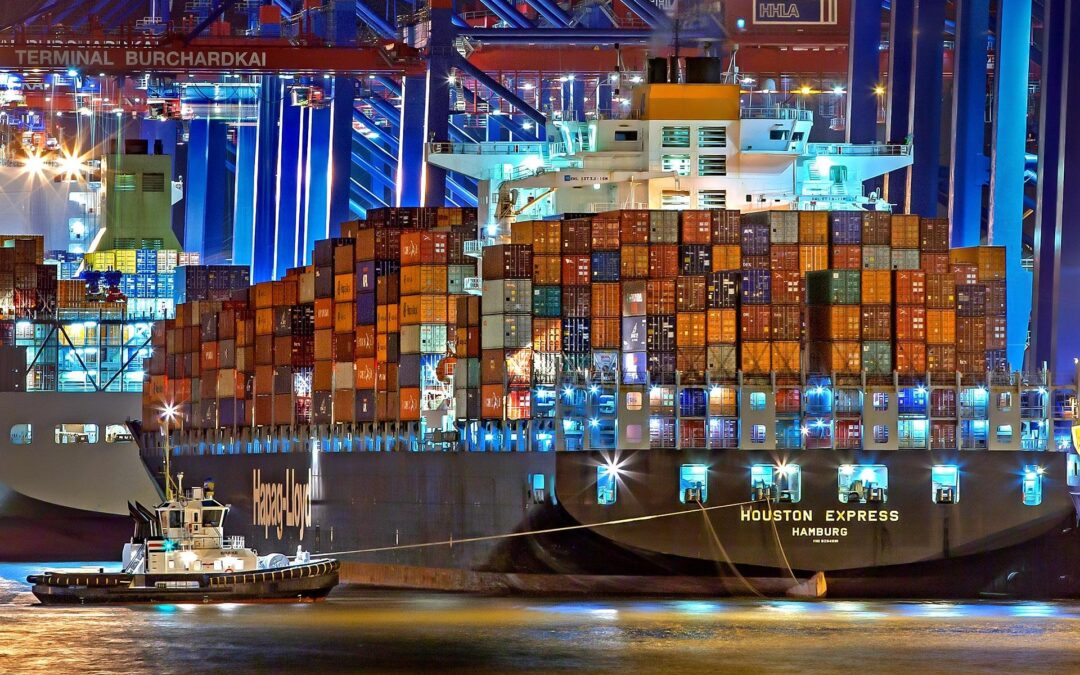
Weak development in Peru’s logistics services could prompt operators to seek alternative gateways. This is the main warning expressed by the members of the private sector that has been maturing over the years: in addition to other factors, Peruvian logistics has gaps that do not allow it to fulfill its potential. Although the country has excellent conditions and has had excellent results in many export-oriented sectors of the economy, that window of opportunity will close if it does not improve the logistical insertion of Peruvian companies. Peru’s export sector, therefore, faces a critical moment: to date, the national economy has achieved commendable results in exports of agricultural products, mining, and the development of energy supply. However, logistics has not yet reached the same level of development.

The warning comes from the private investment promotion agency of the Ministry of Economy and Finance (MEF). The argument is that without the development of infrastructure such as ports, roads, airports, and telecommunication networks, the country will be unable to maintain its performance in those segments and, above all, will not be able to consolidate its participation in certain markets that have been captured through recent investments. Without improved logistical development, all that effort could be frustrated in the medium and long term. The lack of transport infrastructure has an impact on the costs of all exporters, and, even worse, limits the capacity of national logistics to keep pace with growing global demand for Peruvian products. As a result, Peru’s favorable location would quickly become irrelevant unless it quickly closes its logistical deficiencies.

Peru’s logistics and the urgent need to increase exports

ProInversión’s executive director, Luis del Carpio, has also insisted on the need to remove bottlenecks in infrastructure. “Our capacity for economic growth is much higher than what our infrastructure can support,” he said in the virtual seminar Foreign Trade and Infrastructure organized by ComexPerú. Del Carpio is pointing to a key issue, which is that the advance of Peru’s export industries continues to occur without improvements in the supporting infrastructure. Peru, in short, has the production capacity, labor, comparative advantages, and much more to grow faster than it has done until now. But logistics infrastructure has not allowed that to happen.

The head of ProInversión recognized that there have been advances in the logistics sector in recent years, thanks to private-sector initiative and the PPPs promoted by ProInversión to get the country to surpass several of its neighbors in this field, from a market-oriented model. He stressed that the country has had the possibility of implementing an infrastructure model in which PPPs can be the great driving force for modernization. But he added that the current challenge is not lower than the previous one and that, in many cases, it could be much greater. The great challenge, which Del Carpio also expressed, is to develop integrated logistics corridors. The goal is to generate a chain between the port, the highways, and the international corridors to seek efficiency and competitiveness. “We are already competing by logistics corridors. We have to focus on that, the competition is no longer port-to-port, but corridor-to-corridor,” he pointed out.

The executive of ProInversión has also emphasized that if the country does not correct its infrastructure and logistics deficit, it runs the risk of losing corridors and routes. As a result, he said, the growth of exports would be limited. “If we do not put value on the fact that timing in logistics is critical for competitiveness, we will lose ground. We have many challenges,” he stressed. With these statements, Del Carpio points to the need for Peruvian logistics to move forward in line with international trends. If countries do not streamline their logistics, in addition to losing time and money, long-term opportunities will be lost because shipping companies and multicompany exporters will be forced to redirect the flow of cargo.

Road and logistics disconnect in Peru generates additional costs

On the other hand, in the same seminar, Raúl Díaz, general manager of Lima Express, also warned of the need to connect the road infrastructure projects in the country with logistics. “The network of roads and logistics is not working hand in hand. This is what causes a lot of inefficiencies to be generated and, in the long run, they are extra costs that limit our development,” he said. In his opinion, it is essential to coordinate infrastructure projects with a long-term vision of mobility oriented towards efficient logistics corridors. Without articulating urban mobility projects with the requirements of freight transportation, Peru will run the risk of building very modern and innovative infrastructure that, in the end, does not fit well into the country’s national and international trade corridors.

Díaz has also indicated that to generate the conditions for investment, it is essential to have legal stability and respect for contracts. Infrastructure investments are long-term in nature, and many projects require years before being able to be projected in construction, even more so in operation. In this regard, he stated that the interest of all should be directed to political will, an issue that must be transcended so that infrastructure projects that benefit the people can be built and adapted to the future challenges of foreign trade. The general manager of Lima Express is therefore also marking the tone, as in a majority among members of the private sector that should be part of decision-making, of what is required to improve Peruvian logistics: institutional stability.

Chancay Port: a model for logistics investment in Peru

In turn, Gonzalo Ríos, deputy general manager at Cosco Shipping Ports Chancay Peru, has stressed that Peru has a geographically privileged position for international logistics. He has also highlighted the country as an example in recent years of the role of private investment in logistics development. However, he stated that the Government must also maintain its role in promoting a stable regulatory framework and in facilitating public-private partnerships. The Chancay megaproject, which will become a new logistics hub for trade between South America and Asia, is an example of the potential of investment when logistical planning is carried out in line with market opportunities in the global economy.

The Peruvian executive, for his part, argued that a comprehensive vision for logistics also requires investments in regulatory aspects and stability that generate greater confidence among domestic and foreign investors. A strong, modernized Peruvian logistics, Ríos stressed, must include investments in infrastructure, technologies, and systems, as well as improvements in regulatory efficiency and in planning to address the new challenges of global trade. He also stated that both PPP projects and other privately capitalized projects are needed, such as the case of Chancay, for Peru to fully take advantage of its potential for exports and logistics. The current evolution of global shipping routes and the growing competition between regional ports is generating a new scenario that will determine whether Peru consolidates its leadership in the region or lags behind others that are more agile.