+1 (520) 780-6269 investment@latamfdi.com
The semiconductor industry in Panama is an opportunity to ensure industry stability

The semiconductor industry in Panama is an opportunity to ensure industry stability

As the stakes in the 21st-century chip wars intensify, American companies need reliable, stable, capable, and close partners in the semiconductor industry. A semiconductor industry in Panama can be the answer.

The growing vulnerability of global supply chains and the volatile state of geopolitics are leading U.S. semiconductor chipmakers to look for alternatives to fill critical functions in their manufacturing process. Today, they have a new opportunity in a stable and reliable partner close to home: Panama.

Chips are the oil of the 21st century, and the U.S. has prioritized their importance to national security through the CHIPS Act. American chipmakers are looking to expand domestic capacity to help ensure supplies of these strategic goods.

Panama as a center for Assembly, Testing, and Packaging (ATP)

However, the industry often relies on companies thousands of miles away to complete the final stages of its chip manufacturing, known as Assembly, Testing, and Packaging (ATP). Many of these ATP facilities and warehouses are concentrated in East and Southeast Asia.

Recently, the United States and Panama made an important announcement of a strategic alliance to strengthen the semiconductor industry in Panama and its value chain. Panama was chosen as one of just a handful of countries that will benefit from State Department funding to explore ways to expand ATP capacity. The recent visit of the Secretary of Commerce of the United States, Gina Raimondo, to Panama reinforced this intention of strategic collaboration.

To diversify risk in the supply chain while improving U.S. national security, Panama may be the preferred solution for U.S. chipmakers, a hemispheric hub for ATP and a global distribution node for the industry.

A developed semiconductor industry in Panama would help move the supply chain closer to home

The semiconductor industry in Panama offers the perfect opportunity for companies to create custom ATP facilities and warehouses less than 900 miles from some of the world’s largest semiconductor plants in the United States. Since Panama is directly south of the U.S., it has a time zone advantage, essential for business coordination, that Asian options cannot match.

In addition to proximity,  a semiconductor industry in Panama offers U.S. chipmakers several other advantages, chief among them stability. Panama is a proven strategic partner of the U.S. and, more importantly, is in a region that is not experiencing high-risk tensions. Investing in Panama as an ATP hub is also a win-win proposition for U.S. states seeking to expand technology exports to the region.

Any ATP distribution center must have world-class logistics capabilities, and Panama excels in this.

The Panama Canal is the world’s most essential logistics node, providing valuable access to global supplies. The international community depends on Panama to provide political and economic stability to ensure the uninterrupted operation of the maritime passage. This, in turn, drives the country’s political decisions, ensuring predictability and stability, making it an attractive destination for long-term investments in the semiconductor industry in Panama. The 185 multinational companies maintaining their regional headquarters in Panama attest to this.

Panama also has the best air infrastructure in Latin America, according to the World Economic Forum, with direct commercial and passenger flights to major American cities and a regional hub for global cargo carrier DHL.

Panama’s regulatory environment is conducive to doing business

In addition to Panama’s pleasant climate, the country has a favorable regulatory climate.

Panama offers a Special Regime for Manufacturing Services for Multinationals (EMMA), which provides a wide range of incentives to foreign investors. This regime aligns well with U.S. goals of creating economic prosperity at home while supporting partners abroad. For example, it allows U.S. companies to establish manufacturing in Panama while maintaining the ability to bill consumers from their U.S. headquarters. Greater stability for investors is ensured by Panama’s laws, which protect foreign investments from regulatory and fiscal changes over ten years.

Panama has a free trade agreement with the United States and trade agreements involving more than 60 countries, including the E.U., Singapore, Israel, and South Korea.

The most crucial component in all of this, of course, is the people. The Panamanian Government has established a network of institutions to support the training of the workforce and the development of human capital to work in the semiconductor industry in Panama.

For example, the Higher Specialized Technical Institute is a state-of-the-art campus that promotes public-private partnerships to develop the technology sector workforce. The Technological University of Panama, which produces 4,000 high-level graduates annually, has six research facilities, including the Experimental Engineering Center, the Electrical, Mechanical, and Industrial Research Center, and a Center for Innovation and Technology Transfer. Similarly, the National Secretariat of Science, Technology and Innovation promotes expanding workforce productivity in partnership with the private and public sectors. Additionally, Panama continues actively partnering with U.S. academia to expand its capabilities.

As the stakes in the 21st-century chip wars intensify, American companies need reliable, stable, capable, and close partners in the semiconductor industry. Panama is an answer.

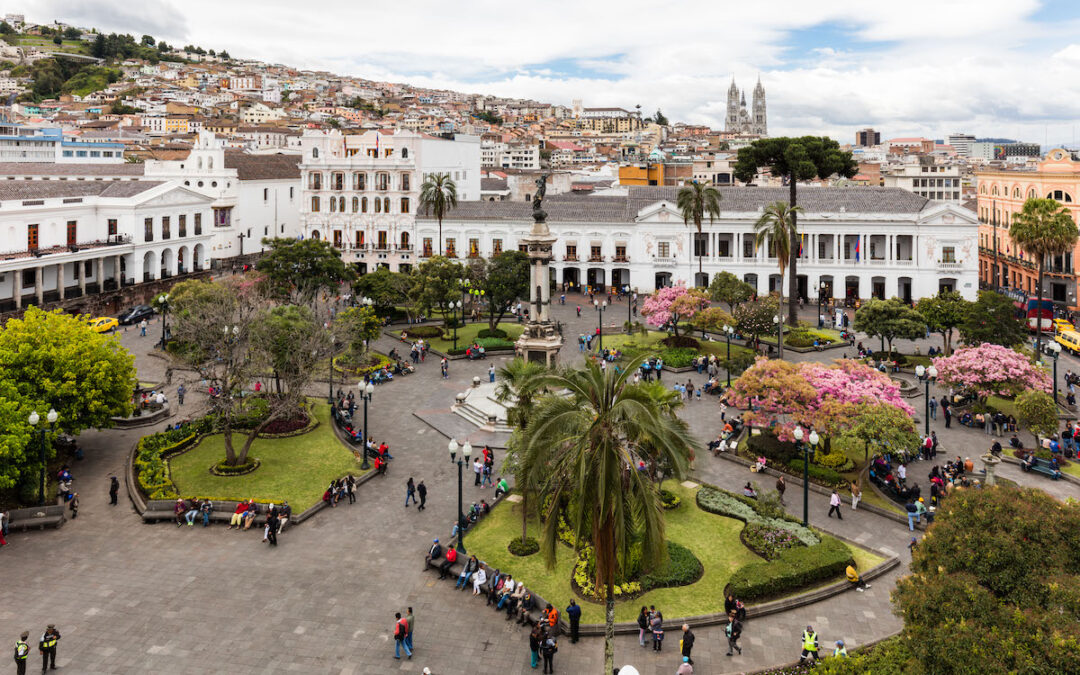
Investment in Quito comprises 25% of Ecuador’s Foreign Direct Investment

Investment in Quito comprises 25% of Ecuador’s Foreign Direct Investment

Investment in Quito offers six factors that make it one of the most attractive Ecuadorian cities for Foreign Direct Investment (FDI).

Quito attracts, on average, 25% of Ecuador’s Foreign Direct Investment (FDI), equivalent to USD 200 million per year.

This positions Quito as one of the cities with the greatest attraction of resources from abroad, above Guayaquil.

This is outlined in the 2023 Investment Guide, produced by the Quito Chamber of Commerce (CCQ) and the Development Secretariat of the Municipality of the capital.

For Francisco González, coordinator of the Quito Opportunities Center project, the capital, like the rest of the country, can potentially attract more resources from abroad.

Advantages of investment in Quito

According to the 2023 Investment Guide, Quito can attract more capital due to six advantageous factors:

International Airport

Being the capital of Ecuador, Quito has an international airport that is essential for the growth of business through foreign trade.

In 2022, more than 239,000 tons of merchandise were exported through the Mariscal Sucre International Airport in Quito, and more than 47,000 tons of products were imported.

In the ten years of operation of the air terminal, nearly 2.3 million metric tons of cargo have been moved. More than 97.5% corresponds to international cargo, explains Corporación Quiport, which operates the airport

Infrastructure

The city also has a road system that allows merchandise transfer to the rest of the country, which translates into greater economic dynamism.

In addition, it is expected that this year, the Quito Metro will begin operating, which will cover 22.6 kilometers.

“The project for infrastructure investment in Quito will be the backbone of the city’s future integrated transportation system, which will shorten distances,” which means saving time and money, explains the World Bank.

The city is also attractive for business because it has convention centers and large hotels for holding national and international meetings, conferences, and congresses.

Institutions

Another advantage of investment in Quito is that, being the capital, businesses have greater access to public institutions to obtain permits and comply with procedures.

There is greater access to financial institutions and offices of international organizations that support small businesses, such as the Inter-American Development Bank (IDB) and the Latin American Development Bank CAF.

Professionals

Many of the country’s universities and institutes are located in Quito.

Ecuador has 71 registered and accredited higher education institutions, 32% in the capital.

The presence of universities and institutes means greater access to education, which translates into prepared professionals. For this reason, 37% of the Economically Active Population (EAP) of Quito has higher education. The figure is above the national average, which reaches 20%.

In addition, 6% of the city’s EAP have a postgraduate degree. That’s four percentage points above the national average, which is 2%.

Business environment

The country has nearly 850,000 business establishments, according to the Business and Commercial Establishments Directory of the National Institute of Statistics and Censuses (INEC).

About 186,000 of them, or what is equal to 22%, are in Quito.

If analyzed by size, there are 16,572 large and medium-sized companies in Ecuador, which is equivalent to 2% of the entire business sector.

The reality of the capital is different; 4,424 or 27% of its companies are large or medium-sized, which means that, at least, they register sales of USD 2 million per year and have at least 100 workers.

Sectors related to commerce, other service activities, scientific and technical professional activities, manufacturing industries, and transportation and storage comprise approximately 73% of the total companies domiciled in Quito.

Tourist destination

The international airport and geographical location make Quito one of the main tourist destinations in Ecuador, which means income from accommodations, entertainment, and commerce, among other activities.

In total, 15 passenger airlines connect Quito directly with 14 international destinations and eight destinations within Ecuador, making the capital the most connected city in the country by air.

The city has one of the main tourist attractions in the country: the Middle of the World.

Tourists visit Quito to appreciate its historic center, which earned the city recognition as the First Cultural Heritage of Humanity. In 2022, 531,097 national and foreign tourists visited the capital, according to Quito Turismo.

The foreign citizens who visit Quito the most come from the United States, Colombia, Spain, Peru, and Canada.

Paperwork and red tape

The city also has particular pending challenges that affect Foreign Direct Investment in Quito

One of them is the excessive paperwork in some processes, says the coordinator of the Quito Opportunities Center project.

The World Bank agrees with this, stating that a person needs to complete 11 procedures that take 48.5 days to open a company in Quito.

Among them is the Single Metropolitan License for the Exercise of Economic Activities (LUAE).

On the other hand, in Santiago de Chile, it takes four days to establish a company.

González adds that the arrival of investment in Quito is also threatened by a degree of uncertainty.

In some instances, the return on investment in Quito for businessmen is lower due to the country risk, which has increased and makes the cost of credit obtained abroad more expensive, González concludes.

Investment in Quito is a viable opportunity

Despite its challenges, Quito, Ecuador, presents a viable opportunity for foreign direct investment due to its strategic location and a government committed to fostering a favorable business climate.

Situated in the heart of South America, Quito serves as a gateway to a market of over 100 million consumers in the Andean region, making it a pivotal hub for trade and commerce.

Ecuador’s government has implemented a series of economic reforms, offering incentives and legal protections for foreign investors, which include tax breaks, simplified regulations, and bilateral investment treaties with several countries.

Quito, Ecuador, offers investors access to a modern international airport, highly functional infrastructure, institutional stability, an educated workforce, and a vibrant environment for conducting business.


Peru’s Port of Chancay built with Chinese capital is to be operational at the end of 2024

Peru’s Port of Chancay built with Chinese capital is to be operational at the end of 2024

The construction of a Peruvian Port of Chancay that hopes to operate at the end of 2024 is advancing. Built with Chinese capital, it seeks to be the leading logistics center that connects both shores of the Pacific.

Chinese capital expands investment in Latin American infrastructure

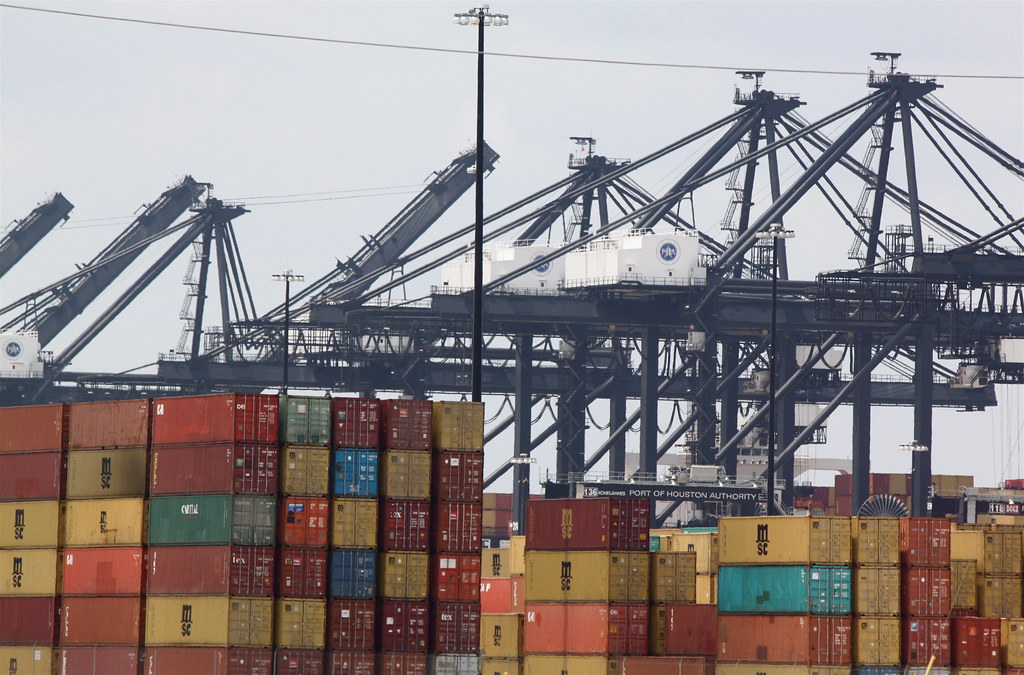
A megaport for South America and the Asian giant China is advancing steadily. China views this Peruvian Port of Chancay as a symbol of its investment in South America and is of enormous importance at a geopolitical level. It is being built about 80 kilometers from Lima, and the company responsible for the project expects it to be operational by the end of 2024. Its objective is to become the regional logistics center par excellence that unites both shores of the Pacific Ocean. The project represents a $3.5 billion investment. It will include 15 terminals to mobilize more than 5 million containers annually. It will even receive the largest cargo ships in the world.

Mario de las Casas, director of Public Affairs of the COSCO shipping company in the Port of Chancay, points out: “This port will allow having a direct route to export our products to an immense market that is Asia.”

Due to its more than 16 meters depth, users can unload ships with a capacity of 18,000 containers, which cannot currently be reached in any South American port.

This way, transporting goods will be more efficient by reducing the crossing time by ten days. The Peruvian megaport project is part of the Chinese expansion through the Andean nation that is also occurring in sectors such as mining or energy.

A strategic variable

At a recent international port forum held in Lima, the deputy general manager of Cosco Shipping, Gonzalo Ríos, stated that “beyond just being the port, it is a strategic variable in regional distribution chains.”

“The growth projected by the agricultural sector in Peru, all the large irrigation projects mean almost doubling Peru’s agricultural output, and that means enormous market growth that requires a concentrating port to reach consumers in Asia, particularly,” said Ríos.

The manager stressed that “the Asian market for this type of (agricultural) product is still about to grow a lot” and that in Peru, “making logistical ‘ clusters ‘ (groups) in each of its regions is the development path. “

” The Port of Chancay is becoming a player with a lot of modernity, with a lot of efficiency, with significant volumes of movement that, together with the ports of Callao, will mean that Peru is a leading regional ‘hub’ in this logistics component,” he said.

In the opinion of the president of the Maritime, Port and Customs Affairs Commission of the Lima Chamber of Commerce, Alberto Ego-Aguirre, since Peru is a small country, “success has to be achieved through exporting so that Peru continues to grow.”

“Ports move 85% of the products. Air travel will always be more expensive,” he noted.

For the union representative, his country’s economic growth “has to go hand in hand with the growth of the ports” and, related to the ports, “better roads.”

The Port of Chancay is a linchpin for Peru’s foreign trade

The Port of Chancay is a pivotal gateway to Peru’s international trade efforts, serving as a linchpin in the nation’s economic development and global connectivity. Situated on the Pacific coast, Chancay plays a vital role in facilitating the import and export of goods for Peru and the wider South American region.

This port’s strategic location is a cornerstone of its significance. With its proximity to Lima, Peru’s capital and economic hub, the Port of Chancay offers a convenient and efficient means of transporting goods to and from the country’s interior. This connectivity reduces transportation costs, fosters economic growth, and improves the country’s overall competitiveness.

Moreover, the Port of Chancay plays a pivotal role in Peru’s ambitious trade ambitions. As Peru continues to expand its trade relationships globally, particularly with the Asia-Pacific region, Chancay’s deep-water harbor has emerged as a critical asset. It enables larger vessels to dock, allowing for the efficient transfer of goods and enabling Peru to tap into the vast markets of Asia and beyond.

Additionally, the Port of Chancay is a vital node in Peru’s export-oriented economy, particularly in the mining and agricultural sectors. The port’s modern infrastructure and logistics capabilities ensure that Peruvian products can easily reach international markets, bolstering the nation’s foreign trade volume.

In conclusion, the Port of Chancay is not just a harbor but a linchpin of Peru’s international trade strategy, linking the nation to global markets, driving economic development, and propelling Peru onto the world stage as a significant player in international trade. Its continued development and expansion will be pivotal to the nation’s future economic success.

Outsourcing services to Mexico with Arturo Rodriguez

Outsourcing services to Mexico with Arturo Rodriguez

Arturo Rodriguez
Co-Founder and Vice President of Business Development
Intugo
arturo.rodriguez@intugo.co

LATAM FDI: Today. We’re pleased to have Arturo Rodriguez with us. Arturo is the founder or one of the founders of a company that is based in Hermosillo, Mexico, called Intugo. And today, we will have a conversation on outsourcing services to Mexico. Arturo. How are you today?

Arturo Rodriguez: I’m very good. I’m very happy to be here with you. Steve.

LATAM FDI: Can you tell us a little bit about yourself and your organization?

Arturo Rodriguez: Sure. As you said, I’m Arturo Rodriguez, Vice President of Business Development for Intugo and a co-founder. Intugo is a company that, for more than 15 years, has been helping international companies set up, run, and grow operations in Mexico. We specialize in particular in helping operations related to service-oriented activities. And as I said, we’ve been helping companies that are outsourcing services to Mexico for more than 15 years.

LATAM FDI: Many people are familiar with the power and breadth of Mexico’s manufacturing sector. But you deal with other kinds of businesses. What kind of operations can a company have in Mexico from the perspective of your clientele?

Arturo Rodriguez: Yeah, it’s a good question. Manufacturing is huge in Mexico, and the type of services we offer at Intugo are a spin-off. They are an expansion of services that have already been offered to manufacturing companies for more than 30 or 40 years. We expanded the concept and tweaked it a bit for people looking at the possibility of outsourcing services to Mexico.  This relates to BPO operations, call center operations, software development, accounting, and anything you can do from a computer or maybe on a remote basis, if you will. That’s the kind of operation that we host. At Intugo, we have more than 90 different positions in different operations for our clients who are outsourcing services to Mexico. This means one position would be maybe software development. Another position would be a call center agent, for instance. Furthermore, another position would be accounts receivable agent or accountant. You can see that there’s a broad number of types of operations and positions that you can do when outsourcing services to Mexico. This aligns with what every company has as a goal to do here.

LATAM FDI: I’m familiar with your company and know you have a unique business model. But before we specify what the characteristics of your particular business model are at Intugo, what types of models, other than what you’ll explain to us about your company, are available for businesses that want to set up the kind of operations that you mentioned in Mexico?

Arturo Rodriguez: Yes, there are many models or value propositions in the marketplace, but I’ll summarize it in two big solutions, if you will. First, you want a company to help you with a particular need. Let’s say that you needed someone to help you with your accounting and do your general ledger and do your returns and do your, I don’t know, tax strategies, et cetera, et cetera. You want to outsource that to someone, maybe in Mexico, a Mexican firm, for whatever reasons. Then, you find what we call a regular outsourcing firm. A regular accounting outsourcing firm. Same thing. You can tell. Let’s say you want to do a sales campaign to sell something through a call center. You may go and find a call center outsourcing company in Mexico that does sales. You don’t want to get very much involved in the operation. You want someone to do it for you completely in your desire to outsource services to Mexico. That’s one type of company or a big number of value propositions around that concept. Our concept is totally the opposite. Our concept is all about helping you be able to control the operation for yourself using the same examples.

You don’t want someone doing the accounting for you; you want to do it yourself. You want to control it. You want to know who’s doing the work. You want to help with the productivity of the people doing the tax returns or the general ledger activities. In another example, in call center operations, you want to be involved in and control sales. Maybe that’s your core business. Maybe that’s what you do as a business, and you want to expand your operation and control the people. You want to be able to say who gets to be part of your team. Our model for outsourcing services to Mexico is all around helping, making sure that you can control productivity while we take care of the rest.

LATAM FDI: So, when you talk about “the rest,” obviously, I’m familiar with your business. I know that part of that, quote-unquote, “the rest” has to do with physical infrastructure. But in addition to physical infrastructure, what other things do you do to take off the plate for your clients so that they can on their core competencies and concentrate on what they do?

Arturo Rodriguez: Yes, we call it. We offer a bundle for outsourcing services to Mexico. Let me start by giving a view of this concept. When you have an operation or a company, you have to take care of everything that the company needs. Not only the productivity aspect, but you have to take care of the people, pay payroll, and take care of the facilities, insurance, and everything else that is needed. Our services for outsourcing services to Mexico enable you to concentrate on what you’re there to do. Our job is to try to make sure that you don’t have to deal with the complexities, particularly the complexities of doing business in Mexico, and that you don’t necessarily have to get too deep into that because we help you with that. As you said, we go from everything regarding the infrastructure and the facilities to the recruiting of the people who will be part of your team. All the human resources activities that are needed for the people not only to be recruited and hired but also for them to stay there. We provide services for outsourcing to Mexico regarding legal contracts, payroll, benefits administration, and maybe some additional benefits that you want to provide or that you’re already providing to your people back home.

We also help you with any procurement needs that you may have for your operations, including the basic things that someone in your team may need or something more related to your operation. Computers, bandwidth, more office space, et cetera, et cetera. So, in a nutshell, all the labor or law or country-related activities to be able to operate, we help you with those once again, for you to be able to concentrate on what you’re here to do, your core business in Mexico.

LATAM FDI: Just so I am clear on this, my understanding is that under your business model, the people who work for your clients are not legally, at least on the side of Mexican labor law, employees of your client. Would it be correct to assume that with regard to human resources, your company acts somewhat akin to a PEO in the United States?

Arturo Rodriguez: We could say that we call that we are the employer of record for outsourcing in Mexico. So yes, legally speaking, people are under our umbrella, and technically speaking, our clients don’t have any labor law-related liability in Mexico. Our clients don’t need to have any entity or bank account in Mexico to operate through our model. We take care of that, including what you say regarding the employer of record situation. Nevertheless, operationally speaking, the people assigned to your operation, our client’s operation, report to our client and our client’s managers and work alongside our clients’ strategies.

LATAM FDI: In other words, they have control over what they do. This means they have a complete focus on their activities, which they’re in business to do. At the same time, you take care of things in a way that enables them to plug into Mexico and be up and running, outsourcing services to Mexico in a reasonable period of time. Is that correct?

Arturo Rodriguez: That’s correct. Very correct.

LATAM FDI: So, given this model, how big of an operation can you contemplate setting up under that model in order to be able to gain some of the benefits that you’re able to gain by outsourcing services to Mexico?

Arturo Rodriguez: Yeah, we have operations that have started with one person, and we have operations that have started bigger. But most importantly, we have operations with more than 200 or 300 people. So, we host small operations or small clients and bigger ones. Maybe a common thing, a common trend amongst all our clients, is that usually, they start small by their standards. Small for someone, maybe 20 people, small for someone else can be one.  Usually, they start with that and eventually grow. That has been the trend for most of our clients.

LATAM FDI: What kind of savings would a company expect to see by setting up operations in Mexico?

Arturo Rodriguez: It depends on what kind of talent pool you’re looking for. The more experience, and particularly worldly experience, the less savings you may have. Maybe. But in general, on average, you will be able to have between 25% and 50% lower costs compared to your operation in the US. In general, that’s what you find when outsourcing services to Mexico under the Intugo business model.

LATAM FDI: With respect to your company, I understand that you have several locations. Can you tell us a little bit about each location and maybe a little bit about the labor force that people can expect to find in those locations?

Arturo Rodriguez: It’s an interesting question, not only from the perspective of facilities that we have but also from the market conditions as they are right now. Because as we know, before COVID, 98% of the people working for our clients worked in one of our facilities. Just a few of them were working remotely or maybe on a work-from-home basis. Once COVID hit and everyone, including us, had to go home and work there for a while, the work-from-home, or the remote option, if you will, became a reality. Today, we have maybe 40% of the people working from home, and the rest are working on a hybrid model or an on-site model in one of our facilities. We have facilities in Hermosillo, Sonora, which is where we started. We also have facilities in Obregon, Sonora, and have facilities in Guadalajara and in Mexico City. We also have a very small operation in Monterrey. Having said that, we have recruited people for outsourcing services to Mexico from practically all over the country. A lot of the people that are working today for us and for our clients are working from different states in Mexico.

The important part regarding these concepts is that we help you decide what’s the best strategy for you. This strategy is particularly based on what kind of talent you’re looking for in order to engage in outsourcing services in Mexico. If you have an operation that needs a lot of security and maybe it’s an IT-related operation, we might suggest Guadalajara, for example. There’s a big talent pool for IT people there. But if your operation does not necessarily have that need and needs different kinds of people, different kinds of experiences, and positions, we may suggest a hybrid mode. This could maybe be with a foot in one of our facilities in one of the cities, but also with people working remotely because of the experience you’re looking for. Every operation is different, and we usually work with our clients involved in outsourcing services to Mexico to decide what strategy will be best for them to have the best talent available.

LATAM FDI: It seems this is an all-inclusive model for outsourcing services to Mexico that makes it easy to set up operations.

Arturo Rodriguez: I would like to say that with us, it’s very easy to start and very easy to start up operations through outsourcing services to Mexico.

LATAM FDI: Typically, when people listen to the podcasts we do, they have questions arising from the information they’ve listened to. That being the case, if somebody with further questions would like to contact you, how would they do that?

Arturo Rodriguez: I invite them to send me an email. I’ll give you my email: arturo.rodriguez@intugo.co. That’s my email. They can contact me through that or go to our website, www.intugo.co, and look at our business proposition there. There, they will find different ways of contacting us, including my email, but also through a form, and we’ll answer them really quickly.

LATAM FDI: Okay. What we’ll do is, in the transcript section on the page that hosts this podcast, we’ll have that information. We’ll have your URL and your email address. Another thing that we would like to include if it’s available, is a link to people’s LinkedIn pages. Do you have a LinkedIn page that we can include in our information about outsourcing services to Mexico?

Arturo Rodriguez: That will be okay, definitely.

LATAM FDI: All right, we’ll do it. Thank you very much for speaking with us today. It’s been very interesting and informative, and we hope you have good luck going forward.

Arturo Rodriguez: Thank you for inviting me, Steve.
Bitcoin mining in Paraguay: Is it a good use of the country’s energy resources?

Bitcoin mining in Paraguay: Is it a good use of the country’s energy resources?

Paraguay is currently debating what to do with the proliferation of bitcoin production farms. A single 50,000-square-foot facility for bitcoin mining in Paraguay consumes the same electricity as 20,000 middle-class homes.

When the Spanish founded the city of Villarrica in the 16th century in Paraguay, they expected to find abundant quantities of gold. But the gold never appeared. Now, 450 years later, what Villarrica produces are bitcoins.

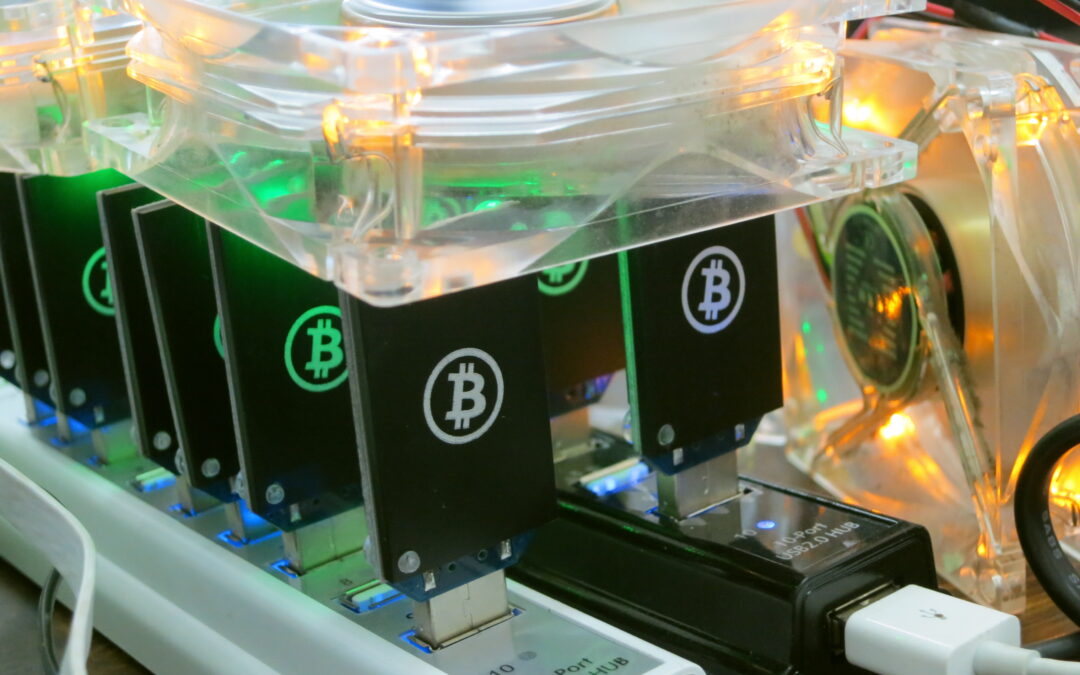
Emmanuel Friedman is a local businessman from Villarrica who, together with his international partners, operates nearly 10,000 computing machines to do crypto mining, that is, generate electronic currencies by bitcoin mining in Paraguay.

How does it work? The machines are dedicated 24 hours daily to solving complex computer processes to validate transactions on the Bitcoin network. For this activity, crypto miners like Friedman are rewarded with fractions of bitcoin. The more machines with high computing power are used, the higher your income will be, but the cost of electricity, the primary input of crypto mining, rises. ”It is a new way to have extra income for all Paraguayans by transforming energy into an asset,” explains Friedmann.

The energy expenditure of Friedman’s crypto-mining complex bitcoin mining in Paraguay is equivalent to the consumption of 20,000 middle-class homes. It is estimated that between industrial miners and people who do crypto mining at home, there are 30,000 machines in Villarrica. “Today, we already have Swiss, Canadian, and Brazilian companies in the city doing mining,” says Friedman.

Low-cost bitcoin mining in Paraguay

CLYFSA, the private company that distributes electricity in Villarrica, has been purchasing energy for five years at a price below the cost of production, according to the National Energy Administration, ANDE.

In 2021, CLYFSA paid ANDE an old rate of USD 23.84 megawatt/hour, while the rest of the Paraguayans paid USD 41.98 per megawatt/hour. Judicial protection prevents ANDE from updating the rate to CLYFSA.

According to ANDE, the energy rate that Villarrica mining accesses is below the cost of production, which becomes “a subsidy granted by all the Paraguayan people,” the company said in a document published on its web portal.

”This means that the rest of the users have to pay that difference, either in their electricity bill or in a worse quality of service, because the necessary investments cannot be made,” says the former vice minister of Mines and Energy of Paraguay, Mercedes Canese, who observes with the growing fever for bitcoin mining in Paraguay with growing concern.

Paraguay is a country that generates 100% of its electricity from its binational hydroelectric plants: the Itaipú dam, in partnership with Brazil, and Yacyretá, in alliance with Argentina. Nearly 60% of Paraguay’s energy is not consumed in the country. The surplus is exported to Brazil and Argentina.

Crypto miners: “We must take advantage of the surplus energy.”

Juan José Benítez was one of the first crypto miners in Paraguay and has his own mining plant in the capital, Asunción. Benítez is one of the most audible voices that promote regulating this industry activity and encourages foreign capital’s arrival. “Take advantage of the surplus energy we have. Paraguay has a lot. We have renewable hydroelectric energy that is green, which is everything that, let’s say, any Bitcoin investor would be looking for at this moment,” Benítez assured.

The miners argue that the country would receive more significant income through bitcoin mining in Paraguay than by exporting surplus energy. “What Paraguay has the most of is energy. On top of that, it has energy that is not used. So, instead of Paraguay selling Brazil energy at ridiculously low prices, this is an excellent opportunity for everyone to sell energy to the large mining companies that come to invest in Paraguay to create a new way of making assets,” says Emmanuel Friedmann.

The cryptominers ‘ argument is not shared by the former Vice Minister of Energy, Mercedes Canese. We do not want “companies to come that consume a lot of energy, also at a subsidized price. This is because these types of investments do not generate employment. It is perhaps different from subsidizing a sector that does generate general well-being, such as public transportation, or an industry that is not electro-intensive, but employment-intensive .”

The environmental footprint of Bitcoin mining

Using electricity from fossil fuels to “mine” bitcoins is one of the significant criticisms of cryptocurrency mining globally. China banned crypto mining in 2021. Activity was temporarily reduced, but it is growing again. Although bitcoin mining in Paraguay is becoming increasingly popular, its global participation is barely 0.15%.

Bitcoin in the world

Although the electrical energy that Paraguay produces is completely clean. That is the argument of local crypto miners to defend their activity and attract foreign investors. Former Vice Minister Canese considers that if Paraguay’s surplus electrical energy stops being sent to Brazil and Argentina to prioritize crypto miners, those countries would likely have to look for alternative sources, such as oil derivatives. “So the greenhouse gas is not generated in Paraguay, but it will be generated in Brazil or Argentina, and the effect of climate change is global,” says Canese.

Paraguay’s hydraulic energy availability will be taken over starting in 2030, as estimated by the binational company ITAIPU, which generates energy from the Paraná River. The severe drought affecting the Paraná basin has reduced the levels of hydraulic energy production. It has fallen 36% since 2016, when ITAIPU had its best generation year.

Although Paraguay has surplus electricity, at least 23% of Paraguayan households still depend on the consumption of firewood for cooking, according to the latest Permanent Household Survey of 2018. In rural areas, firewood consumption for domestic use reaches 52%.

“We are talking about providing concentrated energy to crypto miners when we have places 50 kilometers from Asunción without power lines. The neighbors have to organize to set up an energy column. It is the neighbors themselves who have to assume the cost at an energy rate 4 or 5 times higher than what a crypto miner would pay in Villarrica,” says Leonardo Gómez from the Association of Technology, Education, Development, Research and Communication TEDIC, an organization that has monitored the development of crypto mining in Paraguay.

Government veto on crypto mining

In July, the Senate of Paraguay approved a law regulating bitcoin mining in Paraguay. However, the government of President Mario Abdo Benítez vetoed the law and returned it to Congress. The veto decree argues that crypto mining “does not generate added value.” It is characterized by “its high electrical energy consumption and low use of labor.” The government considers that the country’s industrial exports are growing and estimates that, in five years, the country’s manufacturing industry will require the available energy. “If Paraguay wants to intensify crypto mining today, in the next four years, it will be forced to import electricity,” the decree states.

The Paraguayan government’s veto of crypto mining relieves those who have doubts about the implications of equating crypto mining with a regular industry. However, Villarrica’s crypto miners will continue to benefit from low-cost energy that all Paraguayans somehow end up paying for.