
+1 (520) 780-6269 investment@latamfdi.com
The Bukele government seeks to attract Spanish foreign direct investment in El Salvador

The Bukele government seeks to attract Spanish foreign direct investment in El Salvador

The Central American country’s government has created a new agency to attract foreign direct investment to El Salvador.

Considered one of the most challenging countries in Central America for foreign direct investment (FDI), the Nayib Bukele Government of El Salvador has begun to act to try to change this state of affairs. At the beginning of June 2023, the Salvadoran Congress approved the Law for the Creation of the Investment and Export Promotion Agency. This organization (INVEST) is intended to attract more foreign direct investment to El Salvador. It will seek to gain Spanish investment that is far from reaching its potential volume today. This is even though Spain is the third investor in the Central American nation.

Spain’s foreign direct investment in El Salvador leads Europe

Spanish investment in El Salvador, which had been increasing modestly, has slowed its pace in recent years. According to the ‘XV Report on Spanish Investment in Ibero-America’ by IE University, the country will be one of the markets where FDI will not grow significantly in 2023. All in all, Spain is El Salvador’s leading political and economic partner in Europe. The countries have a bilateral treaty for the Promotion and Reciprocal Protection of Investments and an agreement to avoid double taxation. Spanish firms have asked San Salvador for regulatory improvements to further facilitate their foreign direct investment in El Salvador.

In El Salvador, where Spanish investment has traditionally been modest and variable, even though Spanish firms rank third in capital flow to the country (10% of FDI, 900 million stock), companies are present in the modernization of transport and energy infrastructures and play a key role in agribusiness and tourism. Present with investment in El Salvador are Spanish firms such as Barceló, Calvo, Acciona, Abantia, ACS, FCC, Indra, Atento, Santander, Mapfre, Inditex, Mango, and Iberia. Telefónica, within its divestment strategy, closed the sale of its subsidiary there in 2022 for 125 million euros to the General International Telecom investment fund.

More promotion of foreign direct investment to El Salvador

The new Invest Agency will replace the existing Export and Investment Promotion Agency of El Salvador (Proesa), which will be dissolved. Once the law goes into effect, Invest will promote foreign direct investment in El Salvador to investors and increase exports. However, the power to set up committees for each Public-Private Partnership project is separate from the law, and the Ministry of Economy will assume this responsibility.

A study prepared by the KPMG firm recently indicated that El Salvador is among the most challenging countries for investment in Latin America. It ranks as the fifth most attractive country to invest in, surpassed by Costa Rica, Honduras. the Dominican Republic and Panama. According to the survey, the country ranks 13th in attractiveness for doing business. It only exceeds Guatemala, Nicaragua, Bolivia, and Venezuela. However, San Salvador has been indicating in the last year that the country has improved in terms of investment, which they attribute to different reasons, such as the significant improvement in security and the adoption of Bitcoin.

According to the survey carried out among 400 business leaders in the region, El Salvador still needs to register among the ten most attractive countries to invest in Latam in a context where opportunities for mergers and acquisitions are increasing. The first place on the list is occupied by Mexico since 79% of companies and investors consider that country the most attractive to do business. After Mexico, Brazil (69%); Costa Rica (54%); Chile, Colombia, and Peru are recognized as the best investment venues. The list analyzes 17 of the 19 Latin American countries.

The lack of abundant foreign direct investment in El Salvador (the country continues to be the country that attracts the least foreign capital flow in Central America) could be due, according to the study, to the fact that it does not yet offer what companies are looking for: clarity in the opportunity to invest, diversify and grow. In the KPMG report ‘In an uncertain world, mergers and acquisitions in Latam are increasing,’ it is emphasized that investors now perceive less legal certainty in the country.

International campaign for foreign direct investment in El Salvador

The Central Bank itself of El Salvador points out that in 2022 the flow of investments in the country, that is, the inflows and outflows in monetary terms, was US -99.1 million dollars, a negative figure that reflects that more investments left El Salvador than those that entered, despite the official speech of the Government of Nayib Bukele, which highlights that the exception regime in public security and the adoption of bitcoin have been vital in attracting investment.

Despite the government’s efforts, more foreign direct investment in El Salvador is needed. As a part of this effort, in recent times, San Salvador has made an effort to define the country as a safe place for investment, notably in tourism. It did so in Madrid in January 2023 through the Minister of Tourism, Morena Valdez. Likewise, in March, the Government of El Salvador reinforced its campaign to attract foreign capital with a campaign focused on the fact that the country has a “propitious” climate for doing business and hopes to become a place where investors pay attention and multinationals are established.

Both the Minister of Economy, María Luisa Hayem, and other ministers highlight the opportunities offered by El Salvador in sectors such as logistics, construction, aeronautics, water, technology, tourism, agribusiness, health, railway, airport, and transport infrastructures, ‘outsourcing ‘ and specialized textiles, thanks to “legal security, macroeconomic stability, the promotion of innovation, the development of public infrastructure and a legal framework defined in the Investment Law that is governed by the principle of non-discrimination and equal treatment of national and foreign investments.

The Salvadoran economy, highly dependent on remittances, grew at a rate of 2.6% in 2022 and is expected to slow to 2% in 2023. This is the case even though the IMF is optimistic and has praised that the country has experienced “solid” growth in the last year, with a reduction in inflation, despite the “adverse” impacts; and highlighted the security improvement, which is giving a “greater than expected” boost to private investment and growth.

Overview of logistics in Panama: the sector’s  impact on country competitiveness

Overview of logistics in Panama: the sector’s  impact on country competitiveness

The Panamanian economy is dominated by services with a contribution to GDP of approximately 80%. This blog post will examine the importance, characteristics, and benefits of local and international logistics in Panama, which is considered the engine of the nation’s economy.

In addition, there will be a review of key events that have strengthened the sector in recent years. Additionally, we will examine actions, policies, and strategies employed in the Panamanian logistics sector to increase competitiveness.

First, we can easily define logistics activity as getting a product from one place to another in the shortest possible time at the lowest possible cost (efficiently) by air, sea, and land.

Second, we will state why the Panama Canal, the Colon Free Zone (ZLC), the international ports, and the Tocumen Airport are efficient growth engines within Panama’s logistics sector, forming an essential part of the global transportation trade.

These growth engines are part of the national development strategy for logistics in Panama originated in the 1970s with the vision of integrating these activities into the country’s growth.

Therefore, the national banking system was created to provide dynamism to credit and finance the activities of the ZLC and other logistics companies.

Similarly, port concessions were granted to international companies of world prestige in port activity. In addition, the Tocumen International Airport was remodeled and expanded, and through Copa Airline’s strategy, the country is promoted as a transportation hub of the Americas.

As for telecommunications, Panama is connected to seven fiber optic submarine cables that allow expanding connectivity and national and international communication.

As all these activities related to transport, storage, and communications play an essential role in economic growth and human capital development, we will focus this analysis on national and international logistics in Panama from the perspective of competitiveness and how to integrate the logistical dynamism with other sectors.

Main components of logistics in Panama

Canal

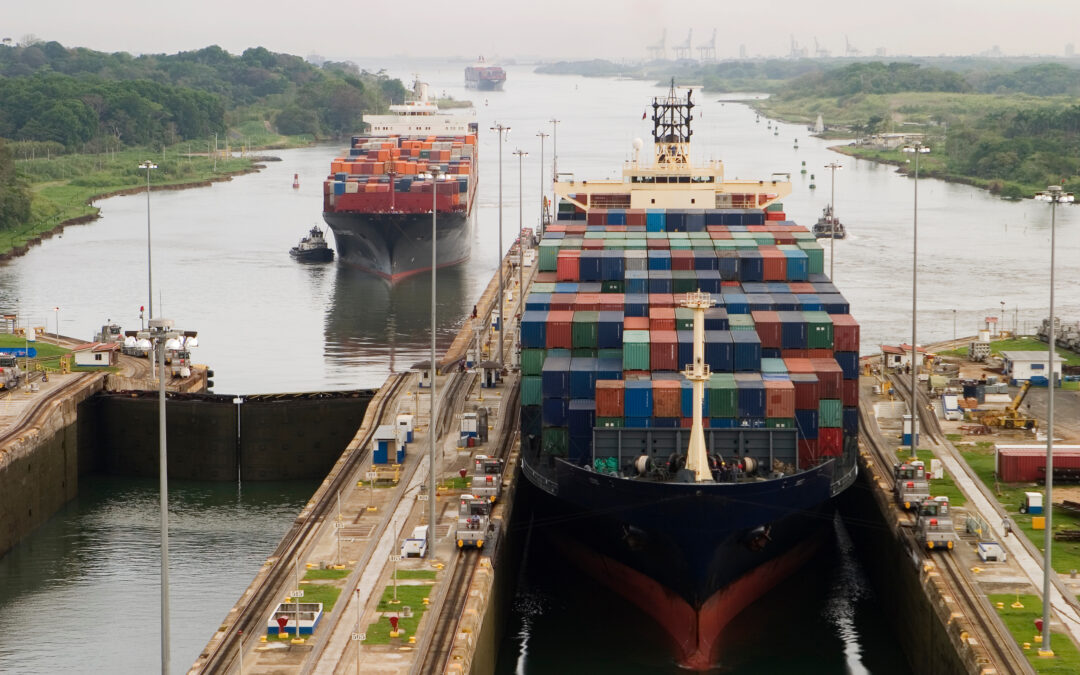
The Panama Canal is one of the most critical components of the Panamanian economy. Approximately 14,000 ships transit through it annually, carrying 325 million net tons of cargo, generating about US $2 billion in tolls.

The Canal also generates income through the export of services, which multiplies national economic activity since -by circulating foreign currency- it causes secondary demands for other goods and services. The preceding has an economic and social impact on a series of economic activities directly and indirectly linked to the Canal.

Ports

Logistics in Panama includes a network of ports that provide a wide variety of services to containerized, bulk, liquid, and general cargo and passengers at cruise terminals. There are five international ports in the country, and a sixth one located in Corozal is being planned to meet the demands in the logistics supply chain. Approximately 7 million TEUs are mobilized per year. The port of Balboa is the leading installation of the port complex, followed by Manzanillo International Terminal (MIT)  and Cristóbal. All these ports have some connectivity with ZLC, Canal, Railroad, and logistics parks at short distances making the country a competitive logistics center among the world leaders.

Maritime services such as fuel sales, food sales, repairs, maintenance, and ship registrations, provided to ships that pass through the country, generate approximately $500 million in revenues annually.

In the same sense, 200 cruise ships visit Panama each year, transporting 500,000 tourists who inject foreign currency into the Panamanian economy.

Airports

Logistics in Panama include airports. Tocumen International Airport is the country’s leading facility for air travel and has the most significant and advanced infrastructure in Latin America. It is an important air transportation hub in America from which Copa Airlines operates.

Copa connects 69 frequencies and 35 destinations worldwide, attracting airlines from other continents with direct flights. This highlights the Panamanian airline as one of the most important in the Americas. About 4.3 million passengers use Tocumen in direct transit. The cargo terminal handles more than 116,000 tons of cargo, mostly transshipment.

Tocumen is developing an expansion plan to provide world-class service, increasing frequencies, flights, and destinations. It is working on streamlining immigration, customs, and passenger check processes. Also, Tocumen has a wide range of commercial and hotel infrastructure to meet the needs of an increasing number of passengers.

Railway

Rail transportation plays a crucial role in logistics in Panama. In 1998, the State granted the concession for 50 years to the Panama Canal Railway Company (PCRC) consortium. The PCRC comprises the union of Kansas City Southern and Mi-Jack Products companies that provide train transportation services for passengers and cargo. Shipments between the cities of Panama and Colon are containerized. The central role of the railway is to serve as a transshipment link for container shipments between Atlantic, Pacific, and ZLC ports, moving around 420,000 containers a year.

Free trade zone

In 1948, the Colon Free Zone began its operations as a duty-free zone and continues to be employed as such until now. It is currently the second most important free zone in the world. Approximately US $29 billion annually is mobilized in imports and exports. All this movement is possible due to factors such as the Panama Canal, banks, ports, airports, Panama,  and the short distances between them.

In addition, there are 15 free zones in the country on a smaller scale that offer various tax incentives. They give added value to commercial activity related to logistics in Panama. Since 2011 with Law 32, this modality began with an investment of $200 million to promote the country’s development and generate employment.

Three types of free zones exist: private, state, and mixed. The types of companies that can operate in these special zones include manufacturers, assemblers, processing of finished or semi-finished products, general services, logistics, higher education, scientific research centers, and health services, among others.

Logistics park

The Logistics Activity Zones or logistics parks in Panama include storage, transportation, transfers, and value-added activities such as customer service, inventory management, assembly, and labeling. There are currently 8 of these parks near the Canal in the provinces of Panama and Colón. The logistics parks complement the maritime and air centers. Therefore, US$ 200 million is currently being invested in a logistics park near the Tocumen Airport.

Road infrastructure

The Panama highway system is going through a series of changes to improve traffic in the Capital and the province of Colón. At the same time, the main highways in the interior and the Pan-American highway are being improved.

Another critical project is the expansion of the Pan-American highway from Santiago province of Veraguas to David province of Chiriquí; the objective of this work is to reduce the cost of transporting items that travel from Panama City to the Costa Rican border in Paso Canoas and from the Capital to the agricultural areas of the country.

Central American logistics integration

An ambitious international project seeks to modernize the highway from Mexico to Central America and Panama; its name is the “Pacific Corridor.” This plan is being promoted by the Inter-American Development Bank (IDB) at a cost of $3.5 billion to build a road network with the necessary infrastructure for the Integrated Mesoamerican Corridor (CMI).

Some of these roads are in poor condition and unsafe, which increases travel time and cargo insurance premiums, increasing costs that are eventually passed on to the consumer. This initiative seeks to reduce the distance, travel time, and costs, joining a proposal for a Customs Union in the region.

The importance of logistics in Panama to the country’s economy cannot be overstated. Panama has a strategic geographic location that makes it a crucial hub for global trade and transportation. Its position as the narrowest point in the Americas between the Atlantic and Pacific Oceans has led to the construction of the Panama Canal, which has had a transformative impact on international shipping and commerce.

Logistics plays a vital role in Panama’s economy by connecting global markets, facilitating international trade, and attracting foreign investment. The country’s ongoing commitment to enhancing its logistics capabilities further solidifies its position as a key global supply chain network player.

A look at the auto parts sector in Colombia

A look at the auto parts sector in Colombia

The auto parts sector in Colombia is a significant part of the productive chain of the nation’s automotive industry, the fourth largest in the region. It represents 6.2% of Colombia’s industrial GDP and has generated more than 25,000 highly skilled and well-paid direct jobs. Among the items manufactured in the auto parts sector in Colombia are:

  • Batteries and wiring: Colombia had a few battery manufacturing companies that produced automotive batteries for various vehicles.
  • Tires: Some tire manufacturers had established facilities in Colombia to produce tires for both passenger and commercial vehicles.
  • Exhaust Systems: There were companies producing exhaust systems and components for vehicles.
  • Seats and Interiors: Colombian manufacturers produce automotive seats and interior components.
  • Filters: Some companies manufacture vehicles’ oil, air, and fuel filters.
  • Electrical Components: Certain electronic and electrical components for vehicles were being produced in the country.

Other items manufactured in the auto parts sector in Colombia include suspension systems, steering systems, transmission systems, cooling systems, friction material, chemical products, lubricants and fuels, tempered, laminated, and armor glass, chassis frames, air conditioners, rubber and metal parts, and accessories, among others.

The automotive sector, including auto parts manufacturing, had been a target for foreign investment due to Colombia’s strategic location, trade agreements, and market potential within Latin America. International companies often invest in the country to take advantage of lower production costs, access regional markets, and benefit from Colombia’s efforts to foster a business-friendly environment.

Government actions are aimed at capturing investment for the auto parts sector in Colombia

Colombia’s government has been actively promoting foreign investment through incentives, tax breaks, and efforts to improve business efficiency. They have also sought to increase the automotive industry’s competitiveness, including the auto parts sector in Colombia.

According to Luis Ernesto Muñoz, a professor at the Universidad de los Andes, the Colombian industry is in an intermediate state, considering that one of the extremes is the development of the complete vehicle and another is vehicle importation. Based on the above, the industry has two significant markets: vehicle assembly and spare parts manufacturing and sales. These activities are concentrated in Bogotá, Cali and Medellín.

Although at the moment, one of the lines of a smaller scale in generating income in the auto parts sector in Colombia is the manufacture of components or systems with added value. The transition from an “assembly country” to a “manufacturing country” is one of the industry’s most critical challenges. Successfully making the transition could represent an increase in the degree of specialization of the auto parts sector in Colombia.

There are several major players in the Colombian automotive industry

According to the research carried out by Martín Arango Serna, an academic at the country’s National University, the companies that make up the auto parts sector in Colombia are:

  • National and international suppliers that supply parts to manufacturers, assemblers, and distributors.
  • Parts manufacturing companies that supply both assemblers and distributors.
  • Assembly companies of light vehicles, trucks, buses, and motorcycles.
  • The distribution companies, whose corporate purpose is the sale of auto parts.
  • The freight carriers that move the parts between each of the groups mentioned above.

Colombia currently has eight vehicle assemblers installed and more than 300 companies dedicated to producing auto parts and bodywork. The goal for 2032 is to sell USD 5,129 million in vehicles and USD 5,558 million in auto parts. The vehicle sector in Colombia is recognized worldwide as a “leading edge” sector.

It is considered to be at the tip of the economic and social development spear due to its multiplier effects on a wide range of fields of industrial activity. Its high contributions to innovation and technology transfer make it one of the leading sectors and one of the locomotives for the development of Colombia

The vehicle assemblers with a presence in the country include:

  • General Motors Colmotores (Isuzu, Volvo, and Chevrolet brands)
  • SOFASA (Renault brand)
  • Hino Motors Manufacturing SA (Hino brand – Toyota group)
  • Photon
  • Non-Plus Ultra Bodies ( its brand, CKD Volkswagen)
  • Auto Assembly Company (Nissan brand)
  • Navitrans SA (Agrale brand)
  • Daimler (Mercedes Benz brand)

Colombia has the largest vehicle spare parts distribution center in Latin America, with nearly 70,000 parts in stock and an investment of US$40 million in infrastructure and spare parts throughout the country to serve all brands of heavy-duty vehicles at different points of care.

The auto parts sector in Colombia has room for growth

The auto parts sector in Colombia has much room to develop further. Its continued growth depends on several factors. Among them are:

  • Economic Growth: If Colombia’s economy continues to grow, it could lead to increased vehicle sales and demand for auto parts, benefiting the sector.
  • Government Policies: Favorable government policies, such as incentives for the automotive industry or measures to attract foreign investment, could stimulate growth in the sector.
  • Regional and Global Demand: Colombia’s auto parts industry might benefit from increased regional and global product demand, leading to more export opportunities.
  • Technological Advancements: Embracing advanced manufacturing technologies and staying up to date with industry trends could enhance the competitiveness of Colombian auto parts manufacturers.
  • Sustainability and Electric Vehicles: The global automotive industry is shifting towards sustainability and electric vehicles. Colombian auto parts manufacturers might need to adapt to these changes and invest in components and technologies related to electric mobility.
  • Supply Chain Integration: Strengthening supply chain integration with original equipment manufacturers (OEMs) and global automotive companies could create new growth opportunities.
  • Market Competition: The sector may face challenges from international competition, especially from countries with well-established auto parts industries.
  • Infrastructure and Logistics: Improving transportation infrastructure and logistics could facilitate the movement of raw materials and finished products, reducing costs and increasing efficiency.

Free trade zones in Uruguay offer excellent investment opportunities

Free trade zones in Uruguay offer excellent investment opportunities

Free trade zones in Uruguay (abbreviated as “FTZs”) are regions of the national territory designated by the Uruguayan Ministry of Economy and Finance (MEF) for the development of specific industrial, commercial, or service activities. The fundamental attraction and advantage of FTZs is that users are exempt from any national taxes related to their actions in the zone’s confines.

The promotion of free trade zones in Uruguay is in the national interest

The development and promotion of the free trade zones by the Uruguayan government have been proclaimed in the interest of the country, with the objectives of promoting investment, diversifying the national productive network, creating jobs, increasing the skills of the country’s workforce, increasing national added value,  and encouraging high technology and innovative activities. In addition, through the use of free trade zones in Uruguay, the country wants to promote the decentralization of business sectors and regional development.

Uruguay now has eleven free trade zones with various specialties; several are located in the metropolitan region of Montevideo or its environs. Among them are the following:

Aguada Park, Science Park, UPM Fray Bentos Free Zone, Colonia Suiza Free Zone, Libertad Free Zone, Colonia Free Zone, Nueva Palmira Free Zone, Florida Free Zone, Punta Pereira Free Zone, Zonamérica, and the WTC Free Zone.

What activities are allowed in free trade zones in Uruguay?

Although the Executive Power may be required to include activities that it considers beneficial for the national economy or the economic and social integration of the State, existing laws contemplate the following.

  1. Commercial or industrial operations

The following industrial and commercial activities can be undertaken in the free trade zones in Uruguay: selling merchandise or articles and logistics operations.

The legislation obliges them to enter the FTZ in which the activity is carried out or in another FTZ to qualify for tax exemptions (both possibilities are included, regardless of whether it is inside or outside national borders).

Logistics operations permitted in free trade zones in Uruguay include conditioning, sorting, grading, distilling, assembling, installing software, and configuring hardware.

Manufacturing facilities may also be set up and operated in an FTZ located in the country.

  1. Services

The Law does not establish any restrictions and allows service provision. In this area, the services must be provided within the free zone for consumers or promoters of the free zones or third countries.

Some services can be provided nationally as long as monopolies and government concessions are considered. In this sense, the provision of the following services (within Uruguay) is allowed: international call centers (excluding those whose sole or primary objective is the rest of the national territory), mailboxes, distance education, and electronic signature certificates.

Services provided within an FTZ are also included for the convenience of users of the zones. They can also be leased from the free zones to the non-free territorial limits to companies subject to Income on Economic Activities (IRAE) as long as they do not interfere with monopolies, state exclusivities, or public concessions.

  1. Prohibited activities

The Law establishes that ZF users cannot perform certain acts. Weapons, gunpowder, and ammunition are among them. Likewise, the act of “retail trade” is prohibited.

However, the exchange of products and services between users is allowed, as well as commercial operations or services aimed at satisfying the needs of individuals. At the same time, they carry out work activities within them. Free zone restaurants are a good example.

What requirements must be met to operate in a free zone in Uruguay?

  1. Exploitation

The operator or promoter of a foreign trade zone in Uruguay can be the government or a private company. In the latter case, it can be a physical or legal person. It must offer the necessary and adequate infrastructure for constructing and operating a free zone in exchange for a fee.

Consequently, the permit fee must be paid once or periodically to the State (the most common arrangement).

It is common for private operators to be, at the same time, the owners of the properties affected by the FTZ. However, the operator does not own the entire region in other circumstances. Still, only the majority of the affected registries have direct authority over the rest of the registries affected by the FTZ.

The application for a license to exploit and develop an FTZ must be submitted to the Ministry of Economy and Finance (MEF) with an investment project demonstrating its economic viability and advantages.

Once the official request is submitted, the examination of the case by the Executive Power can last up to 45 days from the submission date, not including the time for studying the file.

In practice, the application must be accompanied by a face-to-face presentation of the idea to government officials by company representatives.

It is also recommended to provide support material for the introductory presentation and encourage instances of interaction with the authorities throughout the process. Within the scope of the authorization for the deployment of free trade zones in Uruguay, the Executive Authority may require the operator and users to offer guarantees. Said guarantees are established to ensure the chosen rate and the fulfillment of the committed duties.

  1. Users of FTZs in Uruguay

Users are those (natural or legal) who have obtained the authority to carry out any of the actions specified in the legislation. To obtain said authority, a procedure must be carried out before the General Directorate of Commerce (Free Zone) under the Ministry of Economy and Finance.

Remember that there are two types of users: direct and indirect. The direct ones are those who enter into a contract to obtain the right to settle with whoever runs the free zone, be it the government or an individual. On the other hand, the indirect ones are those who carry out the lawful act with the help of others.

Contracts can be entered into by both legal persons in their capacity as “future users.” In reality, these are owned by legal entities that acquire one of the following types of companies: Public Limited Companies (SA), Limited Liability Companies (SRL), Simplified Stock Companies (SAS), and “foreign company branches.”

  1. Request for authorization of user contracts.

For the General Directorate of Commerce – Free Zones Area to sanction the activity, the contract must be presented between the users (direct or indirect) and those with the right to exploit the free trade zones.

The request must include the following elements: the contract of the parties and the investment plan (including the business plan). In addition, the necessary information must be provided: substantial and complementary activity to be carried out, human resources to be used in the FTZ and details of the employees affected outside it, and any other information that the company deems necessary.

  1. Deadlines

The permit granted by the General Directorate of Commerce (Free Zone Area) will have a maximum duration of fifteen years for carrying out industrial operations and ten years for services and commercial activities since it is a direct user.

For an indirect user, the usual term is five years. In both circumstances, it is essential to highlight that the deadlines are renewed upon request to the competent authorities.

Despite the preceding, the Executive Power may allow longer-term contracts. Even so, as the regulation establishes, users must base their decisions on the amount of the investment in fixed capital, the anticipated employment, or other factors that determine a contribution.

  1. Workers: A minimum of 75% of employees must be of Uruguayan nationality.

Another criterion for training an FTZ user is that 75% of the entire workforce must be of Uruguayan nationality, whether physical or legal.

The proportion may be reduced depending on the unique characteristics of the task to be carried out and for reasons of public interest.

However, it is worth mentioning that when it comes to service operations, the number of Uruguayans can drop to 50% if the nature of the company requires it.

What are the main advantages of operating in a free zone in Uruguay?

  1. Tax regime

The main advantage of working in free trade zones in Uruguay is that users are exempt from all national taxes.

There are exceptions: single contributions to social security and legal monetary advantages created in favor of non-state public law persons of social security (for example, donations from the University Professionals Fund).

  1. Particularities for foreign workers

The Law allows foreign workers who work in the free trade zone to indicate in writing their desire not to participate in the Uruguayan welfare system. The user is not obliged to make the contributions required under this premise.

  1. Non-tax benefits

The legislation allows government agencies that offer supply inputs or services to users of free zones to establish promotional prices. In the same way, in the free zones, the monopolies of state services in the industrial and commercial fields will not govern.

In the same way, the entry and exit of the free zones for securities and national and foreign currencies would be free.

For more information on free trade zones in Uruguay, contact LATAMFDI.

Foreign direct investment in Latin America and the Caribbean reached its maximum historical value in 2022

Foreign direct investment in Latin America and the Caribbean reached its maximum historical value in 2022

Foreign direct investment in Latin America and the Caribbean increased by 55.2% in 2022 over its 2021 level, thus reaching its maximum historical value. This is according to a report published on July 10, 2023, by the Economic Commission for Latin America and the Caribbean (ECLAC).

According to the report, Latin American and Caribbean countries received approximately US $225 billion of foreign direct investment (FDI) in 2022. This figure represents the highest dollar value since records have been kept. This influx of FDI has been achieved due to “the growth of all investment components, especially the reinvestment of profits and the rise in the service sector in the region.”

Recovery and opportunities for investment in Latin America and the Caribbean

The study recalls that foreign direct investment in Latin America and the Caribbean had not exceeded US $200 billion since 2013.

“This dynamic is consistent with the post-pandemic recovery, and it is unclear if it will remain at similar levels in 2023,” the document considers. However, this annual report also recorded an increase in the weight of these flows in regional GDP, coming to represent 4.0%,” the ECLAC study specifies.

“The challenge of attracting and retaining foreign direct investment in Latin America and the Caribbean that effectively contributes to the sustainable and inclusive productive development of the region is still more relevant than ever,” said ECLAC Executive Secretary José Manuel Salazar-Xirinachs, who presented the main conclusions of the study at a press conference in Santiago de Chile.

“There are new opportunities in an era of reconfiguration of global value chains and geographic relocation of production in the face of changing globalization,” he stressed before emphasizing that the challenge is to “maximize the contribution of FDI to development” with “aggregation policies of value and promotion in value chains, development of human resources, infrastructure and logistics, and construction of local capacities,” he indicated.

Brazil is the leader in foreign investment in Latin America and the Caribbean

According to the report, almost all the countries of Latin America and the Caribbean received more foreign direct investment in 2022, with Brazil, which received 41% of the regional total and ranked fifth as a global FDI destination at the top followed by Mexico (17%), Chile (9%), Colombia (8%), Argentina (7%) and Peru (5%).

Costa Rica, for its part, was the primary recipient of foreign direct investment in Central America, while in Guatemala, these flows registered a significant drop in 2021 but returned to their historical average the following year.

The United States and the EU are the leading investors

At the regional level, 54% of foreign direct investment in Latin America and the Caribbean entered the services sector, although the manufacturing and natural resources sectors rebounded.

As for investors, the United States (38% of the total) and the European Union (17%, excluding the Netherlands and Luxembourg) led the investment inflows. Along the same lines, FDI from countries in the same region of Latin America and the Caribbean significantly jumped from 9% to 14% of the total.

“The variation in FDI inflows was also positive in the Caribbean, driven mainly by higher investments in the Dominican Republic, which was the second recipient country after Guyana,” according to the ECLAC study.

In 2022, the amount invested abroad by Latin American transnational companies, known as translatinas, reached historical levels: 74.7 billion dollars. This is the highest figure recorded since statistics began to be compiled in the 1990s.

On the other hand, the amount of FDI project announcements for investment in Latin America and the Caribbean grew by 93% in 2022, totaling close to one hundred billion dollars.

For the first time since 2010, the hydrocarbons sector (coal, oil, and gas) received the most investment, with 24% of the total, followed by the automotive sector (13%) and renewable energy (11%).

Energy transition

The ECLAC study also identifies energy transition as one of the sectors that can boost economic growth and therefore recommends that the countries of Latin America and the Caribbean prioritize it in their economic agendas and make it a significant driver of productive transformation in the region.

“FDI can play a key role in accelerating the energy transition, facilitating technology transfer, and enabling emerging technologies. Governments must lead the coordination of strategies for the success of the energy transition in the region,” stresses the Commission in its report.

One of its central functions is to develop long-term policies that promote investment in Latin America and the Caribbean in renewable energy sources so that the transition is fast and safe and does not leave the region behind in a context in which energy from clean sources is a competitive factor,” notes the study.

“However, ECLAC also warns that in this process, the importance that the non-renewable energy sector still has for some countries in the region should be considered, especially in terms of income generation to meet social demands, productive development, and energy security” the report concludes.