Ricardo Rascon
Marketing Director
Tetakawi
ricardo.rascon@tetakawi.com
LATAM FDI: Today, we are fortunate to have Ricardo Rascon with us. Ricardo is with a company called Tetakawi, one of the leading shelter companies in Mexico. He’s the marketing director. Ricardo, I’ll let you introduce yourself and tell us a little bit about your organization.
Ricardo Rascon: Great. Thank you, Steve. I’m really honored to be here with you today, and I feel like I should be interviewing you with all the knowledge you have on Mexico, but I appreciate you taking the time to ask me some questions about manufacturing in Mexico. As you mentioned, my name is Ricardo Rascon, director of marketing at the Tetakawi. We’re, a company based in Tucson, Arizona, that for nearly four decades has been helping foreign manufacturing companies expand into Mexico via what’s known as the shelter program, which I’m sure we’ll talk about in more detail. Thanks again, Steve. I really appreciate the opportunity to be here.
LATAM FDI: Well, thank you for being here, Ricardo. But to set the stage for the people who are listening, can you highlight some of the advantages of setting up of operations for manufacturing in Mexico compared with other global destinations?
Ricardo Rascon: Yes, definitely. I think if you’ve turned on the TV any time in the last four months or listened to the radio, anything besides Taylor Swift, you’ve probably heard about the countless advantages that Mexico has to offer. I think it really comes down to four or five. I would say, number one, you have cost efficiencies. When you look at labor costs compared to other regions in the world, there are significant savings that could be had by manufacturing in Mexico. So that’s one of the primary reasons. I would say, aside from that, it’s a strategic location. Our proximity to North American markets makes a lot of sense. When you’re comparing, should I manufacture my product in China versus Mexico, do I want this product to be sitting on a ship for a couple of weeks, or do I want it on a truck where it could be in the US? In 8 hours? I think Mexico is very fortunate to have the US as a neighbor, and that’s one of the key reasons why a lot of companies are looking to Mexico right now. Aside from that, there are a lot of free trade agreements that companies that are manufacturing in Mexico take advantage of.
The USMCA is obviously the one that everyone talks about, but there are other ones when you kind of do the math. I think there are over 50 countries that participate in various free trade agreements with Mexico. It’s a great launching pad for places aside from just the US and Canada, and Latin America. That’s why a lot of kind of European companies like it as well because you’re not just getting preferential trade access to North America, but there are also other countries that you’re able to trade with as well. Aside from that, I would say the last two are probably going to be the skilled workforce. We talked about cost efficiencies, but just because they’re lower cost doesn’t mean that they’re lower-skilled. Companies that are manufacturing in Mexico find that the workforce has a lot of skills. We have aerospace companies, medical device companies, automotive companies, and companies that have been manufacturing in Mexico for decades. Mexican workers have that industrial work culture that a lot of companies need. And the last one, I would say, is especially important now. It’s really the favorable demographics. When you look at Mexico’s workforce, the median age is in the mid-twenties, and what’s most important what we see is it’s a workforce that’s ready, willing, and able to work in the manufacturing industry.
I live here in Tucson, Arizona, and a lot of people around that age have zero interest in working in manufacturing. But in Mexico, these are aspirational jobs for them. So that’s another key benefit. And I think a lot of these factors collectively make Mexico an attractive destination. There are a lot of other advantages as well. And I’m sure you could read about them, listen to them on TV. But I think at the end of the day, those are the four or five that really have companies thinking about manufacturing in Mexico as a solution, not just for their current needs, but for their future needs as well.
LATAM FDI: For businesses that are considering opening manufacturing operations in Mexico. What are the primary modes of entry that are available to them, and how do they differ?
Ricardo Rascon: Yes. So, there are really five modes of entry. I would say when it comes to expanding into Mexico; there are contract manufacturing options, there are joint ventures, there are acquisitions, there’s standalone or fully owned subsidiaries. And then there’s something unique to Mexico, which is called the Shelter Model. For the sake of today’s conversation, I’m just going to talk about contract manufacturing. standalone operations and the shelter program. As for joint ventures and acquisitions, we don’t see them happening too much right now in Mexico. They don’t have a strong history of success either.
The first mode of entry is contract manufacturing. This is where a company looks for a third-party firm in Mexico with some existing capacity and says, hey, I need you to make this widget for me. It’s a low-risk entry strategy. It doesn’t require a ton of capital investment, and you’re able to benefit from a company that might already have these manufacturing processes in place. They may have some economies of scale, scope, and learning. So that could be a good solution for a company that’s already kind of made the decision from a strategic perspective that when it comes to the production part of my value chain, I’m going to outsource manufacturing in Mexico through a third party.
When we look at kind of this nearshoring that’s kind of taking place right now. That’s where a lot of interest in Mexico is right now. Many companies say, hey, maybe I make this Widget through a third-party company in China. Now, I’m looking for a substitute solution, and I’d like to do this in Mexico. Oftentimes, they kind of have a greater affinity towards the contract manufacturing model. But there are some challenges with that. Number one, they’re hard to find. It’s hard to find 100% owned Mexican contract manufacturing companies that can manufacture products for you at a competitive price. You could certainly find some US-based companies with operations in Mexico that do have some capacity, but they’re going to pass on that US. It may not make It the most cost-effective way, but if it is an option that you’re considering, I would advise you to consider working with a sourcing agent, someone who has a Rolodex of companies that might have the capabilities that you need. Typically, that’s the best way to make that work. So aside from contract manufacturing, you also have a standalone operation.
So, in this model, a foreign company sets up its own operation for manufacturing in Mexico. It forms its own legal entity, just as if you were a US. Company and looking to form A company in Canada, for instance. It gives you the highest level of control over all aspects of your manufacturing process and your administrative process, from production to workforce management. You’re 100% responsible for all of the activities related to manufacturing in Mexico. But because of this, it comes with the highest level of risk, and it requires a significant amount of investment and resources in order to make this type of operation possible. So that’s where things kind of open the door to the shelter model. The shelter model is unique to Mexico, and it’s been around for over 40 years, but it’s getting even more popular now. And really, it allows a foreign company to operate in Mexico as a division of a shelter service provider. The shelter service provider, like Tetakawi, would take a company, let’s say ABC Manufacturing, and ABC Manufacturing would say, hey, Ricardo, I’m looking for 35,000 square feet of industrial space and need to hire 80 people. We would find and lease the building on their behalf, recruit and hire all the people that they need, help them move everything in and out of the country, and make sure that they’re compliant with all regulations.
It’s really A turnkey solution that allows them to take advantage of everything that Mexico has to offer without worrying about the bureaucracies and the administrative kinds of nightmares. For lack of a better word, of doing business in a foreign country. Each of these models obviously has its own advantages and considerations. But I think the shelter model, at the end of the day, really stands out because of how it allows you to control production-related activities without having to worry about the administrative aspects of doing business in Mexico. At the end of the day, there are a lot of risk mitigation strategies built into the model as well.
LATAM FDI: Ricardo, I just heard You mention a shelter service provider will help a company find and lease space. I know that Tetakawi does do that. But just to give our listeners an idea of the size and breadth of Tetakawi. How much real estate does Tetakawi have under roof?
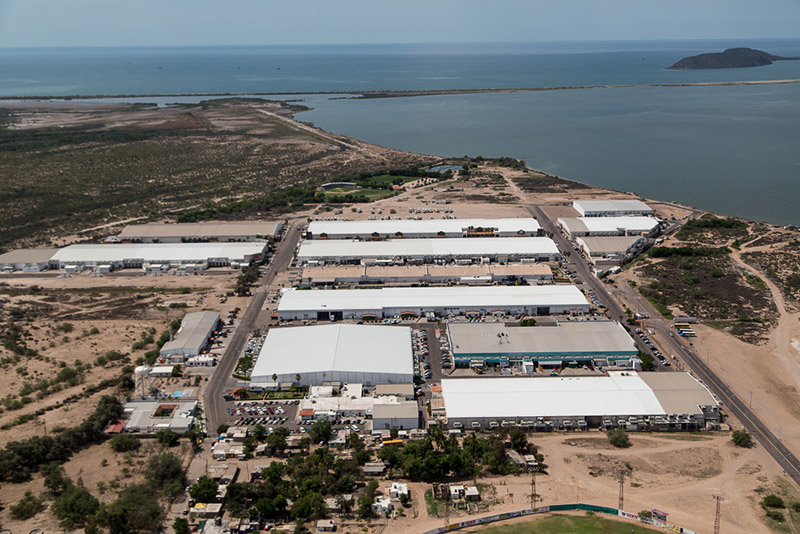
Ricardo Rascon: We actively own and manage over 7.5 million industrial space. We definitely have more room to operate as well. Our core product is what we know as a manufacturing community. So really, it’s much more than just an industrial park. It’s an industrial park with onsite support services and amenities that help make sure that companies can kind of facilitate this turnkey expansion to manufacturing in Mexico as seamlessly as possible. But that’s not necessarily a fit for every type of company. Some companies might say, hey, Ricardo, I really love your value proposition. I would like to use some of your shelter services. However, operating inside of your real estate may not make sense for me for several reasons. We’re also able to provide services outside of our real estate as well.
LATAM FDI: One thing that I’ve always thought about shelter companies, and an easy way to explain it to people is it’s an all-encompassing solution. If I’m a manufacturer, I want to make something in Mexico. I don’t have to know anything about doing business in Mexico. I just plug into the system, and I’m good to go in a short period of time.
Ricardo Rascon: Yes. I think that the speed of entry is really key. Under current conditions, it’s kind of changed. Obviously, a lot of companies are looking to Mexico. Real estate is hard to find. Before this kind of wave of expansion into Mexico, we could get a company set up in as little as 30 days. So, sign a contract, and in 30 days you could be shipping out finished products. I would say now it’s probably closer to three months if we could find an available building for manufacturing in Mexico. If there’s not an available building, and we have to build from the ground up, you’re probably looking at between six to eight months to get started. But if you compare that to a standalone operation, there’s still a savings of time. If you were to say, hey, I want to go into Mexico and I want to do it on my own, you’d first have to secure the real estate, then you’d have to apply for certain certifications that on their own could take upwards of six to eight months. To get started with the current administration in Mexico and how things have become even more bureaucratic than they should be, in my opinion, you’re probably looking for a standalone operation anywhere between twelve to 16 months to get set up.
LATAM FDI: Yes. Another thing that’s pretty important to consider is that in addition to all the physical infrastructure preparation that has to be done to get up and running in Mexico if you’re doing a standalone, you have to staff up with people who know HR and labor law. You have to staff up with people who know accounting in Mexico. You have to staff up with people who know how to do customs and logistics issues, and environmental compliance. So, all of those things are already in place under the shelter program model of doing business in Mexico.
Ricardo Rascon: Yeah, and definitely you get it from top-notch people. And what I always tell companies, especially SMEs, hey, if you’re looking to expand into Mexico with about 50 to 70 people, you could try to do a lot of those things on your own. Or you can work with a shelter service provider like Tetakawi, which does these things for over 70 companies and has over 24,000 employees in Mexico. And you could get access to the types of people, the types of infrastructure, the types of resources that would normally only be available to a Fortune 100 company. When you talk about the economies of scale, scope, and learning, it’s really a no-brainer. And in my biased opinion, I guess you could say I agree with you. Yeah. I don’t know why a company wouldn’t at least start under the shelter program because it’s an amazing way to get started, because of the speed, but also to learn how to do things the right way. And for some companies, it is a perpetual mode of entry. I mean, we’ve been in business for almost 40 years, and our oldest client has been with us for over 35 of those years.
For other companies, they may say, hey, I just need a one, two, three-year engagement. And then, after that, I want to take the training wheels off and see what makes the most sense for my company. But what I always tell clients is, what’s the number one reason you’re expanding into Mexico? And a lot of them have some different reasons, but at the end of the day, it all kind of boils down to making high-quality products at a lower cost. I say, great, you’re not coming to Mexico to become an expert in how to deal with labor unions or how to deal with environmental health and safety standards. You’re coming here to do your best manufacturing in Mexico at a lower cost. So, work with the shelter service provider. We’re experts in these other things, and we’ll help you improve your competitive advantage by allowing that kind of focused production environment at a lower cost.
LATAM FDI: Well, when it comes to making a decision, what should a company do and if you could summarize, what should a company consider when it’s contemplating starting out in Mexico with a shelter company as opposed to a standalone operation?
Ricardo Rascon: I think that the biggest thing is going to be the degree of control. So how much control do you want over every single aspect of your operation for manufacturing in Mexico? If you’re a company that says, hey, I want to go to Mexico, and I want to be like Hernan Cortez and just conquer every aspect of it? I want to be an expert in environmental health and safety laws and regulatory compliance and labor unions and how to deal with them. Suppose you want to have complete and 100% control over all the administrative aspects. In that case, you should really consider setting up your own subsidiary, build out these teams internally, and get started on your own. If you’re a company that says, hey, I want to expand to Mexico and take advantage of everything that it has to offer. I do want to have 100% control over production-related activities, but when it comes to the administrative side of the business, I just don’t want to deal with that. Then, typically, the shelter will be more advantageous for you. And there are even some companies who are kind of in the middle of it, and they say, hey, eventually, I want to be able to do those things on my own.
But right now, I just want to focus on getting started as quickly as possible. Like I said, there are ways to kind of transition outside of the shelter. So, degree of control I would say, is probably an important thing to consider when pondering manufacturing in Mexico. The second thing is going to be time to market. And Steve and I kind of talked about this earlier. If you need to get set up as quickly as possible, there’s no quicker way than the shelter option. If you have time if time isn’t of the essence and you say, okay, I want to establish a manufacturing facility in Mexico. Still, I don’t need to be operational until 2025, and I do want to have a lot more control over it, so maybe the standalone option could make a little more sense.
I’d say that the third most important consideration when you’re comparing a shelter versus a stand-alone operation is going to be the headcount of your operation because that’s going to be really crucial. For a small operation, if you’re saying, hey, I’m looking at something less than 15 people, I think neither of these options would make sense. I would encourage you to consider going the contract manufacturing route, but between 15 to around 400, when you start comparing it from an economic perspective, the shelter option for manufacturing in Mexico is the most cost-effective route.
I think headcount is crucial to consider if your operation will exceed 400, and maybe you’re looking at 500 or more people. The economics of it may not make a ton of sense, but there are other aspects of the value proposition that still might incline you to consider using the shelter route. For instance, we have companies that have over 3000 employees with us under the shelter program, and from a cost perspective, it may not make the most sense, but there are other aspects of the value proposition. As I mentioned, there’s risk mitigation. There’s focused production. For instance, if you’re a medical device company and you’re making products that are 100% quality critical, would you want a plant manager who’s also stressing about how am I going to deal with this next labor union negotiation? How am I going to make sure that everyone’s paid on time, how am I going to handle this audit from the environmental authorities? Or do you want a plant manager who says, hey, I know a company like Tetakawi can take care of all of this and I could just be 100% focused on making pacemakers or making some other mission-critical device.
Some companies that are kind of on the higher end of the headcount perspective start to look at the shelter model for reasons other than just cost savings. And I think those are important to consider as well.
LATAM FDI: From an operational standpoint, how does the day-to-day management of a manufacturing unit under the shelter program differ from the standalone that you just got through commenting on?
Ricardo Rascon: Yeah, so from an operational standpoint, the day-to-day management of a manufacturing unit under the Shelter program is going to be less burdensome from an administrative perspective compared to a traditional setup. But I think it’s important to kind of highlight that from a production-related perspective, the amount of control is going to be the same at the end of the day. Really, the only difference is that the shelter service provider will handle all the administrative responsibilities. So, they’re going to handle all aspects of HR, of import-export administration, regulatory compliance, accounting, finance, and all of those things so that you could be 100% focused on what you do best, which is production-related activities. From a day-to-day perspective, that’s really how it works. The shelter provider is an extension of your team for manufacturing in Mexico. I would say typically, the end user of our product is going to be the plant manager that our clients handle. The plant manager is then well-equipped regarding how to activate different departments within our organization. If he needs to scale up production, he would talk to our HR team and say, hey, I need to hire 50 more of X position if they’re going to be working on a new product line.
He would get with our import-export team to let them know that things need to change from an importation or exportation perspective, or if they’re bringing in different types of chemicals, he would get with our environmental, health and safety team, and they would make sure that everything’s well documented and that employees are trained on those things. So really, at the end of the day, the shelter acts as an extension of the team, but they handle all of those administrative functions, and the plant manager is 100% focused on production.
LATAM FDI: For businesses that have been intrigued by what you described in terms of the Shelter program, how can they go about comparing different options that are available to them in the marketplace?
Ricardo Rascon: I mean, I would just contact Tetakawi, and we could solve all your problems. But no, if you do the research, there are about 27 different shelter service providers in Mexico. I would say about seven of them own 80% of the market share. So, there’s a lot of them. I would encourage any company to speak to as many as they can. But I think at the end of the day, what it really comes down to is finding a shelter service provider who can help you with a couple of elements of your strategy. Number one is going to be location. A lot of shelter service providers are location-specific. If you’re looking to operate in a specific region in Mexico, not every shelter service provider might be there. For instance, if you’re coming to Tetakawi and you’re saying, I absolutely, positively need to be in Tijuana, we would say we cannot provide services there. But if you were interested in another one of our venues, let’s say Sonora, Coahuila, or Mazatlán, we would gladly be able to help you there. But there are some shelter service providers that may not provide that key service there either. I think that’s kind of the most important thing to consider is maybe having a list of locations where you are seeking to do your manufacturing in Mexico.
I also wouldn’t assume that one location is the best location. I would compare and I would benchmark, and work with different shelter companies to work through cost models and understand what the cost implications are for different locations. But I’d say when comparing shelter service providers, location is going to be a key difference. Number two, I would also look at cultural fit. At the end of the day, a shelter service provider is a risk-sharing partner, but you have to make sure that it’s a partner that kind of aligns with you from a lot of perspectives. Some shelter service providers, for instance, are US-based based, like Tetakawi. So, if you’re a US-based or a Canadian company, you could align with a provider and have a contractual base in the US. That could offer a big advantage in terms of communication and legal alignment, which will be really crucial to make sure you have smooth operations. I think the cultural fit is important. I think a track record is also something worth exploring as well. At the Tetakawi, we always encourage prospective clients to speak to existing and former clients. I think the conversations with the former clients will help you to really know about the shelter service provider and when you transitioned out, how did they helped you.
What were some of the reasons that you decided to no longer use their services for manufacturing in Mexico, and would you recommend them to someone? I think looking at track record is important as well. But again, I think that the biggest thing is to talk to as many shelter service providers as you can if you are interested in exploring this mode of entry and see what makes the most sense for your business. When we talk to a prospect, we always say, hey, our goal is number one to help you decide if is Mexico right for you, yes or no. Because for some companies manufacturing in Mexico may not make sense. Number two is the shelter mode of entry. The best way for you to establish in Mexico, yes or no? And number three, is Tetakawi the right fit? Yes or no? Because sometimes we aren’t. We may not be in the location that you’re looking for. We may not be able to offer you the very specific flexibility that you need. But at the end of the day, we’re very proud, and we have a lot of strong belief in our business model, but it’s not necessarily a 100% fit for every company.
So again, I would encourage you to speak to many shelters, visit them in person, go see it for yourself, tour their facilities, talk to their clients, but also make sure that they’re providing you with data that you can kind of use and benchmark and do the homework yourself. Because at the end of the day, no one can make that decision for you. It’s a decision you have to make, but there are quantitative and there are qualitative factors that you have to evaluate.
LATAM FDI: With respect to the data that you just mentioned, I know that one of the most valuable pieces of data that Tetakawi, in particular, offers its client is the cost model analysis. Can you tell us a little bit about your cost model analysis and how that helps companies make decisions?
RICARDO RASCON: Yeah, definitely. Our cost model is based on proprietary data that we aggregate based on the operation of our 70 clients in Mexico. At the end of the day, we have real-time data. We pay 26,000 people every Friday. So, when a company is saying, hey, I’m thinking about expanding to begin manufacturing in Mexico, we can take this data and provide them with an estimation of what it would cost them to set up that facility in Mexico. Within our cost model, we would look at not just labor, we would look at real estate, we would look at logistical movements and purchases in Mexico, and then we’re able to benchmark different regions in Mexico. If you’re saying, hey, I’m location neutral, maybe I’m not quite sure where I want to operate. We could help you model the different cost scenarios versus locating in different locations there. I think the cost model is an important thing for a company to kind of work through, and I think it’s great to work with a shelter service provider. But again, just make sure you’re comparing apples to apples and you’re getting real information because some companies may not provide fully fringe wages, for instance. They may say, hey, this is what this person will cost, not considering other benefits that you may have to provide the workforce.
It may seem that one location in Mexico or one provider in Mexico has a better cost scenario than another, but just make sure you’re looking at things with a transparent lens. The cost model for manufacturing in Mexico is very effective, and we could also help companies benchmark a standalone operation versus a shelter operation. If you’re kind of in between both and you’re saying, hey, well, maybe I’d want to start with the shelter and eventually transition out, we can help you understand what that’s going to look like from a cost perspective, not just in the short term, but also in the long term.
LATAM FDI: How is Tetakawi, at this point in time, innovating or adapting its shelter services in response to some of the changing needs that we’re seeing in the global business?
Ricardo Rascon: So, you know, at the Tetakawi, we’re well aware of what’s going on not just in the global manufacturing landscape, but also in Mexico as a whole. When it comes to kind of evolving, innovating, and adapting our business model, there are a couple of things that we’re doing. Number one is exploring new venues. As I mentioned, there’s a lot of interest in Mexico right now, but that also creates some problems in some areas that have been attracting investment for years. You have more competition for labor. You have increased real estate prices. There are some areas along the border where the maquiladora industry is over 24,000 workers, where turnover is upwards of 16% a month.
What we’re doing at the Tetakawi is looking at other venues in Mexico that may not be traditional manufacturing hubs but that have labor availability that can help ensure that companies have access not just to the talent they need today but also to the talent they need tomorrow. For instance, we’re going to be establishing a new manufacturing community in Mazatlan, which is an area mostly known as a tourist destination. But when we do our research, when we look at the demographics, when we look at the needs of the local workforce, there’s a lot of talent there that’s looking for jobs in the manufacturing sector.
We believe that could be a venue that’s very attractive to companies that want to hire a workforce, train them, and not worry about them leaving tomorrow for 20 more pesos a day. It could be a good venue for a company really focused on reducing turnover and looking to invest in its workforce. So that’s one thing that we’re doing. We also invest a lot in training centers and position ourselves as an employer of choice. Steve, you’ve been to our manufacturing communities. I think you could really speak to what you’ve seen there, anything from daycare facilities to sports complexes to transportation services to onsite medical services. And really, many of these things that we’re investing in within our manufacturing communities have a dual purpose. So first, they support our employees, and they contribute positively to the different communities where we operate. But they also provide our clients, who may be entering Mexico for the first time, with access to services and amenities that normally they wouldn’t be able to invest in. The level of infrastructure and support that we’re able to provide these SMEs in Mexico is significant.
The amenities that Tetakawi provides can really be a game changer for a company that says, I don’t just want to expand into Mexico; I want to expand into Mexico the right way, and I want to do the right things, and I want to help elevate the local communities. I’d say those are some of the things that we’re doing to kind of innovate our business model and elevate the communities where we operate.
LATAM FDI: One thing that is particularly impressive, and I’m familiar with this, was what was done beginning in the early 2000s in Guaymas. There was no aerospace in Guaymas in the early 2000s. Today you have one of the biggest aerospace clusters for the manufacture of aerospace engine parts. Tell us a little bit about what was done there in terms of creating an educational infrastructure to make that cluster happen.
Ricardo Rascon: Yeah, definitely. And I wish I could say I was part of that, but that was well before my time. But really, at the end of the day, it was our team’s knowledge that, hey, we need to kind of change the way we’re doing things here and maybe let’s focus less on labor-intensive operations and look more for capital-intensive operations that are looking to expand into manufacturing in Mexico. Aerospace made a lot of sense, but the challenge there was kind of the workforce. and how do you ensure these people have the necessary knowledge to do things like CNC machining and things like that? So, then Tetakawi worked with local universities and also invested in its own training facilities to kind of help elevate the local workforce. And over the years, we built a very strong aerospace cluster that was really driven early on by engine components. OEMs, who recognized the local talent, who also recognized that it’s one of the few venues in Mexico where if you invest in a worker, you won’t have to worry about them leaving tomorrow for a 5% pay bump. It’s a more stable workforce, a workforce that is interested in learning more, and if you show a desire to invest in them, they’re willing to stay there a little longer.
And now, as you said, that initiative started in the early 2000s. Here we are in 2023. We have about 17 aerospace component manufacturers that do anything from secondary processing to castings and things like that. We’re very proud of what’s happened in Guaymas. When we look at what it’s done to the local community and how it’s kind of elevated employees and their pay levels there specifically, it’s really impressive.
LATAM FDI: Well, Ricardo, we’ve traveled quite a distance here in terms of the information that we’ve covered in a relatively short period of time. The experience that we’ve had with these podcasts is that the listeners have questions after taking in the information. They want to speak to those who have been kind enough to do a podcast with LATAM FDI. That being the case, can people contact you, and how would they do that?
Ricardo Rascon: Definitely. You know, you could shoot me an email ricardo.rascon@tetakawi.com. You could also visit www.tetakawi.com. We have a chat box there. You could shoot me a message and I’d be happy to respond, or you can fill out a Contact Us form. You could even call me directly. My cell phone number is 520-971-9096, and I’d be happy to answer any questions that you may have about manufacturing in Mexico.
LATAM FDI: Okay. In addition to that information, we’ll include a link to your LinkedIn profile if that’s okay with you on our transcript section of the podcast.
Ricardo Rascon: Yeah, no problem at all.
LATAM FDI: Well, thank you very much for joining me today. It’s been very instructive and informationally packed, and we wish you well in the future and everything that both you and Tetakawi do.
Ricardo Rascon: No thank you Steve. I really appreciate the consideration, and I look forward to seeing where we can disseminate this information on manufacturing in Mexico.
LATAM FDI: Take care.
Ricardo Rascon: All right, take it easy. Bye