+1 (520) 780-6269 investment@latamfdi.com
The Production of Lithium in Bolivia: Opportunities and Challenges

The Production of Lithium in Bolivia: Opportunities and Challenges

Introduction

Lithium, often referred to as “white gold,” has emerged as a critical resource in the 21st century, owing to its vital role in the global transition to clean energy and the proliferation of high-tech devices. As the demand for lithium-ion batteries soars, countries with substantial lithium reserves are poised to play a pivotal role in the global supply chain. Bolivia, known for its vast lithium deposits in the Salar de Uyuni, has garnered significant attention for its potential to become a major player in lithium production. This blog post explores lithium production in Bolivia, highlighting the opportunities it presents and the challenges that must be overcome to harness this valuable resource.

Lithium in Bolivia: A Precious Commodity in the Modern World

Lithium’s significance in contemporary society cannot be overstated. It is a critical component of lithium-ion batteries, which power many devices, from smartphones to electric vehicles (EVs) and even grid-scale energy storage systems. The global shift towards renewable energy sources and the electrification of transport has created an insatiable demand for lithium, making it a critical resource for a sustainable future.

The Lithium-ion Battery Revolution

Lithium-ion batteries have revolutionized several industries, most notably the automotive sector. EVs are rapidly gaining popularity as a cleaner and more efficient alternative to traditional gasoline-powered vehicles. These batteries are also integral to renewable energy systems, allowing for the efficient storage of energy generated from sources like wind and solar power, ultimately reducing dependence on fossil fuels. As a result, lithium has become indispensable in the transition towards a low-carbon economy.

The Global Lithium Market

The global lithium market has experienced exponential growth in recent years. This growth can be attributed to a surge in demand for EVs, government incentives promoting clean energy technologies, and an increased focus on reducing greenhouse gas emissions. Consequently, the price of lithium has seen fluctuations, attracting the attention of countries with significant lithium reserves.

Reserves of Lithium in Bolivia Reserves: The Salar de Uyuni

Bolivia’s Salar de Uyuni is home to the world’s largest known lithium reserves in Bolivia. It is estimated at around 9 million tons. This vast salt flat of over 10,000 square kilometers contains lithium-rich brine beneath its surface. The sheer scale of these reserves places Bolivia in a unique position to become a significant player in the global lithium market.

Advantages of the Salar de Uyuni

The Salar de Uyuni’s lithium-rich brine offers several advantages for lithium production:

  1. Abundant Resource: The sheer size of the Salar de Uyuni’s lithium reserves dwarfs those of other lithium-producing nations, giving Bolivia a competitive edge.
  2. Low-Cost Extraction: The brine extraction process used in the Salar de Uyuni is generally considered cost-effective compared to traditional hard-rock mining methods.
  3. Lower Environmental Impact: Brine extraction typically has a smaller environmental footprint than mining, aligning with the global push for sustainable resource extraction.
  4. Adjacency to Neighboring Markets: Bolivia’s proximity to major lithium-consuming markets, such as the United States and Europe, reduces transportation costs and logistical challenges.

Bolivia’s Ambitions in the Lithium Market

Bolivia’s government has recognized the potential of its lithium resources and has taken steps to harness this opportunity. The state-owned company Yacimientos de Litio Bolivianos (YLB) was established to oversee lithium production in the country. Bolivia aims to export lithium carbonate and other derivatives and develop its battery manufacturing industry, thus adding more value to its lithium resources.

Challenges to Lithium Production in Bolivia

While Bolivia possesses substantial advantages for lithium production, several challenges must be addressed to realize its full potential in the global lithium market.

Technological and Infrastructural Constraints

The country faces technological and infrastructural limitations that hinder the development of lithium in Bolivia. Establishing lithium extraction and processing facilities requires significant investment in advanced technology and infrastructure. Moreover, the need for domestic expertise in lithium production necessitates collaboration with international partners.

Economic Viability

The economic viability of lithium production in Bolivia depends on several factors, including market prices, production costs, and economies of scale. The volatility of lithium prices can make long-term planning and investment challenging, especially for a nation seeking to compete with established lithium producers like Australia and Chile.

Environmental Concerns

Even from brine sources, lithium extraction in Bolivia can have environmental consequences if not appropriately managed. Excessive water consumption, potential contamination of groundwater, and the release of greenhouse gases during processing are significant environmental concerns. Bolivia must develop sustainable and eco-friendly practices to mitigate these issues and meet international environmental standards.

Market Dynamics and Competition

The global lithium market is highly competitive, with established players dominating production and supply chains. Bolivia must compete with countries like Australia, Chile, and China, which have extensive experience and infrastructure in lithium production. Establishing a foothold in the market requires strategic planning and partnerships to secure a share of global lithium demand.

Geopolitical Factors

The geopolitics surrounding lithium production can present both opportunities and challenges. Bolivia’s lithium reserves have attracted the interest of international investors and nations looking to secure their supply chains. Balancing foreign investments and protecting national interests can be a delicate task for Bolivia’s government.

Opportunities for Bolivia in the Lithium Market

Despite the challenges, Bolivia has several opportunities to become a prominent lithium producer on the global stage.

Collaboration with International Partners

Bolivia can leverage its lithium resources by collaborating with international companies and governments with expertise in lithium production. Joint ventures and partnerships can provide access to capital, technology, and knowledge, accelerating the development of Bolivia’s lithium industry.

Sustainable Practices to Develop Lithium in Bolivia

Bolivia can position itself as a leader in sustainable lithium production. Implementing environmentally responsible practices can attract environmentally conscious consumers and investors who prioritize eco-friendly products and supply chains.

Vertical Integration

Bolivia’s goal of developing its battery manufacturing industry represents a significant opportunity to capture more value from its lithium resources. Vertical integration would allow the country to produce high-value battery components, creating jobs and boosting the economy.

Diversification of Products

Rather than solely exporting raw lithium materials, Bolivia can explore the production of lithium-based products, such as batteries, cathodes, and electrolytes. Diversifying its product range can increase profitability and reduce vulnerability to market fluctuations.

Geopolitical Leverage

Lithium resources in Bolivia can be used as leverage in international negotiations and partnerships. By strategically managing its lithium assets, Bolivia can secure favorable deals and investments that benefit its economy and development projects.

Conclusion: The Path Forward for Bolivia’s Lithium Industry

Bolivia’s lithium reserves in the Salar de Uyuni hold the potential to transform the nation’s economy and contribute to the global transition to clean energy. However, realizing this potential requires careful planning, collaboration, and adherence to sustainable practices. Bolivia must address technological, infrastructural, economic, and environmental challenges while seizing opportunities for collaboration and diversification.

The future of Bolivia’s lithium industry hinges on its ability to balance economic interests with environmental stewardship, navigate the competitive global market, and leverage its unique position in the geopolitics of lithium production. With the right strategies and investments, Bolivia can emerge as a significant player in the global lithium market, securing its place in the clean energy revolution and driving economic growth for years to come.

The United States-Panama Free Trade Agreement: A Comprehensive Analysis and Review

The United States-Panama Free Trade Agreement: A Comprehensive Analysis and Review

Introduction

The United States-Panama Free Trade Agreement (FTA) is a testament to the enduring importance of international trade in the modern global economy. Signed on June 28, 2007, and implemented on October 31, 2012, this agreement has significantly shaped the economic relations between the United States and Panama. In this blog, we will delve into the historical context, key provisions, economic impact, and geopolitical implications of the U.S.-Panama FTA, as well as recent calls by the Panamanian President, Laurentino Cortizo Cohen, to review the accord. By examining these aspects, we aim to comprehensively understand the agreement’s significance and assess its outcomes over the years.

Historical Context

To appreciate the importance of the United States-Panama Free Trade Agreement, one must first understand the historical context that led to its negotiation and eventual implementation. Panama’s historical ties with the United States can be traced back to the early 20th century when the U.S. supported Panama’s secession from Colombia and signed the Hay-Bunau-Varilla Treaty in 1903, granting the U.S. control over the Panama Canal Zone.

The Panama Canal, completed in 1914, became a crucial maritime route connecting the Atlantic and Pacific Oceans. For decades, the U.S. maintained a strong military and economic presence in Panama due to its strategic interest in controlling this vital waterway. However, as the 20th century progressed, anti-American sentiment grew in Panama, and calls for the return of the Canal Zone to Panamanian control intensified.

The Torrijos-Carter Treaties of 1977 marked a significant turning point in U.S.-Panama relations. These treaties set the stage for the eventual transfer of the Panama Canal to Panama in 1999. With the canal’s return, Panama gained control over one of the world’s most important trade routes, positioning itself as a critical player in global commerce. This shift in the geopolitical landscape created an opportunity for both countries to deepen their economic ties through a free trade agreement.

Key Provisions of the U.S.-Panama Free Trade Agreement

The U.S.-Panama FTA is a comprehensive trade agreement that covers a wide range of economic sectors. Some of its key provisions include:

Tariff Elimination: The agreement provided for the gradual elimination of tariffs on goods traded between the two countries. This provision of the United States-Panama Free Trade Agreement has benefited American and Panamanian businesses by reducing the cost of imports and exports.

Services and Investment: The FTA promotes trade liberalization in services and encourages foreign investment. It provides a framework for protecting intellectual property rights, which is crucial for innovation and economic development.

Agricultural Trade: The FTA addresses various agricultural issues, including removing trade barriers and establishing quotas for certain agricultural products. This has expanded market access for American farmers and agribusinesses in Panama.

Labor and Environmental Standards: The United States-Panama Free Trade Agreement includes provisions to improve both countries’ labor rights and environmental protections. This reflects a growing recognition of the importance of sustainable and socially responsible trade practices.

Dispute Resolution: The FTA establishes mechanisms for resolving trade disputes between the two countries, ensuring that trade issues are addressed through a structured and transparent process.

Economic Impact

Since the implementation of the U.S.-Panama FTA in 2012, both countries have experienced significant economic benefits.

For the United States, the agreement has opened up new opportunities for American businesses. U.S. exports to Panama have increased substantially, with sectors like machinery, agriculture, and manufacturing benefiting the most. American farmers, in particular, have seen a surge in exports of products such as wheat, soybeans, and poultry. Panama has become a key market for U.S. agricultural goods, significantly boosting the American agricultural sector.

In Panama, the FTA has also positively impacted the economy. The agreement has facilitated increased foreign investment, providing a stable and predictable framework for conducting business. Panama’s regional financial and logistical hub status has attracted American companies seeking to expand their presence in Central and South America. Additionally, eliminating tariffs has made American products more affordable for Panamanian consumers, improving living standards.

Furthermore, the U.S.-Panama FTA has encouraged economic diversification in Panama. The country has expanded its exports beyond traditional sectors like agriculture, including financial services, information technology, and logistics. This diversification has made Panama’s economy more resilient to external shocks and less reliant on a single sector.

Geopolitical Implications

Beyond the economic impact, the United States-Panama Free Trade Agreement has significant geopolitical implications. It underscores the United States’ commitment to strengthening its ties with its neighbors in the Western Hemisphere. By fostering economic integration and cooperation, the agreement promotes stability and prosperity in the region, which is in the interest of both countries.

Moreover, the United States-Panama Free Trade Agreement has bolstered Panama’s regional trade and logistics hub role. Its strategic location at the crossroads of North and South America, coupled with the expanded Panama Canal, has made the country a linchpin in global trade routes. As Panama continues to develop its infrastructure and logistics capabilities, it becomes an increasingly important partner for the United States in facilitating the flow of goods between the Atlantic and Pacific Oceans.

The FTA has also helped to strengthen diplomatic ties between the two countries. By engaging in a mutually beneficial economic partnership, the United States and Panama have built a foundation for cooperation in other areas, such as security, counterterrorism, and environmental conservation.

Challenges and Future Prospects

While the U.S.-Panama FTA has delivered numerous benefits, it has been challenging. One of the key challenges has been ensuring that trade benefits are distributed equitably within both countries. Critics argue that the agreement has primarily benefited large corporations and multinational firms, while smaller businesses and workers may not have reaped the same rewards. Addressing these disparities and promoting inclusive economic growth remains an ongoing challenge for both governments.

The FTA’s success is also contingent on maintaining a stable and predictable trade environment. Changes in political leadership, shifts in public opinion, or alterations to trade policies could disrupt the gains achieved through the agreement. Therefore, both countries must continue to commit to free trade and open markets to ensure the agreement’s longevity.

Looking to the future, there are opportunities to expand and deepen the U.S.-Panama economic relationship. One potential growth area is the digital economy, where both countries could work together to facilitate e-commerce and digital trade. Panama’s strong financial and technological infrastructure positions make it an attractive partner for American tech companies looking to expand in the region.

Furthermore, the United States and Panama can collaborate on addressing common challenges such as climate change and environmental conservation. By incorporating sustainable practices into their trade relationship, they can demonstrate leadership in promoting environmentally responsible trade.

Calls to review the United States-Panama Free Trade Agreement

The President of the Republic, Laurentino Cortizo Cohen, recently announced that the Panamanian Government formally requested the United States ( USA ) to review five sensitive products covered under the free trade agreement with that country.

Cortizo Cohen, who announced before hundreds of producers gathered at the National Livestock Congress held in La Villa de Los Santos, announced that this review was requested during a recent visit of the U.S. Secretary of Commerce, Gina Raimondo.

He highlighted that in that meeting, he expressed to the U.S. Government official his interest in engaging with the Secretary of Agriculture of that nation and other authorities of the U.S. Government to discuss this request from the Panamanian Government.

Cortizo Cohen reported that Panama has made progress in efforts to expedite health equivalence with the U.S., which would facilitate the export of Panamanian meat to the U.S. market.

Cortizo met on July 20 with the United States Secretary of Commerce, Gina Raimondo, to strengthen the ties of collaboration between both countries.

Raimondo’s visit came after the announcement made by the United States Department of State, in which the selection of Panama was announced as one of the seven countries worldwide with which a collaboration will be established to strengthen the semiconductor global value chain.

The Government of Panama requests a specific review of the terms and conditions of the Tariff Reduction Program agreed upon in the United States-Panama Free Trade Agreement for certain agricultural products sensitive to Panama, specifically rice, milk and dairy derivatives, beef, chicken, and pork.

Panama maintains that “the current TPC is not a rigid instrument, since in addition to establishing an institutional framework to monitor and ensure faithful compliance with the established standards and commitments, it also provides for spaces and mechanisms to make adjustments, taking into account conditions that were unforeseen at the time of its negotiation.”

Conclusion

The United States-Panama Free Trade Agreement represents a significant milestone in the economic and diplomatic relations between the two countries. Over the years, it has delivered substantial economic benefits, facilitated the diversification of Panama’s economy, and solidified Panama’s position as a regional trade hub. Furthermore, it has strengthened diplomatic ties and promoted stability in the Western Hemisphere.

However, challenges remain in ensuring that trade benefits are distributed equitably and maintaining a stable trade environment. To build on the successes of the FTA, both the United States and Panama must continue to work together, foster innovation, and explore new avenues.

A new free zone in Uruguay will be established for an investment of US $20 million

A new free zone in Uruguay will be established for an investment of US $20 million

Uruguay’s government recently authorized installing a new free zone in the southwestern town of Colonia del Sacramento to produce, market, and export services. The project consists of an investment of 20 million dollars, will be in charge of Zona Franca del Plata, and will be the first dedicated to services located on the Uruguayan coast.

Zona Franca Plata will provide infrastructure for the new free zone in Uruguay

This past June, the Uruguayan Ministry of Economy and Finance (MEF) gave the go-ahead for a new free zone to take shape in the country. According to the proposal’s details, the primary condition is that Zona Franca del Plata must provide the infrastructure for installing the new facility.

The project’s final objective for the new free zone in Uruguay is to establish a space dedicated to companies that commercialize services and will consist of various stages. The first includes preparing the executive project and approval by the Municipality of Colonia and the Ministry of the Environment. Then, the project will be presented to the National Directorate of Free Zones. This process is estimated to last six months and should be completed by the beginning of 2024.

The project’s second stage for the new free zone in Uruguay provides for building and infrastructure construction. This should be completed within 18 months once the project has received approval from the corresponding organizations.

In total, it is estimated that the installation of the new service free zone will take two years. Given this timeframe, it should be operational by mid-2025 if no problems arise along the way. The investment in the installations starts at  US $15.3 million and will reach US  $20 million if pre-operational and on-the-ground expenses are also included.

According to Zona Franca del Plata, which must pay 8% of its yearly turnover as a fee to the State, the works began in the second half of the year. The forecast is that the new free zone in Uruguay will generate around 1,000 jobs once the facilities are operational. The main building that will be constructed will have five levels of offices and a business center of 118 thousand square feet of construction.

The reasons for the approval of the new free zone by the MEF

In the resolution that authorizes the proposal for the services free zone in Colonia del Sacramento, the MEF highlighted the convenience of continuing to promote the export of services through the installation of free zones. The establishment of this facility will encourage the capture of capital and the establishment of knowledge industry facilities required by top-level international companies with high technical and quality standards.

The MEF maintains that the Free Zone Law has established that promoting and developing free zones in the country is in the national interest. It has among its objectives promoting investments, diversifying the productive sector, generating employment, increasing the capabilities of the domestic workforce, and increasing the added value.

The new free zone in Uruguay is also planned to promote activities with high technological content and innovation and favor the country’s insertion into international trade in goods and services and global investment flows.

Free zones in Uruguay offer a multitude of benefits

Among the benefits of locating a business in the new free zone in Uruguay located in Colonia de Sacramento are:

Tax Incentives:

Exemption from certain national taxes and tariffs, such as income tax, value-added tax (VAT), and import duties on machinery and equipment used exclusively within the zone.

Reduced or zero-rated VAT on goods and services sold within the zone.

Reduced corporate income tax rates or tax exemptions for qualifying activities.

Customs Benefits:

Simplified customs procedures and faster clearance for imports and exports.

The ability to import and re-export goods without customs duties or taxes when conducting qualifying activities.

Regulatory Flexibility:

Streamlined administrative processes for permits and licenses.

Reduced bureaucratic hurdles and more flexible labor regulations in some cases.

Infrastructure and Services:

Access to modern infrastructure and facilities within the free zone, including office space and logistics services.

High-quality telecommunications and internet connectivity.

Foreign Exchange Benefits:

The freedom to hold and transact in foreign currencies.

No restrictions on the repatriation of profits and capital.

Intellectual Property Protection:

Strong intellectual property protection and enforcement.

Access to Markets:

Proximity to major international airports and ports, facilitating trade with global markets.

Skilled Workforce:

Access to a skilled and educated workforce, as Uruguay has a strong emphasis on education.

Strategic Location:

Uruguay’s geographic location between South America’s major markets, Brazil and Argentina, can be advantageous for businesses involved in regional trade.

Political and Economic Stability:

Uruguay is known for its political stability, low corruption levels, and favorable business environment.

Incentives for Specific Sectors:

Some free zones may offer sector-specific incentives tailored to technology, finance, logistics, and agribusiness industries.

Although these are some benefits of locating in a free zone in Uruguay, it’s essential to conduct thorough due diligence and consult with local authorities or a legal expert to understand the specific requirements and benefits associated with a particular free zone.

The Ecuadorian Economy: An Overview of Principal Components

The Ecuadorian Economy: An Overview of Principal Components

Ecuador, located in the northwestern corner of South America, boasts a diverse and unique economic landscape. This blog post aims to provide an authoritative overview of the principal components of the Ecuadorian economy, drawing on historical trends, key sectors, and current challenges. This text will delve into the following elements:

Macro-Economic Indicators

To understand the Ecuadorian economy, it is essential to examine macroeconomic indicators. Oil prices, export commodities, and government policies have driven Ecuador’s Gross Domestic Product (GDP). Historically, the country has experienced fluctuations in its economic performance.

Ecuador has grappled with fiscal deficits and debt challenges. The country adopted the U.S. dollar as its official currency in 2000 to stabilize its economy. Inflation rates have generally been controlled due to dollarization, but fiscal sustainability remains a concern.

Oil and Energy Sector

The Ecuadorian economy has long been reliant on the oil and energy sector. The country is one of the smallest members of OPEC, and oil exports have historically been a primary source of revenue. However, this dependence has exposed the country to volatility in global oil prices.

Ecuador’s government has sought to diversify its energy sources, including investments in renewable energy such as hydroelectric power and wind farms. Reducing reliance on oil exports is considered a strategic move to enhance economic stability and sustainability.

Agriculture and Agribusiness

Agriculture plays a crucial role in the Ecuadorian economy. The country is known for its exports of bananas, flowers, shrimp, and other agricultural products. Favorable climatic conditions and diverse landscapes have enabled Ecuador to become a global supplier of these commodities.

Additionally, the government has encouraged sustainable and organic farming practices to meet international demand for eco-friendly products. Agribusiness, including food processing and packaging, is vital to Ecuador’s economic landscape.

Mining and Natural Resources

Ecuador possesses significant mineral resources, including gold, silver, and copper. The government has pursued mining projects to tap into these resources. This has attracted foreign direct investment. However, this sector has faced challenges related to environmental concerns and, in some instances, community opposition.

Striking a balance between economic development and environmental preservation remains a priority, and Ecuador has implemented stricter regulations to ensure responsible mining practices.

Manufacturing and Industry

Ecuador’s strategic location in South America and access to international markets have made it an attractive destination for manufacturing and industry. Key sectors include textiles, food processing, and electronics manufacturing.

The country’s manufacturing sector has grown due to its export-oriented approach, capitalizing on preferential trade agreements with countries like the United States and the European Union.

Services and Tourism

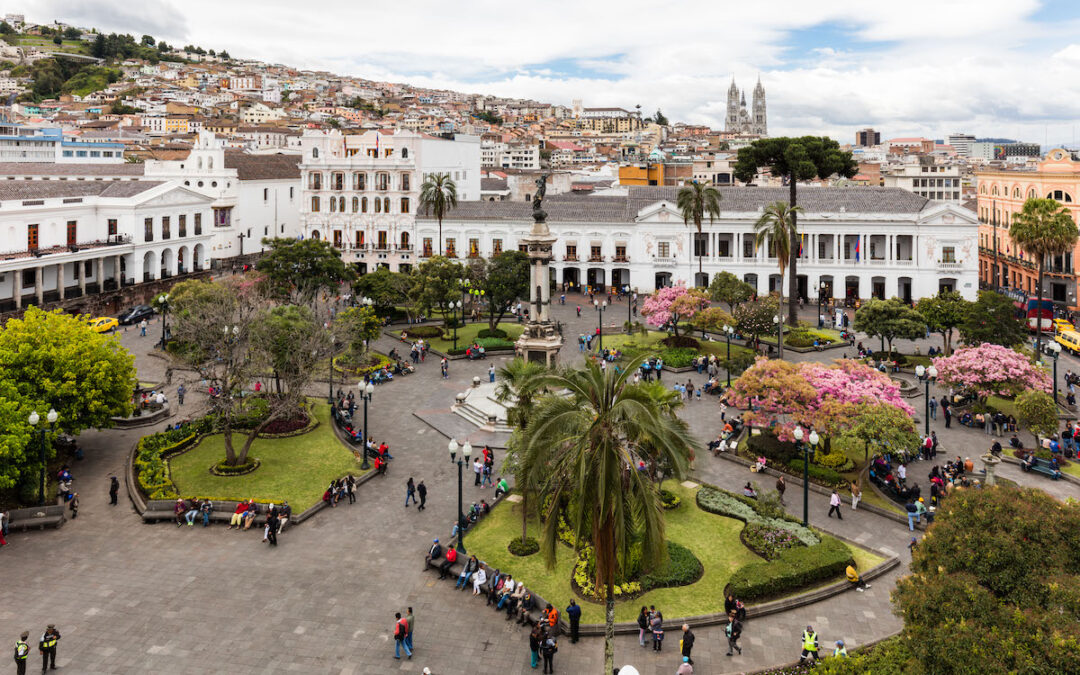
Ecuador’s services sector, including finance, telecommunications, and technology, has expanded. Quito and Guayaquil have witnessed the emergence of tech hubs and start-up ecosystems.

Tourism is another crucial component of the services sector. The country’s natural beauty, including the Galapagos Islands, diverse landscapes, and rich cultural heritage, draws tourists worldwide. Investments in hotels, resorts, and infrastructure have supported the growth of this sector.

Trade and Foreign Direct Investment in the Ecuadorian economy

The Ecuadorian government has actively pursued trade agreements and attracted foreign direct investment (FDI). The country has signed trade agreements with various countries and blocs, expanding its access to international markets. Among trade agreements that benefit the Ecuadorian economy are accords between Ecuador and the United States, Peru, and Chile. Ecuador also has agreements with major trading blocs. Among them are:

  • The Andean Community (Bolivia, Colombia, and Peru)
  • The European Union (27 countries)
  • Mercosur (Argentina, Brazil, Paraguay, and Uruguay)

Historically, FDI has flowed into the oil, mining, and telecommunications sectors. However, the government has sought to diversify investment by promoting renewable energy, agriculture, and technology sectors.

Challenges and Future Prospects

Currently, the Ecuadorian economy faces several challenges that require attention for sustainable growth:

  1. Fiscal Sustainability: The country needs to address its fiscal deficits and debt levels. Responsible fiscal management is crucial to ensure long-term economic stability.
  2. Oil Price Volatility: Ecuador’s vulnerability to fluctuations in global oil prices underscores the need to diversify revenue sources and reduce reliance on oil exports.
  3. Environmental Concerns: Balancing economic development with environmental preservation is vital, especially in sectors like mining and energy.
  4. Infrastructure Development: Investing in infrastructure, including transportation and utilities, is essential to support economic growth and enhance competitiveness.
  5. Economic Diversification: The government’s efforts to diversify the economy beyond oil and mining are promising. Continued support for the agriculture, manufacturing, and technology sectors will be critical.
  6. Attracting Investment: Attracting foreign direct investment and creating a conducive investment climate is essential to fund infrastructure projects and drive economic growth.
  7. Social Inclusion: Addressing income inequality and ensuring social inclusion are vital for long-term stability and sustainable development.

In conclusion, the Ecuadorian economy is a multifaceted landscape comprising traditional sectors like oil and agriculture and emerging industries like technology and tourism. Economic stability and growth will require prudent fiscal management, diversification of revenue sources, responsible resource management, and attracting foreign investment. Despite challenges, Ecuador’s potential for sustainable development remains promising, and strategic policies can pave the way for a prosperous future for the South American nation.

The Chilean National Petroleum Company (ENAP) invests at home and abroad

The Chilean National Petroleum Company (ENAP) invests at home and abroad

The Chilean National Petroleum Company (ENAP) said it obtained a profit of USD 341.3 million in the first half of 2023, with an EBITDA of USD 716.3 million. According to the general manager of ENAP, Julio Friedmann, the result consolidates the future investment plan in Chilean national territory and its operations abroad, mainly Egypt and Ecuador. “In Ecuador, we are already the main oil company that operates,” highlighted Friedmann, who insisted that ENAP will continue with its development and investment in the Coca region and that it will not have problems with the Ecuadorians’ decision to keep the Yasuní National Park oil underground.

Positive results for the Chilean National Petroleum Company

“The results are positive for the company and show the progress of the development and investment plan that we have implemented, aimed at environmental improvement and the modernization of our logistics infrastructure,” Friedmann stressed.

The executive also highlighted the great value of the results in a challenging context, primarily due to the costs of the logistics industry and the weather effects that have impacted its operations.

For his part, the company’s Finance Manager, José Pablo Gómez, stated that both the EBITDA and the profits obtained in the first semester of this year by the Chilean National Petroleum Company represented a decrease compared to the first semester of 2022, of 11.7% and 7.5%, respectively.

EBITDA is a financial indicator that shows profits before subtracting payments and costs such as taxes, interest, depreciation, or amortization.

This reflects the current market context, which has been affected by the higher cost of freight, the increase in fuel prices, adverse weather conditions for loading and unloading crude oil, lower international refining margins, and variations in the price of crude oil.

Given this situation, during the first semester, ENAP made several organizational changes to focus more on using its physical plants, operational excellence, the challenges of the energy transition, and responsible financial management.

“We have a solid alignment between the work we do every day, the five-year business plan, and our long-term strategy, in addition to robust corporate governance,” added Gómez.

Broken down by business lines, the results show that the Refining and Marketing (R&C) unit reported an EBITDA of USD 365.6 million, while international E&P operations reached USD 79 million.

Regarding E&P of Chilean National Petroleum Company Magallanes, in charge of meeting demand in the southern region of Patagonia and its capital, Punta Arenas, pre-tax profits were USD 24.1 million.

A look from the outside

Friedmann announced that ENAP is in talks with the Ministry of Finance to transfer part of last year’s profits (about USD 400 million) to the State, which has yet to happen since 2003.

However, if confirmed in the coming days, neither this decision nor the total debt, worth USD 4.46 million last year, will prevent the Chilean National Petroleum Company from following its current development plan, with an important focus on Egypt and Ecuador.

The strategy also includes greater cooperation with Argentina through the trans-Andean oil pipeline, which, after 16 years inactive, has now become the supplier of 50% of the raw material that reaches the refinery in the central coastal city of Concepción.

Regarding future investment, the manager said that about USD 3.5 billion is estimated, of which about USD 800 million will be allocated to sustainability and projects related to decarbonization and clean energy, including green hydrogen.

Another part, the amount of which should have been indicated, will be invested in maintaining the quality standards of the products, mainly fuel, for which it already has a production capacity of Euro6.

Likewise, they will allocate part of the resources to take care of the reserves to replace 100% of what is being exploited in Chile and abroad.

Finally, they will bet on growing in Ecuador and Egypt, exploring investments in other countries, expanding production and exploration in the southern region of Magallanes, Chile, and developing ports and pipelines for green hydrogen.

ENAP is an integral part of the Chilean Economy

The Chilean National Petroleum Company (ENAP) is indispensable in Chile’s national economy, serving as a critical pillar of energy security and economic stability. ENAP, as the state-owned entity responsible for the exploration, production, and distribution of petroleum and natural gas resources, plays a pivotal role in ensuring a reliable and consistent supply of energy resources for the nation. Its contributions extend beyond mere energy provision, as it generates significant revenue through domestic and international operations, bolstering Chile’s fiscal strength and supporting critical public services and infrastructure projects. Furthermore, ENAP’s strategic investments in research and technology enhance the energy sector’s efficiency and promote sustainable practices and environmental responsibility, aligning with Chile’s commitment to addressing global climate challenges. Thus, the Chilean National Petroleum Company stands as a cornerstone of economic development and energy resilience, underpinning Chile’s continued growth and progress on both regional and global scales.