by Editor Latam | Mar 16, 2023 | FDI Latin America
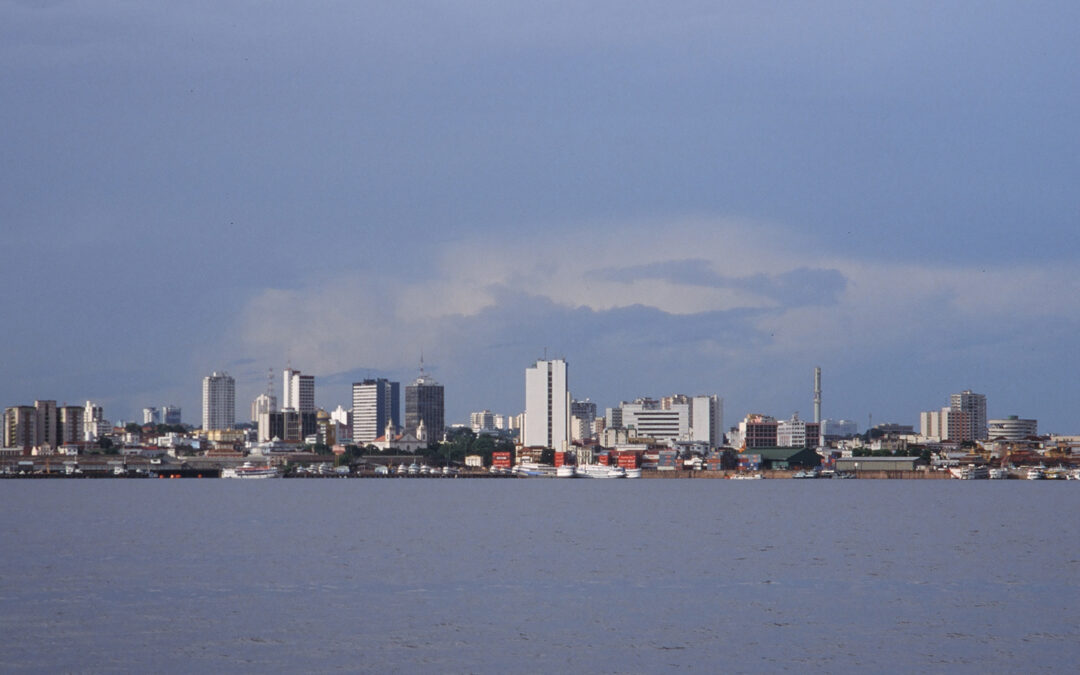
Manaus Free Trade Zone Revenue in 2022 was R$ 174 billion, generating 700 thousand direct and indirect jobs
The Manaus Free Trade Zone (MFTZ) in Brazil is a special economic zone that was established in 1967 to promote economic development in the Amazon region. The FTZM offers tax incentives and other benefits to businesses that operate within its boundaries.
On Tuesday, February 7, 2023, the Brazilian Chamber of Deputies celebrated the 56th anniversary of the establishment of the Manaus Free Trade Zone (MFTZ). It was established by Decree-Law 288/67. The event was presided over by Deputy Sidney Leite (PSD-AM).
In a message read by Sidney Leite, the mayor, deputy Arthur Lira (PP-AL) attested that the Manaus Free Trade Zone is successful. “In 2022, total revenue reached BRL 174 billion. This figure represents a record and growth of almost 7% over 2021; exports amounted to BRL 3 billion, up 29%,” he said.
“No social program is better for the Brazilian family than employment, and investment in the MFTZ was responsible for maintaining an average of 110,000 jobs last year, which could represent around 700,000 direct jobs and indirect”, continued the message from the president of the Chamber.
Sidney Leite, in turn, said he supports tax reform in the country, citing that the MFTZ represents the highest revenue collection in the country’s North Region. He also points out that the maintenance of tax incentives contributes to reducing regional inequalities and environmental sustainability.
“The Manaus Free Trade Zone led to the creation of some of the cleanest industry on the planet and has taken measures to preserve the largest rainforest in the world,” said Sidney Leite. The Industrial Pole of Manaus, according to the Superintendency of the Free Trade Zone of Manaus (Suframa), is home to more than 500 companies that can be considered to be “cutting edge.”
Industries represented in the MFTZ include:
What industries are in the Manaus Free Trade Zone?
- Electronics and Technology: The MFTZ is known for its electronics and technology industry, which includes the production of consumer electronics, such as smartphones, tablets, and televisions. Major companies like Samsung, LG, and Panasonic have factories in the FTZM.
- Automotive: The automotive industry is also present in the MFTZ, with major manufacturers like Honda, Yamaha, and Harley-Davidson operating factories there.
- Pharmaceuticals: The Manaus Free Trade Zone has a growing pharmaceutical industry, with companies like Pfizer, GlaxoSmithKline, and Novartis establishing operations there.
- Chemicals: The MFTZ has a significant chemical industry, which includes the production of petrochemicals, plastics, and other chemical products.
- Food Processing: The MFTZ has a growing food processing industry, with companies like Coca-Cola, Nestle, and PepsiCo establishing factories in the zone to produce a variety of food and beverage products
Tax reform
For Deputy Reginaldo Lopes (PT-MG), chairman of the Chamber’s working group that is working on tax reform, it will be necessary to seek consensus to approve the proposal. “We need more modern mechanisms to support regional development,” said Lopes, suggesting a new dialogue on the FTZM.
Other deputies and entities working on this issue include Captain Alberto Neto (PL-AM), Fausto Santos Jr. (União-AM), Saullo Vianna (União-AM), Silas Câmara (Republicanos-AM), Coronel Chrisóstomo (PL-RO) and Damião Feliciano (União-PB); senator Plínio Valério (PSDB-AM); business leaders; and Amazon authorities.
History
The Manaus Free Trade Zone emerged with the objective of stimulating the economic and social development of the Amazon region, in addition to seeking environmental preservation and border protection. The area covered by the FTZM comprises the states of Acre, Amazonas, Rondônia, and Roraima and the cities of Macapá and Santana in Amapá.
With an original term of up to 1997, the Free Zone, which covers the agricultural, commercial, and industrial sectors, was extended on several occasions by the National Congress. In 2014, Constitutional Amendment 83 extended its validity until 2073, maintaining incentives for companies until the end of 2050.
Products that are manufactured in the MFTZ have tax benefits. Among them are the reduction of up to 88% in Import Tax on industrial inputs and 75% in Income Tax. Companies also enjoy an exemption from the Tax on Industrialized Products (IPI).
According to a report on subsidies released in July 2020 by the extinct Ministry of Economy, between 2003 and 2019, the Manaus Free Trade Zone had, per year, tax benefits equivalent to about 0.37% of the Brazilian Gross Domestic Product (GDP ) or BRL 23.3 billion, on average, in 2019 values.

by Editor Latam | Mar 12, 2023 | FDI Latin America
The presidents of Ecuador and Chile, Guillermo Lasso and Gabriel Boric, face contrasting economic conditions.
Differing states of affairs
In the final phase of the first round’s Chilean electoral process and during the second round, most of the Chilean media affirmed that a victory registered by socialist Gabriel Boric would dramatically reduce foreign direct economic investment in the country. In addition, many believed that foreign capital would flee the country due to fear of the advent of a leftist government in the country.
In Ecuador, the opposite happened. Throughout the campaign of candidate Guillermo Lasso, the media spread the message that his victory would open sources of foreign capital and investment in Ecuador and that foreign direct investment (FDI) in the country would grow at a noteworthy pace. As a consequence of these assumptions, it was supposed that the unemployment rate in Ecuador would decrease significantly and that the economy would grow briskly.
However, economic data has demonstrated a different outcome. Foreign direct investment did not flee from Chile when Boric was elected, nor did FDI flow generously to Ecuador towards the government of Guillermo Lasso. On the contrary, recent Central Bank of Chile reports show that foreign investment has grown steadily throughout the past year. On the other hand, the Lasso government and local media, such as El Mercurio, have been forced to acknowledge that foreign direct investment in Ecuador has decreased significantly in recent times.
Foreign investment in Ecuador
In a recent edition, El Mercurio of Ecuador newspaper noted, “Foreign investment has fallen to the lowest level in the last twelve years.” This is because there has been a noticeable drop in investment in the mining and transportation sectors. According to the Central Bank of Ecuador, foreign direct investment (FDI) reached 51.3 million dollars in the third quarter of 2022, compared to the same period of the previous year. This figure represents a year-over-year contraction of 67 percent. Furthermore, it is the lowest level recorded since the fourth quarter of 2010, when FDI had a negative balance of 30.9 million dollars.
Prominent analyst Jaime Carrera commented that the Ecuadorian economy would have difficulty taking off for the foreseeable future. This statement coincides with the forecasts made by the International Monetary Fund, IMF, which states that “the Ecuadorian economy will be one of the least growing in Latin America this year.”
Keep in mind that the Economic Commission for Latin America and the Caribbean (ECLAC) considers that, for Latin America to create new jobs and appreciably reduce poverty consistently, these countries must grow at least 5 percent annually for the next 20 years. This point agrees with an assessment made by the International Monetary Fund (IMF) and the Ecuadorian analyst Carrera.
According to the Central Bank, foreign investment in Ecuador fell in five of nine critical economic activities in the country. Within these, the mining sector is the one that registered the most significant contraction; financing fell by 39.2 million dollars in the third quarter of 2022.
Foreign investment in Ecuador in the manufacturing, transportation, communications, and construction sectors also declined. On the other hand, foreign direct investment grew in finance and insurance, agriculture, commerce, and the gas and water services sector in 2022.
Foreign investment in Chile
Contrary to what many had predicted by traditional Chilean media, a collapse in the pace of Foreign Direct Investment in Chile has thus far yet to occur due to Gabriel Boric’s ascension to the Chilean presidency.
The Central Bank of Chile, through a recently published bulletin, reported that the FDI received by the country between January and December of last year (2022) reached 17.1 billion dollars. This represents an increase of 12 percent compared to the year 2021, which means the best FDI performance in the last 15 years.
It also represents 36 percent more than the average of the last five years and 23 percent higher than the average between 2003 and 2022. However, it is essential to note that the reinvestment of profits reached a total of 6.1 billion dollars, and “instruments of debt accumulated an amount of 2.9 billion dollars, an amount lower than the record for the month of October 2022, ”according to the Central Bank.
The Minister of Economy, Nicolás Grau, noted the statistics and asserted, “The figures published by the Central Bank show that the Chilean economy is resilient.”
For information about the investment climate for foreign direct investment in major Latin American economies, contact LATAM FDI.

by Editor Latam | Mar 11, 2023 | FDI Latin America
Foreign direct investment in Chile reached US $17.1 billion in 2022. The Minister of Economy, Nicolás Grau, indicated that this figure is a “good sign for the Chilean economy.” He stated, “It speaks of investor confidence in the country and contributes to the generation of more and better jobs for the country’s citizens.”
On February 5, 2023, the Central Bank reported that the flow of foreign direct investment in Chile (FDI) received between January and December 2022 reached a total of US$17.1 billion. According to the analysis carried out by InvestChile, this amount is 12% higher than that accumulated during the same period in 2021. Additionally, it is 36% higher than the average of the last five-year period (US$ 12.6 billion) and 23% higher than the average for the years 2003-2022 (US$13.9 billion).
The most important component of the FDI flow was participation in capital investment, which accumulated an amount of US$9.1 billion in the period. The reinvestment of profits reached an amount of US$6.7 billion, while the debt instruments accumulated an amount of US$1.3 billion.
The figures in early February correspond to a preliminary assessment. Thus, they may undergo adjustments in the next review that the Central Bank will make on March 18.
A good year for foreign direct investment in Chile
The Minister of Economy, Nicolás Grau, pointed out that the figures are a “good sign for the Chilean economy” since “a higher level of foreign direct investment, in addition to meaning an injection of liquidity for the economy, contributes to the development of the country through the installation of sustainable projects, the arrival of new technologies and the generation of quality jobs for Chilean men and women.”
“The figures published by the Central Bank show that the Chilean economy is resilient. When choosing where to install their projects, global companies focus on long-term results, which is a good sign that foreign direct investment in Chile continues to grow. This speaks of confidence in our economy and its future development. As a government, we will continue working to attract sustainable and quality investment to Chile since its contribution to the recovery of the economy is fundamental”, said Minister Grau.
The director of InvestChile, Karla Flores, highlighted that last year’s investment level was the highest since 2015 and one of the highest figures in the historical series (20023-2022). The numbers exclude the Chilean mining boom (2010-2015). In addition, she pointed out, they reaffirm the willingness of investors not only to maintain their positions in the country but also to increase existing operations. “We are facing an injection of capital and long-term resources since 92% of all the capital flow that entered the country corresponded to new projects or expansion of existing operations, and only 8% consisted of loans to subsidiaries from the parent company”, explained Flores.
InvestChile ‘s 2023 planning will focus its work on attracting quality foreign direct investment in Chile in markets classified as strategic. This effort will be complemented by the work of the new Investment Attachés in the United States, Germany, France, Italy, and Canada, which are added to the already existing Attaché Office of Japan.
“2023 will undoubtedly be challenging for foreign direct investment, but we have reasons to be optimistic: Chile has established itself as a preferred investment destination within Latin America, especially in terms of technological infrastructure and clean energy. These are two sectors that we believe will continue to develop this year. All companies that want to contribute to the sustainable development of our country are welcome to participate in foreign direct investment in Chile,” said Flores.
Free zones are open to foreign direct investment in Chile
In Chile, the free zones are located in the two most extreme regions of the country. They are in the Region of Tarapacá in the city of Iquique, and in the Region of Magallanes, in the city of Punta Arenas. Both of these special economic areas receive government support to promote their economic development. In Iquique, the free zone is better known as ZOFRI; in Punta Arenas, it is known as PARENAZON. Both areas have tax benefits that make them attractive for doing business.
In the free zones, you can find shopping malls, automotive industries, and department stores with all kinds of wares. The free zones are called free ports because the free port was formerly a zone where commercial exchanges were carried out without having to pay customs fees or any type of tariff. Free ports were part of these extreme zones in the Chilean economy for many years until they were decreed as free zones.
In the free zones, new materials can be traded, and imported used goods following the Internal Operational Regulations of the zone can be exchanged. The merchandise that can be seen most frequently in the trade of these areas are clothing, perfumes, food, machines, vehicles, spare parts, supplies, etc. In Iquique, many buy vehicles free of tariffs and customs taxes.
The function of free zones in Chile
Free zones have the main function of:
- Streamlining foreign trade operations related to imports.
- Lower the costs of foreign products in Chilean national territory.
- Promoting the development and quality of life in the most extreme regions of the country. Preferential fiscal treatment of commerce compensates for the high logistics and transportation costs to and from the zones, directly impacting citizens’ cost of living.
- Being a merchandise warehouse, they will be in place awaiting their final destination.
- Transforming, manufacturing, and marketing goods without any type of restriction.
- Simplifying everything that has to do with the most common customs procedures, as well as allowing the payment of customs and commercial taxes to be deferred when necessary or simply waiving taxes.
From the customs point of view, free zones in Chile are considered to be foreign territory, so while merchandise is in the free zone, it is considered as being in its country of origin.
Foreign direct investment in Chile is an attractive option in its free zones and throughout the country. This is so because the country offers a stable and predictable investment environment, a strategic location with easy access to other markets in the region, abundant natural resources, a skilled workforce, and investment incentives that make it an attractive option for foreign investors looking to expand their operations in South America.
For further information on foreign direct investment in Chile, contact LATAM FDI.
by Editor Latam | Mar 10, 2023 | FDI Latin America
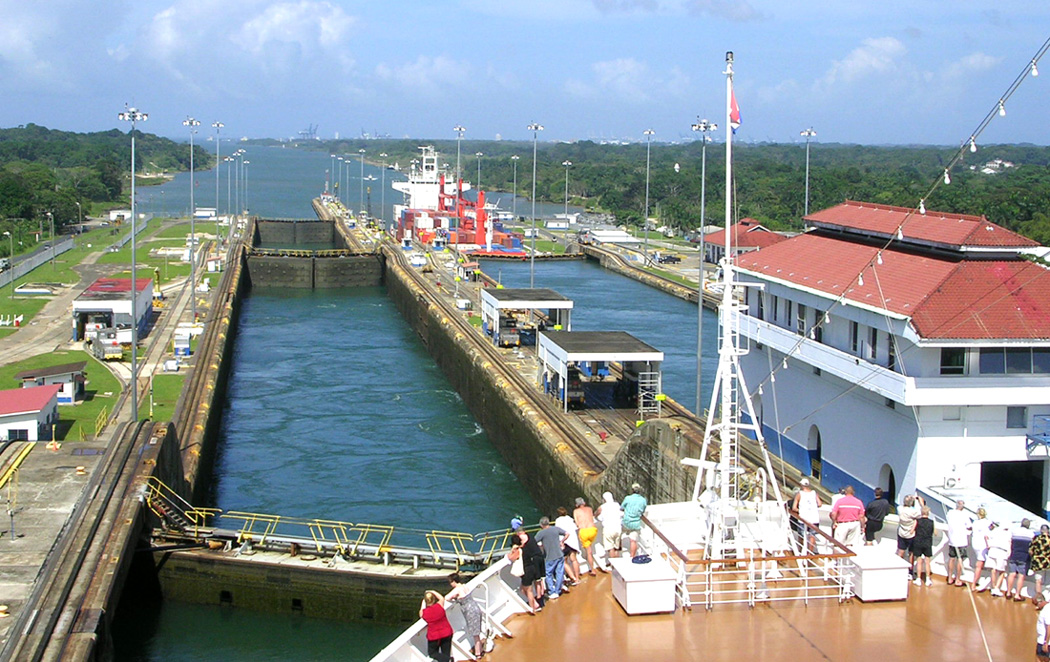
The Ministry of Commerce and Industry of Panama (MICI) recently reported that so far in 2023, the free zones in Panama have attracted initial foreign direct investment in the order of $92.4 million.
Bertech companies Panama, SA, Pinturas Termoplásticas, SA, Chiriqui Electronic Design Studio, SA, and Centralpack Corp will operate in the Panapark Free Zone in the corregimiento 24 de Diciembre, east of Panama City.
These companies represent a total cumulative initial investment of $13,889,075.74 and come from Brazil, Chile, Peru, Venezuela, and Switzerland, the MICI said in a recent statement.
Within the Panapark Free Zone, they will be involved in manufacturing, assembly, and processing activities for finished and semi-finished products. These activities translate into the incorporation of new technologies, the establishment of export-quality industries, expanding Panama’s export offerings, as well as the generation of more than 90 direct jobs, primarily for Panamanians.
“Production chains are becoming more frequent and more powerful with free zones in Panama. We see, for example, that with Centralpack Corp., there is a convergence of suppliers and customers in the same free zone. This allows for achieving an industrial symbiosis that makes producing from within a free zone more efficient. This circumstance reduces the fragility of supply chains based on imports,” said Ámbar Ruiz Chaperón, MICI’s general director of Free Zones in Panama.
According to the information, manufacturing, assembly, and processing lead investments in free zones
The Government of Panama reported on February 8 that it had endorsed the establishment of two new free zones to encourage increased employment, production, and exports.
New free zones in Panama announced
The Executive of President Laurentino Cortizo, through the Cabinet (Council of Ministers ), authorized the establishment of the Tech Valley Free Zone and Panama Digital Gateway Free Zones. These two new developments will eventually house a total of 740 companies, including Hyundai.
Through the Galbay Holding Corp., Tech Valley Free Zone plans to invest 100 million dollars. As a result of this capital investment, it is projected that 1,140 direct jobs and 3,570 indirect jobs will be generated.
Panama Digital Gateway, for its part, is considered to be “the largest data center company” by the Panamanian Government. With an initial investment of 11.5 million dollars, the facility will house 620 companies and promote the country’s strategy of becoming the “Digital Hub ” of the region.
This free zone in Panama will have a privileged position that will allow large content companies to be closer to their end users while “positioning itself as a strategic place for receiving new submarine cable projects. This will consequently improve the competitiveness and connectivity of our Panama.” according to official information.
In addition, the Government of Panama points out, “The laying of the Curie submarine cable will facilitate the attraction of content providers such as Netflix, Microsoft Azure, Cloudflare, FaceBook, Amazon, and Akamai, among other digital enterprises.”
In three years, “historical figures” have been achieved in the free zones in Panama, which is mainly because the country promotes ” clustering ” and linkages between suppliers and customers in the same place, he added.
He stressed that “in 2018, 78 million dollars were exported through these free zones, while by 2022, this figure doubled to more than 143 million in billed exports. “
Investing in free zones in Panama is a good strategy
Investing in free zones in Panama can be a good strategy for several reasons:
Tax Incentives: Free zones in Panama offer several tax incentives, such as exemption from import duties, export taxes, and income tax. These incentives can significantly reduce the operating costs of companies operating within the free zones, allowing them to be more competitive in the global market.
Strategic Location: Panama is strategically located at the crossroads of the Americas, making it an ideal location for companies looking to expand their operations in the Americas. Its location provides easy access to the Pacific and Atlantic Oceans, facilitating the movement of goods to and from North and South America.
Developed Infrastructure: Panama has invested heavily in developing its infrastructure, particularly transportation and logistics. As a result, the country boasts world-class ports, airports, and highways, making it easy for companies to move their goods in and out of the country.
Skilled Workforce: Panama has a well-educated and skilled workforce, with a high percentage of its population fluent in English. This makes it easier for foreign companies to operate in the country without language barriers.
Pro-Business Environment: Panama has a pro-business environment with a government committed to attracting foreign investment. The country has implemented several reforms to improve its business climate, including simplifying procedures for starting a business and reducing bureaucracy.
The US Dollar is the nation’s currency
In addition to these benefits, Panama uses the US dollar as its official currency. The country adopted the US dollar as its official currency in 1904 and has been in use ever since. As a result, the US dollar is widely accepted in Panama, and visitors can use US dollars to pay for goods and services without the need for currency exchange. Additionally, the country has a modern banking system with many international banks, making it easy for foreign investors and free zones in Panama to do business there.
For more information on doing business in free zones in Panama, contact LATAM FDI\
by Editor Latam | Mar 4, 2023 | FDI Latin America
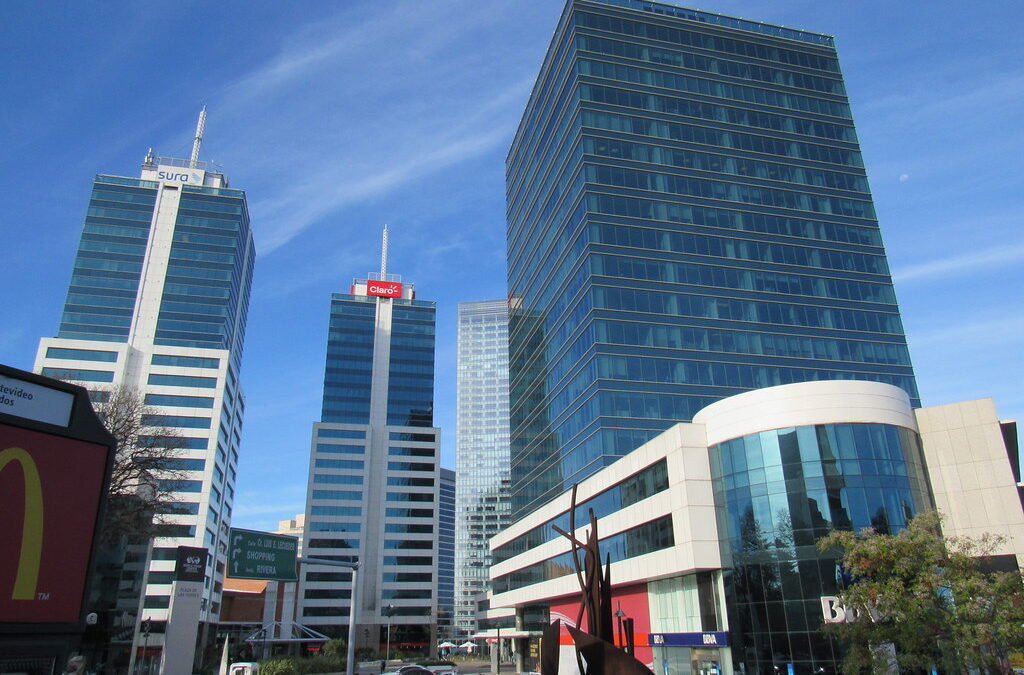
To invest in Uruguay is to invest in one of the most attractive countries in Latin America. One of its significant advantages for investors from other countries is that it allows companies to be 100% foreign-owned.
The last two decades have seen a strong interest on the part of the Uruguayan government in encouraging and promoting investment, both local and foreign. This posture has attracted (and continues to draw) many investors. Below are ten reasons why many believe that Uruguay is the best country in Latin America to set up a business.
Modern logistics
Uruguay has a modern infrastructure compared to many other countries in the region. However, the government has recently invested heavily in improving its infrastructure, particularly telecommunications, transportation, and renewable energy.
Regarding telecommunications, Uruguay has a highly developed mobile and internet network, with widespread access to 4G and broadband internet. The country has also invested in fiber optic networks to improve connectivity and increase broadband speeds.
Regarding transportation, Uruguay has a well-developed road network, with highways connecting major cities and towns. The country also has a modern international airport and several ports, including the Port of Montevideo, one of the region’s busiest ports.
Uruguay has also invested heavily in renewable energy, particularly wind and solar power. The country has set a target of generating 50% of its electricity from renewable sources by 2025 and has made significant progress toward this goal. Companies that invest in Uruguay have access to well-developed infrastructure.
Uruguay has experienced consistent economic growth over the past two decades, with a strong focus on trade, services, and agriculture. The country has a diverse economy with a relatively low level of inequality compared to many other countries in the region. The country has also maintained low levels of inflation and unemployment, which has helped foster economic stability for companies that choose to invest in Uruguay.
Economic, political, and social stability
Politically, Uruguay has a strong tradition of democracy and has held regular free and fair elections since the country transitioned to democracy in 1985. As a result, the country has a stable political environment, a multi-party system, and a relatively high consensus on many key issues.
Uruguay is considered one of South America’s most socially progressive countries, with a solid commitment to human rights and social welfare. The country has a high literacy rate and a robust public education system and has made significant progress in healthcare.
Ease of setting up a business
The Uruguayan government offers many benefits, so business people often choose this country instead of one of its neighbors. Some of these benefits are:
- Free repatriation of benefits.
- Equal treatment for foreign and local investors.
- Free exchange market.
- The tax system benefits the investor more than in most neighboring countries.
To register a business in Uruguay, you must submit various documents to the National Public Register of Commerce (Registro Nacional de Comercio), including proof of identity, a business plan, and information about the company’s shareholders and directors. You must also obtain a tax identification number (RUT) and register for social security and other taxes.
Uruguay offers a range of incentives for businesses, including a relatively low corporate tax rate and a simplified tax system. The country also has a free trade zone, where companies can benefit from tax breaks and other incentives.
In terms of doing business in Uruguay, the country has a well-developed infrastructure and a highly educated workforce, making it an attractive destination for companies looking to invest in the region. The country also has a stable political and economic environment, which can provide predictability and security for businesses.
Promotional programs for investment
The government grants many benefits to promote and encourage investment. Some of them are:
- Free zones, in which there are no taxes.
- The free transit of merchandise through ports and airports without the requirement of authorizations.
- Promoted housing regime, with which investment in real estate is exempted from a large amount of taxes.
- The Law for the Promotion of Entrepreneurship allows the creation of Simplified Limited Companies (SAS), enabling collective financing projects and others.
In addition to those recently named, there are many more measures and benefits; practically all business sectors are covered with good bonuses for investors.
Technology leader
Uruguay is one of the countries with Latin America’s most significant technological development. In addition, it is the nation with the fastest internet download speed in the region, which favors entrepreneurs for certain types of businesses that invest in Uruguay.
One area where Uruguay has been particularly successful is in the development of software and technology services. The country has a highly educated workforce with a strong focus on technology. As a result, it has attracted significant investment from multinational companies involved in these activities, looking to establish a presence in the region.
Access to a broad market
Uruguay has free access to the Mercosur market, which allows it to trade with more than 270 million people (56% of Latin America’s GDP).
In addition to Mercosur, it has a treaty with Mexico, so, between Mercosur and Mexico, Uruguay can trade free of tariffs with 400 million people.
Furthermore, Uruguay signed a free trade agreement with the European Union in 2019 and a similar deal with Chile in 2016.
High rates of return on real estate
The average net return rate of real estate in Uruguay varies between 4-5% per year, which means that the return in this country is far from the 2-3% per year obtained in its neighboring countries.
Uruguay has seen significant growth in its real estate market over the past decade, particularly in areas such as Punta del Este, Montevideo, and other coastal cities. This growth has been driven by a combination of factors, including a strong economy, political stability, and increasing international buyers that choose to invest in Uruguay.
One factor that can influence the rate of return on real estate investments in Uruguay is the country’s relatively low property taxes. This level of taxation helps to make investments in real estate more attractive. In addition, Uruguay’s real estate market has historically been less volatile than some other markets in the region, which can provide stability for investors.
Competitive national human resource talent
Due to the high quality of basic, technical, and university training, Uruguayans can easily adapt to new technologies or production processes, making any project very competitive.
Uruguay has a high literacy rate and a well-developed education system, including several universities and technical schools that provide training in various fields. In addition, the country has made significant investments in vocational training and skills development programs to prepare workers for the needs of the modern economy.
The availability of skilled labor can vary depending on the field or industry. However, Uruguay generally has a highly skilled software development, engineering, and professional services workforce. The country is also known for its strong agricultural sector, which relies on skilled workers with specialized knowledge and expertise.
Excellent quality of life
The Uruguayan capital, Montevideo, is a quiet city with access to education, security, good mobility, health, and public services.
According to the Mercer consultancy, it has the best quality of life in Latin America.
Uruguay also has a well-developed public healthcare system, providing its citizens with universal coverage. As a result, the country has a relatively high life expectancy and low infant mortality rate compared to other countries in the region.
In addition, Uruguay has a robust social welfare system, including programs to reduce poverty and inequality. The country’s relatively low Gini coefficient measures income inequality, indicating that wealth is relatively evenly distributed.
Uruguay is also known for its natural beauty, including its beaches, national parks, and other scenic areas. In addition, the country has a high level of environmental protection and sustainability, which can contribute to a high quality of life for its residents.
Lowest corruption rate in Latin America
Due to Uruguay’s international transparency, the UN confirmed that it has the lowest corruption rate in Latin America. This gives Uruguay a very high reliability, which benefits its economy, and is reflected in its high foreign investment rate.
Uruguay is often considered one of the least corrupt countries in South America. According to the Corruption Perceptions Index (CPI) 2021 published by Transparency International, Uruguay is ranked 23rd out of 180 countries worldwide, scoring 73 out of 100. This places Uruguay ahead of most other countries in South America.
While challenges and risks are always associated with any foray into a foreign market, those businesses that invest in Uruguay enjoy several compelling advantages when establishing a presence in this South American nation.
For more information related to investment in Uruguay, talk to the professionals at LATAM FDI.