+1 (520) 780-6269 investment@latamfdi.com
Investment in Honduras

Investment in Honduras

Investment in Honduras


LATAM FDI: Hello, welcome to another episode of the LATAM FDI podcast. Today we are fortunate to have Yusuf Amdani as our guest. Yusuf speaks to us on the subject of investment in Honduras from San Pedro Sula in Honduras. How are you today, Yusuf?

Guest Speaker:
Yusuf Amdani
Chairman
GK Group

Yusuf Amdani: I’m very fine. Good speaking with you.

LATAM FDI: Same here. Could you introduce yourself, tell us a little bit about your background, and tell us about the GK Group and its activities to promote investment in Honduras and throughout the region?

Yusuf Amdani: Thank you very much. My name is Yusuf Amdani. I’m the chairman of GK Global. We are basically active in five segments of different industries, starting with textile, which we are in the third generation. We are vertically integrated and based in the entire region here in Central America, the Caribbean, and southern Mexico. We specialize in real estate, industrial and commercial as well as technology, lifestyle, and agriculture businesses. We are in nine countries and two continents mostly. But our big core businesses are both in real estate as well as in the textile industry.

LATAM FDI: You have a couple of very nice modern facilities.  First, I’m thinking of the Green Valley Industrial Park. Could you explain what’s going on there?

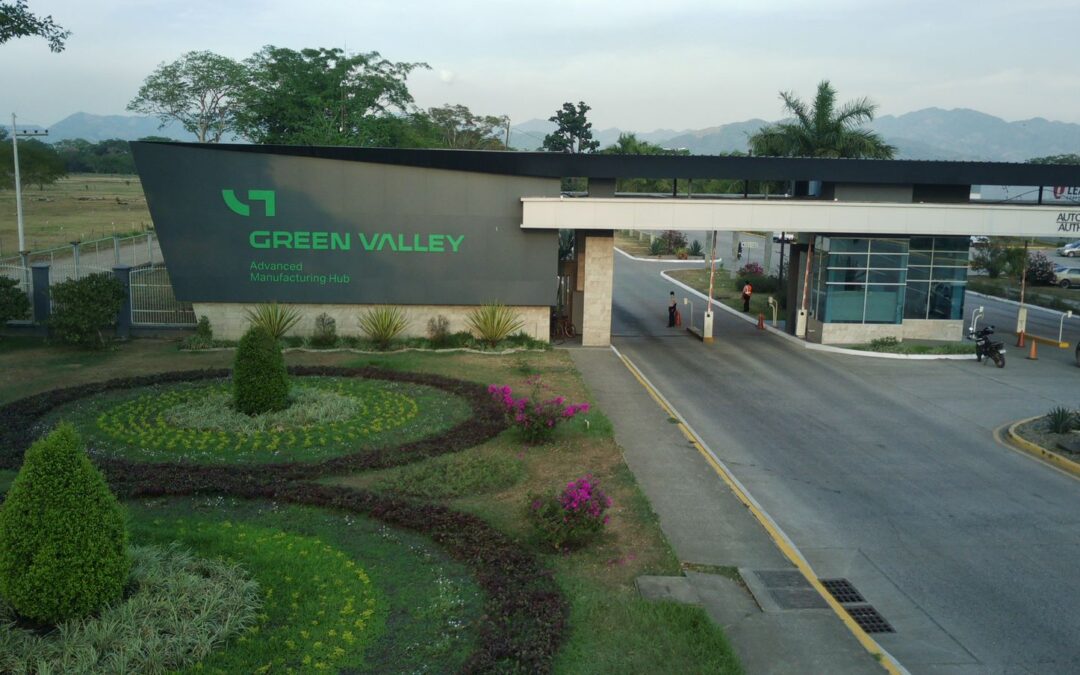
Yusuf Amdani: Green Valley is, you know, the largest industrial development in this region. Actually is the only industrial park in Western Hemisphere which does not use any public services. That means we produce our own water; we produce our own energy, we provide steam-chilled air, and we treat our wastewater. We are also ISO 14,001 certified for environmental management. Last year, we also got the certification from TRUE for waste management. We are actually the only industrial hub or development with this certification in the region.

Currently, we have two major clusters there that have made investments in Honduras. One is for the automotive wire harnesses. We have the largest cable and wire and cable manufacturer for automotive as one of our customers. Then we have Lear and Aptiv. They are the Tier 1 automotive suppliers. Then we have a smaller company making the tape and other accessories as their investment in Honduras. The largest cluster in Central America for wire harnesses is based in our facilities in Green Valley. Then we have a textile cluster. We have Delta Apparel, a stockholder, in the park and their large facilities there. We have GK’s textile facilities there, as well as we have three other textile plants.

In summary, we have five textile facilities that operate in Green Valley and some light industries.

LATAM FDI: Thank you for that synopsis of what you have happening at your facilities in Honduras. I have a few more questions I’d like to ask you. The first one concerns the Biden administration and the promotion of investment in Honduras in the Northern Triangle countries to address the issue of mass migration. Have you seen any visible results of these efforts?  Has there been investment in Honduras?

Yusuf Amdani: I think yes. The current US administration has taken this positive effort to actually create opportunities at the ground level within the countries in the Northern Triangle. We at GK Global have been doing this for 30 years. I always feel that people need to have the opportunity where they are from or where they live in the town or city; they have to migrate. The easiest migratory choice is to go to the US. That’s where there are opportunities. So, the current administration’s efforts since last year have been worthwhile.  They have gotten a commitment from several large US companies for different segments in different areas in which to invest in Honduras and the rest of the region. A few of them already have projects on the way, but it’s a process that will take some time. But in the end, it will definitely create some impact by providing more jobs in the Northern Triangle, which should mitigate the migration.

LATAM FDI: The next question I have has to do with the fact that your country changed its president in January. At the beginning of 2023, Xiomara Castro assumed the country’s top office. Has any discernible change in the environment for investment in Honduras due to changes to the government?

Yusuf Amdani: No, I think, as you probably know, she won landslide margins, and then we had a change in the party which was in the power for the last twelve years. This is a change of a party and, of course, a different ideology. They are still settling down, but in practice, there are no major changes to Honduras’s investment environment.  This is even though last year was especially challenging for the textile sector.  This is a big sector in the entire Northern triangle. Recently, the market has been soft, but still, we see several investments gearing up in all these three countries.

LATAM FDI: For people that are thinking of investing in Central America, what can companies expect in terms of benefits if they look towards investment in Honduras?

Yusuf Amdani: Because we have operations in Mexico, we have operations in some other countries, Honduras, and all three Central American countries. Honduras has a free zone law that allows companies to establish without any long paperwork or legal drama. Secondly, they are 100% exempt from any kind of tax, which means importing raw materials for export or your income tax. It’s all under one because, in any place, the custom facilities are right there, whether you build your own free zone or your lease or operate in an existing free zone. There is only one document required for entry and one for the exit. So, there’s no further customs or other paperwork to be done at the port or the airport. This makes it very easy to establish and operate, and as well as definitely there’s a tax benefit as to your 100% exemption for your income tax. So many companies, especially the US and other countries, try to manufacture and keep their profits in Honduras so that they can use the same for their expansions and don’t have to go back and pay taxes for them.  Such benefits definitely affect your overall cost of manufacturing. So, I think those are really the key benefits when the decision is made to invest in Honduras. Beyond this, of course, we have the largest port in Central America, which is Puerto Cortez. Then we have connectivity with the US, which is one flight from Atlanta, Miami, Houston, and most of the cities we can be connected. So direct flights are coming to San Pedro Sula because all the industries are located in the northern part of the country. So, I think there’s connectivity. There is shipping from Miami or to Houston. It’s only a day and a half transit time. So even if you can ship on a boat so in two days, the vessels are there logistic-wise as well as connectivity by air. Not having any tax liabilities and easy to operate, you don’t have to go through many local government permits, permissions, and certifications. So that makes it very easy. So, when an investor comes in, they can basically start their operation by leasing a building.  Then the park operator or company that manages the park provides all the support. Your leasing contract entitles you to start that process.

LATAM FDI: You mentioned a little about the kind of companies located in the Green Valley advanced manufacturing hub, and you mentioned a bit about the infrastructure. If a company wants to do business with you at the Green Valley facility, for instance, can they lease space, build to suit, and purchase land? What are the options for investors in your facility to invest in Honduras?

Yusuf Amdani: We have a unique business model that, of course, you can lease the building, or we can build to suit, or you can buy the land. We can design and build any of the options available, but we are not a typical industrial park per se. Definitely, real estate is a component that we offer. So, first of all, we not only design your building, but we also design all your infrastructure, which means your electrical installation, mechanical installation, HVAC, and any specialized installation you may require due to the equipment you may be using. So first of all, we provide completely fitted buildings, so it’s ready for you to send the equipment and start installing it. If you need assistance with the talent pool or labor force, we provide a prescreening database of employees. So whatever number of employees you need, you provide the details, and then our HR department provides you with the number of people you may need for interviews. Currently, we usually run from 84% to 87% of hiring rates at the park. This means if we are providing 100 employees for them to interview and hire, the previously mentioned percentage of interviewees get offered positions.

We also provide all the security, both external and internal. We provide maintenance, energy, water, and wastewater treatment. Basically, everything which is not your core business as a client we take care of it. So you can only focus on what is your core business. You don’t have to worry about sending down the ex-pats, their housing, schools for their kids, or anything you need to set up your company. For any governmental permits, logistics, or anything you need to operate and manage your business, we provide that as a package. When you come to Green Valley, you will bring your technology and equipment, and then we will help set it up and run it. Then even if you need specialized training, we also look for university or tech company partners who come and train in a particular area. Currently, we are working with Colin College and Aptiv, one of our guests at the park, to create the most advanced tech camp at the Green Valley Industrial Park in the different disciplines.

LATAM FDI: With respect to other activities in the facility, obviously, there is manufacturing, but are there any back-office operations? Do you have facilities for companies that do those sorts of things?

Yusuf Amdani: We have an LTE Smart City, which is actually located in the city. As you know,  the people who work in BPO operations are mostly students with high school or university degrees. So, we actually have Altia Smart City, both in San Pedro Sula and Tegucigalpa. In fact, Altia Smart City is considered among the 1% of the best infrastructure in the world to host companies that have made the decision to invest in Honduras. We are currently hosting five of the 10 largest BPO operations in the world as our tenants in LPs Smart City, plus we have some software development companies. We also have boot camps for different disciplines, from cloud services to data science to cyber security. Companies may be interested in finding talent because universities do not offer skill sets for those disciplines. So we have started to set up our own boot camps using one of the best training companies in the world to provide this education and those skill sets to the people so that companies can come to invest in Honduras. In Altia, we also provide a very similar type of package service, not just the space but also the furniture and the computer installations, electricity, and internet, as well

We also provide human resources. We provide security, we provide logistics; we provide everything for them. Again, in this case, they bring their software or some of their management personnel, and then they can operate. Currently, we have over 13,000 people working in the tech industry out of LPs Smart City, and we are growing. We didn’t have any space. We were about to start our fourth tower, and then COVID came, so we didn’t do it then, but we started last year. It will be completed later this year. So, we continue to expand and build. So yes, there is an opportunity for any tech services companies, whether they’re first-year BPOs or high-end cyber security companies.

LATAM FDI: According to your website. I was looking it over, and it seems to me that, having reviewed it, you place a high priority on sustainability. Can you tell us how you’re achieving that?

Yusuf Amdani: Yes, in Green Valley, for example, as I mentioned to you, we are the only industrial development in the region which has ISO 14,001 certification for environmental management. Because from the get-go, when we started in 2004, our park design was by a master plan. Two design groups did it out of Canada based on sustainability. So that we have like more than we probably have less than 50% utilization of actual land. We have so many green areas; we plant three trees per person that work in Green Valley park right now. Forty percent of our energy is solar. We just put in 15 MW last year, and currently, we are building another 15-megawatt capacity. And even in our thermal, we do cogeneration. We are using steam and chill air through the waste heat. So, we do heat recovery, and so even on thermal, our emissions are very low, and we are working very hard to be carbon neutral by 2030. As I mentioned, we are also TRUE-certified for waste management and zero waste.

So, we have energy-efficient buildings. We use only LED lighting. We also have solar in all our buildings because it’s a low percentage. Only about 16% of our energy consumed is coming from renewable resources right now. But we continue to build the parking structures with solar on top. So that will double our solar production in the park. It would be best if you took care of the people; the facility and environment are very important to protect. So, we have specific strategic plans that we are continuing year-to-year. We just in fact, in November 2022, we released our first sustainability report based on a global reporting initiative in UN Agenda 2030. And with that, you will see all the different activities we carry across our organization based on sustainability that we factor into our operations when we invest in Honduras.

LATAM FDI: One of the things that we’ll do in the transcript of this podcast is to include a link to that document so people can get detailed information about it.

Yusuf Amdani: Thank you.

LATAM FDI: A lot of the listeners that we have, after hearing a brief discussion with our visitors in these LATAM FDI podcasts, have questions beyond those that were addressed during the podcast. Suppose anybody who is listening has a question for you or wants information on the Green Valley Industrial Park or the Altia Tech City. How would they contact you with their questions regarding how to invest in Honduras?

Yusuf Amdani: We have a corporate info site.  The address is www.gkglobal.com, or they can also connect through directly through the websites of www.greenvalleyhub.com or www.altsmartcity.com.

LATAM FDI: As I said, we’ll make information available about you, and your company will include a link to your LinkedIn page. If people want to contact you that way as well.

Yusuf Amdani: Great. Like any other required information, we will be happy to provide it to your listeners anytime.

LATAM FDI: Thank you very much for joining me today. I wish you the best of luck for the remainder of the year and far into the future.

Yusuf Amdani: Thank you so much. Always great speaking to you after such a long time, but great to see you.

LATAM FDI: Same here. Have a great day.


Benefits of the maquiladora regime in Paraguay

Benefits of the maquiladora regime in Paraguay

The maquila regime in Paraguay offers a battery of incentives for investments to export goods or services from Paraguay. There are three models under which foreign companies producing goods or services for export in Paraguay can operate.

It has been conceptualized as a special regime of incentives for investments and exports that adopts a model of international outsourcing of industrial processes or outsourcing services. Under this scheme, a company from abroad hires the services of a company incorporated in Paraguay to produce goods or services for export.

The regulatory framework of the Paraguayan maquiladora regime is important. It was created by Law 1064/97 and is regulated by Decree 9585 of 2000. Beginning in 2001, the first maquiladora companies started to operate in the country under the Decree. Today, approximately 230 companies from different sectors are exporting goods or services from Paraguay.

The maquila regime in Paraguay has stability and is independent of the government in power. As such, it has the necessary legal support from the macro law of the national congress, which provides security to investors.

The Ministry of Industry and Commerce leads the maquiladora regime in Paraguay

A national council of five institutions administers the maquila system. The council is chaired by the Ministry of Industry and Commerce (MIC), whose organic function is the development of the country through the installation of industries or companies that produce in Paraguay and promote the export of goods and services from the country.

The maquiladora regime in Paraguay is also made up of the Ministry of Finance due to the tax incentives that it offers. Also involved are the Ministry of Foreign Affairs, the Technical Secretariat for Planning, and the Central Bank of Paraguay, which is in charge of studying the maquila projects presented by the companies that request the benefits of the special regime.

The National Council also has an executive body known as the Executive Secretariat that works within the Ministry of Industry and Commerce. This entity is in charge of the operational part of the regime and is responsible for executing the decisions of the National Council.

The Ministry of Industry and Commerce is responsible for all procedures involved in approving programs and regulating the operations of the maquiladora companies that are domiciled in the country.

Maquiladora companies in Paraguay located in the country can be establishments already operating in the domestic market or installed exclusively to operate under the maquiladora export regime

Benefits of the maquiladora regime in Paraguay

The maquiladora regime in Paraguay benefits imports since goods, machinery, inputs, or raw materials can be imported temporarily. They enter the country for transformation into a product that is then exported.

Another benefit of the special regime is that customs tariffs are suspended when exporting under the maquila regime. This is because goods incorporated into the manufactured products are temporarily in Paraguay.

The tariff that a company that operates under the maquila regime in Paraguay is obligated to pay is subject to tax suspension and must be insured through a guarantee instrument. This can be through a bank insurance policy or any other real guarantee.

The suspension of tariffs under the maquiladora regime in Paraguay is a benefit where the goods can enter the country for two years. During that time, the transformation of the determined product must be carried out, and the final product must be exported. If a company cannot ship the finished product outside the country within two years of entry, it must nationalize the goods. In other words, the company operating as a maquiladora must pay the initially suspended taxes or re-export the goods abroad. Furthermore, assets can only be kept in Paraguayan territory while they are within the maquila regime for the determined period of two years.

Regarding exports, the main benefit of the differentiated tax treatment regime of the maquiladora company is that it pays a tax called UNI (Unique Maquila Tax). This is an autonomous tax, and companies that export their goods pay 1% of the amount or the value of the invoiced price of the goods. In addition, companies are obliged to make a monthly tax declaration before the Ministry of Finance.

If the company operates at 100% of its productive capacity to export under the maquiladora regime in Paraguay, 1% is already considered the only tax levied by the national government. Although a company may carry out mixed operations, it exports a percentage of its production capacity. Also, it sells a portion of its finished goods into Paraguay’s domestic market. Therefore, the company has a differentiated tax treatment for what it exports under the maquiladora regime and what it sells in the internal market. As regards goods sold within the country, it pays all the taxes in force, as is the case for any company that operates within the normal regime.

Maquiladora employment in Paraguay nears 20,000

Direct employment in the maquiladora regime in Paraguay at the end of October 2021 reached 19,800 jobs. The program consists of approximately 230 companies whose jobs are certified by the Social Welfare Institute of Paraguay.

The companies that lead the maquiladora sector in Paraguay are auto parts manufacturers. They are responsible for generating the highest level of employment, with about 6,000 jobs. Clothing and textile companies follow with 1,598 jobs. In addition, services such as call centers, telemarketing, and remote assistance facilities that export their product abroad employ approximately 1,600  people. At the same time, plastics and other manufacturers that create employment under the maquiladora regime in Paraguay produce food products, footwear, tobacco products, agrochemicals, and other items.

Learn more about investment opportunities in Latin America by reviewing the posts in the LATAM FDI Blog.

Legislation and free trade agreements govern investment in Chile

Legislation and free trade agreements govern investment in Chile

The primary laws governing foreign direct investment in Chile are the Foreign Investment Law (Law 20.848 of 2015) and the Central Bank of Chile’s Foreign Exchange Regulations. These laws pertain to the entry and operation of foreign companies in Chile and set forth requirements for the repatriation of profits and currency conversion.

Additionally, the Chilean government has signed multiple free trade agreements that further facilitate foreign investment in the country by eliminating barriers to entry and providing greater protections for those individuals and companies that engage in investment in Chile

Investment in Chile is regulated by legislation

The Foreign Investment Law in Chile provides several vital provisions to promote and regulate foreign direct investment in the country. Some of the key provisions of the law include the following:

National treatment: Foreign investors are entitled to the same treatment as Chilean investors and are not subject to discriminatory measures.

Protection of investments: The law guarantees foreign investments, including protection against expropriation and compensation in case of losses.

Free transfer of capital: Foreign investors can freely transfer their capital and profits abroad.

Simplified procedures: The law streamlines the processes for foreign companies engaging in investment in Chile, making it easier for them to establish operations in the country.

Access to financing: Foreign investors have access to funding from domestic and international sources.

Access to technology: Foreign investors can transfer technology and technical knowledge when seeking to participate in investment in Chile.

Non-discriminatory regulations: The Chilean government prohibits enacting rules that unfairly discriminate against foreign investors.

The Central Bank of Chile’s Foreign Exchange Regulations are designed to regulate and supervise foreign exchange transactions in the country. Some of the key provisions of these regulations include:

Reporting requirements: All foreign exchange transactions over a specific value must be reported to the Central Bank of Chile.

Foreign currency exchange: Foreign currency exchange operations are allowed between authorized financial institutions and dealers.

Repatriation of profits: Foreign investors can freely repatriate profits and capital related to their investment in Chile, subject to certain conditions and restrictions.

Currency conversion: Foreign currency can be converted into Chilean pesos and vice versa, subject to the provisions of the regulations.

Exchange rate determination: The exchange rate between the Chilean peso and foreign currencies is determined by market forces, subject to the Central Bank’s intervention when necessary.

Foreign exchange controls: The Central Bank may impose foreign exchange controls to regulate the flow of capital in and out of the country and maintain stability in the foreign exchange market.

These regulations ensure stability in the Chilean foreign exchange market and provide a framework for managing foreign exchange transactions in the country.

Chile has a broad range of free trade agreements

The Chilean government has signed several free trade agreements (FTAs) to promote trade and investment with other countries. Some of the most notable FTAs signed by Chile include:

  • North American Free Trade Agreement (NAFTA): Chile signed a bilateral FTA with Canada and Mexico in 1997, becoming the first South American country to enter into a trade agreement with North America.
  • Free trade agreement with the United States
  • Trans-Pacific Partnership (TPP): Chile is a member of the TPP, which is a free trade agreement between 11 countries in the Asia-Pacific region.
  • European Free Trade Association (EFTA): Chile has signed an FTA with the EFTA, which includes Switzerland, Norway, Iceland, and Liechtenstein.
  • Asia-Pacific Economic Cooperation (APEC): Chile is a member of APEC, which is a forum for promoting economic cooperation and trade among 21 economies in the Asia-Pacific region.
  • Mercosur: Chile signed a trade agreement with the Mercosur countries (Argentina, Brazil, Paraguay, and Uruguay) in 1996, which created one of the largest free trade areas in the world.
  • China: Chile has signed a bilateral trade agreement with China, which provides greater market access for Chilean goods and services in the Chinese market.

These FTAs provide opportunities for Chilean companies to access new markets and increase their competitiveness globally. Additionally, these agreements provide greater protection for foreign investors in Chile and further facilitate trade and investment in the country.

Because of legislation and negotiated free trade agreements, the economic outlook for Chile is generally positive, with a forecast for continued growth in the coming years. Chile has experienced steady economic growth in recent years, driven by strong exports, favorable demographics, and a stable macroeconomic environment. The country has also benefited from its diversified economy, which is based on a mix of traditional sectors (such as mining and agriculture) and modern services industries.

Chile’s national economy was transformed in the 1980s

A significant reason that Chile is currently one of the best-positioned and modern economies in South America is because of a series of reforms that were introduced during the 1980s. The measures brought on what was termed the “Chilean miracle,” which led to increased foreign direct investment. These reforms included:

Privatization: The government sold state-owned enterprises, including utilities and other key industries, to the private sector. This helped reduce government intervention in the economy and increase competition, spurring investment in Chile.

Deregulation: Chile reduced regulations on businesses and simplified procedures for starting and operating a company. This helped reduce business costs in Chile and increase the economy’s efficiency.

Trade liberalization: Chile opened up its economy to foreign trade and investment, reducing barriers to trade and attracting foreign direct investment.

Fiscal: The government reduced inflation by implementing strict monetary policies, including using inflation targets.

Social security reform: The government reformed the social security system, switching from a defined benefit system to a defined contribution system, which has helped to reduce the long-term costs of social security for the government.

These reforms helped transform Chile’s economy from a primarily state-controlled system to a market-oriented one, thus making it more attractive to invest in Chile. The result was increased economic growth, lower inflation, and improved competitiveness. The reforms have been widely recognized as a model for other countries seeking to transition to a market-oriented economy.

Today, the Chilean economy is expected to fully recover from the recent coronavirus pandemic, driven by a rebound in global trade, a recovery in domestic consumption, continued growth in the services sector, and continued foreign direct investment in the nation’s economy.

Choosing a manufacturing partner in Mexico: A conversation with Jason Wolfe – Podcast

Choosing a manufacturing partner in Mexico: A conversation with Jason Wolfe – Podcast

LATAMFDI: Hello. Welcome to the first of a series of podcast episodes that we’ll be recording for the LATAM FDI website. What we’re going to try to do in these conversations is to make the listeners aware of individuals with whom they can invest in Latin America. We’ll be doing episodes that pertain to foreign direct investment opportunities in the entire region.

Guest Speaker:
Jason Wolfe
CEO
Novalink

Today. We have Jason Wolf with us. He’s the president of a company called Novalink in Mexico. We will be discussing the issue of choosing a manufacturing partner in Mexico.  Hello Jason, please introduce yourself and give us a synopsis of what your company does.?

Jason Wolfe: Yeah, sure. Absolutely.

Thank you, Steven. My name is Jason Wolf. I’m the president and CEO of Novalink. Novalink is a company that was founded in early 1989 as a manufacturing partner in Mexico for our clients. The idea behind Novalink was, or still is today, that many companies need to get to Mexico that would like to be in the country to reap the benefits of manufacturing there. We’ll talk a little bit about many of those benefits in a minute. But Novalink’s idea is that companies are looking to place a product line or move their facility completely into Mexico but need more resources or the desire to come to Mexico and start something on their own.

Novalink is a manufacturing partner in Mexico that is probably categorized as a shelter manufacturing company. Again, I’ll explain how we differ from a typical standard shelter manufacturing operator in Mexico. Currently, we have two locations. Our headquarters and principal location is in Matamoros, Mexico. We have 400,000 manufacturing space and depending on the seasonality, just around 2,000 employees.

Additionally, We have a secondary location in Saltillo, Mexico, where we have 78,000 square feet of industrial space and roughly 200 employees at this point. And then on the US side, we have a 70,000 square foot distribution center where we do warehouse and distribution services for many of our clientele.

LATAM FDI: You mentioned that you would tell us a little about the different shelter company models operational within Mexico’s maquiladora industry. Could you expand on that?

Jason Wolfe: Sure. So, when somebody’s looking to find a manufacturing partner in Mexico, there are basically three concepts. One is you can come to Mexico and look for a contract manufacturer in the maquiladora industry. And my definition of a contract manufacturer is, say, take wire harnesses. You have a Mexico company operating as a maquiladora under the IMMEX program, but their focus is on wire harnesses. You can go to them and give them your drawings and explain your production needs. They know how to go out and acquire the inventory. They have the engineering and design on staff to be able to build your harness for you, and you can look at them as a contractor whom you place your order with.

The second option is a standalone operation. Most people are familiar with this option.  It includes large operations such as General Motors, Aptiva, Delphi, and companies like Boeing and so forth. They come to Mexico, put in their own operation, and staff the program with ex-pats from the US to get it up and running. Then maybe they oversee it over the long term and staff it with their own personnel and a Mexican workforce.  When this option is chosen, the companies do not require a manufacturing partner in Mexico. That model is one where the company, whether it’s a US-based company, Chinese or other nationality, is going to need to incorporate in Mexico and therefore be in the Mexican system of paying taxes, doing all their own legal work, having their own IMMEX program, their own importing and exporting and so forth.

The third option, or third main option if you will, is what many refer to as the shelter program. Under the shelter program, a US company, for instance, partners with a shelter company. Most of the time, shelter companies already have the infrastructure in Mexico to set that company up. Now, most standard shelter manufacturers will incorporate that US company in Mexico, put them in a facility, help them do all the importing and exporting, set up the maquila program for that company, help them staff it, and so on forth. In the ongoing process, the shelter company would handle what many would refer to as administrative functions. So, the HR, the importing and exporting oversight, the customs oversight, the accounting, the legal matters, and so forth. But the US company is still responsible for coming down and manufacturing and overseeing and managing the production aspect of the operation.

So again, that’s a pretty black and white explanation of the three models. Now we’ll look at Novalink to give you a little bit more information on how there are some other options to choose from within the shelter manufacturing industry.

Novalink decided that there were companies that did not have the resources or the desire to come down and oversee the production management of the operation. These are companies that are looking for a manufacturing partner in Mexico. Under this scenario, we have clients that may have 20-25 operators here with us. They may take up 2,500 to 3,000 square feet of industrial space. We produce a product for them on an ongoing and consistent basis. The unique aspect of Novalink is that our clients are not incorporated in Mexico. They don’t have a Mexican entity, therefore, they don’t have any legal ties to Mexico for things like accounting. There’s no permanent establishment risk and so forth. Novalink acquires all of the permits under our maquiladora license. We hire all the employees under our corporations in Mexico. Our clients typically provide us with all the equipment and raw materials and the know-how of building their products. They’ll come down to Mexico and they’ll teach us how to do their production.  This includes everything related to manufacturing the specified item, as well as maintaining the quality aspects of their production. They also show us how to run the communication aspect of the relationship, whether they want us to run Epicor, Oracle, SAP, or however they want us to communicate with them.

All of that is the initial training of it. But then they go home, take their resources, and focus on their business, and we oversee operations as their manufacturing partner in Mexico.

LATAM FDI: You mentioned a term that is important to illuminate. You spoke of IMMEX in Mexico a couple of times. Could you give the listeners a brief explanation of what that term means?

Jason Wolf: Sure.

The IMMEX program in Mexico is all balled up within what many people understand to be the maquiladora industry. It started in the 80s with an agreement between the United States and Mexico of a US company being able to come to Mexico, set up, and qualify for a different taxation structure. There are a lot of rules and regulations related to this arrangement that we don’t need to get into in this discussion necessarily. But from a general standpoint, I operate within Mexico. I have a US company. I also have a Mexican maquiladora and am permitted to operate within Mexico and not pay import duties or taxes on the raw materials and equipment I bring into the country.  This is with the understanding that it is all here on a temporary basis.

There are many rules placed on me that when I import, let’s say, a million feet of wire to build wire harnesses, and I have a checks and balance system that I report to the Mexican government that shows that I’m importing those million feet of wire. And through the consumption of the bill of materials of the finished product and the exportation of those finished products, I demonstrate to them that I am exporting it all back out of Mexico.  The Mexican government permits me to do that without paying any import taxes on that wire. So that’s a general explanation of it. And again, many programs come along with the maquiladora and the IMMEX program. As you know, it was modified from NAFTA to the USMCA as the primary trading agreement between the United States, Mexico, and Canada.

In conclusion, there are many benefits and a lot of rules and regulations that go along with it. But that’s, in general, what the IMMEX program is.

LATAM FDI: Thanks for that explanation. Given what you mentioned regarding the models in the maquiladora industry, based on that explanation that you provided to listeners, what type of manufacturing partner in Mexico would you recommend that they consider working with?

Jason Wolfe: Well, so much thought needs to go into making this decision, right? So again, not to pick on them or single them out in any way. But suppose you look at somebody like General Motors. In that case, or Fruit of the Loom, or companies like these that are large fortune 500 companies, lots of times Fortune 100 companies that have the wherewithal not only in labor resources, managerial resources, but cash right to come down and set up their own operations. They do not need to find a manufacturing partner in Mexico. Many times, these are some of your larger maquiladoras in Mexico. Volkswagen has got a big operation. Ford has got a big operation in Mexico, actually building finished vehicles. So, when you look at something like that, the scale and scope of the program oftentimes would, by definition, dictate that they’re going to come down and put in their own operation.

Now for everybody else, that may require a smaller operation. Or, again, they don’t want to commit the resources to Mexico to come down and manage it, or they do not want to have their own legal entity in Mexico. In this case, a contract manufacturer or somebody like Novalink will benefit them in the process of finding a manufacturing partner in Mexico.

Another variable comes into play when you look at something like getting started in Mexico. Right? So, Novalink has a few customers. And keep in mind that we’ve been doing this for 30-plus years. We’ve been a part of the natural evolution of manufacturing in Mexico. Fruit of the Loom was one of my clients in the early 90s. And to use them as an example, they wanted to get into Mexico. All their cut and sew was being done in the United States, and they wanted to get into Mexico, but they needed to learn about the country. Because of this, they started with Nova Link. We started off with about 25 operators and were sewing their products for them. That taught them about Mexico and how things function in the maquiladora industry. Through our services, they were able to test the waters. We grew that operation to about 450 operators. At that point, and I want to say, Steven, we had been manufacturing for them for probably four or five years; they decided that it was time for them to start to explore Mexico on their own and start to set up some of their own manufacturing operations.

So, the neat thing about a company like Nova Link is, again, is that we are not committing you to a 50,000-square-foot building. We are not committing you to your own legal entity in Mexico. We will get the program going if you want to start with Novalink with 25-30 operators. That operation may grow to 300 to 500 operators, consuming 30,000 -40,000 square feet. At that point, you may run a cost model and decide to establish your own operation. Now, suppose you decide to move out of your relationship as a manufacturing partner in Mexico with Novalink. In that case, I will cease using them as my steppingstone to operate in Mexico. Those are all the possibilities and benefits that come along with choosing a company like Novalink to be your partner. It opens up many more variations and opportunities for you as you grow in Mexico without that full-on upfront commitment of going out, getting your own building, incorporating, and so forth.

LATAM FDI: What I’m hearing here is that your company has to offer a model that enables a manufacturer that perhaps has had no international experience; they don’t have to go through the learning curve of doing business, all the intricacies of doing business in Mexico. They can use your organization and your knowledge to immediately benefit from being in Mexico without having to experience that learning curve. Novalink can be their manufacturing partner in Mexico.

Jason Wolfe: That’s exactly right. For example, we brought over a company that we met three months ago today. It’s actually a Canadian outfit. And they’ve been doing cut and sew up in Canada. They are starting to need help with the cost of that labor and mathematically how that affects the product they have, as well as the availability of labor and finding people willing to take up the trade of cut and sew. And so, we are starting them off today, and they will start with 15 operators that will quickly grow to 25. And as their business grows, we’ll be able to grow with them.

It’s a very easy way to start and get your feet wet in Mexico. And if the size of your operation is only going to be 25 operators, then a company like Novalink is an excellent partner because that’s what we’ve built our business off of. Again, the neat thing about us is that we are not pigeonholed into being a wire harness provider or a textile manufacturer. We’ve been in quite a few industries, including automotive, aviation, the medical space, and consumer goods.  Additionally, as a manufacturing partner in Mexico, we’ve built airport shuttle vans, football helmets, and even bagged potpourri.

LATAM FDI: That is quite a diversity of activities you’ve been involved in as a manufacturing partner in Mexico. Given that and what you’ve said, what resources should someone consider that should be dedicated to Mexico?

Jason Wolfe: So anytime you do an international operation, bringing this back to exaggerate the point, let’s talk about a US company that has not done any manufacturing abroad. Again, suppose they partner in Mexico with somebody like Novalink. In that case, the resources they will need to commit to the program will be something they will be able to communicate with us and provide us with. They will tell us what the manufacturing schedule is going to be. They will need to provide us with certificates of origin for all the raw materials and someone who will continue to do all the material ordering and acquisition. And then, after that, it’s basically communicating with the Mexican operation. We’ll dedicate somebody as a project lead for that particular customer. And those individuals will communicate on a daily basis to talk about quality production efficiencies, ramping up production capabilities, and so forth. Suppose one of your listeners wants to do a contract manufacturing relationship again. In that case, they’ll need to designate somebody as the lead on that project who can communicate directly with the contract manufacturer. And if they decide to do something on their own, then the resource commitment will be much deeper than if they use a company like Novalink to be their manufacturing partner in Mexico.

In this case, somebody will need to spend more time in Mexico, possibly relocate there to be able to be in the factory dealing with the day-to-day on-site issues that arise with the operation.

LATAM FDI: What’s the manufacturing background that companies who are seeking to get involved in this type of relationship should look out for?

Jason Wolfe: One of the things we’re seeing today is that many companies migrated overseas. And when I say overseas, I’m talking principally about countries like China and India. Places that were a lot farther away from home. Right? When that happened, Steven, many of these companies basically gave up their manufacturing capabilities. They’re buying products from someone in China. And so, what we’re seeing today is companies returning that have to recreate that manufacturing capability. Novalink, being that we’ve been in manufacturing for decades, can help them. My father, who started the business, Bill Wolf,  came from a long history of being in the manufacturing industry with General Motors initially and Trico Technologies after that. The rest of us that are currently running the operation are my brother, Brad Wolf, who is the Senior VP of Administrative Operations, and Louise Muskies, who is the Senior VP of Manufacturing Operations. We have 30-plus years of manufacturing experience with Novalink, so we can help these companies recreate that capability. Your question leads to another: How do you choose a manufacturing partner in Mexico? If you’re going it alone and doing a standalone, you will need help with legal, accounting, import-export, etc. You’re likely to hire a Mexican national to be your general manager, and so forth.

If you’re going with a contract manufacturer to be your manufacturing partner in Mexico, you obviously want to ensure that that company has the right background. If they’re a contract manufacturer, you would assume they have a background in whatever product or category you need them to manufacture. Or if you’re picking to take the route of a shelter company in Mexico, what you really want to focus on is what’s their manufacturing background. Because you’re selecting a partner here, right? It’s like you’re selecting a financial partner or a private equity company to get into business with you. What are you looking for? Are you looking for somebody that can help you? Because they have experience in the industry. Are you looking for a private equity partner to give you cash and let you go and do it on your own? And the same thing applies to the shelter manufacturer. Are you looking for a company that is really good at administrative roles? Then there are shelters out there that are really good at that. What are you looking for? A manufacturing partner in Mexico that is a manufacturing-minded experiential group that can understand what manufacturing is all about.

Will you be able to teach them how to do your processes and then walk away from it? Will you go back home and let them oversee the manufacturing? We’re really good at it if you’re looking for somebody to be your legal representative in Mexico. But this is not Novalink’s competency. I’m not going to do all your legal work for you. We will be your manufacturing partner in Mexico that oversees the manufacturing side of the business.

LATAM FDI: You’ve brought up something very interesting. There’s been much talk over the last couple of years about nearshoring and people bringing back manufacturing from, particularly, China. And we find that most of those companies have done what it is that you say. They basically source the product from the Chinese. They don’t get involved in manufacturing. So companies looking for that kind of relationship with somebody nearshore would look towards working with a manufacturing partner in Mexico like Novalink. Is that correct?

Jason Wolfe: To some degree, yes. Now, if you take somebody, for example, to use a silly example, mugs. If somebody wants to order and buy mugs or order and buy ball caps, Novalink is not your partner. We’re not in the ball cap manufacturing business. Now, if you make ball caps or you’ve been in a relationship with somebody, again, to use the example of China, where you’re ordering ball caps from them on a very consistent basis, and you want to leverage all of the value propositions of having an operation in Mexico. Nova Link would say, okay, we’re going to set up a ball cap manufacturing line or project program for you. With you. Right. So that would mean between the two companies Novalink and Company X. We will need to acquire all the inputs to be able to do that, which is going to be the sewing equipment, the embroidery equipment, the cutting equipment, and so forth. And then we’re going to set that up. And that project will be dedicated to you, my client, company X, and we’re going to make, I don’t know, 1000 ball caps a day, 1000 ball caps a week.

We’re going to set it up to meet the production needs that you have. So that’s where a company like Novalink comes in, where these companies will come back and say, okay, I want to find the same model I have in China. I want to order ball caps. From somebody that’s going to be more of an, I need to find a ball cap contract manufacturer in Mexico that is currently making ball caps. And the ability to do that in Mexico right now is much more limited than it is in China. China has spent the past arguably 30 years developing that supply chain in China. And to give them credit, and all your listeners already know this, they got very good at they have put in a supply chain model in China where if you want to make a ball cap out of wire mesh, they probably got somebody over there that will figure out how to do it and get it done. So, Mexico is developing that supply chain and has been doing so over probably the past ten to 15 years as companies are really looking to, I don’t want to say deglobalize because I don’t know that deglobalization is much of a reality, but deglobalize as much as possible and nearshore as much as possible. In this case, they will seek a manufacturing partner in Mexico.


So, coming back, finding injection molding, finding PC boards, finding painting and metal fab and so forth here in Mexico, Mexico is doing yeoman’s job of things like textile production, being able to provide fabrics out of Mexico. And frankly, I hope that the US will realize and see the opportunity in a lot of those much more capital-intensive operations like injection molding, fabrics, plastics, metals, and so forth that would make much sense to do in the US. And then do all the assembly and kind of secondary production, if you will, leveraging our manufacturing partner here in Mexico.

LATAM FDI: Jason, in a short period of time, we’ve covered a pretty good amount of ground. We find that listeners of our podcast inevitably have more questions and want to go deeper into the subject matter in some cases. That being said, how would somebody contact you to be able to email you or whatever communications mode you prefer? How could they get in contact with you to be able to have you expand on this topic further for them?

Jason Wolfe: Sure, and thank you for that opportunity, Steven. One, they certainly can reach out to you and contact me via you (stevecolantuoni@latamfdi.com). The other is my direct line here in Mexico is 956-986-6727. I also have a personal email which is jwolfe@novalinkmx.com. And then we also have a website which is novalinkmx.com. On the site, we have a contact form to fill out, which would put your listeners in direct communication with one of Novalink’s business development VPs.

LATAMFDI: Thanks for that. The listener can also keep in mind that the written transcript on this website that recorded this conversation will have that information. And if it’s okay with you, Jason, if you have a LinkedIn page, we’d like to put a link to your LinkedIn page so that people could contact you that way.

Jason Wolfe: Okay, that will be fine.

LATAM FDI: Well, I want to thank you for joining us today. It’s been very instructive. We wish you good luck in 2023 and beyond. We hope that more companies will do business with Novalink as their manufacturing partner in Mexico.

Jason Wolfe: Well, I do appreciate the opportunity, Steven, and best of luck to you as well. And I look forward to talking to you again and continuing our relationship.

Free zones in Colombia: these are the benefits

Free zones in Colombia: these are the benefits

There are three types of free Trade Zones. They are permanent, special or single-business, and transitory.

Permanent Free Zone

It is an area in which multiple companies are installed and which is managed by an operator. They are also called industrial parks and must be equipped with the necessary infrastructure for companies to settle there and carry out their industrial activity. Currently, about 31 permanent free zones are distributed throughout Colombian national territory. These companies enjoy special tax, customs, and foreign trade rules and regulations.

Special Permanent Free Trade Zone

This type of free zone allocates the space to a single company. Regardless of the geographical area where it is located, the benefits of the free zone apply to its activities. These companies must work with projects with a high social and economic impact on the country. The company occupying this type of free zone in Colombia enjoys special tax, customs, and foreign trade rules and regulations.

Currently, in Colombia, there are approximately 71 special permanent free zones. Types of companies in these special zones include manufacturers of goods, services, health services, agro-industrial projects, and port companies.

Transitory Free Zone

Among the types of free zones in Colombia, this is the one designated for certain defined periods that are temporary in nature. These are zones for international fairs, exhibitions, congresses, and seminars of importance to the country’s economy and international trade

The land where this type of event takes place is temporarily granted the treatment of a commercial-free zone to allow the entry of goods from abroad free of tariffs and VAT. The maximum permanence time of the goods in the Transitory Free Zone includes the duration of the event plus two additional periods: one of three months before its initiation and another of six months after its termination.

Free zones in Colombia are geographically defined spaces where one or several companies are located. In such a zone, inhabitant firms receive multiple tax and customs advantages. The special districts, as they are also known, have been in operation in Colombia since 1958 and are currently favored by a legal framework that guarantees their sustainability in various regions of the country.

According to information provided by Colombia’s Ministry of Commerce, Industry and Tourism and the country’s Chamber of Free Zones of the National Association of Businessmen of Colombia (ANDI), companies located in an area that has been established as a Free Zone in Colombia, whether permanent, special or transitory have access to three kinds of benefits. These benefits are in the areas of taxation, customs rules and regulations, and foreign trade statutes. Let us examine the information pertaining to each of these areas:

Tax benefits for free zones in Colombia:

According to Andi and the Chamber of Free Zones, “companies established within a Colombian free zone pay a special income tax rate of 20%. Additionally, companies located in free zones in the country, whether foreign or domestic, do not have to pay VAT tax related to purchasing and selling raw materials, inputs, and finished goods. This is a significant benefit considering the high VAT tax burden (19% on average) applicable to the rest of Colombian national territory.

 Customs benefits:

Companies located in free zones in Colombia “are exempt from paying customs taxes (tariff and VAT) for the importation of goods that they introduce into the free zones. However, when a good produced in a Colombian free zone is sold in the national territory,  such a transaction is considered an import. Therefore, at that moment, companies must pay these taxes and comply with the requirements of all imports.

Furthermore, although merchandise sold from Colombia to a free trade zone must carry out the export process, it is possible to enter national goods into a free trade zone so that they can be processed or transformed and returned to Colombia. In these cases, customs procedures are not required, only authorization of the user, operator, or administrator of the Free Zone.

In turn, damaged or poorly maintained merchandise that is within a free zone in Colombia does not have to be nationalized. Such items can be removed or destroyed within the free zone without paying taxes.

Foreign trade benefits:

In this realm, companies in free zones in Colombia have access to seven specific benefits. These are:

    1. Goods from abroad brought into the free zone do not require an import declaration. The goods are only required to appear on the transport document as consigned to a free zone user where the items brought from abroad will arrive.
    1. Raw materials, capital goods, inputs, and any merchandise entering a free zone are not considered imports. Therefore, companies in free zones in Colombia do not have to pay duties or VAT while they are inside the designated area. However, if they leave Colombian national territory, they must be imported. Once this is done, an import declaration must be presented, the tariff and VAT must be paid, and the other requirements demanded by customs and foreign trade legislation must be met.
    1. Exiting merchandise to another country from a free zone in Colombia does not require submitting an export declaration because the merchandise transit form acts as this document. Departures to another country only need authorization from the free zone operator.
    1. Companies located in free trade zones, domestic and foreign investors, can temporarily enter raw materials and intermediate goods into Colombia for partial processing without this implying import costs or prior customs authorizations.
    1. Merchandise entering a Free Zone may remain within the Free Zone indefinitely. This is a benefit since companies can carry out the nationalization or import when they have a specific need for the goods.
    1. There are no restrictions on selling goods or services produced in a free zone in Colombia, in third countries, or in the national territory.
    1. The companies installed in a Free Zone can have offices and staff outside the Free Zone in the national territory.