+1 (520) 780-6269 investment@latamfdi.com
Foreign Direct Investment in the Dominican Republic with Vladimir Pimentel

Foreign Direct Investment in the Dominican Republic with Vladimir Pimentel

Vladimir Pimentel
Deputy General Director
ProDominicana
Santo Domingo, Dominican Republic
vladimir.pimentel@prodominicana.gob.do

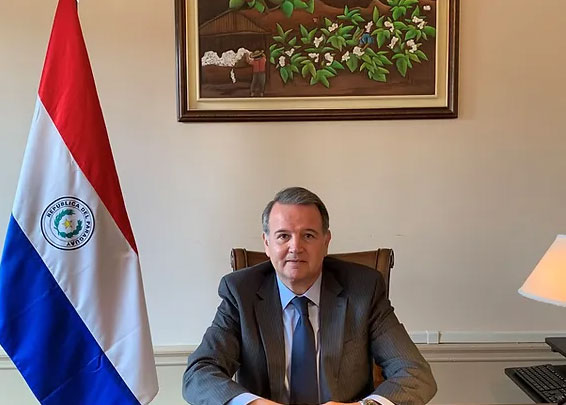
LATAM FDI: Vladimir Pimentel is with us today. He is the deputy general director of an organization in the Dominican Republic called ProDominicana.

Hello Vladimir. I’ll let you introduce yourself, say a bit about your biography, and tell us about your organization and how it promotes foreign direct investment in the Dominican Republic.

Vladimir Pimentel: Okay, thank you very much. I’m really happy to be with you on this important podcast offering information to different people interested in foreign direct investment in the Dominican Republic. As you told me, we will talk about investment in my country and maybe the trends and what is happening in Latin America and the world as they relate to FDI. Well, it’s not simple to talk about yourself. So, I want to say that I am an economist. I have been working for a long time in the academic sector as a professor in international business and different economics areas. And I have been working in international trade maybe since 2008. At this moment, I am, as you mentioned, the deputy general director of ProDominicana. ProDominicana is the center for export and investment promotion in the Dominican Republic. I know that you know very well how important it is for the promotion in a country, the agency in charge of bringing new capital and foreign direct investment to the country. This is true, especially when discussing a small or developing economy like the Dominican Republic. And I am, of course, a person who is interested in these topics.

LATAM FDI: Well, we’ll cover, hopefully, a lot of interesting information about foreign direct investment in the Dominican Republic for our audience today. To start in a general sense, from a global perspective, what are some of the challenges and opportunities that exist in the world today for attracting foreign direct investment to Latin America and the Caribbean in general?

Vladimir Pimentel: Well, one of the, we can say, elements that I try to explain and what I will discuss about challenges and opportunities is that maybe a challenge could be an opportunity for a country. It will depend on the region, area, what is going on, the flows, and how it will impact your country. If you are having a problem in a region and some investors are moving out, it means they will move to another place. For the country with the inflow investment, it is an opportunity, but the one with the outflow investment may have a problem. Okay. But in general, what all the international organizations like the World Bank, IDB, and United Nations agree on is that we are having this global change. There are uncertainties because of the war between Russia and Ukraine and what is going on in Israel. These situations signify risky trends or a complicated moment for investors to decide on where to go with their capital. So that gives us a more complex possibility to convince an investor to come to make foreign direct investment in the Dominican Republic or to invest in any region, not only Latin America, because they are deciding with greater care. And that is very important.

Another part that is happening is that everybody talks about the effects of COVID. It’s not only that we had COVID-19, is that because of COVID we still have a slower environment for investment. We are three and almost four years after the COVID that stopped the world. And we have this shock in the two parts, like demand and offer. That’s why the world is growing in recent years in slow motion. And that’s why you can see that countries like China have issues with their exports. Having a slow-moving world in economics and trade is what is happening. But we have the perspective or the prospects that for 2024, we will have a better perspective. All indications are that trade, in general, will grow and that GDP will move. Like, for example, in the case of the Dominican Republic. We are going to achieve a percentage of growth of about 5%.  We have had this average for between 30 and 40 years. That is one of the main, let’s say, opportunities as they relate to foreign direct investment in the Dominican Republic.

I think that what I mentioned in the beginning if we have more complex dynamics in the other hemisphere of the world, it means that we have a quieter or more comfortable and more stable region for investors. Another opportunity is what is happening. And it’s specifically for foreign direct investment in the Dominican Republic. We have been working a lot in the last few years to make the Dominican Republic a real regional hub for logistic activities, not only for the maritime sector. We include air transport and the tourism sector, using the planes that are bringing the tourism and sending our products to other countries. One big opportunity that we have in the Dominican Republic is that you have a Caribbean region that has been getting more dynamic in recent years. And the expectation is that in 2024 and 2025, many countries in the region will have important growth, including Panama. Besides that, Panama is in Central America, but it’s very important for the Caribbean. Everybody knows Guyana because of the petroleum activity and investment they are experiencing. The Dominican Republic and other small islands have a very dynamic approach, including tourism. It is very important

So, in our opinion, many investors are looking to the region and the Caribbean and specifically looking to make a foreign direct investment in the Dominican Republic.

LATAM FDI: Getting into the specific realm that you just mentioned, what trends are most impactful at this time on foreign direct investment in the Dominican Republic specifically?

Vladimir Pimentel: Okay. You know that one of the main problems historically that we are having in the Dominican Republic is the energy sector. We are still having blackouts this year, in 2024. That’s why, in recent years, the government of President Luis Abinader has concentrated on attracting foreign direct investment in the Dominican Republic in the energy sector. We are pushing a lot to bring investors into the energy sector because we have a concrete and specific problem. We also have a private sector in the Dominican Republic that is investing more and trying to have more reliable electricity and connections in the country. At the same time, we have the presence and the support of financing by organizations like the World Bank,  the International Development Bank, and other regional organizations that are financing and supporting this sector. And that’s why last year, the energy sector was the second sector in investment attraction after the tourism sector. Okay? And of course, and that’s one trend and that’s an opportunity in the world that we are looking for a green world. And that’s why green energy is growing a lot because of foreign direct investment in the Dominican Republic.

We have, let’s say, a general plan for having a new matrix for our energy production. So that’s maybe, in my opinion, one of the most important trends. And, of course, the tourism sector. We recently announced that we reached ten million tourists in the country last year. To support that, you need new investments, new hotels, and better hotels with different offers of services for tourism. And that’s why we are having, like, let’s say we can say that it’s a new development in different regions like Pedernales, an area, a province in the south of the country. You know that in the Dominican Republic, we have developed the east for the tourism sector. So, we have a developed east area, and now we are making the southwest area a new pole. I don’t know if you can say that in English, or like a new and specific space for bringing tourism.

LATAM FDI: So, when investors look at Latin America and the Caribbean, they look at the Dominican Republic, and they see the things that you just mentioned, such as an influx of foreign direct investment in the electricity sector and the tourism sector. When you consider the broader economy, what case would you make as to why businessmen should bring their foreign direct investment to the Dominican Republic? What are the advantages? What benefits are there? And beyond the two sectors that you just mentioned, what other opportunities for foreign direct investment in the Dominican Republic exist?

Vladimir Pimentel: Well, we can say that the interesting thing for investors now is the trend and dynamism in the economy in general. If you are going to establish your business, if you are going to invest in a specific country, you need to, of course, it will depend on the sector, it will depend on the interest. But normally, you need a very dynamic economy, and you know that this economy is growing. Normally, for a small country, you need a strong structure for exports and for having good, important, and better connections with the world. It means what happened in the country is that about 70% of the exports in our country are done by foreign direct investment in the Dominican Republic. So this means that if investors look and they are going to export, they must make sure that the Dominican Republic has a good connection that you are exporting.  Additionally, there must be good related services and a very good legal system to support the investors and trade.

To have a stable country like the Dominican Republic is a basic issue. That’s why in the current government, specifically, the president has established a program that we call “Zero Bureaucracy.” This means that every governmental institution that has any specific process, or let’s say, service for foreign direct investors or local investors, exporters in general, or businessmen or businesswomen in the Dominican Republic, needs to eliminate any distraction or any unnecessary step or process in investment or setting up a business. That’s very important because that program connects with the competitiveness that we are developing in the country to promote foreign direct investment in the Dominican Republic. Normally, you hear that in many countries they have plans, that they have strategies, that they have programs, of course. However, what happens normally in the public sector, historically in our countries, is that we generate a document or a very beautiful design document. What is happening, and in my personal opinion, what my country is offering is the facilitation of foreign direct investment in the Dominican Republic. It makes a difference to have a president that is a businessman.

And that dynamic is making all the, let’s say, policymakers think like policymakers but act like businessmen. We can mention many things. We have additional specific laws that offer incentives in different sectors. We have the free zone sector, we have the film sector, and we have incentives and facilitation. You can have that. But the important thing is to have a long-term strategy, a long-term development. You need to think of more relevant elements than incentives, like less or no taxes. We need to make and continue the development. We must engender this culture in the Dominican Republic’s people, officials, government, and business sectors.

LATAM FDI: In recent years, the Dominican Republic has successfully attracted foreign direct investment. One sector that stands out for me is medical devices, for instance. What have you done differently to bring about this kind of success in this area of foreign direct investment in the Dominican Republic? Do you have different tools, incentives, and initiatives that you’ve put into place? Could you explain a little bit about that, please?

Vladimir Pimentel: Well, I think that, in general, to have a specific regime in the free zone sector with an incentive in the different, let’s say taxes, that if you are going to export, of course, if you are going to transform the goods and you are going to sell abroad, this is like a very important attraction. All the investors that make inquiries ask me about the free zones. But in the medical devices sector specifically, one of the important things is to have a specialized agency for services for the investors. First, this sector, you know, has an important demand worldwide. It’s not only in a specific region, but the demand is also worldwide. What is happening is that it’s not because this near-shoring is new. We are talking more now to companies interested in foreign direct investment in the Dominican Republic. Many of them are looking at getting closer to the markets that are buying their products, and the United States is one of the main countries buying this type of product. At the same time, Latin America is growing and has more demand. It focuses on spending more on healthcare and having better products for attending or giving health services to Latin Americans.

And that’s why companies are bringing their investors to the Dominican Republic, the Caribbean, and Central America. The support for this sector is very specific and very specialized. It needs good global connections. Additionally, it needs a good possibility to have, how do you say, the raw materials for their processes. They should be in a specific place. We are making this linkage between producers in the Dominican Republic for the established companies in the area.

Additionally, a very basic issue is that we are developing human resources. The universities in the Dominican Republic and training technicians. They are supporting this area with master’s and different degrees for engineering in this sector so that investors do not need to bring in workers from other countries. So, we are offering these resources in the Dominican Republic. We can talk about the Dominican Republic as a hub for this sector because it needs a quick answer when they have a demand when they need to sell because it’s like a new vaccine that you have or a new disease in a specific country.

So, you need to dispatch the product at a good time and in a good manner. That’s why foreign direct investors are looking at countries like the Dominican Republic to establish their logistics activities, import, export, and do what we call reexports, which they need to bring from other companies or countries. They bring items to the Dominican Republic and re-export what they are manufacturing or what they are only importing to re-export.

LATAM FDI: Just to give the listeners an idea of what things have looked like from a macroeconomic point of view, what has foreign direct investment in the Dominican Republic looked like in recent years? Can you give us some values, identify some sectors, and maybe give us an idea of where this investment in terms of other countries is coming from?

Vladimir Pimentel: Yes, sure. As I mentioned, I’m not sure if I did this part, but what happened last year in 2023 is that we will reach about 4.3 billion dollars. For the Dominican Republic, that is a record. And it’s like, let’s say we have been with an average investment flow of about 2.5 billion dollars in the last ten years. Okay, just for an idea, we have already reached four billion in 2023. Last year, we reached at least this projection, but it will be more than 4.2 billion dollars. In general, if you see the flow of which country is normally the United States. In 2022 we had like 1.5 billion from the United States. You have specifically Spain and Mexico that are important in the flows, specifically in the tourism sector. Additionally, you can mention that Canadian companies specialize in the mining sector and that we have an important participation in our mining exports. And then after that, you have countries like Germany in specific areas such as the energy sector and specific manufacturing activities.

Specifically, when we are talking about sectors, I mentioned tourism, energy, mining, and transportation are important in recent years. What is generally related to logistics is growing fast, and there are many opportunities for local and foreign investors. Additionally, this is like we can say we are following in ProDominica what we call signals for investors and logistics is one of the most important signals. It means that company investors are saying that they are looking to invest in Latin America, maybe in a specific country, or just looking at a potential group of countries. But logistics and energy are now the most active sectors for foreign direct investment in the Dominican Republic, according to our research.

LATAM FDI: Given that we just looked a little bit at the past, what do you see in terms of the future of foreign direct investment in the Dominican Republic in 2024?

Vladimir Pimentel: Yes, in the future, and we can maybe look a little bit more than 2024. As you may know, investment flow in the sector that we are looking for and in the sector that we are having is a more long-term view. Energy is still an important sector for foreign direct investment in the Dominican Republic because there are specific programs, specific needs, and specific plans in the government for 2024 and further into the future. That’s why we will have more investment and more flows and we are working on that. Of course, we continue focusing on green energy, trying to change, as I mentioned, the energy matrix. Another important sector for countries like the Dominican Republic is the one related to information technologies. All sectors need to improve in this area of technology. Businesses require connections for communications. You are in the United States now and I’m here in the Dominican Republic, and we are having this conversation that gives you productivity. It allows me to provide information on foreign direct investment in the Dominican Republic to a global audience. Another very interesting discussion deals with artificial intelligence. This is changing the trend. We have recently a new national strategy to see how the Dominican Republic will answer to the AI trend and how we will bring new capital related to it to the Dominican Republic.

And additionally, and maybe it’s not the last one. Still, the last thing I will mention is that we are focusing on investors who will create and strengthen the export capacity in the Dominican Republic. As a small country, as a limited country related to population, GDP, and land, we need to increase the capacity to export in our country. We are trying to do this, and our dream is to double our exports by 2030. It’s a big dream. It’s a really big dream, but that can happen only with the support of information technology and making that work for people and our exporters in general.

LATAM FDI: Vladimir, we’ve covered a lot of ground here in a relatively brief period discussing foreign direct investment in the Dominican Republic. And we find out that many of the folks who listen to these podcasts after they hear our speakers’ presentations have questions so that we can get them good answers. We would like to ask our speakers like yourself, if somebody wants to get in contact to be able to get information directly from you, how can they contact you?

Vladimir Pimentel: It’s very easy. One of the things that as an agency that is in contact with investors, exporters, and internationally through our web page, www.prodominicana.gob.do, or by email, you can send any questions or any information or express any interest that you have in the Dominican Republic to:

vladimir.pimentel@prodominicana.gob.do.

LATAM FDI: What we’ll do is we typically have a transcript section on the web page that hosts our podcast, and above the transcript, in addition to those things that you just said, I’ll put a link to your LinkedIn profile so that people can contact you that way.

Vladimir Pimentel: That’s perfect. And I hope that you can understand my Spanglish.

LATAM FDI: It’s very good. I’m sure that everybody understood. I thought it was wonderful.

Vladimir Pimentel: Thank you very much. We’re really happy and thankful for this opportunity to talk about foreign direct investment in the Dominican Republic and the region to your audience.

LATAM FDI: Well, thanks to you. We appreciate it. We know that our listeners will find what you had to say very interesting. Have an enjoyable day.

Vladimir Pimentel: Thank you. Bye.


Projections are for USD 1.6 billion in foreign investment in Guatemala in 2024

Projections are for USD 1.6 billion in foreign investment in Guatemala in 2024

According to the president of the country’s central bank, growth due to foreign investment in Guatemala will increase this year, and these conditions impact the country’s development.

The president of the Bank of Guatemala (Banguat), Álvaro González Ricci, explained the dynamics of macroeconomic growth supported by foreign investment in Guatemala.

The figures increase depending on the investment capacity and the country’s conditions to promote said growth, estimated at USD 1.6 billion (around 12.6 billion Quetzales) for 2024.

Regarding the projections for the close of 2023, according to Banguat, foreign investment in Guatemala closed at 1.5 billion dollars (around Q11.7 billion). The forecast for this year is that this level of foreign investment in Guatemala will increase. According to data from the Central Bank, the figures were adjusted because a company related to maritime transport and another oil company will cease their investments in the country in 2024.

Confidence in foreign investment in Guatemala

In a recent presentation of the global and national economic panorama promoted by the Chamber of Industry of Guatemala, Raúl Bouscayrol, president of the Board of Directors of the institution, emphasized that with the change of government that the country has recently experienced, the certainty of the increase in foreign investment also grew. He communicated that it is estimated that foreign direct investment in Guatemala will surge above USD$1.6 billion dollars.

Bouscayrol pointed out that the confidence index in the economy rose from 43 percentage points to 46% as of October last year. This reflects a high level of confidence expressed by economic actors despite the electoral situation in Guatemala at that time.

“The economic scenario is positive, and we hope that tranquility will soon return to the markets and calm to investors since Guatemala’s location is privileged and an excellent destination for investment,” explained Bouscayrol.

However, the conditions for foreign investment and commercial exchange are accompanied and determined by local investment in infrastructure, public policies to promote industrialization, the establishment of clear investment rules and long-term plans, and generating employment.

Macroeconomic positions

The head of Banguat has insisted that despite the country’s conditions between June 2023 and the second week of 2024, the country risk rating agencies continue to evaluate the Guatemalan macroeconomic environment positively.

He pointed out that these confidence ratings resulting from economic dynamics could increase to the extent that the certainty that the country grants to investors also increases, according to the considerations of the firm Stand & Poors.

On the other hand, the president of Banguat, González Ricci, explained that favorable political events increase investor confidence and strengthen the country’s regulatory framework, resulting in increased foreign investment in Guatemala.

Sectors ready to receive investment

While 2024 has just begun, we can analyze current trends and official reports to provide an informed picture of the prominent economic sectors for foreign investment in Guatemala:

Top Potential Sectors

Information and Communications Technology (ICT): This sector saw a sizable chunk of FDI in 2021 and 2022, and this trend is expected to continue. Data centers, cybersecurity, software development, and telecommunications offer promising opportunities.

Manufacturing: This sector, particularly textiles and apparel, benefits from preferential trade agreements and government incentives. Nearshoring opportunities due to geographic proximity to the US further enhance the appeal.

Financial and Insurance: Guatemala’s growing middle class and rising insurance penetration present substantial investment potential. Fintech startups and specialized insurance products for underserved segments hold promise.

Tourism: Guatemala’s rich cultural heritage and diverse natural beauty make it a prime tourist destination. Investments in sustainable tourism infrastructure, eco-lodges, and adventure activities can be lucrative.

Renewable Energy: Guatemala aims to increase its share of renewable energy, especially solar and hydro. Investing in renewable energy projects aligns with global sustainability goals and offers attractive returns.

Other noteworthy sectors for foreign investment in Guatemala

Construction: Infrastructure development for housing, logistics, and tourism presents steady growth potential.

Agriculture and Agribusiness: Investing in value-added processing and sustainable agricultural practices can unlock significant opportunities.

Healthcare: Guatemala’s healthcare system requires modernization, offering scope for investments in hospitals, clinics, and medical equipment.

Prospects for foreign investment in Guatemala in 2024

Guatemala’s prospects for foreign investment in 2024 shine brightly, fueled by a mix of economic resilience, strategic positioning, and growing international interest. Let’s unpack the data:

Economic Stability: Guatemala boasts a steady GDP growth trajectory, averaging 3.5% annually since 2010, even weathering the pandemic’s storm. This stability, coupled with low inflation and a sustainable debt-to-GDP ratio, paints a picture of a mature and reliable market.

Global Appeal: Guatemala’s strategic location, bordering Mexico and with easy access to the US market, makes it a prime candidate for nearshoring. Coupled with advantageous trade agreements like CAFTA-DR, this proximity unlocks access to a vast consumer base for foreign investors.

Sectorial Dynamism: Key sectors like Information and Communication Technology (ICT) are booming, with FDI soaring in data centers, cybersecurity, and software development. Fueled by Guatemala’s cultural and natural treasures, tourism is poised for further growth, offering ripe opportunities in eco-tourism and sustainable infrastructure.

Investment Climate: The Guatemalan government actively welcomes foreign investment. Initiatives like the “Guatemala Investment Plan 2023-2027” offer tax breaks, streamlined permitting processes, and infrastructure development projects tailored to attracting foreign capital.

International Recognition: The International Monetary Fund (IMF) and World Bank acknowledge Guatemala’s economic resilience and immense potential. Their positive evaluations bolster investor confidence and pave the way for increased foreign participation.

With prudent economic policies, a diversified and growing market, and proactive government support, Guatemala stands ready to embrace foreign investment and propel its economic engine forward.

So, whether you’re a tech giant eyeing ICT expansion, a tourism developer enticed by pristine Mayan ruins, or an energy leader seeking renewable opportunities, Guatemala beckons with open arms and promising horizons. In 2024, the time to invest is now.


A Deep Dive into the Thriving Commercial Fishing Industry in Chile

A Deep Dive into the Thriving Commercial Fishing Industry in Chile

With its extensive coastline stretching over 6,400 kilometers, Chile boasts one of the most lucrative commercial fishing industries globally. In this blog post, we’ll delve into the depths of the commercial fishing industry in Chile, exploring its size, value, foreign direct investment, workforce, government support, and export prowess.

Catch Size and Value

The commercial fishing industry in Chile is a powerhouse, reeling in an impressive quantity of fish annually. According to recent data, Chile’s total fish catch surpasses 4 million metric tons, making it a significant player in global seafood production. This output is a testament to the rich marine biodiversity along Chile’s coast, featuring species like anchovies, hake, and salmon.

In terms of value, the Chilean fishing industry contributes substantially to the country’s economy. The estimated market value of the catch exceeds billions of dollars, reflecting not only the volume but also the high demand for Chilean seafood in international markets.

Foreign Direct Investment (FDI) in the commercial fishing industry in Chile

Chile’s commercial fishing sector has attracted substantial foreign direct investment, fueling its growth and technological advancements. International companies recognize the potential in Chile’s abundant fishing grounds and have significantly contributed to the industry. The infusion of FDI has facilitated the adoption of modern fishing techniques, sustainable practices, and state-of-the-art processing facilities.

The exact figures for foreign direct investment in the commercial fishing industry in Chile are staggering, with numerous global players establishing partnerships and subsidiaries to capitalize on the country’s rich aquatic resources. This collaborative effort has enhanced the efficiency of operations and contributed to the region’s overall economic development.

Figures for foreign direct investment in the commercial fishing industry in Chile include:

Overall FDI in Chile’s Agriculture & Fisheries:

2022: USD 266.55 million (reported by Central Bank of Chile)

2021: USD 151.788 million

Average (2009-2022): USD 182.117 million

Workforce in the Fishing Industry

The thriving fishing industry in Chile is a significant employer, providing livelihoods for many workers. The sector supports diverse job roles, from fishermen braving the Pacific waves to those involved in processing and distribution. Statistics indicate that hundreds of thousands of individuals are directly or indirectly employed by the fishing sector, highlighting its significance as a primary source of employment in Chile.

The workforce comprises skilled fishermen, scientists dedicated to sustainable practices, and professionals engaged in the logistical and managerial aspects of the industry. The symbiotic relationship between the industry and its workforce underscores its pivotal role in shaping local economies. Some of the leading employers in the Chilean commercial fishing industry include:

  • Marine Harvest (now Mowi): Mowi, a Norwegian seafood company, is one of the world’s largest producers of Atlantic salmon. It has been involved in salmon farming operations in Chile, contributing significantly to the country’s aquaculture sector.
  • Cermaq (a subsidiary of Mitsubishi Corporation): Cermaq, a Norwegian aquaculture company, is a significant player in the Chilean salmon farming industry. Mitsubishi Corporation acquired Cermaq in 2014, emphasizing its global presence.
  • Cooke Aquaculture: Cooke Aquaculture, a Canadian seafood company, expanded its operations to Chile through acquisitions. The company is involved in salmon farming and processing, contributing to Chile’s export of salmon products.
  • Australis Seafoods (acquired by Agrosuper): Australis Seafoods, a Chilean salmon farming company, was acquired by Agrosuper, a Chilean food conglomerate. While both are Chilean companies, the involvement of foreign investment in Agrosuper reflects the global nature of the industry.
  • Ventisqueros (acquired by Cermaq): Ventisqueros, a Chilean salmon farming company, was acquired by Cermaq in 2018. Cermaq, as mentioned earlier, is a subsidiary of Mitsubishi Corporation, a global conglomerate.
  • Blumar Seafoods: Blumar Seafoods is a Chilean company that has formed partnerships with foreign investors. While the company is Chilean, these partnerships may involve foreign companies contributing to the industry.
  • AquaChile (acquired by Agrosuper): AquaChile, a prominent Chilean aquaculture company, was acquired by Agrosuper in 2018. Agrosuper, although Chilean, is a conglomerate with diverse investments.

Government Support

Recognizing the importance of the commercial fishing industry in Chile, the government has implemented supportive policies and initiatives. These measures aim to ensure sustainable practices, responsible resource management, and the sector’s overall growth. Government agencies collaborate with industry stakeholders to enforce regulations, monitor fishing activities, and promote research on marine ecosystems.

Financial assistance, subsidies, and incentives are also provided to encourage responsible fishing practices and investments in technology that minimize environmental impact. The government’s commitment to balancing economic growth with ecological sustainability reflects a forward-thinking approach to the challenges faced by the fishing industry.

The Chilean government has implemented various support programs to promote and sustain the growth of the commercial fishing industry in Chile. These initiatives are designed to ensure responsible and sustainable practices, encourage investment, and foster the sector’s overall development. Here is a list of key government support programs for the Chilean commercial fishing industry:

  • Fisheries Management and Regulation: The Chilean government has established comprehensive fisheries management and regulation frameworks to monitor and control fishing activities. These regulations are crucial for maintaining sustainable practices, preventing overfishing, and preserving marine ecosystems.
  • Research and Development Funding: The government allocates funds for research and development in the fishing industry. This includes initiatives to improve fishing technologies, sustainable resource management, and developing innovative practices that reduce environmental impact.
  • Subsidies for Responsible Fishing Practices: Financial incentives and subsidies encourage fishermen and fishing companies to adopt responsible and sustainable fishing practices. This may include support for implementing selective fishing techniques, gear modifications, and vessel upgrades that minimize bycatch and environmental impact.
  • Aquaculture Development Programs: The Chilean government promotes the sustainable growth of aquaculture through specific development programs. This includes support for the responsible farming of fish and shellfish, technological advancements in aquaculture practices, and measures to mitigate environmental risks associated with aquaculture operations.
  • Financial Assistance for Small-Scale Fishermen: Specialized financial assistance programs target small-scale and artisanal fishermen. These initiatives support equipment purchases, vessel upgrades, and capacity-building programs to enhance the livelihoods of smaller fishing communities.
  • Monitoring and Surveillance Systems: The government invests in advanced monitoring and surveillance systems to enforce fishing regulations effectively. This includes using satellite tracking, electronic monitoring, and patrol vessels to combat illegal fishing activities and ensure compliance with established rules.
  • Export Promotion and Market Access: Government agencies work to promote the export of Chilean seafood products. This includes facilitating market access, participating in international trade events, and supporting fishing companies in meeting quality and safety standards demanded by global markets.
  • Environmental Conservation and Protection Measures: The Chilean government actively participates in environmental conservation efforts related to the fishing industry. This involves implementing measures to protect marine habitats, biodiversity, and ecosystems, ensuring a balance between economic activities and environmental sustainability.
  • Training and Education Programs: The government supports training and education programs for individuals in the fishing industry. These programs focus on enhancing the skills of fishermen, promoting safety at sea, and educating industry stakeholders about sustainable practices.

These government support programs collectively contribute to the sustainable growth and success of the commercial fishing industry in Chile, ensuring its resilience in the face of evolving challenges.

Export Sales and Global Market Presence

Chilean seafood is a sought-after commodity in international markets, and the country consistently ranks among the top global exporters of fish and seafood products. The United States, European Union countries, China, and Japan are some of the significant destinations for Chilean seafood exports.

Export sales from the Chilean commercial fishing industry contribute significantly to the country’s trade balance. The diverse range of products, including fresh and frozen fish, seafood preparations, and aquaculture products, caters to consumers’ varied preferences worldwide. The industry’s ability to meet stringent international quality standards has further solidified Chile’s position as a reliable supplier in the global seafood market.

The commercial fishing industry in Chile stands as a beacon of success, combining natural abundance, technological innovation, and responsible governance. The sector’s impressive catch size, substantial economic value, foreign investment, large workforce, government support, and global market presence underscore its vital role in Chile’s economic landscape. As the industry continues to navigate the waters of sustainability and growth, it serves as a model for others, demonstrating that a harmonious balance between economic prosperity and environmental responsibility is achievable and essential for long-term success.


Software Development in Argentina: An Ascending Trajectory

Software Development in Argentina: An Ascending Trajectory

Latin America’s expanding technology scene boasts several rising stars, and Argentina undoubtedly shines among them. This blog post delves into the intricacies of software development in Argentina, examining its competitive positioning, dominant software types, educational pillars, and talent availability.

Thriving in a Competitive Landscape

Argentina occupies a noteworthy position in the Latin American software development landscape. With a market exceeding $11 billion, it ranks third in the region, only behind Brazil and Mexico (Technavio, 2023). However, its ascendancy does not stop there. A projected 8.3% compound annual growth rate (CAGR) for the Argentinian IT market between 2022 and 2027 paints a picture of exponential growth in software development in Argentina, potentially propelling it further up the regional ladder (Technavio, 2023). This trajectory suggests that Argentina is not just a competitive player but an emerging force to be reckoned with in the global software development arena.

Here are some of the top software development companies in Argentina, known for their expertise, innovation, and client satisfaction:

  • Globant: A global leader in digital and cognitive transformation services, Globant employs over 20,000 professionals across 17 countries. They work with Fortune 500 companies on cutting-edge projects, using their AI, big data, and cloud computing expertise.
  • Baufest: Founded in 1982, Baufest is a renowned software development company with over 2,500 employees across ten countries. They specialize in custom software development, enterprise resource planning (ERP) solutions, and IT consulting.
  • Desarrolla: With over 1,000 employees and offices in Argentina, Mexico, and the United States, Desarrolla offers various software development services, including web and mobile app development, cloud solutions, and digital marketing.
  • Globant Labs: A subsidiary of Globant, Globant Labs focuses on emerging technologies such as AI, blockchain, and the Internet of Things (IoT). They help clients experiment and innovate with these technologies to create new business opportunities.
  • MercadoLibre: This e-commerce giant started in Argentina and has become a leading online marketplace in Latin America. Their in-house software development team creates and maintains the MercadoLibre platform and develops new features and functionalities.
  • Digital House: A leading digital education platform, Digital House offers boot camps and courses in software development, data science, UX/UI design, and other tech-related fields. They have a strong presence in Argentina and other Latin American countries.

Beyond Specialization in software development in Argentina

The expertise in software development in Argentina transcends mere specialization. Its developers weave diverse software offerings, from sophisticated e-commerce platforms like MercadoLibre (Gómez-Mejía, 2020) to innovative e-government solutions and cutting-edge financial services software (The World Bank, 2023). This versatility extends to mobile app development, with Argentinian talents contributing to global giants like TikTok and Uber (Business Insider, 2023). This adaptability and range are testaments to the agility and ingenuity of the personnel employed in software development in Argentina.

Nurturing Talent: The Educational Backbone

A robust educational framework underpins this technical prowess. Argentina boasts strong universities like the National Technical University (UTN) and the University of Buenos Aires (UBA), consistently ranked among the best in Latin America (QS World University Rankings, 2023). These institutions offer top-tier computer science and engineering programs, equipping graduates with the skills and knowledge needed to thrive in software development in Argentina. Additionally, a burgeoning network of boot camps and coding schools supplements traditional education by providing rapid upskilling opportunities and catering to diverse learning styles (OECD, 2023). This commitment to continuous learning ensures a steady influx of talent into the industry’s ever-growing workforce.

A Plentiful Harvest: The Talent Landscape

Argentina’s skilled software developer pool is brimming. Coursera’s Global Skills Index Report 2020 positions Argentina 22nd globally in data science skills (Coursera, 2020), highlighting its proficiency in a crucial emerging technology. Moreover, Argentina reigns supreme in Latin America in various tech skills, from programming languages like C and Python to AI frameworks and cloud computing platforms (Coursera, 2020). This abundance of talent, coupled with competitive salaries and a thriving tech culture, attracts skilled professionals from across the globe, further enriching the ecosystem (BairesDev, 2023).

Challenges and Opportunities: Looking Ahead

While the software development in Argentina scene shines brightly, it has challenges. Bridging the gap in infrastructure and boosting investment in R&D is crucial for sustained growth (World Bank, 2023). Fostering a more inclusive tech environment that welcomes women and other underrepresented groups will unlock the industry’s full potential (UNESCO, 2023).

Despite these challenges, the future of Argentina’s software development industry is filled with promise. Its robust talent pool, diverse expertise, and educational commitment position it for global leadership. As Argentina continues to navigate the digital landscape with its signature tango-like passion and agility, the world can expect a wave of innovative software solutions emanating from the heart of South America.

What to expect from Latin America and the Caribbean in 2024

What to expect from Latin America and the Caribbean in 2024

Optimism in 2024 and moving forward

There is no shortage of reasons for optimism for Latin America and the Caribbean in 2024. For example, consider a couple of topics. The first is demographics. The region’s population is still relatively young, and the population peak is expected to occur in four to five decades of the present century. This fact has potentially significant implications for investment, consumption, and competitiveness. The second issue is productivity. The region’s productivity could be structurally higher, but there is room for it to significantly increase.

Now, consider economic policy. Like other regions, Latin America and the Caribbean (LAC) were also exposed to the disruption of global value chains during the pandemic years. However, prudent monetary management led to exemplary inflation control, with rates substantially lower and less persistent than in advanced countries. Furthermore, there is something virtuous about the region’s prudent macroeconomic management, which has largely been maintained even amid changes in political orientation in governments.

Decarbonization can be an opportunity for Latin America and the Caribbean in 2024

But the region’s attractions go beyond that. Unlike any other, it has enormous potential to become a great driver of solutions for decarbonization and food scarcity. Compared to advanced countries, the sustainability agenda is not a wedge that divides the political debate. On the contrary, a point of convergence in public policy formulation has helped expand and accelerate these agendas.

The growing global need to accelerate decarbonization creates enormous space for influence for Latin America and the Caribbean in 2024. Consider ‘powersharing, ‘the business strategy of geographically locating production associated with the availability of green, safe, affordable, and abundant energy. The region has the cleanest electricity grid in the world – Uruguay and Paraguay, for example, have almost 100% green electricity matrixes, and Brazil’s is 85% green. At the same time, the global average is only a fraction of that, which makes the region attractive for energy-intensive industrial investments.

The region has enormous potential for producing green hydrogen (H2V) at competitive costs. It has large reserves of essential critical minerals for the new economy, such as lithium, copper, nickel, graphite, silicon, rare earths, high-grade iron ore, and many other minerals. It is rich in freshwater, varied biomes, and forests. It has gigantic potential for the bioeconomy, many fertile lands still available, a lot of biomass, an incomparable potential to participate and expand the carbon market, and is a world leader in technologies, business models, and biofuel production. Latin America and the Caribbean in 2024 is also a natural candidate to participate in the geographical diversification of manufacturing production associated with the construction of resilience networks against extreme climate phenomena and has been the target of nearshoring and friendshoring strategies, relocating industrial plants that were previously located in Asia to serve the US and European markets.

With this unique set of attributes, the region can produce industrial goods with far fewer emissions than advanced countries and an unparalleled time-to-market and cost structure. Agriculture, in turn, can significantly expand production while advancing sustainable and regenerative technologies, using degraded lands and other environmentally friendly techniques. Powershoring is already attracting investment, including sectors such as steel, green hydrogen (H2V), cement, paper and pulp, fertilizers, SAF, glass, ceramics, chemicals, and others that need to decarbonize to protect business competitiveness and meet environmental compliance.

And consider geopolitics. Unlike other regions, Latin America and the Caribbean are shielded from many of the most complex issues, providing space to pragmatically explore trade and investment opportunities. This issue is not minor. After all, geopolitics increasingly determines the location of investments.

Value addition is critical for the realization of regional potential

The region presents itself to the world as a source of solutions to significant issues, and all of this can lay the foundations for more sustainable and sustained growth. However, for the region to realize its full potential, it will be necessary to focus on value addition, ensuring that international markets function properly, and address unilateral protectionist measures, subsidies, the imposition of rules, standards, certifications, and other barriers. Tariffs can neutralize the environmental comparative and competitive advantages of LAC.

According to IMF estimates, the region is expected to grow modestly in 2024. Still, at a much higher rate than advanced countries, the gap with the average for emerging countries is decreasing. It would not be surprising, as has happened recently if the growth recorded is more significant than expected. Despite the global decline in Foreign Direct Investment (FDI), the region’s relative and absolute participation in FDI has been increasing. It increased from 9% of the total in 2021 to 16% in 2022, and projections indicate further increases in the coming years. Even in a complex fiscal and international context, some countries in the region have seen an improvement in risk indicators, and several of the largest global fund managers are already increasing their exposure in LAC.

Despite the difficulties faced by Latin America and the Caribbean in 2024, there is evidence that the region will be better this year, and the future winds should continue to blow favorably. It is up to governments, the private sector, banks, and multilateral organizations of Latin America and the Caribbean to do their part to help turn the region’s potential into reality.

The Economy of Bogotá: A Driving Force in Colombia’s Prosperity

The Economy of Bogotá: A Driving Force in Colombia’s Prosperity

Bogotá, Colombia’s vibrant and bustling capital, is a key player in shaping the economic landscape of the entire South American nation. As the primary economic player in Colombia, the economy of Bogotá boasts a diverse range of industries, attracting significant domestic and foreign companies, supported by a robust educational infrastructure. In this blog post, we will delve into the significance of Bogotá’s economy, exploring the industries that thrive within the city, the major contributors to its economic health, the educational institutions shaping its workforce, and the enticing opportunities it presents for foreign direct investment.

Industries Shaping the Economy of Bogotá

Bogotá’s economy is characterized by its diverse industrial base, contributing significantly to Colombia’s overall economic health. The city is a hub for various sectors, with services, manufacturing, and technology playing pivotal roles. The financial services sector, including banking and insurance,  also stands out as a cornerstone of Bogotá’s economy, with the city hosting the headquarters of major Colombian financial institutions. Among them are:

  • Bancolombia
  • Grupo Aval
  • Banco de Bogotá
  • Banco Davivienda
  • Banco Popular
  • Banco GNB Sudameris

Manufacturing is another crucial pillar of the economy of Bogotá, encompassing a wide array of industries such as textiles, pharmaceuticals, and automotive. Bogotá’s strategic location and well-developed transportation infrastructure make it an ideal center for manufacturing and distribution activities. Below is  a small sample of the many domestic and foreign manufacturers that have a presence in Bogotá:

Domestic Manufacturers

  • Bavaria: This Colombian brewing giant is the second-largest beer company in Latin America and the eighth-largest globally. Bavaria is best known for its Aguila beer brand, but it also produces a variety of other beers, malts, and soft drinks.
  • Grupo Corona: Another major Colombian brewery, Grupo Corona, is the world’s 15th largest beer company. It produces beers such as Poker, Aguila Light, and Club Colombia, as well as soft drinks and bottled water.
  • Cementos Argos: This Colombian cement company is one of the largest in the Americas, operating in 18 countries. Cementos Argos produces various cement products, including concrete, lime, and other building materials.
  • Grupo Empresarial Colombiano (Grupo Nutresa): This Colombian food conglomerate is one of the largest in the Andean region. Grupo Nutresa produces various food products, including meat, poultry, bakery goods, pasta, and snacks.
  • Grupo Sura: This Colombian financial services company is one of the largest in Latin America. Grupo Sura offers a variety of banking, insurance, and investment products.

Foreign Manufacturers

  • 3M: This American multinational conglomerate manufactures various products, including adhesives, abrasives, medical supplies, and electronics. 3M has a large manufacturing facility in Bogotá.
  • Danone: This French multinational food company manufactures dairy products, bottled water, and baby food. Danone has a large manufacturing facility in Bogotá.
  • PepsiCo: This American multinational food and beverage company manufactures various products, including snacks, soft drinks, and bottled water. PepsiCo has a large manufacturing facility in Bogotá.
  • Pfizer: This American multinational pharmaceutical company manufactures various drugs and vaccines. Pfizer has a large manufacturing facility in Bogotá.
  • Siemens: This German multinational conglomerate manufactures various products, including electronics, power generation equipment, and medical equipment. Siemens has a large manufacturing facility in Bogotá.
  • General Motors (Chevrolet): They have a significant plant in Bogotá, responsible for assembling models like the Chevrolet Spark, Chevrolet Sail, and Chevrolet NHR Truck. This makes them a major player in the Colombian automotive market.
  • Colmotores (Renault, Nissan, Suzuki): This alliance also operates a large plant in Bogotá, assembling popular models like the Renault Logan, Sandero, Stepway, and Duster, and Nissan March and Suzuki Swift.

    Information technology and telecommunications have also experienced rapid growth, positioning the economy of Bogotá as a technological hub in Latin America. The city’s commitment to innovation has attracted major tech companies, fostering a dynamic startup ecosystem and contributing to the digital transformation of various industries.

Educational Infrastructure and Workforce Development

Bogotá’s economic success is intrinsically tied to its well-educated and skilled workforce. The city boasts a robust educational infrastructure with numerous universities, technical institutes, and research centers. Institutions like the Universidad de los Andes and the National University of Colombia are renowned for their contributions to various fields, supplying the labor market with highly qualified professionals.

The emphasis on science, technology, engineering, and mathematics (STEM) education has driven Bogotá’s emergence as a technological and innovation hub. The close collaboration between academia and industry ensures that the workforce is equipped with the latest skills and knowledge demanded by the evolving job market.

Opportunities for Foreign Direct Investment

The economy of Bogotá presents many opportunities for foreign direct investment, attracting investors from around the globe. The city’s strategic location, well-established infrastructure, and favorable business climate make it a sought-after destination for international businesses seeking to expand their operations in Latin America.

Foreign investors can tap into Bogotá’s diverse sectors, from finance and manufacturing to technology and renewable energy. The Colombian government has implemented policies to facilitate foreign investment, offering incentives and streamlined processes to encourage businesses to establish a presence in the city.

In conclusion, Bogotá stands as a powerhouse in Colombia’s economic landscape, driving growth and innovation across various industries. The city’s diverse industrial base, coupled with the presence of major domestic and foreign companies, creates a dynamic and resilient economy. Supported by a robust educational infrastructure, Bogotá’s workforce is well-equipped to meet the demands of a rapidly evolving global market. As Bogotá continues to position itself as a hub for innovation and investment, the city’s role in shaping Colombia’s economic prosperity will strengthen in the coming years.