by Editor Latam | Mar 28, 2023 | FDI Latin America
Argentina is a very heterogeneous country in terms of geography, climate, and soil type. It is also very diverse in terms of production. Industries in Argentina are extensive and cover activities of all kinds. Some productive activities include food (agricultural, fishing, dairy, wine, and food processing), forestry, mineral origin (mining, steel, refineries, oil, and gas), and electronics, among many others. This post will discuss the leading industries in Argentina, what they consist of, and in which areas they are developed.
Argentine national industry
Argentina’s national industry is essential for the growth of the country and is one of the most important in South America. It is characterized by the transformation of raw materials into finished products for direct consumption or intermediate products to be later applied in other industries. This is due to the wealth of natural resources that is characteristic of Argentina, which allows the extraction of a great diversity of raw materials.
In a word, the distinctive feature of Argentine industry is the value chain that characterizes it. Different actors are involved in production to obtain final products.
Principal industries in Argentina
Automotive Industry
Argentina’s automobile industry is an important sector of the country’s economy. The industry began in the early 20th century and is one of the largest in Latin America. The leading manufacturers in Argentina include General Motors, Ford, Volkswagen, Renault, Toyota, and Fiat, among others.
The Argentine automotive industry produces a wide range of vehicles, including cars, trucks, buses, and motorcycles. The industry has benefited from significant government support, including tax incentives and subsidies for both manufacturers and consumers. In addition to producing vehicles for the domestic market, the Argentine automobile industry also exports to other countries in the region and beyond.
Food industry
The food industry is one of the primary industries in Argentina, if not the most important. The food industry is what distinguishes the country for its quality and innovation. It covers the following industrial sectors: agriculture, livestock, fishing, food, and beverages.
In the agricultural industrial sector, cereals, oilseeds, fruits, and vegetable production stands out. In addition to this, Argentina produces sugar, grains, and tobacco crops. Livestock farming focuses mainly on beef, although lamb and pork are also produced, while the fishing industry is highly developed thanks to Argentina’s long Atlantic Ocean coastline.
Pharmaceutical industry
The pharmaceutical industry is also one of the most critical industries in Argentina. Almost 70% of the industry is domestic. More than half of the drugs for internal use by the country’s citizens are produced by Argentine companies. Although Argentina receives imports of medicines that are not manufactured locally, the sector also exports. Significant investments have been and are being made in the pharmaceutical industry for biotechnological and bioengineering development.
Oil and mineral industry
The oil industry is one of the leading industries in Argentina. This is due to the large amount of oil and mineral reserves that the Argentine soil possesses for the production of fuel and natural gas.
This sector requires significant economic investments for its development and safe exploitation. It also requires specialized labor and large-scale, heavy machinery.
Main industrial areas of Argentina
The main industrial areas of Argentina are located throughout the country. To a large extent, it depends on the sector and the activity carried out in the region. The prominent locations of industries in Argentina are considered below:
Cuyo Industries
The Cuyo region is made up of the provinces of San Luis, San Juan, and Mendoza.
There, viniculture for wine production is dominant. The wines produced in the Cuyo region are internationally renowned and are intended for both domestic and foreign consumption. The wine industry is principally concentrated in the provinces of San Juan and Mendoza.
The region is also known for its fruit and vegetable agroindustry and processed food products.
Patagonian Industries
Argentine Patagonia is made up of the provinces of Tierra del Fuego, Santa Cruz, Chubut, Neuquén, and Río Negro.
As for the food industry, this region produces the so-called “fine fruits,” or forest fruits, and cattle and sheep farming. The province of Río Negro is the leading producer of pears and apples in the country. Part of the production is intended for the preparation of food and beverages, as well as for export.
Most of the oil industry is found in this region, especially in the province of Neuquén. Tierra del Fuego is home to a large part of the country’s industrial electronics factories and the fishing industry, thus positioning Ushuaia and Río Grande among Argentina’s most important industrial cities.
Industries of the Northeast or Mesopotamia
The provinces that make up the Argentine Northeast are Misiones, Corrientes, and the north of Entre Ríos.
The region’s food industry is dedicated to the production of rice, tobacco, sugar cane, cassava, and citrus. In addition, cotton for use in the country’s textile industry is produced in this region.
Northwest Industries in Argentina
The Argentine Northwest, which is the NOA by its Spanish acronym, includes the provinces of Tucumán, Salta, Santiago del Estero, Catamarca, Jujuy, and La Rioja.
Agroindustry is also developed in this region. The Northwest harvests sugar cane, tobacco, vegetables, fruits, and spice crops. In addition, the province of Salta is home to part of the country’s petrochemical industry, with its oil and lithium distilleries.
Industries of the Pampas Zone
The Pampas region covers the provinces of Córdoba, La Pampa, Buenos Aires, Santa Fe, and part of Entre Ríos.
This area is part of the sectors that develop agroindustry and livestock. It is where oilseeds, cereals, and grains are produced and where manufacturers of vegetable and animal products are produced. The meat processing, dairy, and fishing industries are also present in the region. Córdoba and Buenos Aires provinces also have a large concentration of the clothing and textile industry. The forest industry and paper production are also carried out in Santa Fe and Buenos Aires. Factories in Buenos Aires concentrate a large part of the industries in Argentina.
Contact LATAM FDI for more foreign direct investment investment information.

by Editor Latam | Mar 24, 2023 | FDI Latin America
The Guatemalan Minister of Economy, Dr. Janio Rosales, and Foreign Minister Mario Búcaro, Minister of Foreign Affairs, participated in a meeting on Monday, February 14th, with the United States delegation led by Lindsey Zuluaga, Principal Advisor for Economic Affairs of the Office of the Vice President of the United States, Kamala Harris.
Also participating in the meeting were: Ryan Gwinn, Central America Strategist, Office of Central American Affairs and Office of Western Hemisphere Affairs; Jonathan Fantini Porter, Executive Director, Association for Central America; Mark Lopes, President/COO of the Partnership for Central America; Ann Marie Brouillette, Director of Programs, Alliance for Central America; Danielle Orihuela, Program Manager, Alliance for Central America, Whitney Dubinsky from USAID and John Szypula from the US Embassy in Guatemala.
The joint agreement on nearshoring and investment between the United States and Guatemala will trigger increased foreign direct investment
The joint agreement on nearshoring and investment between the United States and Guatemala will strengthen the attraction of foreign direct investment. This result will come to fruition through the new Central America Forward Plan. The plan maps out a course of action that includes a series of investment events and economic tours in the United States and Guatemala. These activities will strengthen economic and trade ties between the two nations.
Likewise, the Government of Guatemala is working together with its country’s private sector within the framework of the plan Guatemala No Se Detiene (Guatemala Does Not Stop). Guatemala No Se Detiene has prioritized attracting foreign investment to generate more opportunities for Guatemalan workers. With this program, economic officials seek to increase the country’s competitiveness.
Guatemala-based companies can reduce supply chain risk
The global economy is highly interconnected, and disruptions in one region can significantly affect businesses and economic conditions in other regions. In particular, opportunities have been identified in the joint agreement on nearshoring and investment between the United States and Guatemala for companies with a nearshoring model in the textile, mining, medical device, and food safety sectors, among others.
During his speech, the Minister of Economy thanked the attendees for their presence and the support received from the United States. Also, he highlighted the work of Ambassador William Pop for his commitment to Guatemala. Ambassador Pop commented, “all these important advances and the achievements that we are having in economic matters are of great value. We need to continue working on actions to strengthen the Guatemalan economy. This will improve the living conditions of Guatemalans and will generate more prosperity, security, and a better future”.
The United States is helping transform Guatemala
The United States government has been a crucial part of this transformation. It has contributed to the economic development of Guatemala by building walls of prosperity by attracting more foreign investment. The companies that aim to supply important markets and implement a nearshoring model are significant ones.
From this account, progress has already been made in the joint agreement on nearshoring and investment between the United States and Guatemala. But, most importantly, it promotes the creation of jobs. In addition, it addresses the fundamental causes of migration within the framework of “good governance and good jobs.” With this in mind, it seeks to increase supply chain resilience through a strategy directed by the Guatemalan Ministry of Economy and the country’s Office of the Executive.
Alliances such as the Centroamérica Adelante (Forward Central America) initiative and Vice President Harris’ Call to Action are essential to future economic growth. They aim to strengthen the commitment of companies that invest in and support the comprehensive development of people and their families in the region.
The goal is to generate stable, long-term supply chains
The nearshoring model and the diversification of sources of raw materials and components is an essential additional step in the growth of companies. Achieving this will contribute to the long-term stability of corporate supply chains by investing in local suppliers and developing local production capacities.
For example, companies such as Walmart, Pricesmart, Nestlé, Millicom, Nextil, Target, and Yazaki have trusted in the productivity of the Guatemalan workforce and have benefited from the country’s strategic location.
As indicated, strategies to attract important companies have also been developed between the Ministry of Economy through PRONACOM and the Project Creating Economic Opportunities of USAID. This alliance has led to the establishment of Guatemalan operations by companies such as Yazaki, which has pioneered the country’s move toward more sophisticated industrial sectors with trained and qualified human resources.
During the meeting on the joint agreement on nearshoring and investment between the United States and Guatemala, various American Guatemala-based companies testified to the excellent business climate they have encountered while doing business in the country.

by Editor Latam | Mar 20, 2023 | FDI Latin America
Latin America registered its best Economic Climate Index (ECI) level in the first quarter of 2023.
In the first quarter of 2023, the business climate in Peru ranks fourth among its Latin American neighbors. This is according to a study recently released by Brazil’s Getúlio Vargas Foundation (FGV).
The Economic Climate Index (ECI) of the region, which was prepared with the input of 143 specialists from 15 countries, gives the business climate in Peru 89.6 points.
The FGV report specifies that Paraguay remains the leader in the list of Latin American countries with the most significant improvement. Its Economic Climate Index score jumped from 114.7 to 162.3 points. This is partly thanks to the fact that the country began to recover from a significant drought that resulted in a loss of exports to Russia.
In second place was Uruguay, with 99.3 points, followed by Mexico (89.8 points), Peru (89.6 points), Ecuador (79.1 points), and Brazil (73.5 points).
Business Climate Performance
Colombia’s indicator fell from 137.6 points in the last quarter of 2021, when the progressive Gustavo Petro was elected president. Colombia’s ICE registered 53.5 points in the first quarter of 2023.
Chile (35.7 points), Argentina (35.3), and Bolivia (32.1) complete the list, with very low indicators.
He specified that the indicator for Venezuela stopped being measured several months ago due to the exceptional situation in the country.
The FGV revealed that the business climate in Latin America registered its best level in the first quarter of this year since the last quarter of 2021. Overall, the region’s ICE rose 6.9 units in the last quarter, reaching 73.4 points. Despite this fact, the ICE is 3.5 points below its average for the previous ten years (76.9), but the first quarter of 2023 represents its best score since the end of 2021 (80.6).
According to the Getúlio Vargas Foundation, the largest private university for economic studies in Brazil, the rise in the ICE indicator was due to both the improvement in the perception of the current economic situation and the projection in the outlook for the next six months.
GDP projections
The FGV’s study considers the forecasts of the gross domestic product (GDP) of the countries in the region for 2023, which are mostly below 3%. According to the Getúlio Vargas Foundation, “this is worrying for a developing region that has limitations in physical infrastructure and indicators of social development.”
In the last quarter, only the GDP growth prospects of Paraguay (4.6%), Mexico (1.7%), and Argentina (1.2%) improved, while they worsened in Chile (-1.8%), Colombia (1.1%), Brazil (1.1%), Bolivia (3.4%), Peru (2.5%), Uruguay (2.4%) and Ecuador (2.4%).
The economic survey of Latin America allows the monitoring and prediction of economic trends based on quarterly information provided by experts in the economies of each country examined.
The same methodology is applied simultaneously to all the countries of the region. Conducting the study in this manner allows the construction of an agile and broad panorama of the economic situation of the countries and economic bloc under consideration.
Peru grew in the last quarter of 2022
In the fourth quarter of 2022, Peru’s GDP grew by 1.7%. This gain in Gross Domestic Products is a result that is mainly explained by the performance of domestic demand at 2.1%, driven by family consumption (2.3%), as well as by the increase in investment gross fixed capital (2.6%), especially public investment (23.4%), reported the National Institute of Statistics and Informatics (INEI).
It specifies that the evolution of economic activity occurred, and the business climate in Peru took place in a context of slower growth in the world economy and that of Peru’s main trading partners.
During 2022, Peru’s GDP grew by 2.7%. This was driven by domestic demand. This sector of the economy presented a gain of 2.3%. This result was mainly due to the contribution of household consumption (3.6%) and gross fixed capital formation (0.8%). Exports (5.9%) and imports of goods and services (4.2%) also showed positive results.
The business climate in Peru has benefitted from macroeconomic stability. The country has maintained a stable macroeconomic environment for many years. This has resulted in low inflation, low debt, and a stable currency. These factors make Peru an attractive destination for foreign investors.
In addition to stability, the business climate in Peru benefits from the country’s diversified economy. In addition to a strong mining sector, the country has a growing manufacturing and service sector. This growth is attributable to the investment-friendly policies that the Peruvian government has put into place. These policies include tax incentives for investors and streamlined procedures for setting up a business.

by Editor Latam | Mar 19, 2023 | FDI Latin America
Bolivian exports of the country’s traditional and non-traditional sectors reached a value of USD 6.9 billion, with a participation of 51% in the total value of shipped products in 2022. This is according to data provided by the Bolivian Ministry of Foreign Affairs.
The Foreign Ministry pointed out in its Foreign Trade of Bolivia 2022 report that “the generation of added value and diversification of Bolivian exports are fundamental components of this new cycle.”
As of December 2022, Bolivia’s sales to the world reached the highest level in the country’s history of foreign trade, with a value of USD 13.6 billion.
All sectors of Bolivian exports registered growth in 2022
According to economic activity registered between January and December 2022, Bolivian exports achieved dynamic growth in all economic sectors (agriculture 75%, hydrocarbons 31%, minerals 11%, and manufacturing 23%), with a variation of 24% on average, compared to 2021.
Another way to analyze the composition of Bolivian exports to the global market is through the classification of goods into those traditional and non-traditional. In the case of the latter class of goods, they are characterized by the generation of added value in the Bolivian manufacturing sector.
In 12 months of 2022, in terms of value, traditional exports reached USD 9.7 billion with a positive variation of 17% compared to 2021, and non-traditional exports totaled a value of USD 3.8 billion with a positive variation of 43%.
In terms of volume, traditional exports presented a negative variation of 11%, and non-traditional exports had a positive variation of 31% compared to 2021.
Based on the provisions of the Foreign Ministry report, traditional Bolivian exports continue to take advantage of the international situation of high prices for the primary raw materials (gas and minerals). This is mainly due to the war between Ukraine and Russia and the sanctions imposed by the United States and the European Union on the Russian economy.
Non-traditional exports also benefitted from high international prices. However, unlike traditional exports, they have a high volume and value-added component.
Generally, the growth of exports (traditional and non-traditional) constituted a significant source of foreign exchange and income collection for the Bolivian economy. The non-traditional export sector generated jobs, added value to production, and had a multiplier effect for other sectors of the Bolivian economy.
Traditional Bolivian products
Within the main products exported in this category, metallic gold exports reached a value of USD 3 billion, with a growth of 18% in value and 35% in volume; the sale of natural gas reached a value of USD 2.9 billion, reporting a 32% increase in value and a 15% decrease in volume; and shipments of zinc ores and their concentrates reached a value of USD 1.8 billion with an increase of 32% in value and 10% in volume.
Sales of metallic gold reached an export volume of 64 tons, 17 tons higher than in 2021. The main destination markets were India (75%) and the United Arab Emirates (17%), and the central exporting regions were La Paz (75%), Beni (15%), and Santa Cruz (7%).
The sale of zinc ores and concentrates registered an export volume of 772 thousand tons, 73 thousand tons higher than in 2021. The main destination markets were Japan (45%), South Korea (12%), Belgium (12%), China ( 12%), and Belgium (11%). The leading regional exporters were Potosí (87%), Oruro (6%), and La Paz (4%)
Non-traditional products
Between January and December 2022, non-traditional Bolivian exports reported a positive variation of 43% in value and 31% in volume compared to 2021. This was driven by the growth in value and volume of exports from the agri-food sector: oilseed complex (soybeans and derivatives, sunflower, and derivatives), foodstuffs, chestnuts, beef, sugar, and bananas.
Industrial products also have a contribution, among which granulated urea, chemical products (basically lithium carbonate and potassium chloride), and ethyl alcohol stand out.
Bolivian exports of soybeans and derivatives (grain, crude and refined oils, soybean meal, and cake) constituted an important source of foreign exchange generation for the country. Sales of soybeans and derivatives recorded a value of USD 2,2 billion and a volume of 3.54 million tons.
The main destination markets for these products were Colombia (42%), Peru (26%), Ecuador (13%), and Argentina (11%). The leading exporter was Santa Cruz (98%).
Shipments of Brazil nuts (with and without shells) registered a value of USD 198 million and a volume of 26,435 tons. The main destination markets were the Netherlands (34%), Peru (26%), the United States (22%), the United Kingdom (12%), and Germany (11%). Beni (80%) and Pando (18%) were the main exporters.
The mobilization of sunflower derivative products (oils and cakes) registered a value of USD 157 million and a volume of 159 thousand tons. The main destination markets were Ecuador (64%), Colombia (12%), and Peru (10%). The leading exporters were Santa Cruz (95%) and Cochabamba (5%).
Exports of beef, edible offal, and preparations registered a value of USD 128 million and a volume of 20,373 tons. The main destination markets were China (81%), Hong Kong (9%), Ecuador (4%), Peru (4%), and Russia (2%). The leading exporter was Santa Cruz (100%).
The placement of Bolivian exports of fresh bananas in foreign markets registered a value of USD 47 million and a volume of 127,457 tons. The main destination markets were Argentina (98%), Uruguay (1%), and Chile (1%). The main exporter was Cochabamba (99%).
Finally, the same was done with granulated urea, which totaled a value of USD 193 million. The volume exported reached 383 thousand tons. The main destination markets were Argentina (45%), Brazil (42%), and Peru (8%). The leading exporters were Cochabamba (98%) and La Paz (2%)
For information related to opportunities for foreign direct investment in Bolivia, contact LATAM FDI.
by Editor Latam | Mar 18, 2023 | FDI Latin America
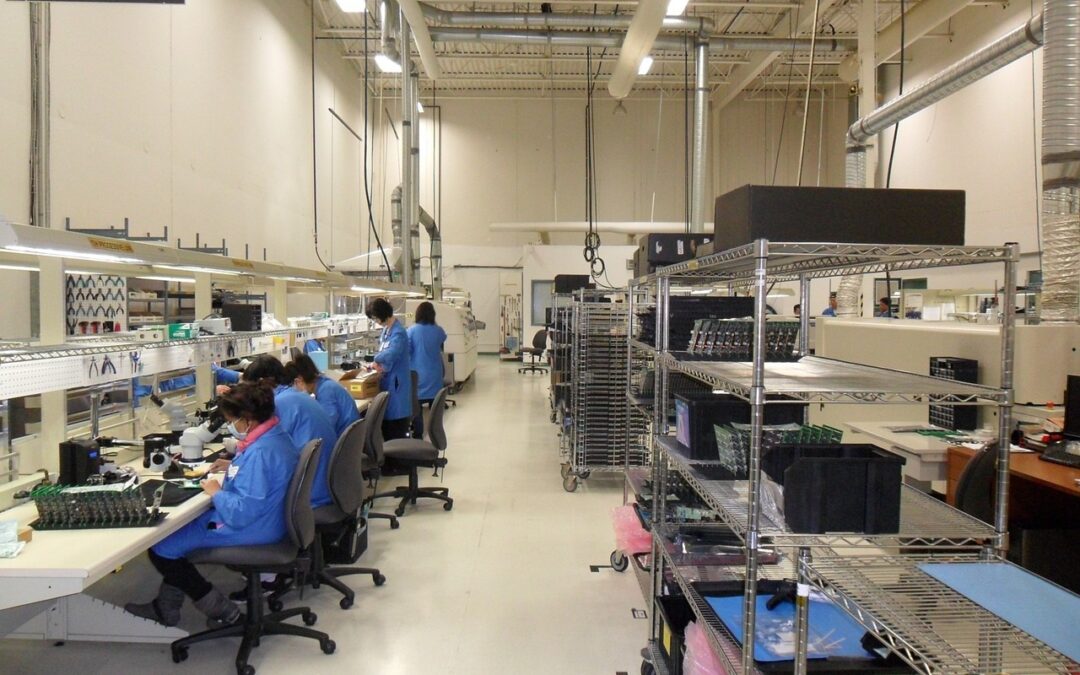
The issue is not exclusive to Mexico, but after the Covid-19 pandemic, the word “nearshoring” began to monopolize the pages of trade industry and business publications. In forums, summits, or different events where the economy was discussed, the main conversation was the reconfiguration of supply chains globally and how these companies saw nearshoring in Mexico as a manufacturing platform to export to the largest market in the world: the United States.
Three years after the “boom” of the nearshoring concept, the benefits for the Mexican economy are tangible, and the future looks promising, according to experts; however, much work must be done.
The latest Nearshoring Tracker report by Credit Suisse shows the arrival of foreign investments related to the phenomenon of nearshoring Mexico. For example, it informed that during 2022, 102 investment announcements were made that committed investments valuing 18.1 billion dollars.
Benefits for 2023 of nearshoring in Mexico
To understand what visible benefits nearshoring will bring to Mexico this year, it was necessary to consult experts in the field, such as Dr. Luz María de la Mora, former Undersecretary of Foreign Trade of the Ministry of Economy. She was a key player in approaching industrialists to make manufacturing investments in Mexico.
For 2023, the expert sees greater flows of Foreign Direct Investment (FDI) and the development of clusters of industries participating in supply chains, such as automotive, auto parts, and electric batteries. In addition to this, she sees the consolidation and strengthening of the country’s capacity through more nearshoring in Mexico.
“The strengthening of regional supply chains, the creation of quality and well-paid jobs in companies that participate in these supply chains, will also be elements that we will see in Mexico,” said de la Mora.
For his part, Jorge Molina Larrondo, a foreign trade consultant, points out that the benefits depend on the type of foreign investment that is attracted and, to a large extent, on the legal certainty that the Mexican government offers to foreign capital. In any case, and even with little legal certainty, in addition to industries such as automotive, aerospace, medical device, and general manufacturing, he foresees the arrival of investment in things like consumer products and food and food processing plants. In addition, he anticipates that many projects that do not entail large investments will benefit from nearshoring in Mexico. He also sees the transfer of state-of-the-art technology and the creation of many long-term jobs.
Some tangible benefits are already beginning to be seen, such as the growth in the capacity of industrial parks. These facilities are increasing to expand nearshoring in Mexico for companies already established in the country and house new companies seeking to enter Mexico for the first time. This translates into the generation of sources of formal employment, maintains Samantha Atayde Arellano, partner at the firm RRH Consultores.
She argues that if Mexico knows how to take advantage of the context in which it finds itself, the position it occupies as a commercial partner of the United States, and its network of treaties, nearshoring in Mexico is presented as another tool to attract new investment or reinvestments in the country.
The appeal of nearshoring in Mexico in 2023
In her experience as a former Undersecretary of Foreign Trade, Luz Maria de la Mora believes that the sector that will benefit the most will be the automotive sector since it is transitioning towards manufacturing electric vehicles. It has announced important investments in recent months, such as the case of the General Motors complex in Ramos Arizpe. This facility will become its fifth plant in the country and will produce electric vehicles.
He also sees growing interest in producing electric batteries and their components and a significant investment opportunity in the semiconductor and electronic component sector to complement new investments in semiconductor manufacturing (“fabs”) in the United States.
“In the US, at least three large fabs are being built —TSMC and Intel, in Arizona, and Samsung, in Texas— which can have multiplier effects for Mexico’s participation in some segments of the industry’s supply chain,” he says.
In the same way, Atayde Arellano is confident that the automotive sector will top the list of the most benefited sectors since it is a strategic sector for the economies of the United States – Mexico – Canada (USMCA) region. It is followed by sectors such as aerospace, electrical and electronic, pharmaceutical and medical device, transportation, storage, and agro-industrial industries, as well as industries that use nearshoring in Mexico to focus on the development of software and other technologies.
Adriana García, coordinator of economic analysis at the Mexican think tank Cómo Vamos, comments that the immediate opportunity for nearshoring in Mexico in 2023 lies in 50 import categories that it shares with China. As a result, she feels that Mexico can occupy a greater proportion of the market share. These categories are in electronics, machinery, furniture, and auto parts manufacturing.
“This could be taken advantage of and translate into more investment and quality jobs for Mexico in the short term. A second opportunity will be to explore industries where we don’t have knowledge of and experience with, which would imply a larger investment,” she asserted
Mexico’s task
Carlos Véjar, International Trade and Arbitration lawyer at the Holland & Knight consultancy, assures that Mexico’s task to benefit from nearshoring is to get involved in a coordinated manner with the private sector to promote investment attraction through greater political and economic certainty for the export sector. This is in addition to facilitating the increase of new spaces to build industrial parks or expand existing ones to create spaces for more nearshoring in Mexico.
“Among the challenges that Mexico faces is to improve the supply and costs of renewable energy and water supply; solve the difficulties of the supply chain that arise, improve times in obtaining programs for exports (IMMEX), and provide greater security in the production regions and commercial routes,” says Véjar.
Along the same lines, Molina Larrondo believes the Mexican government wants to attract capital-intensive production. Doing so implies implementing state-of-the-art technology and creating many jobs in the long term (that is, producing products in the early stages of their life cycle). The Mexican government must change its discourse of constantly attacking the private sector. It must also enforce its intellectual property protection regime and reduce piracy.
“Everything depends on the current government and its attitude concerning nearshoring in Mexico. The United States is promoting the investment of its companies in countries that it considers “friendly” and “trustworthy,” which has been called “friend-shoring.” “For this reason, the attitude of the Mexican government is key to attracting new companies to the country,” he says.
On the other hand, the expert emphasizes that legal certainty must be generated by respecting what the country’s trade treaties and agreements and the laws that govern the country indicate. He also notes that the current government of Mexico must adopt a more positive attitude toward the private sector.
He stated the importance of “Enforcing and respecting the laws for the protection of intellectual property, reducing the cost of creating new jobs, and improving security.”
Regarding investment issues, the list of pending subjects that Mexico has is long, explains De la Mora, among which is investing in infrastructure and logistics, particularly in ports, highways, railways, airports, telecommunications, and 5G. In addition, investing in clean energy generation will also be important, as companies need to meet new requirements and emission reduction goals in addition to their growing energy capacity needs.
We can add the investment in human resource development since more engineers and technicians specialized in advanced manufacturing will be needed. Also important is water availability for industrial use and human consumption. Most notably, it is of primary importance to guarantee the rule of law that gives certainty to investments resulting from nearshoring in Mexico.
Adriana García sums it up best: Legal certainty is needed for Mexico to take advantage of the benefits of nearshoring in terms of greater investment and generation of quality jobs. This is especially true in the energy sector since the country must provide sufficient and necessary energy required by the country’s growing industrial base.
For information on starting a nearshore manufacturing facility in Mexico, contact LATAM FDI.

by Editor Latam | Mar 18, 2023 | FDI Latin America
The Paraguayan maquiladora industry, also known as the Export Processing Zone (EPZ) industry, has been a significant part of Paraguay’s economy since the 1980s. As a result, Paraguay’s government and private sector have worked together to create a favorable business environment for multinational companies to establish maquiladoras.
Paraguayan maquiladora industry manufacturers initially focused on import substitution
The history of the maquiladora industry in Paraguay dates back to the early 1980s when the government passed a law creating a special economic zone (SEZ) in Ciudad del Este, Paraguay’s second-largest city. The law was designed to attract foreign investment and create jobs in the area. Initially, companies in the SEZ focused on import substitution, producing goods that would otherwise have been imported. However, as the industry grew, it shifted towards export-oriented production, with most maquiladoras producing goods for the Brazilian market.
The Paraguayan maquiladora industry has brought significant benefits to the country. It has created jobs, particularly for women, who comprise a substantial proportion of the industry’s workforce. The industry has also brought in foreign investment and helped diversify Paraguay’s economy, which was traditionally almost totally reliant on agriculture. Additionally, the industry has boosted Paraguay’s exports, which have increased by over 500% since 1990, making it one of the fastest-growing economies in South America.
Volume of exports grew in February
Exports from the Paraguayan maquiladora industry reached USD 87 million in February 2023, which reflected a 34% growth compared to the same period in 2022. It is a record figure compared to the same month in previous years.
The aforementioned is based on the latest report from the Ministry of Industry and Commerce (MIC), which highlighted the increase in the sector by the National Council of Maquiladora Export Industries (CNIME).
In the first two months of the year, exports totaled USD 160 million, 14% more than the USD 140 million in 2022.
The most exported product in the months analyzed corresponded to auto parts with 25%. The second item with the highest volume of exports was related to aluminum and its related manufactured articles with 20%.
Also, another class of products of importance in total export numbers was clothing and textiles with 18%. Finally, exports of food products and plastics were 13% and 6%, respectively. These items represent 82% of the total goods exported by the Paraguayan maquiladora industry in February 2023.
When considering the main export destinations for Paraguay’s exports so far in 2023, Brazil stands out as the most important customer, with a participation of 63%. It is followed by Argentina, the United States, Chile, and Uruguay, followed with 15%, 7%, 5%, and 4%, respectively. Concerning Mercosur, 81% of the shipments were concentrated in that trading bloc.
Maquiladora industry imports and trade balance
The purchases of inputs for industrial transformation under the maquila regime (imports) in Paraguay totaled USD 99 million between January and February. This was 5% more than the same period of the previous year.
For its part, the sum of the trade balance (exports minus imports) for January and February totaled USD 62 million, 35% more than the USD 46 million registered in the total for the first two months of 2022.
Regarding the estimates for 2023, in a conservative scenario, exports are expected to increase by 9% to reach some USD 1.12 billion by the end of this year.
Paraguay is a member of Mercosur
Paraguay is a Southern Common Market (Mercosur) member, a regional trade bloc composed of Argentina, Brazil, Paraguay, and Uruguay. Paraguay joined Mercosur in 1991. The grouping is an important platform for trade and economic integration among member countries. Mercosur has a combined GDP of over $2 trillion and a population of around 300 million people. This makes it one of the largest trading blocs in the world. Mercosur aims to promote free trade and economic cooperation among member countries, and it has signed several trade agreements with nations outside the bloc, including the European Union and China.
There are several benefits that the members of Mercosur enjoy. These include:
Access to a large market: Mercosur is one of the largest trading blocs in the world, with a combined population of over 300 million people and a GDP of over $2 trillion. Being a member of Mercosur gives countries access to a large and growing market for their goods and services.
Tariff reductions: Mercosur member countries have agreed to reduce and eliminate tariffs on goods traded within the bloc. This promotes trade and economic integration among member countries, leading to lower costs for consumers and businesses and increased competitiveness.
Common external tariffs: Mercosur member countries have a common external tariff (CET) on goods imported from outside the bloc. This helps to protect domestic industries and promote trade among member countries.
Political cooperation: Mercosur member countries cooperate on a range of political issues, including human rights, democracy, and regional security. This can promote stability and cooperation in the region.
Investment promotion: Mercosur member countries work together to promote investment and economic development in the region. This can lead to increased foreign investment and economic growth.
Overall, members of Mercosur, such as Paraguay, have access to a large market, tariff reductions, a common external tariff regime, political cooperation, and investment promotion. These benefits promote economic growth and development in member countries and strengthen regional cooperation and stability.