+1 (520) 780-6269 investment@latamfdi.com
Brazil Rare Earth Production: How Public Policy and Investment Can Elevate the Country to Global Leadership

Brazil Rare Earth Production: How Public Policy and Investment Can Elevate the Country to Global Leadership

Coordinator of a Network of 15 Research Institutes Dedicated to Developing a National Rare Earths Supply Chain Outlines the Path to Unlock the Country’s Potential

Brazil holds the world’s second-largest rare earth reserves—a group of 17 elements essential for the energy transition and high-tech industries. Yet transforming this geological advantage into economic development and technological sovereignty requires overcoming challenges such as the lack of a dedicated public policy, insufficient investment, and limited mechanisms to guarantee national research institutions’ access to mineral samples. This assessment comes from Professor Sérgio Michielon, coordinator of the newly created INCT Material (Advanced Materials Based on Rare Earths: Innovations and Applications). As debates advance around Brazil’s rare earth production, experts increasingly emphasize the need for strategic action.

“Rare earth materials represent only 1% of the total value of a cell phone. It may seem small, but without that 1%, the device wouldn’t exist. That means rare earths are not at the center of debate for their financial potential, but for their strategic value,” he explains.

A professor at the Federal University of Amazonas (UFAM), Michielon oversees INCT material, a network that brings together researchers from 15 national institutions working to drive the development of rare-earth-based materials. The initiative covers the entire production chain—from extraction and processing to high-impact applications and recycling.

Challenges and Opportunities

According to the specialist, Brazil possesses the main requirements to become a global leader in the rare earth market. In addition to hosting the world’s second-largest reserves—behind only China—the country has research institutions and highly regarded experts in the field. “Brazil has the raw material and the knowledge, but it still lacks investment and the creation of a specific public policy. We need to build an ecosystem capable of turning our potential into wealth and innovation,” he says. Strengthening Brazil rare earth production would position the country more competitively in the global technology landscape.

One of the barriers he highlights is the difficulty universities and national research centers face in accessing these minerals. He notes that many mining companies produce waste rich in rare earths, yet when Brazilian researchers request samples, they are often denied. “This is something that needs to be addressed within the legislative framework,” he explains.

Training and Retaining Talent

Another challenge concerns the training of specialized labor. In this regard, INCT Material includes the participation of two technical education institutions. “This is important because it helps inspire new generations to take an interest in the topic, which is crucial for ensuring sustainability over the decades.”

However, Michielon stresses that simply training new specialists is not enough. There must also be investment in strengthening the industrial supply chain to create jobs capable of retaining this workforce in the country and generating domestic wealth.

“Today, the country invests heavily in training professionals, but they often leave for opportunities abroad because they cannot find a market in Brazil. In other words, foreign companies receive highly qualified professionals essentially for free—professionals we finance. We need to create conditions that allow these people to build their careers here,” he argues.

One initiative aiming to change this trajectory is the creation of the Innovation and Technology Center for Rare Earth Magnets (CIT Senai ITR) in Lagoa Santa, Minas Gerais—a lab-factory focused on producing high-performance magnets. This effort reinforces the broader vision of advancing Brazil rare earth production through integrated industry-academia partnerships.

The project is the result of a partnership between Senai, Fiemg (the Federation of Industries of the State of Minas Gerais), and MagBras, a consortium of 28 companies, seven research institutes, and three foundations. “The initiative shows the synergy required between academia and industry to foster the development of a national supply chain for rare earth permanent magnets,” he summarizes.

 Three Strategic Pillars

INCT Material aims to coordinate efforts to train people, attract funding, and support research in the field of rare earths. With an expected duration of five years, the project is structured around three main pillars.

The first focuses on the national production of neodymium-iron-boron magnets, the most advanced on the market. These magnets are essential for device miniaturization and are found in electric vehicles, wind turbines, and computer hard drives.

The second front explores new properties and applications for different rare earth elements, while the third is dedicated to developing metallurgical routes for mineral processing and substance concentration, with a strong emphasis on sustainability.

“One of our priorities is what we call urban mining. Instead of searching for natural deposits, we will focus on recycling end-of-life magnets. The goal is to ensure that the mineral resources found in products like electric vehicles are not wasted in the future,” Michielon reveals. Such innovations will play a critical role in improving Brazil rare earth production through circular and sustainable practices.

Institutions Participating in INCT Material

Federal University of Amazonas – UFAM (AM)

Institute for Technological Research of the State of São Paulo – IPT (SP)

Mineral Technology Center – CETEM (RJ)

Federal University of ABC – UFABC (SP)

University of São Paulo – USP (SP)

Federal University of Santa Catarina – UFSC (SC)

Federal University of Catalão – UFCAT (GO)

Nuclear Technology Development Center – CDTN/CNEN (MG)

Federal University of Espírito Santo – UFES (ES)

Federal Institute of Education, Science and Technology of Amazonas – IFAM (AM)

SENAI School of São Paulo – SENAI (SP)

Federal University of Western Pará – UFOPA (PA)

Federal University of Minas Gerais – UFMG (MG)

Geological Survey of Brazil – CPRM/DF (DF)

Nuclear and Energy Research Institute – IPEN/CNEN (SP)

Conclusion

Brazil stands at a decisive crossroads. With abundant reserves, strong scientific talent, and emerging partnerships that bridge academia and industry, the country has the foundations needed to become a global rare earth powerhouse. Yet the transition from potential to leadership will depend on coherent public policies, regulatory reform, industrial investment, and a long-term vision that recognizes rare earths not only as a commodity, but as a strategic asset for the nation’s technological future. By advancing these priorities, Brazil can secure a central role in the global clean-energy supply chain and ensure that the benefits—economic, scientific, and geopolitical—are realized at home.

The Maquila in Paraguay: Continuously Expanding and Driving Industrial Development and Job Creation

The Maquila in Paraguay: Continuously Expanding and Driving Industrial Development and Job Creation

The maquila in Paraguay is a particularly attractive source of investment for manufacturing and re-export activities

In a recent press release, the Vice Ministry of Industry of the Republic of Paraguay, the agency in charge of Paraguay’s industrial policy, provided a series of figures that not only illustrate the dynamism of the maquila regime—an already highly dynamic export system—but also its growing impact on economic development, job creation, and regional competitiveness. According to the most recent data, the maquila in Paraguay exports over USD 1 billion and is one of the most strategic pillars in the country, with over 35,000 direct jobs, representing one of the main formulas for attracting investment and promoting industrialization. As Paraguay positions itself as a nearshoring opportunity for global companies and strengthens its competitive advantages in terms of logistics and energy, the maquila sector will also continue to grow in size and participation.

Highlights of the Maquila Industry in Paraguay

Exports above USD 1 Billion

The Paraguayan maquila industry registered USD 131 million in exports in October, taking the total amount for 2024 to USD 1.052 billion. The accumulated figure thus exceeds the USD 918 million exported in the same period last year, representing an increase of USD 134 million and continuing the steady expansion of the maquila in Paraguay. The results in the external component not only respond to strong demand, but also to Paraguay’s growing competitiveness as a destination for manufacturing and re-export activities. Attracted by cost efficiencies, logistical benefits, and access to strategic markets, particularly those of Mercosur, the maquila in Paraguay continues to attract companies seeking opportunities.

Major Exporting Industries in the Maquila Sector

Diversification is one of the characteristics of the maquila sector in Paraguay. However, some industries lead the ranking in contributing to the country’s export revenues. Auto parts remain in the lead with 34% of total maquila exports, a segment that has created an ecosystem of suppliers, logistics operators, and specialized labor. This has turned Paraguay into an increasingly relevant hub in the regional automotive value chain. In second place is the textile and apparel industry with 17%, an ongoing trend that further consolidates its role as an important generator of jobs and a stable export contributor. Aluminum and aluminum-derived products stand at 13% and food products are at 12%, showing that the maquila’s manufacturing portfolio is broadening beyond traditional sectors.

A diversified export portfolio of the maquila sector in Paraguay is a key competitive advantage, since, in addition to mitigating risks derived from external uncertainties, it also provides companies with greater agility in the face of changes in market dynamics.

Maquila Export Destinations

Mercosur countries are, by far, the main destinations of the maquila sector’s exports. This is a natural consequence of Paraguay’s geographic location and commercial integration within the bloc. Brazil accounts for 64% of the share, which is the main destination for Paraguayan maquila companies. Argentina is next in line with 15%, while Chile and Bolivia each account for 3%. Uruguay, for its part, is the last of the main five, with 2% of the total volume of maquila exports. In recent years, maquila companies in Paraguay have also been able to expand their presence in more distant markets. The United States and the Netherlands each represent 4%, which is an indicator of the sector’s growing geographic reach and diversity. This expansion is also strengthening the international reputation of the maquila industry as a platform focused on industrial manufacturing.

A Leading Force in Industrial Exports

In 2024, up to 66% of exports of manufactured industrial products (according to data reported by the Vice Ministry of Industry) corresponded to maquila companies. This percentage already illustrates the fundamental role that the maquila regime in Paraguay has been playing in the productive infrastructure and industrialization process of the country. The features of the maquila system, with tax incentives, greater operational flexibility, and a framework based on export dynamism, are increasingly attractive to investors seeking stable and predictable environments, especially in times of global uncertainty.

Geographical location and industrial poles

In addition to its continued growth in size, the maquila industry also plays a key role in the definition and development of regional industrial poles in the country. Currently, 91% of the approved maquila programs in Paraguay are concentrated in the departments of Alto Paraná, Central, the Capital, and Amambay. Of all of them, Alto Paraná is by far the most relevant, with 59% of the total, driven mainly by the district of Ciudad del Este and the municipalities that make up its area of influence. This department has established itself as one of the most dynamic industrial poles in Paraguay, thanks to its strategic location on the border with Brazil and its well-developed logistics corridors. On the other hand, the Central and Capital departments continue to capture investments thanks to the availability of talent, infrastructure, and proximity to essential services. Amambay, for its part, has shown a sustained growth curve and is increasingly attracting the attention of manufacturers and logistics operators in Paraguay.

These regions reflect how the maquila industry in Paraguay is sculpting a more geographically balanced industrial network in the country.

Job Creation: A Multitude of Opportunities

Job creation is, in turn, one of the main contributions of the maquila industry. Currently, the maquila system has 35,447 direct jobs. In October, companies in the sector hired 383 new employees, which represents a year-on-year growth of 6,676 jobs. In the most comprehensive and strategic understanding of the term maquila, a wide range of industries are generating growth in employment. The sector that stands out the most in this regard is the textile and apparel industry, which employs 8,076 workers in the system. Close behind is the auto parts sector, with 7,963. Intangible services—a growing category that includes technology, back-office operations, and other digital services—employs 3,959 people. Fourth and fifth place are, respectively, plastics and chemicals, with 2,742 employees.

Furniture manufacturing, pet food production, and the metalworking industry also stand out, since each has more than 1,000 direct jobs. The figures are not only evidence of the maquila sector’s role as an engine of exports, but also of its importance as a generator of formal, stable, and diversified employment in multiple value chains.

A Winning Model to Attract Investment

It is no coincidence that the maquila industry operates with such high volumes. The country has become an increasingly attractive proposition for the manufacture and re-export of products, due to a combination of very low labor costs, an abundant and competitive energy supply, an efficient logistics infrastructure, and a stable macroeconomic environment. In addition, the maquila regime itself provides a predictable and transparent legal framework that guarantees favorable conditions, such as tax incentives, simplified procedures, and the ability to import raw materials and machinery. All of these factors are making Paraguay an increasingly attractive destination for global companies looking for alternative production sites or seeking to restructure their supply chains. Faced with trends such as nearshoring and regional integration, the competitive advantages of Paraguay’s maquila are key to positioning it to capture new investment.

Conclusion: A sector with a promising future

The performance of the maquila industry has demonstrated its key role in Paraguay’s economic strategy and the growth potential it has for the coming years. With an export volume that exceeded USD 1 billion, thousands of new jobs, and a high degree of participation across a very diverse range of industries, the maquila formula has proven to be a reliable growth driver for competitiveness and industrial development. As the country continues to strengthen its industrial base and attract new investment, the maquila industry in Paraguay is expected to remain a strategic pillar in the long-term process of economic progress and deeper insertion into global value chains.

Colón Free Zone: One of the Best Destinations for Investment

Colón Free Zone: One of the Best Destinations for Investment

The Colón Free Zone is a free trade zone in Panama and one of the most important commercial and logistics centers in the Western Hemisphere. Located on the Atlantic entry point of the Panama Canal, the Colón Free Zone has been serving as a center for international trade, distribution, and re-export for over 70 years. The free zone connects markets from the Americas, Europe, and Asia.

A Strategic Hub for Regional Commerce

Currently, the Free Zone continues to consolidate its position as a regional logistics powerhouse by presenting major benefits to companies interested in penetrating the Latin American market. Dovi Eisenman, president of the Colón Free Zone Users Association (AUZLC), indicated that this free trade zone is consolidating itself as a strategic point for regional commerce and as an engine for economic growth for Panama.

“Colón Free Zone continues to be a preferred destination for foreign investment and an important economic engine for Panama,” Eisenman said. He added that “many foreign companies are coming to Panama to locate themselves in the Colón Free Zone by the benefits and incentives that we have in Panama to attract foreign investment.”

Global Connectivity and Business Diversity

The businessman explained that the Colón Free Zone “is a strategic point for the development and generation of trade in the region, in addition to being a door to the Atlantic and Pacific oceans and having access to more than 1,400 ports in the world through the Panama Canal.”

There are currently 2,800 registered companies in the Colón Free Zone, “representing various areas such as logistics, pharmaceuticals, textiles, electronics, and automotive parts. These companies take advantage of the excellent infrastructure and world-class connectivity that the Free Zone has, as well as its efficient customs regime to operate their international supply chains and regional distribution,” Eisenman stated.

Competitive Advantages for Companies

Eisenman explained that companies have multiple competitive advantages in the Colón Free Zone. These include: “The benefits of operating in the United States dollar, a stable and dollarized economy, and a very favorable geostrategic location between two continents. In addition, Panama is a country with a long-standing tradition of being a business-friendly environment with a solid and growing financial services sector, which makes Panama an attractive option for multinational companies that are interested in establishing a presence in Latin America.”

Fiscal and Customs Benefits

The businessman noted that Colón Free Zone companies operate under a special fiscal and customs regime, which includes the free importation, storage, and re-exportation of goods. For this reason, the Colón Free Zone is “one of the largest free trade zones in the world, after Hong Kong.”

The Colón Free Zone’s close proximity to the largest ports, modern warehouses, and multimodal transport links—including the Panama Canal Railway—offers a streamlined and efficient logistics ecosystem for companies looking to move their goods throughout the Americas, which reduces costs and optimizes delivery times.

Economic Contribution and Local Impact

The Colón Free Zone president also indicated that “last year, we generated more than 50 million dollars per year as a result of the commercial activity that is carried out by all the users of the Free Zone. Of those $50 million, we deliver about $30 million to the Central Government, and then it is the Central Government that takes care of distributing it among the municipalities,” Eisenman explained.

The businessman’s statements were in response to a controversy generated by statements made by Colón’s mayor, Diógenes Galván, who had indicated that in the Colón Free Zone, “businesses are not paying taxes and that is what slows down the district.”

Clarifying Misconceptions About Taxation

Eisenman responded to the comments by stating that “the mayor from the start should have clarified, because the story was completely inverted, as if the businessmen were to blame for what is happening.”

Eisenman indicated that “what I can tell the mayor is that he should be very well informed because by what he said, he confused not only the general public but also every one of us. We, as Free Zone businessmen, don’t understand what he means by ‘not paying taxes.’”

According to the president of the AUZLC, “people in general, including the mayor of Colón, do not understand the way our free zones work in Panama, because our Free Zones have special regimes, which I will briefly explain.”

Fees, Permits, and Local Obligations

“It’s important to know that the free zone companies pay all the fees, permits, security, sanitation, taxes on local sales, social security, and all operational costs. All services that a city hall or municipality normally collects are the services that are paid to the administration of the Colón Free Zone,” Eisenman said.

In addition, he noted that beyond these fees, companies pay other operational fees for operating in the jurisdiction of Colón. “We also pay for other services for operating within the Colón area, and that costs $5,000 per year, being $2,500 for operation and $2,500 for representation,” the businessman stated.

He went on to clarify that “we also pay by the square meter of the space that we occupy, because all the land in there is rented, it is not privately owned; it is rented for 20 years.”

Strengthening Understanding of Free Zone Operations

In light of these explanations, the president of the AUZLC stated that “we are active taxpayers, our companies pay rent, permit taxes, and everything within the law and the regulations that we have.” The businessman said that this contributes to a more accurate understanding of how free zones contribute to economic development and challenges common misconceptions about tax exemptions.

The Colón Free Zone Users Association (AUZLC)

The Colón Free Zone Users Association (AUZLC) was founded on November 5, 1979. The Association was created by a group of entrepreneurs who decided to take the initiative to unite in defense of the rights of the Free Zone users and to strengthen the competitiveness of this important Panamanian institution.

Since then, the AUZLC has been working day by day to promote greater collaboration between the private sector and the public authorities, in order to make the Free Zone more efficient and attractive as a platform for global commerce. The Association promotes the continuous improvement of policies, supports business development initiatives, and also seeks to promote sustained and sustainable growth in the Colón region.

Who Is Dovi Eisenman?

Dovi Eisenman is the current president of the Colón Free Zone Users Association (AUZLC). In addition, Eisenman is the CEO of Grupo FCI, a Panama-based company that provides transportation, e-commerce, distribution, customs management, and third-party logistics (3PL) services.

He is also the president of Fundación Voluntad Panamá. He has a Master’s degree in Administration and Transportation Logistics Management. Eisenman is a professional in the area of international maritime transport, and he has worked closely with ship captains, which has allowed him to establish connections with a large number of global shipping agents.

Looking Ahead: The Future of the Colón Free Zone

The Colón Free Zone is one of Panama’s most resilient economic institutions, and it represents the country’s commitment to trade, openness, and free markets. Despite the challenges the free zone has faced over the last decade, it has continued to evolve and adapt to changes in the global economy.

For instance, the Colón Free Zone has embraced digitization and is implementing sustainable business practices to remain competitive in the changing global market.

A Catalyst for Panama’s Economic Growth

In the future, with continued support from the authorities and with the leadership of the current president of the AUZLC, Dovi Eisenman, and active participation of the organization’s members, the Colón Free Zone has an opportunity to increase its influence as a regional logistics hub, attract new investment, and continue to contribute to the long-term prosperity of Panama.

As Eisenman stated: “The Colón Free Zone is not just a place of business, it’s a catalyst for economic growth and international cooperation, which strengthens Panama’s role as the commercial bridge of the Americas.”

Uruguay Assumes the Presidency of the OECD Economic Development Program for Latin America and the Caribbean

Uruguay Assumes the Presidency of the OECD Economic Development Program for Latin America and the Caribbean

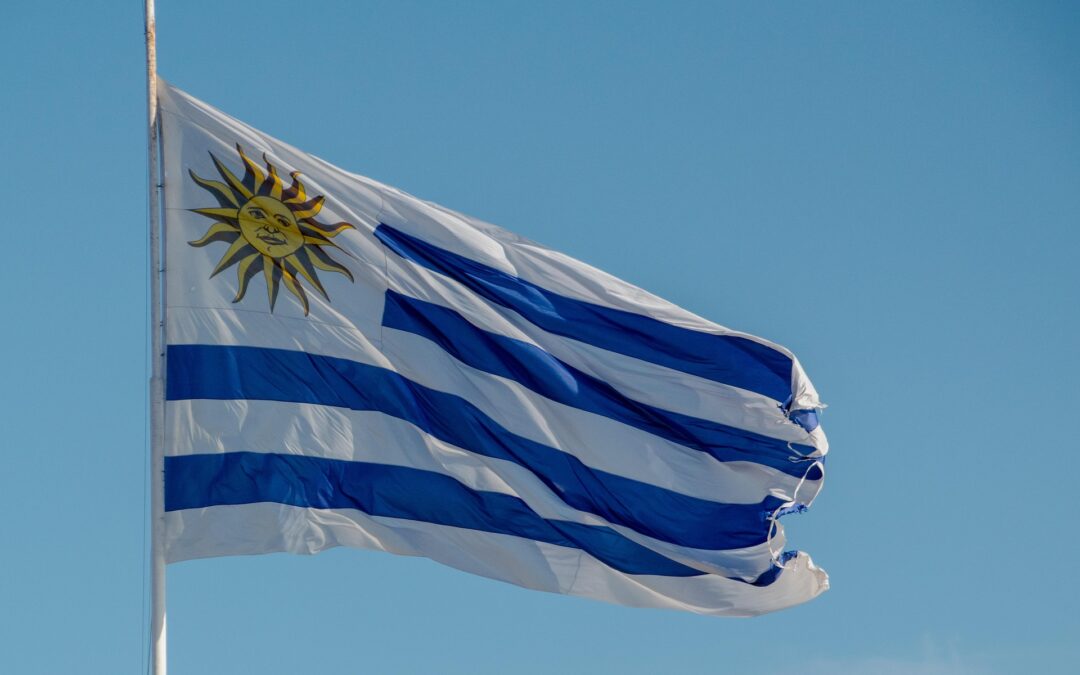
Uruguay has formally taken over the Presidency of the Organization for Economic Cooperation and Development (OECD) economic development program for Latin America and the Caribbean.

Building on Strengths and International Partnerships

The OECD’s economic development program for Latin America and the Caribbean (ECLAC) brings together OECD member countries and regional partners working to design, coordinate, and implement effective public policies to address common development challenges and promote sustained, inclusive growth.

The presidency, which the Uruguayan government and the organization will hold in joint coordination until 2028, will be based on four pillars: productivity, social inclusion, institutions, governance, and environmental sustainability.

“The Ministry of Foreign Affairs, through its involvement in this area of the OECD, will continue working to strengthen the program, so that its actions are in line with the real interests of the countries of the region and benefit their population,” said Deputy Minister of Foreign Affairs Valeria Csukasi.

An Opportunity to Lead the Region

The OECD economic development program for Latin America and the Caribbean is designed to support and stimulate public policy innovation and regional cooperation to tackle the challenges that countries in the region face. From strengthening social protection systems to promoting sustainable economic growth, the program plays a crucial role in helping countries build more inclusive and prosperous societies.

Uruguay’s new position will enable the country to strengthen and diversify South-South cooperation with countries in the region, advancing governance, transparency, competitiveness, and other essential aspects for the well-being of society.

Strengthening dialogue and collaboration among countries, international organizations, and civil society will be central to the new round of work under Uruguay’s coordination. In this sense, Deputy Minister Csukasi advanced that her visit to the OECD headquarters was an opportunity to meet with international partners in order to define work priorities and identify cooperation opportunities. “We have also had the opportunity to meet with the Secretary-General of the OECD, Mr. Mathias Cormann, and with Ms. Elsa Pilichowski, Director of Public Governance, among others,” said the deputy minister.

Dialogue and consensus-building among governments, civil society, and the private sector are key to achieving the goals of the economic development program. The program’s member countries and partner nations in the region agreed to structure their work around four strategic pillars of action. These include productivity, social inclusion, strengthening institutions and governance, and sustainability.

Promoting Productivity and Innovation

One of the program’s key pillars is productivity, which is essential to economic growth and competitiveness. The OECD and participating governments will work together to support policies that help Latin American and Caribbean countries increase productivity, including by integrating small and medium-sized enterprises (SMEs) into regional and global value chains.

Opening access to technology and improving training and financing for SMEs are priorities that will receive particular attention during the Uruguayan Presidency. The program also supports innovation and competitiveness through better policy design and implementation, helping businesses to grow and compete in regional and global markets.

Expanding Opportunities for All

Expanding social inclusion and access to labor markets is another strategic objective. The OECD will work with Latin American and Caribbean governments to promote more inclusive social protection systems, better vocational training, and access to education.

Attention will also be paid to the benefits of digital transformation, given that many people in the region do not yet have equal access to these technologies. The expansion of public transport and urban infrastructure is also a clear priority to make access to employment and services more inclusive.

Building Stronger Institutions and Governance

Strengthening institutions and governance is critical for creating more transparent, accountable, and effective public policies. The OECD program promotes best practices in public administration and supports a culture of integrity to build trust between governments and citizens.

Uruguay will support countries in the region to improve their institutional performance, strengthen the rule of law, and protect human rights. Policies that promote fiscal transparency, for example, can also help attract more investment and make public spending more efficient and transparent.

Environmental Sustainability and Resilience

Latin America and the Caribbean face significant environmental challenges, including climate change, deforestation, and natural disasters. The OECD economic development program supports countries in the region to develop and implement environmentally sound policies, strengthen resilience to climate-related risks, and better manage natural resources.

The program also supports clean energy transitions and efforts to reduce carbon emissions. Biodiversity protection is also high on the list of the governments’ and OECD’s environmental priorities.

Enhancing Regional Cooperation and Dialogue

During her official visit to the headquarters of the OECD, Deputy Minister Csukasi had the opportunity to meet with different international partners to exchange on issues of common interest. Among these, she held a meeting with the OECD Secretary-General Mathias Cormann, with whom she discussed the strengthening of relations between Uruguay and the Organization in key areas such as the quality of institutions, good governance, and sustainable growth.

“We agreed on the need to continue working together in order to ensure that regional public policies are aligned with best practices in OECD countries, which will help increase transparency and competitiveness,” said the Deputy Minister after the meeting.

Subsequently, she met with Anabel Gonzalez, Vice President for Countries and Regional Integration of the Inter-American Development Bank (IDB), with whom she identified opportunities to explore synergies between the IDB’s regional integration projects and the OECD’s capacity-building initiatives.

In turn, she had meetings with Ragnheidur Elin Arnadottir, Director of the OECD Development Center, and Elsa Pilichowski, Director for Public Governance in the OECD, to discuss opportunities for advancing policy coherence in areas of common interest such as digital government, education, and transparency.

21st Meeting of the Executive Committee

Dya Cukasi also co-chaired, together with Costa Rica’s Minister of Foreign Trade, Manuel Tovar, the 21st meeting of the Executive Committee of the program’s participants, which served to assess progress made in recent years and to give shape to the next phase of work.

She also participated in a session with members from various countries of Latin America and the Caribbean and officials of the OECD. She also presented a speech in which she highlighted Uruguay’s strengths in matters such as digital government, green energy, and social protection, and expressed her government’s commitment to working in a pragmatic way to develop public policies that ensure the well-being of citizens and benefit from synergies with regional and multilateral work.

Uruguay’s Presidency

Member countries and partner nations recognized Uruguay’s pragmatic approach and record of successful governance and economic management, with its emphasis on social protection, green energy, and regional integration.

During the next stage of the work program, Uruguay will focus on building long-term and effective partnerships, translating policy recommendations into practical results, and leveraging its experience in innovation to support reforms in other countries in the region.

Punta Cana Free Trade Zone: A New Logistics and Technology Hub for the Caribbean

Punta Cana Free Trade Zone: A New Logistics and Technology Hub for the Caribbean

Punta Cana Free Trade Zone: A New Logistics and Technology Hub for the Caribbean

An innovative free trade zone joins the tourism industry with an investment exceeding US$200 million.

November 12, 2025 – The Punta Cana Free Trade Zone (PCFTZ) was officially launched, a free zone investment of over US$200 million, which combines air and maritime logistics operations, an innovation and technology development center, and an aircraft maintenance and repair service. The event was attended by President Luis Abinader and leading representatives of the public and private sectors. This new initiative for the development of the Eastern Region is an innovative business project for Latin America and the Caribbean promoted by Grupo Punta Cana (GPC), the company that has driven the sustainable development and transformation of tourism in the region for decades.

Innovative Project with a Long-Term Vision: Tourism Meets Industry

The Punta Cana Free Trade Zone is the result of a long-term investment and a project designed to coexist with the extraordinary tourism growth of the region through industrial, technological, and logistics operations. Punta Cana Hub has a total area of 742,616 square meters and will bring together air, sea, and land logistics operations, corporate areas, and an innovation center for entrepreneurship and fintech and technology companies development. The project’s purpose is to create a diversified investment economy, to attract different types of investments to the region and the country, and to lay the groundwork for the future development of industry and technology in the Dominican Republic.

The Punta Cana Free Trade Zone project also includes the first aircraft maintenance, repair, and overhaul (MRO) complex of the Dominican Republic, which will place the country on the map as a future regional hub for aviation services in the Caribbean. It will provide airlines in Latin America and the Caribbean with leading-edge aircraft servicing, engineering, and logistics services, creating a new high-value segment in the national economy.

Jobs and Training for Residents

This complex, in its phase of full operation, will generate over 10,000 direct and indirect jobs, from air cargo and logistics specialists, software engineers, maintenance technicians, administrative staff, and more. It will also create important employment opportunities for people living in La Altagracia province and nearby regions by providing technical specialization and training to promote employment and workforce development in skilled jobs, beyond the capital area, where most of these opportunities have traditionally been limited in the country.

In addition, the Punta Cana Free Trade Zone strengthens the Dominican Republic’s role as an international logistics hub, a center for innovation, and an attractive option for foreign investment. With its state-of-the-art facilities and modern logistics solutions, the PCFTZ will be a key element in the country’s competitiveness strategy in the Caribbean and Latin American markets.

Hub of Air, Sea, and Land Logistics for the Caribbean

The 265,518 m² of land area and 75,000 m² of construction, the Air, Sea, and Land Logistics Center, is designed to manage imports, exports, transshipments and parcels. This operation is strategically located near Punta Cana International Airport (PUJ) and the ports of La Romana and Haina for multimodal connectivity, which will strengthen the Dominican Republic’s logistics infrastructure and contribute to reducing delivery times and costs of products entering and leaving the country.

The PCFTZ complex, which will be equipped with the latest generation of dual-view X-ray machines, container verification systems and automated inventory control systems, will provide maximum safety and efficiency. In its last stage, with a capacity of 430 tons of air cargo and five wide-body aircraft ramp positions, it will move up to 108 tons of cargo per aircraft depending on the configuration. This will offer international companies efficient access to markets in North America, Central America and South America.

Agreement with DP World

Grupo Punta Cana signed a collaboration agreement with DP World, a multinational specialized in logistics solutions and port operations, to work jointly on the construction of the Multimodal Logistics Center that will combine air, land, and sea freight services in a single integrated platform. The agreement with DP World will ensure the implementation of global standards in logistics management, customs efficiency and cargo security from the start of the project. This will place the Dominican Republic on the map as a reference point for global maritime trade and strengthen the role of the region as a gateway between the Americas and Europe.

The announcement of a US$70 million investment in the project was also made by FL Technics, a European aviation services company, to build the first independent MRO (Maintenance, Repair & Overhaul) complex in the Dominican Republic in 2025. The ultra-modern maintenance facility will be equipped with the latest maintenance equipment and operated by local staff who will be trained by international experts, certified in accordance with the U.S. Federal Aviation Administration (FAA) and other international aviation organizations. In addition to providing MRO, the facility will also offer training programs to develop qualified Dominican professionals for highly technical and specialized careers in the aviation sector.

Environmentally Responsible Innovation Center

Grupo Punta Cana has a long-standing history of innovation and a focus on developing environmentally responsible initiatives in tourism and infrastructure. Punta Cana Free Trade Zone will be no exception. Renewable energy systems, waste management solutions and eco-friendly building practices will all be used throughout the project. The free zone’s innovation center, meanwhile, will help incubate and support startups and established businesses that are working in the fields of clean technologies, software, and digital transformation.

The Punta Cana Free Trade Zone represents a new model for the Dominican Republic, evolving into a diversified and knowledge-based economy. Logistics, aviation and other services, which have not traditionally been strong in the Dominican Republic, are beginning to play an important role in the country’s business landscape. Once the Punta Cana Free Trade Zone is in operation, it will not only serve existing export-oriented industries but also attract new businesses to expand their operations in the Caribbean region.

Its strategic location, high-quality infrastructure and a regulatory and institutional framework that is favorable to investment make the Punta Cana Free Trade Zone a pioneer project and an example to be emulated for the international competitiveness of the Dominican Republic.

Argentina Foreign Investment 2025: How Much Capital Entered the Country During the First Half of Milei’s Presidency

Argentina Foreign Investment 2025: How Much Capital Entered the Country During the First Half of Milei’s Presidency

So far under the administration of La Libertad Avanza, total inflows have exceeded USD 15 billion, but economists warn that this is not enough to sustain the current exchange rate regime. Here’s how it compares with Massa’s term and the figures from the Large Investment Incentive Regime (RIGI).

Economic Team Seeks to Boost Argentina Foreign Investment

Following the legislative elections—won by the government—and under the assumption that the exchange rate regime faces no problems, the economic team led by Luis Caputo now wants to focus on attracting Argentina foreign investment to boost economic activity. According to the latest (BCRA), in the second quarter of 2025, total foreign direct investment (FDI) inflows reached USD 2.866 billion. This represented an increase compared with the first three months of the year, when inflows totaled USD 1.015 billion, and especially with the last quarter of 2024, when they barely reached USD 90 million. The rise was largely explained by reinvested earnings, which accounted for USD 1.684 billion of the total—the second-highest level in the year and a half of La Libertad Avanza’s administration, only surpassed by the first quarter of 2024, when reinvestments reached USD 2.347 billion. Below reinvested earnings were debt transactions (USD 1.457 billion), capital contributions (USD 977 million), and mergers and acquisitions, which subtracted USD 1.252 billion.

Economists Warn Current Inflows Are Insufficient

“Current levels of foreign direct investment are low relative to what this economy needs,” said Lucio Garay Méndez, an economist at Eco Go, noting that a low real exchange rate is turning the current account negative. Given the foreign-currency debt maturity profile and the level of the Central Bank’s net reserves, he emphasized that higher levels of Argentina foreign investment are needed to strengthen the capital account — if the government intends to maintain the current exchange rate framework. “From a monetary program perspective, if the aim is to remonetize the economy through peso issuance resulting from foreign currency purchases, it’s unlikely that the current account will supply those inflows until April. In the meantime, higher foreign direct investment is necessary,” he added.

Comparing FDI Flows Between 2023 and 2025

Between January 2024 and June 30, 2025, foreign capital inflows totaled USD 15.528 billion (USD 11.647 billion in 2024 and USD 3.881 billion between January and June 2025). In comparison, 2023 saw inflows of over USD 24 billion. However, according to Garay Méndez, these represent two very different types of FDI. In 2023, investment was inflated by capital controls and increased commercial debt. “Since companies couldn’t take money out, many engaged in carry trades or took on debt because they couldn’t access the foreign currency they needed to exit. In 2024, with the introduction of the Bonds for the Reconstruction of a Free Argentina (Bopreal) and other smaller measures, this situation normalized, and what we’re seeing now is much more genuine,” he explained.

The RIGI Framework and Key Investment Projects

To encourage capital inflows from the start of its term — and avoid repeating what happened under Mauricio Macri — the government enacted the Large Investment Incentive Regime (RIGI). According to official data from the Ministry of Economy, there are currently 23 projects totaling USD 50.589 billion. The RIGI committee has already approved several worth USD 24.814 billion, while another USD 25.775 billion is under review. Among the most significant approved projects is that of Southern Energy (owned by Pan American Energy (PAE) and Golar LNG), which plans to install a floating liquefied natural gas (LNG) production vessel in the Gulf of San Matías, Río Negro. The project involves a USD 15.156 billion investment over its expected 20-year lifespan.

U.S. and Global Capital Lead Argentina’s Foreign Investment

With financial assistance from the United States to the consulting firm Analytica,  President Donald Trump seeks to expand U.S. companies’ participation in Argentina’s economy and curb potential Chinese investment. “The presence of U.S. capital is nothing new. In recent years—up to the first quarter of 2025—U.S. investors accounted for the largest share of Argentina foreign investment, totaling USD 9.999 billion between 2021 and the first quarter of this year,” the report noted. This positioned the U.S. ahead of Spain (USD 9.043 billion) and well above Brazil (USD 6.970 billion).

Investor Confidence and Exchange Rate Outlook

Over the weekend, reports surfaced suggesting that Caputo had told a group of investors in the United States that he was considering changes to the exchange-rate band system within the next 30 days — a claim later denied by official sources at the Ministry of Economy. On Monday, November 10, 2025, the Minister of Economy, Luis Caputo, met with a group of investors on the fifth floor of the Ministry of Economy building in an event organized by Morgan Stanley. “There will be growth, the fiscal surplus remains intact, investments are coming, and money will flow in,” said one of the attendees. Others, however, were more cautious about the economic program. They came to assess how things were progressing, acknowledging that although they view the program as sound and believe capable officials are in charge, uncertainty persists. Several also expressed doubts about whether the economic team will be able to access international markets before the end of the year.

The Road Ahead for Argentina’s Foreign Investment

While inflows have shown an encouraging upward trend, economists agree that Argentina foreign investment must accelerate substantially to stabilize the peso, strengthen reserves, and sustain growth. For now, confidence in Caputo’s fiscal discipline and the success of the RIGI program will determine whether Argentina can attract the scale of foreign capital it needs to power a lasting recovery.