
+1 (520) 780-6269 investment@latamfdi.com
Multinationals Assess New Investments in Panama

Multinationals Assess New Investments in Panama

The Panamanian government held meetings with FONPLATA to finance social and infrastructure projects during the CAF forum

More than 20 multinational companies—including giants such as Pfizer, Google, PepsiCo, Coca-Cola, AES Corporation, Siemens, and Cisco Systems—reiterated their interest in expanding and making new investments in Panama, within the framework of the 2026 International Economic Forum for Latin America and the Caribbean, organized this week by CAF—the Development Bank of Latin America and the Caribbean—in Panama City.

The announcement came during a meeting between President José Raúl Mulino and senior executives from these companies, members of the Council of the Americas (AS/COA), a New York–based business organization that promotes economic development, market openness, and institutional strengthening in the Western Hemisphere.

At the meeting, the president emphasized that his administration has succeeded in creating a stable investment climate after putting public finances in order and strengthening fiscal discipline.

According to Mulino, this process has helped restore the confidence of international investors and laid more solid foundations for economic growth, creating favorable conditions for new investments in Panama.

“The country has begun to move forward on the right path, with order,” the president said, referring to the reforms promoted in administrative, financial, and transparency matters.

During the meeting, Mulino shared his government’s vision focused on efficient public spending, reducing the size of the state, and strengthening institutions.

He also expressed optimism about the impact of the public investment plan to be executed this year, aimed primarily at road infrastructure, health, and access to basic services such as drinking water.

Among the topics discussed were the stabilization of the pension system of the Social Security Fund (Caja de Seguro Social), the strengthening of the logistics and connectivity platform, and a commitment to educational reform to improve labor competitiveness and guarantee greater employment opportunities.

The president also highlighted investments promoted by the Panama Canal Authority in projects such as new ports, a gas pipeline, and a reservoir, designed to improve the operational efficiency of the interoceanic waterway and reinforce the country’s role as a regional logistics hub.

In the technology sphere, Mulino underscored that Panama seeks to position itself as an innovation hub by incorporating the use of digital tools, artificial intelligence, and developments linked to semiconductors into its training and productive development strategy, as part of a broader effort to attract new investments in Panama.

Representatives from companies such as Coca-Cola, Cisco Systems, Google, PepsiCo, Pfizer, Salesforce, Siemens Energy, The AES Corporation, InterEnergy, the International Air Transport Association, Grupo Cox Energy, Enfragen, and Macquarie Capital, among others, attended the meeting.

Business leaders thanked the government for the space for dialogue and praised the organization of the regional forum, noting that Panama is consolidating itself as a meeting point for economic and business discussion in Latin America.

Panama closed 2025 with a total of 188 companies established under the Multinational Headquarters (SEM) regime, consolidating its position as one of the region’s main corporate hubs for managing regional and global operations.

In addition, two companies are registered under the Multinational Manufacturing Companies (EMMA) regime, aimed at value-added productive activities.

The SEM regime is designed to attract headquarters, shared services centers, and administrative, financial, and logistics hubs of multinational companies through tax, immigration, and labor incentives.

These companies centralize functions from Panama, such as regional planning, technological support, treasury, procurement, marketing, and talent management, for their operations in Latin America and other markets.

For its part, the EMMA regime seeks to promote the installation of advanced manufacturing plants and specialized industrial processes, allowing multinationals to produce, assemble, or transform goods in Panamanian territory for export.

Both schemes are part of the country’s strategy to diversify its economy, generate skilled employment, and strengthen its position as a services and production platform in the region.

If the new investments materialize, the country could attract more foreign capital at a time when foreign direct investment (FDI) remains far below the best levels recorded before the pandemic. Currently, the Dominican Republic and Costa Rica rank among the main recipients of FDI in the region, while Panama has fallen to fourth place, far from the top position it held years ago.

Meeting with FONPLATA

In parallel with the dialogue with the business sector, Mulino held a meeting with executives from FONPLATA – Development Bank, who expressed their interest in financing social and infrastructure projects in Panama.

The delegation was led by the institution’s Executive President, Luciana Botafogo, accompanied by the Vice President of Strategic Development, Viviana González; the Head of the Strategic Alliances Division, Leonardo Chagas; and advisor Carlos Melo.

FONPLATA is a multilateral financial institution made up of Argentina, Bolivia, Brazil, Paraguay, and Uruguay, whose mandate is to finance medium- and small-scale projects aimed at promoting development, physical integration, and the reduction of inequality in the region.

During the meeting, Botafogo explained that the bank can support social works such as production roads, bridges, health centers, schools, and housing for low-income families, especially in areas with historical infrastructure deficits.

Mulino noted that one of his government’s priorities is addressing the needs of Indigenous regions, where significant gaps persist in basic services, connectivity, and access to critical infrastructure.

He also emphasized that the state has an outstanding debt in terms of sustained access to drinking water, which is why projects such as the Río Indio Multipurpose Reservoir are being promoted under the coordination of the Panama Canal Administration.

He indicated that these initiatives can be complemented by works developed through the National Council for Sustainable Development (Conades), which will also require external financing.

Regional Context

Both meetings took place in the context of the 2026 International Economic Forum for Latin America and the Caribbean, organized by CAF, which brought together heads of state, ministers, business leaders, and representatives of multilateral organizations in Panama.

The event served as a platform to promote investment and to debate regional integration, development financing, energy transition, technological innovation, and institutional strengthening.
European Union Cooperation with Honduras Marks a New Chapter

European Union Cooperation with Honduras Marks a New Chapter

EU announces credits to Honduras as international cooperation flourishes

Multilateral organizations, friendly nations, and trade partners immediately signaled support for newly inaugurated constitutional president Nasry Asfura. The regional and international support projected hopes that his government will continue putting forward its plans for cooperation, investment attraction, and institutional strengthening.

Messages sent by officials to Honduras on inauguration day pointed to the continuation of foreign relations with renewed impetus towards trade, investments, and productive alliances. The wave of international support sent positive signals of continuity and intensified cooperation that can positively impact the Honduran economy and its positioning in Central America and abroad.

European Union Cooperation with Honduras

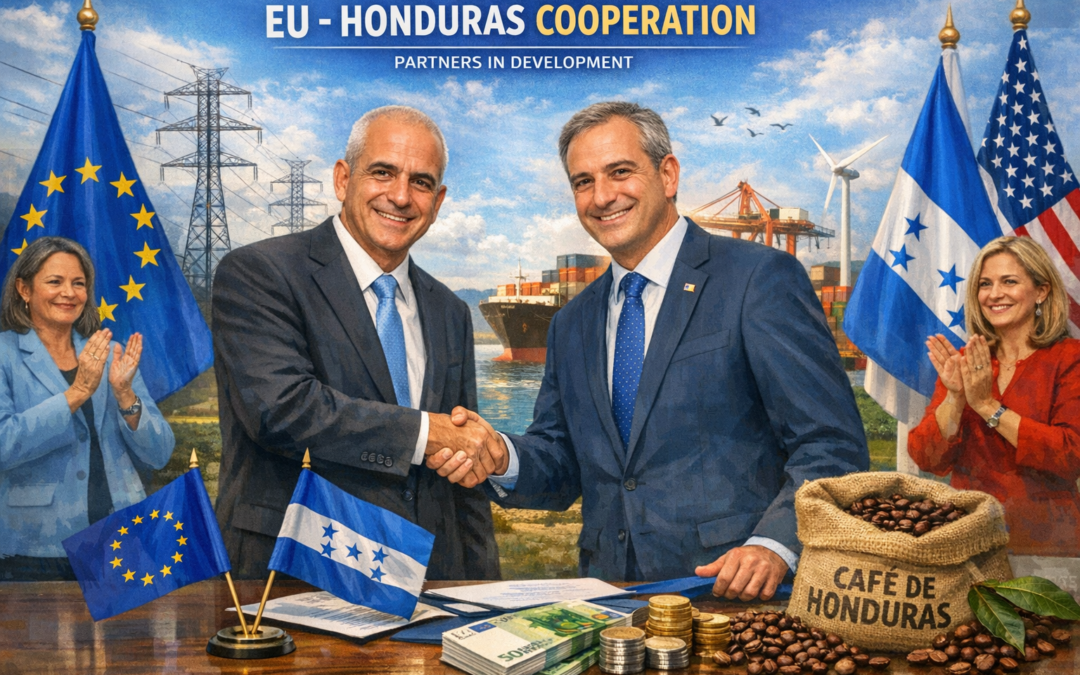
European Union Ambassador to Honduras Gonzalo Fournier announced during inauguration day events that European cooperation will strengthen this year with the immediate opening of financing operations.

“In the coming weeks, we will have the first mega-credits that Honduras signs with Europe since 2009.” Fournier made it clear that European Union cooperation with Honduras is taking center stage this year during a series of meetings with President Asfura as soon as he takes office.

Credits totaling somewhere between €369 million and €500 million are being structured to finance electricity transmission projects and investments aimed at eliminating logistical bottlenecks suffered by Honduras for years. These mega credits will help lower production costs while increasing reliability throughout the Honduran productive sector.

Fournier also announced that a total of €60 million will be destined for sustainability-linked finances, while another €6 million investment will focus on supporting Honduran entrepreneurs, including the micro, small, and medium-sized enterprises segment.

Political significance of credits to Honduras

The ambassador added that “what we are talking about with Honduras will make it the second country in Central America that receives the most financing from the European Union, only behind Panama.” Stressing that EU cooperation with Honduras is also signaling international confidence in Honduras’ institutions.

Trade Ties between Honduras and the European Union

Trade relations between Honduras and European Union nations will continue to be significant. “Europe is the destination of about 68% of Honduran coffee exports,” stated the European Union Ambassador, referring to one of Honduras’ principal exports.

Honduran coffee benefits more than 120,000 families spread throughout the Honduran countryside. European Union Ambassador Fournier also made sure to mention that Honduran coffee exports comply with European Union regulations prohibiting deforestation, allowing them to access the European market with a sustainability label.

Trade diversification talks ahead for Honduras and the EU

“We want it to be not just coffee, but other value-added products,” Fournier said listing examples such as animal and vegetable fats, processed agricultural goods, and textiles as products of interest. EU Ambassador Fournier said Honduras is ready to diversify exports and work towards less dependence on raw commodities.

Investment relations with the European Union

Commenting on investment trends, Ambassador Fournier said, “European investors are already here and have been for years.” He explained that 21% of foreign direct investment coming into Honduras comes from European companies.

European Union investment in Honduras stretches beyond purchasing goods from Honduran producers. Investors from EU countries are engaged in production, renewable energies, and services, providing much-needed jobs and know-how to help strengthen the Honduran economy. Infrastructure projects have also received European financing in years past.

SIECA presidency matters to European Union cooperation with Honduras

Europe congratulated Honduras on its pro tempore presidency of the Central American Integration System (Spanish acronym SIECA) and pledged cooperation in relevant areas. Ambassador Fournier said Europe will work alongside Honduras during its SIECA pro tempore presidency, strengthening customs integration projects, decreasing non-tariff barriers, and trade facilitation mechanisms.

Europe is coming to Honduras February 2-4, and Honduras is heading to EU next month

“I want to announce that the European Union Directorate-General for Trade will visit our country from February 2 to 4,” Ambassador Fournier confirmed. He also announced that Honduras has been invited to the European Union–Central America Investment Forum to be hosted in Panama next month.

“I know that the minister responsible for commerce will count on European investors.” European Union Ambassador Fournier finished speaking on the topic of future visits between Honduras and Europe, signaling continuous exchanges in the months to come.

Supportive Message Sent by US Officials

During the inauguration ceremonies, Asfura was also greeted by the Chargé d’Affaires of the US Embassy to Honduras, Colleen A. Hoey. She took the opportunity to deliver a strong message of support through embassy social media channels.

“Today is the beginning of a new chapter in the relationship between the United States and Honduras,” wrote Chargé Hoey. She went on to highlight security cooperation, economic opportunities, and strengthening bilateral relations as goals to work towards together.

Republican US Congresswoman María Elvira Salazar sent a congratulatory message saying that “today is a new dawn not just for Honduras, but for all of the Western Hemisphere.” She continued writing that she hopes Asfura will focus efforts on promoting democratic institutions while building a stronger bilateral alliance with the United States.

United Nations Sends Support

“United Nations agencies congratulate President Nasry Asfura Jiménez on his inauguration as President of Honduras,” began a joint statement from the United Nations signifying multilateral support for the president.

“The United Nations in Honduras stands ready to continue working with the Government and people of Honduras to advance its development priorities and improve the lives of all Hondurans.” UN Resident Coordinator Alejandro Álvarez emphasized continued UN support for Honduras.

The South American Country Seeks Foreign Capital Through an Argentine Citizenship by Investment Program

The South American Country Seeks Foreign Capital Through an Argentine Citizenship by Investment Program

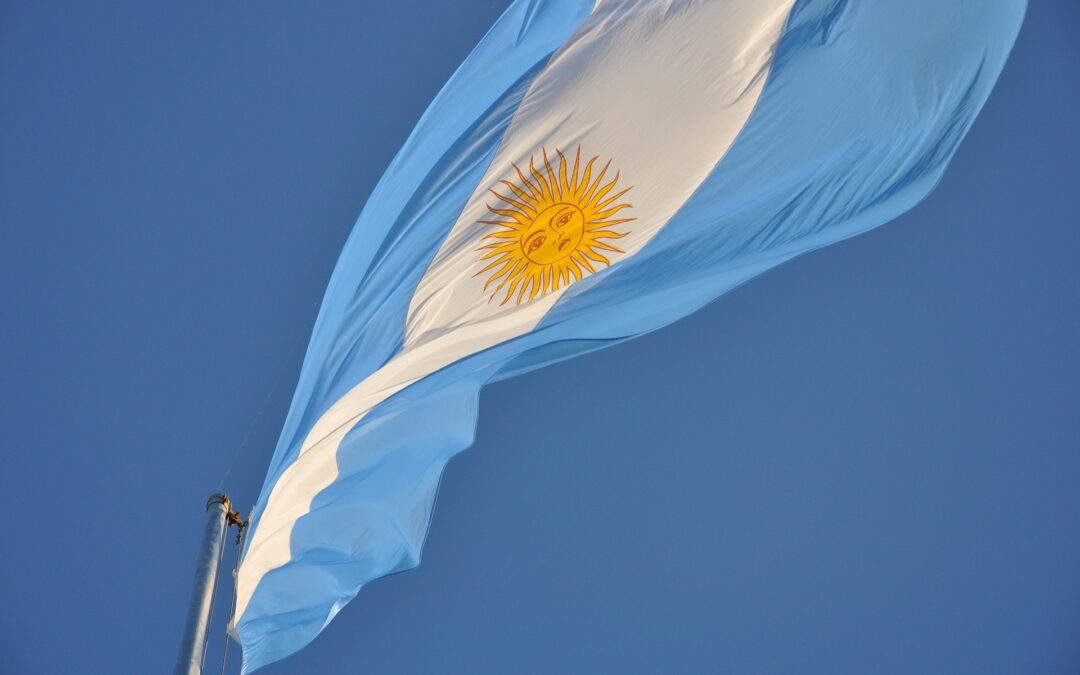
Argentina, which has suffered chronic dollar shortages in recent years and limited access to foreign financing, has officially legalized the program for obtaining nationality through the Argentine Citizenship by Investment Program, as set out in Decree 524/2025. The decree aims to channel foreign savings into productive investment projects and offers investors nationality through the aforementioned investment program. The program itself, however, has yet to be launched pending publication of further implementing regulations establishing minimum investment amounts and granting benefits only for those made in “productive projects”.

In Argentina, Investors Can Obtain Citizenship

Through the program, not yet announced but already regulated by law, foreigners who make certain investments in Argentina will be eligible for Argentine citizenship, becoming the country’s first Argentine citizenship by investment program (similar citizenship-by-investment programs have been reported in other countries in recent years).

The stated goal is that said investments are intended to support long-term productive projects generating jobs and promoting regional development, contributing to Argentina’s export capacity. Although the precise amounts have yet to be announced, officials have said they are working on “a balance so that they are competitive but not insignificant.”

Citizenship-by-investment programs, however, are nothing new: Currently more than 80 countries around the world offer some type of investment-linked residency or citizenship program. In recent decades, citizenship by investment has poured billions of dollars into the United States through the EB-5 Immigrant Investor Program. Europe has also seen a boom in investor migration with Portugal, Malta and Hungary using investment-linked migration to drive investment. Some of these programs have come under pressure lately, leading some countries to tighten rules or suspend them altogether due to national security concerns.

Argentina Creates Agency to Administer Citizenship-by-Investment Programs

Decree 524/2025 provides for the creation of the Agency for Citizenship-by-Investment Programs which would be responsible for receiving applications for investments and projects associated with this type of program; analyzing and approving said projects by publishing them on the Agency’s website, and through technical teams assigned for this purpose; articulating and coordinating with the corresponding agencies of the Nation when required; monitoring compliance with agreements reached with investors; and developing other actions derived from its powers or those that are necessary for the fulfillment of its objectives.

The proposal would now require projects approved by the Agency for Citizenship-by-Investment Programs to be finally approved by the National Directorate of Migration and the corresponding Units of Financial Information of the Government of the Nation.

Argentine Citizenship by Investment

Furthermore, Decree 524/2025 stipulates that, although the citizenship-by-investment framework has been enacted, the program cannot yet be activated. Important aspects such as the investment required to obtain Argentine nationality through investment, designation of the so-called “strategic sectors”, among others, have not yet been released. To fill these gaps, the Argentine Government launched an international call for bids to select a company to provide technical consulting services related to the “study and implementation of citizenship programs by investment”.

It is estimated that the program would exceed USD $2.5 billion in foreign direct investment if implemented in its initial stages, attracting approximately 5,000 families that comply with the program’s requirements. This would represent an influx of foreign currency into Argentina and help boost the country’s reserves. Officials have said that they hope that capital will be placed in strategic sectors such as infrastructure, energy, agriculture, and technology.

Areas like Infrastructure, Energy, Agriculture, and Technology Seek Investments

Argentina’s energy sector is the obvious candidate for investment. The nation is endowed with vast unconventional hydrocarbon reserves and now ranks seventh in the world in terms of shale oil and fifth in shale gas. Argentina needs investment if it wants to become a leader in energy production. Projects related to infrastructure would also be highly relevant, including transport infrastructure, logistics centers, construction projects, and even urban development projects that could help provide jobs and address inequality. When it comes to technology, many hope that those who participate in the program can help develop software and other knowledge-intensive services that Argentina is well-positioned to provide.

Countries worldwide offer residency-by-investment and citizenship-by-investment programs to attract foreign capital. Brazil and Chile, neighbors of Argentina, offer investment-linked visas that grant residence in their respective countries but do not lead to immediate citizenship. Countries like these, which many view to have clearer rule of law, will make competition for Argentina challenging. Argentina will need to price its program correctly and ensure foreign investors that their investments will be safe should they take the plunge and participate. These types of programs have also come under scrutiny for lack of transparency in recent years. Institutions will need to work hand-in-hand to ensure that Argentina does not fall into similar situations that have been seen in other jurisdictions.

Venezuelan Oil Investment Outlook 2026: 55% Growth Expected After Legal Overhaul

Venezuelan Oil Investment Outlook 2026: 55% Growth Expected After Legal Overhaul

The Venezuelan government projects oil investments to grow by 55% in 2026 as it reformulates the Hydrocarbons Law to open up the sector to private investments, marking a potential turning point for Venezuelan oil investment after years of decline and state dominance.

Acting President Delcy Rodríguez said Venezuela expects “some $1.4 billion in investments” in its oil sector for the year, compared to $900 million invested last year. This is part of a strategy to grow hydrocarbon production and court private investors.

“We have faced difficulties given the aggression … But we are reactivating projects. Venezuela produces what it needs to,” Rodríguez said.

Rodríguez’s administration has taken steps in recent months to open Venezuela’s oil industry to private domestic and foreign firms, framing the legal overhaul as essential to restoring confidence and unlocking new Venezuelan oil investment flows.

Long one of the Organization of Petroleum Exporting Countries’ largest oil producers by reserves, Venezuela’s oil production fell steadily for years as Presidents Hugo Chávez and Nicolás Maduro increased state control of the industry and squeezed out independent operators.

OPEC member Venezuela pumps less than 1 million barrels per day of crude oil this year after hitting highs of more than 3 million barrels per day in the mid-2000s. To increase output, Venezuela will have to reverse years of economic stagnation and policies that disincentivized foreign investment.

Rodríguez said that Venezuela would grow oil production via reforming the Hydrocarbons Law to allow contracts based on productive participation with private firms, both domestic and foreign, a mechanism officials see as central to rebuilding Venezuelan oil investment momentum.

Venezuela’s Hydrocarbons Reform: What to Know

The National Assembly-approved Hydrocarbons Law reform bill is meant to make Venezuela attractive to foreign and private investment while maintaining state control of the sector.

It passed its first debate and is awaiting ratification later this month or in early May. According to the law, companies operating in Venezuela would be able to:

Operate Independently

Contractors operating in Venezuela would gain autonomy to operate as they see fit instead of going through cumbersome — and sometimes politically motivated — processes overseen by state oil firm Petróleos de Venezuela, S.A. (PDVSA).

Focus on Production

Companies would focus on producing oil rather than obtaining rights to operate on the territory. Results are handed over to the state.

Commercial autonomy

Legal protections for companies would allow firms some certainty that their investments would not be stripped away by changes in Venezuelan policy. It would also allow companies to seek international arbitration for contracts, a point that was forbidden under Venezuela’s previous, more rigid hydrocarbons policy.

Become Part of the Global Market

The law also permits contractors to sell oil on the global market, something Venezuela previously only allowed through PDVSA.

The reform would guarantee productive participation contracts (CPPs), which were initially issued via executive order under former President Maduro’s Anti-Blockade Law in 2020 to bypass U.S. sanctions.

Rodríguez touted productive participation contracts as a way to attract investors to help Venezuela both increase output and sell oil abroad to help stabilize the domestic economy and currency.

“We need capital to develop productive participation contracts … we have signed contracts for the supply of dollars that will allow us to guarantee workers’ salaries,” Rodríguez said.

Chevron has said it would welcome deeper ties with Venezuela’s oil industry, while other firms could provide technology that can increase output and competitiveness. In other words, reforms to Venezuela’s Hydrocarbons Law are designed to open the country up for investment.

United States Factor

Oil prices surged this week after U.S. and Venezuelan officials announced a bilateral deal for the sale of Venezuelan oil to the United States, along with discussions about allowing Chevron to invest in oil projects in Venezuela, developments that could significantly accelerate Venezuelan oil investment if sanctions relief proves durable.

Bloomberg reported recently that U.S. officials were willing to involve American energy companies in Venezuela’s comeback story.

Washington’s approval of Venezuelan oil exports is the carrot that Venezuelan officials are hoping will unlock billions in much-needed investment in the country. However, lawmakers and energy analysts have warned that companies will be wary of sending capital to Venezuela without clear rules that protect their investment. The reforms in the Hydrocarbons Law would go some way to offering that reassurance.

Oil Investment Still Faces Hurdles

Opposition lawmakers, energy analysts, and legal experts have criticized the accelerated timeline of Venezuela’s Hydrocarbons Law reform. They argue that the government is pushing through legislation that may contradict the Venezuelan constitution.

The speed of the bill’s approval could open it up to legal challenges that stall reforms needed to attract capital. Chevron and other companies have the technical ability and personnel to help Venezuela jump-start oil output, but may be deterred if capital is at risk of nationalization.

Rebuilding Venezuela’s oil sector is also expected to take significant investment, perhaps tens of billions of dollars. It will also take time to reverse damage from years of underinvestment, limited technology, and a shortage of experienced personnel to restart wells, expand capacity, and restore long-term investor confidence.

Factories of the future already exist: where does Paraguayan industry fit in?

Factories of the future already exist: where does Paraguayan industry fit in?

The global factory of the future is undergoing a radical transformation. The World Economic Forum’s research indicates that by 2026, leading-edge factories will be characterized by five megatrends: hybrid technologies (mass adoption of several technologies simultaneously), focus on human capital, sustainability-led value creation, data-intensive operations, and scalability from the design phase. Where does Paraguay fit in this new industrial world, and what role can the Paraguayan industry realistically play?

Information gathered by the Forum through its Global Lighthouse Network, an initiative that tracks the most advanced industrial plants turning innovative ideas into measurable impact, reveals that 94% of deployed solutions are hybrids, applying multiple technologies simultaneously and gaining productivity improvements of up to 60%. They are scaled platforms coordinated across functions—not isolated pilot projects—and combine artificial intelligence, automation, robotics, and data analytics, establishing standards that are increasingly setting expectations for Paraguayan industry.

Scale is our biggest bottleneck

UIP Joven president Francisco Martino identified scalability as the main barrier confronting Paraguayan industry in adopting this new paradigm. “The historic problem we have had with national industry is precisely the lack of absorption capacity of our market. We do not generate enough volume to justify investments of millions or hundreds of millions of dollars in technology for us alone,” he remarked.

Martino added that Paraguay already produces at international quality standards in several sectors where industries have already scaled production to Brazilian slaughterhouses or global supply chains, such as beef and pork production. However, in many cases, Paraguay’s lack of scale limits the profitability of investing in high-end machinery or taking the further step of producing inputs on an industrial scale. “It is not that there is no willingness to innovate, but it does not pay or does not make sense because of the scale,” he summarized.

Foreign companies can play an important role in that sense. “We welcome the installation of Brazilian industries willing to come and produce here. They arrive with their market, with their standards, with their knowledge, and they generate technology transfer. When you manufacture for international companies, you learn; you also start to earn capital and then you can reinvest and buy machinery on an industrial scale,” he added.

Technology and data: mixed improvements

Use of data and real-time visibility is another pillar for competitiveness, according to the World Economic Forum. Factories that exhibit these characteristics reduced time to market for new products by 50% compared to their traditional competitors, and were eight times better prepared to deal with crises resulting in severe revenue drops.

The advance in Paraguay has been mixed. Diego Peyrat, acting head of the National Council of the Maquila Export Industry (CNIME), indicated that from the maquila sector there is progressive implementation of automated machinery and digital management and administrative systems. “From the Executive Secretariat of CNIME we carried out an implementation of IT systems that brought down export times from close to 24 hours to less than one minute. It’s an automatic request processing system with artificial intelligence to recognize components, importers, and issuing online traceability,” he described. At the plant level, maquila companies have integrated automated machinery and management software for productive processes in sectors like auto parts, textiles, plastics, etc. This ranges from inventory control to real-time monitoring of productive processes, allowing year-by-year improvements that are renewing Paraguayan industry from within.

Training qualified human capital is another shared bottleneck. Seventy-five percent of top-performing factories consider skills and safety their number one investment focus. Factories taking these steps have seen performance levels increase by 16% above the average.

“It’s a double challenge because technological incorporation depends a lot on training qualified human capital, and that human capital depends on companies making the effort to invest in technological infrastructure,” said Peyrat.

Reducing emissions, water, or energy is not only key to improving environmental performance but, according to the World Economic Forum, can translate into between 25% and 40% savings in operating costs.

Paraguay needs to improve productivity

For Martino, all that “is true, but today, sustainability is a condition of the market. Some industries can make that profitable, but not many.” He gave the example of a jeans manufacturer exporting to the United States and Europe, which he knows, obtaining organic certifications. “That factory sells its jeans at double the price of others because it has a differentiated market niche that demands organic products,” he noted.

Martino, however, clarified that they cannot make the same request of small and medium enterprises. “We have SMEs in Paraguay that, if they bill US$100,000 a year, are already considered microbusinesses. Many are selling just to pay salaries. We cannot ask them for a circular economy when they are still struggling to make it to the end of the month,” he asserted.

Martino concluded that growth and scale must precede. In that sense, investment in sustainability will have to wait, a reality that appears acutely true for Paraguayan industry.

“In the maquila sector, we see conditions are ripe for the incorporation of technology, automation, and value added. We have macroeconomic stability, tax benefits, competitive energy cost and recently we strengthened the maquila legal framework with the passing of the new Maquila Law 7547 last year. This modernized the service maquila and allows us to recover VAT among other benefits that make the sector even more attractive,” said Peyrat referring to steps that will enable service maquila industries to incorporate more technology and leapfrog into higher value stages of production.

“The world is big and very diversified. Paraguayans have proven they can adapt to many different realities,” concluded Martino.

The Dominican Republic and Chile Advance an Unprecedented Bilateral Agenda Focused on Economy, Borders, and Sustainable Development

The Dominican Republic and Chile Advance an Unprecedented Bilateral Agenda Focused on Economy, Borders, and Sustainable Development

The summit between Dominican Republic President Luis Abinader and Chile President-elect José Antonio Kast signaled the beginning of cooperation in migration control, responsible mining, and infrastructure projects between the two Latin American nations. Meetings took place in Dajabón province, Dominican Republic, which served as the platform for talks centered on policies surrounding sustainable growth, social responsibility, and regional integration. After a weekend of official meetings and technical visits, the representatives of the Dominican Republic and Chile have agreed to strengthen bilateral relations moving forward by exchanging successful policy experiences.

“The activities developed during these days sought to promote exchanges of experiences and strengthen regional integration through meetings of officials and working visits to programs that serve as an example at the national level,” reads a press release issued by the Presidency of the Dominican Republic.

Dominican Republic: Chilean Visit Strengthens Bilateral Cooperation Like Never Before

Dominican President Luis Abinader hosted President-elect José Antonio Kast on Sunday as they began official talks, marking the first time the Dominican Republic and Chile have committed to working together on projects related to sustainability, economic management, and quality-of-life standards. For two days, officials met to discuss actionable takeaways concerning the economy, migration management, mining regulation, tourism, and education. In Dajabón province, the Dominican Republic and Chile signaled their intent to align policies focused on sustainability and social responsibility while also learning from one another.

Chile will adopt several migration control policies based on systems implemented by Abinader’s administration. Technical teams from Chile also requested knowledge on airport administration and the management of free trade zones.

Likewise, the Government of the Dominican Republic will share its procedural blueprint with Chilean counterparts in the areas of migration control, airport management, and free trade zones.

Migration Control and Responsible Mining in the Dominican Republic and Chile

The visit allowed officials to exchange perspectives on responsible mining techniques that wouldn’t compromise either country’s natural resources or the quality of life for its citizens living in mining regions. Kast stated that while mining is essential to Chile’s growth, it will not be expanded at the expense of natural resources or vulnerable communities. “There are mining value chains that do not necessarily affect a community negatively, but quite the opposite,” he said.

That said, he looks forward to using the visit with Dominican officials to both protect Chile’s most important ecosystems and uplift mining communities through just policy. Kast went on to reaffirm his commitment to what will be Chile’s new mining policies that center on workers and environmental protection.

Ahead of implementing stricter mining policies, Abinader explained that the Dominican Republic will not allow any mining exploitation in territories where communities have voiced their concerns or vulnerabilities. Going one step further, Argentina will provide Chile with regulatory procedures that adhere to international standards of innovation, quality control, and prevention.

Security and Border Control

Security was also discussed during meetings between the delegations from the Dominican Republic and Chile. Abinader and Kast toured the Beller Fortress and observed the binational wall that separates Dajabón province from Haiti. Touring the binational wall system allowed Kast to personally witness the technology and organization between institutions that allow for efficient border control.

“I hope that our team can study those technological systems because we don’t have that degree of control,” Kast said. He continued by saying that Chile will have to find a balance between managing migratory flow and humane treatment of migrants.

Speaking on migration specifically, Kast estimated that there are around 200,000 Haitians living in Chile and called for the country to reach a level of “full respect of migrant rights” while maintaining better-controlled borders. As such, he went on to announce that Chile will be implementing a “border shield” plan to help mitigate undocumented migration as soon as March of this year. Kast made it clear that Chile will be analyzing multiple international examples, as well as leaning on the success of the Dominican Republic model.

Investing in Economy and Trade

Dominican Republic officials have impressed Kast with the country’s ability to manage free trade zones and locally owned private airports. As Kast mentions, the Dominican state has managed to become a “reference of excellence regionally in the administration of its airports.”

In terms of the economy, Kast explained that Chile will be using similar systems to better compete in international markets, attract more investors, and diversify Chile’s economy. Trade between the Dominican Republic and Chile was also discussed with the view of expanding bilateral investment opportunities.

Dominican Republic officials took President-elect Kast on a tour of local projects that focused on infrastructure and water management. The projects shared with Kast include: La Vigía Canal waterway, which underwent $6 million in repairs to boost productivity for farmers and citizens who rely on the water source. Officials from Masacre, a nearby rural municipality, also explained the modernization of their river irrigation system. This project was previously funded by a $526 million grant and looks to improve Masacre’s agricultural growth and food security.

In the same manner, new social infrastructure was highlighted, including Ramón Matías Mella hospital and classrooms for the Francisco Javier Ureña Canela school.

Tourism was also brought to the table as Kast expressed interest in working with Dominican officials to reactivate bilateral committees. When speaking about the reactivation of said committees, Kast explained that tourism can act as a bilateral driver for economic development. Creating jobs in the tourism sector can also allow for better regional integration.

Additionally, Kast and officials spoke about the industry sector and the opportunity to share both nations’ knowledge on topics such as sustainability, attracting foreign investors, and technology transfer.

Education

Dominican president Luis Abinader also had the opportunity to speak to students from Colegio La Altagracia about regional integration, the visit with Chilean officials, and the importance of being informed about current affairs. Both students and teachers had the opportunity to interact with President Abinader and his delegation.

“I invite you to continue informing yourselves about sustainable development issues, because you are the great generators of change that our country needs,” said Abinader when addressing students.

Conclusion

The historic visit by Chilean President-elect José Antonio Kast to the Dominican Republic marks a new chapter in bilateral cooperation, emphasizing sustainable development, responsible mining, migration management, and economic growth. By exchanging policy experiences, touring key infrastructure projects, and engaging in discussions on trade, education, and tourism, both nations have laid the groundwork for stronger regional integration and mutually beneficial partnerships. This unprecedented agenda reflects a shared commitment to social responsibility, environmental protection, and inclusive economic progress.