+1 (520) 780-6269 investment@latamfdi.com
Industrial Real Estate in Mexico with Rafael McCadden

Industrial Real Estate in Mexico with Rafael McCadden

Rafael McCadden
Executive Director for Industrial and Logistics
Colliers International
Mexico City, D.F. Mexico
rafael.mccadden@colliers.com

LATAM FDI: Today, we have Rafael McCaden with us. Rafael is the Executive Director for Industrial and Logistics with Colliers in Mexico. Good morning, Raphael. How are you today? Could you tell us about yourself and your company?

Rafael McCadden: Hi, Steve. Good morning. Thanks for this podcast. Of course, I’ve been in real estate most of my life, but industrial now, I would say, for almost 30 years. I started as the Executive Director of the Mexican NAIOP, which is called AMPIP, and then with Colliers for almost 20 years now.

LATAM FDI: Wow. For those who don’t know, AMPIP is the Mexican Maquiladora Association. Is that correct

Rafael McCadden: No. AMPIP is the Developers Association.

LATAM FDI: Okay.

Rafael McCadden: Yes. So, it’s more like NAIOP. Right.

LATAM FDI: Well, some key factors drive demand for industrial real estate in Mexico, given the country’s current landscape. What are those key drivers, Rafael?

Rafael McCadden: Yes. Well, I would say one of the key drivers right now is nearshoring, which is unshoring or friend shoring. It has so many different names now, but it’s the same thing. I would say that the global manufacturing supply chain has changed its course, and now it’s not as global as it used to be for many reasons. Regionalization is the new game. Of course, Mexico, being part of North America, plays a huge role in this, I would say, in many sectors. We’re busier than ever

LATAM FDI: Given this economic landscape, how does the availability of skilled labor influence the location decisions of companies that look to occupy industrial real estate in Mexico for manufacturing purposes?

Rafael McCadden: Great question. Well, you see, there are, I would say, important differences between the workforce in the US and Mexico. For one, if you start looking closely into the average age of engineers or the average age of the population, in the United States, baby boomers are in their late ’60s. The baby boomer generation in Mexico is in its late ’20s. That’s a huge difference. I say it because even though Mexico has pyramids, it’s a young country. The average age is 29 years. That’s a huge advantage. This has resulted in many US and European companies switching to Mexico. This, of course, has positive implications for industrial real estate in Mexico.  Also, design and technical centers are becoming more prevalent. Believe it or not, Mexico graduates the same number of engineers with a population of 130 million as the US with a population of over 350 million. So That tells you how many graduates and how many young students are looking to get a job in Mexico

LATAM FDI: Yes. That seems to be something that many people I speak with comment upon: the availability of good, skilled labor in Mexico. But beyond that, what role do government policies and regulations relations play in shaping the growth and development of the market for industrial real estate in Mexic

Rafael McCadden: The government doesn’t always help the business develop. I can put it that way. But I would say that the trends surpass that big time. Some governments have a more active role, especially state governments. I would say the federal government took a different path by shutting down Promexico, which was a government investment agency. But regardless of that, the trends are helping Mexico. Let me stop here a minute and tell you something that I’ve been, I would say, analyzing, and that is what we started talking about regionalization. Supply chain disruptions are playing a huge role in Mexico’s success. Supply chain disruption, as an example, we can mention the tsunami in 2011 in Fukushima, Japan. So, some people say, What does that have to do with Mexico? And I said, More than you think, Because the auto industry, especially tier one and tier two assembly plants, had to shut down because of the suppliers being affected by the tsunami. And so, some of the largest OEMs, Japanese OEMs, said, This will not happen again. I can’t keep having all the eggs in one basket. So, they started expanding their operations to occupy industrial real estate in Mexico.

LATAM FDI: So, after 2011, more than 300 Japanese auto industry companies, including OEMs like Mazda, Honda, and Nissan, moved to occupy industrial real estate in Mexico in the Bahia region. That played a huge role in that area’s industrial development. Then, as we all know, COVID-19 was a huge game changer in terms of supply chain disruptions. Now, newer supply chain disruptions like the Red Sea, the Panama Canal, and the Baltimore Bridge were torn down. These supply chain disruptions are helping Mexico, which has a 2,000-mile border with the US with 55 border crossings.

LATAM FDI: Concerning border crossing and other investments in Mexico, specifically infrastructure, including transportation and utilities, how does Mexico’s state of development in this area contribute to the attractiveness of locations for industrial real estate in Mexic

Rafael McCadden: Well, being very honest, this tsunami that hit Mexico, which is nearshoring, has challenged our utilities, infrastructure, and transportation. I would also say the developers are trying to play catch-up because we were hit by an unexpected demand for industrial real estate in Mexico. Let me give you an example: Never before has Monterey had over 30 buildings for industrial real estate in Mexico under construction, which they do have today. That tells you the roles that the developers are playing. Developers who weren’t even in the sector, those who were in office development or shopping centers, are moving and putting a lot of interest into the industrial market. They can see that industrial real estate development in Mexico will continue with this trend for a few years. So yes, it’s really interesting to see how also US developers that didn’t care much about Mexico, like Panettoni, for example, they were mainly concentrated on Eastern Europe and other places in the world now are saying, Hey, I’m more interested about Mexico than I was three years or five years ago

LATAM FDI: Getting a view and handle on the physical types of construction you just mentioned, are there any emerging trends in the design and construction of industrial real estate in Mexico

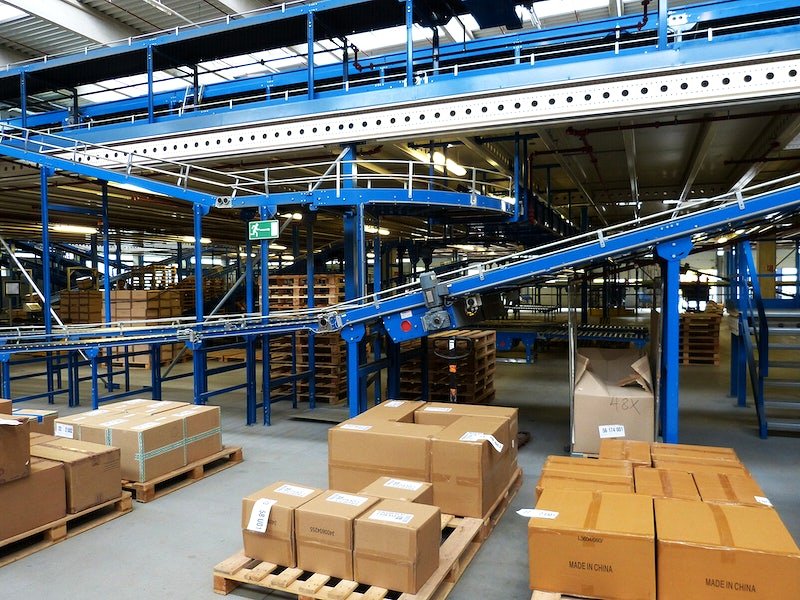
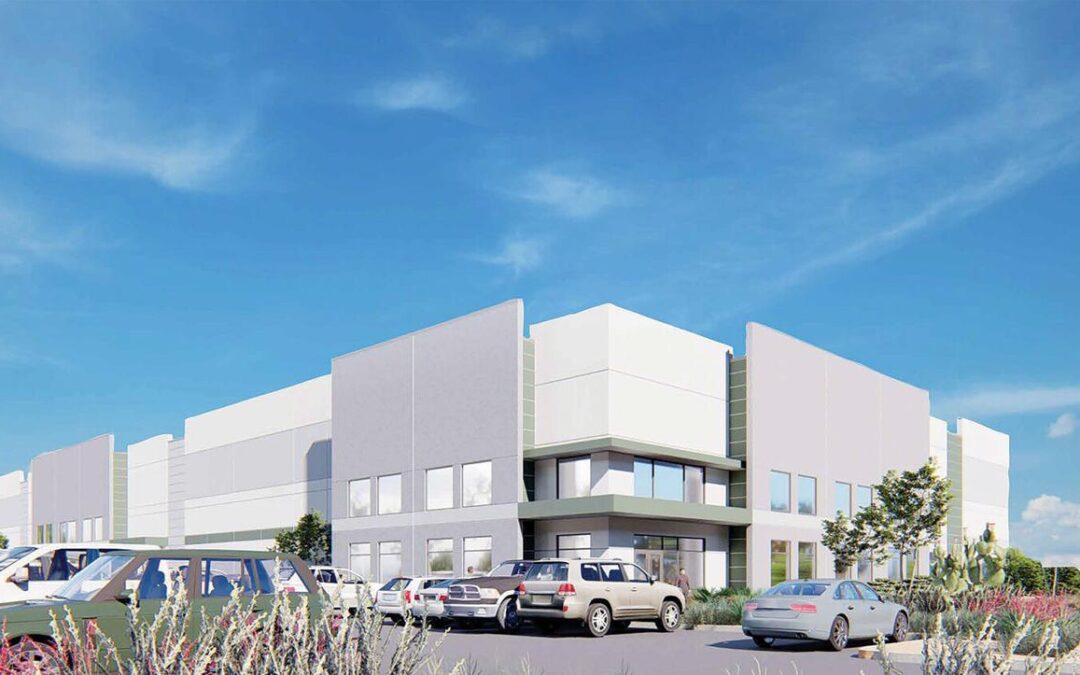
Rafael McCadden: I would say yes. For one thing, industrial buildings are much more environmentally friendly in many ways. So ESG… To give one example. The structures were not typically designed to hold solar panels. Developers didn’t design buildings that could hold them. Now, most developers are designing better structures that can hold solar panels, sprinklers, and HVAC units. That’s one thing. Then power is a huge issue, and that’s one of the reasons why they’re putting in solar panels. And, of course, clear height, that’s another thing. The distribution centers are being more automated than before. So, the requirement for power keeps growing and growing. Because everything that’s being brought into the buildings requires more power. And so, it’s not only on manufacturing, it’s also on distribution centers. Plus, truck fleets now also require charging stations. Those are the trends we can see in the evolution of industrial real estate in Mexico.

LATAM FDI: Can you provide some answers and insight into the competitive landscape of industrial real estate in Mexico? Maybe give us the names of major developers and operators in Mexico, including key players in market dynamics.

Rafael McCadden:  Sure, of course. Well, Prologis, besides being a major global industrial park developer and owner in the US and the world, is also a major player in Mexico. It’s interesting because even though they’re number one, they are focused mainly on six cities. They are concentrated in three border cities: Guadalajara, Monterey, and Mexico City. There are other developers, such as CPA, Amistad, Finsa, and Macquarrie. REITs in Mexico are only 10 years old. So, we didn’t have reeds in the past. Most of the industrial portfolios were owned by the developers. Once REITs were authorized and they had some tax advantages for investors, many insurance companies and retirement funds started investing in industrial real estate in Mexico. The portfolio has changed hands and is now mainly controlled by investment funds, which we call Fibras in Mexico, but it’s the same thing as in the US.

LATAM FDI: Well, Raphael, you’ve provided great information for our listeners. We intend to do this with each discussion with experts like yourself. We want to provide your contact information so that anybody with questions about what they’ve heard can reach you. How would somebody contact you with further questions?

Thank you. Sure. Well, my email is rafael.mccadden@colliers.com. Of course, they could also reach out through LinkedIn. That would be a good way to contact me, and I would say it would be the easiest way to reach out.

LATAM FDI: Thank you for joining me today to discuss industrial real estate in Mexico. This has been very interesting. We’ll put a link to your LinkedIn profile in the transcript section of the page on which the blog post is posted, and we’ll include your email and Collier’s URL for its website. How’s that

Rafael McCadden: Great. I like it. Thank you. Have a great day. It’s not just me, it’s a team. We work throughout Mexico, from Tijuana down to Cancun. We’re constantly traveling and helping companies do soft landings in industrial real estate in Mexico.

LATAM FDI: Well, that’s great. Hopefully, listeners will call you, and you’ll be able to get some new business.

Rafael McCadden:  I appreciate it, Steve. Thank you so very much.


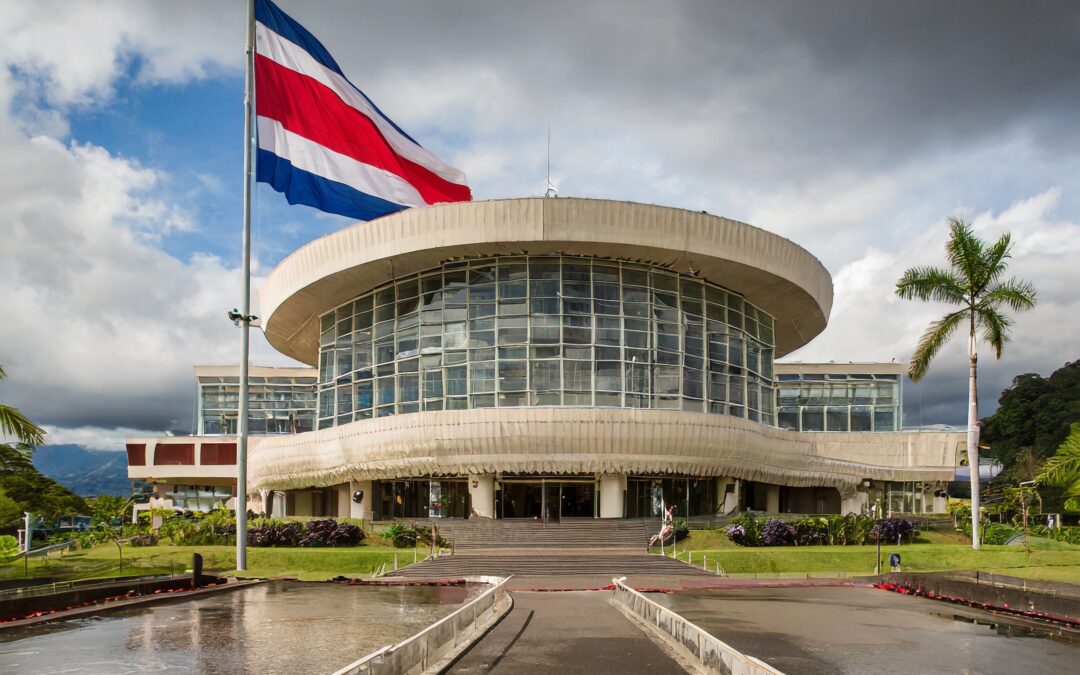
The Foreign Direct Investment Costa Rica Summit 2024

The Foreign Direct Investment Costa Rica Summit 2024

Monica Umaña
General Manager – Foreign Investment
The Costa Rican Foreign Trade Promoter (PROCOMER)
San Jose, Costa Rica
mumanad@procomer.com

The Foreign Direct Investment Costa Rica Summit 2024


LATAM FDI:
Hello. We’re fortunate to have a very interesting person to talk with today. Her name is Monica Umaña. She’s the general manager of foreign investment of an organization called Procomer, which is Costa Rica’s Foreign Direct Investment Promotion Agency. Monica, I’ll let you introduce yourself and tell us a little bit about your organization.

Monica Umaña: Thank you, Steve. It is very nice to see you again, especially because of the topics we will talk about today, the Foreign Direct Investment Costa Rica Summit 2024.

As you said, my name is Monica Umaña. I have been working for the past year as the Foreign Direct Investment Division manager at Procomer. Procomer, as you said, is the National Agency for Investment and Export Promotion in Costa Rica. Still, I have been attending and receiving investors in Costa Rica for the past 11 years. So very nice to see you again and talk to you today.

LATAM FDI: Well, thanks. Today, we’re going to talk about something that’s very important. It’s a little bit exciting. We all know that Costa Rica has been very successful, especially because of the size of the country,  in attracting foreign direct investment for the last 30 years. Today, we’re going to talk a little bit about the Foreign Direct Investment Costa Rica Summit 2024 that you have coming up that you can give more information on. But the first question I want to ask you is specifically related to that. You assumed the general manager role at the National Agency for Attracting Foreign Investment (Procomer) a year ago. Now, you’re preparing an event you will tell us about to showcase the benefits of investing in Costa Rica. What’s this all about?

Monica Umaña: Costa Rica has been a reference for foreign direct investment. With our responsibility as the Costa Rican Investment and Export Promotion Agency, we decided to have the Foreign Direct Investment Costa Rica Summit 2024 to showcase why we host more than four hundred multinational companies. As you said, this will be the first edition of the FDI Summit. This represents a unique opportunity to keep positioning Costa Rica as a highly attractive destination for international investors. Costa Rica is well known as a country with highly skilled human talent, but also because it offers attractive fiscal incentives under the free trade zone regime. That is one of the main reasons many companies analyze and choose Costa Rica to have a manufacturing or services facility here in the country. We offer an excellent business climate, legal security, and, of course, sustainability. We have a record of stability and peace. We want to show this during the Foreign Direct Investment Costa Rica Summit 2024. We’re inviting new investors from key sectors. Costa Rica is interested in specific and strategic sectors such as the agro-industry and food industry, manufacturing, light and advanced manufacturing, life sciences, and the main export products from Costa Rica right now. We are also highly interested in targeting corporate services, digital technologies, and semiconductors. This is one of the most recent sectors of interest since we launched the roadmap for the semiconductor sector recently with the Ministry of Foreign Trade. Additionally, tourism investment is another sector that we want to attract to Costa. The Foreign Direct Investment Costa Rica Summit 2024 will take place on June 11th and 12th at the Costa Rican Convention Center, which is very close to the international airport in Alajuela.

LATAM FDI: Well, can you give us a little bit of a preview of what agenda is being planned?

Monica Umaña: Absolutely. Actually, the FDA Summit offers a comprehensive experience in two days. This is going to be an in-person format. On the first day, we will have a keynote speaker. He’s going to highlight the global landscape for foreign direct investment. We want to start with an overview of what’s happening worldwide. Our general manager, Laura López, will also share some updates regarding Costa Rica’s landscape and especially our opportunities in terms of strategic sectors inside and outside the Greater Metropolitan Area of Costa Rica. Since launching our strategy a year ago, we have highlighted the importance of capturing investments outside the Greater Metropolitan Area. Diversification of sectors is really important for us, as well as diversification of countries of investment origin. We will have dedicated sessions for specific topics during the first day of the Foreign Direct Investment Costa Rica Summit 2024. For example, we’re going to examine digital technologies and global interconnectivity. I mean, this is a new level of complexity for companies, so we will talk about it. We discussed this earlier year, Steve, 2024 is the biggest election year ever. We have general elections in more than seventy countries around the world. This is something that will definitely shape decisions this year in terms of foreign direct investment.

Supply chain resilience is something that is still catching the attention of every single investor. When we receive new companies in Costa Rica, we must discuss this. Artificial intelligence will be present as one of the main topics, as will sustainability, Steve. Sustainability is a pillar of our Costa Rica value proposition for investors, and we will discuss this. But going back to the second day of the summit, we’re talking with each company about having a tailor-made agenda according to the sector and according to the needs of the company. We will be visiting industrial parks and academia. We will have benchmark meetings with companies already established in Costa Rica, and we’re organizing visits to the regions outside the Greater Metropolitan Area to ensure we present all the benefits we offer as a country and offer a comprehensive view of investment opportunities in Costa Rica.

LATAM FDI: Can you give us a little bit of a preview concerning some of the speakers that will be present at the Foreign Direct Investment Costa Rica Summit 2024?

Monica Umaña: Yes, sure. Actually, we’re about to send an updated version of the agenda and the speakers since we have confirmed participation. For example, FDI intelligence will be present. You know this platform is important for every person making investment decisions. Of course, we, as an investment promotion agency, want to have FDI Intelligence as one of our keynote speakers. Deloitte and other big names in terms of consultant firms outside Costa Rica will also be at the event. We want to highlight the success stories of multinational companies. With operations in Costa Rica. They will be part of these conversations because it’s important not only to mention benefits and what we offer but to let the companies talk about what they have been experiencing in Costa Rica in the past year. We will consider why Costa Rica is a natural hub for new investment. I hope to share the complete agenda of the Foreign Direct Investment Costa Rica Summit 2024 with you and the audience soon.

LATAM FDI: Okay, that’ll be great. I’m sure it’ll be very informative, and you’ll have some good speakers. Before we started the interview offline, we were talking about how things are going right now concerning foreign direct investment in Costa Rica. Could you share some information about that?

Monica Umaña: Sure, Steve. Costa Rica reached a historic milestone in 2023 by closing the year with record figures in foreign direct investment. The country reached a 24 % increase compared to December, surpassing the estimated goal for that year by 131%. As part of the investment, 61% of this investment is under the free trade zone regime, followed by 19% in the definitive regime, 7% in tourism, 7% in real estate, and 6% in various other sectors. In terms of the activities, manufacturing leads with 55 % of the total, followed by the services sector with 25%. When we discuss the country of origin of each project we discussed earlier, we’re working to diversify our investment origins. The United States remained the main source of foreign direct investment in Costa Rica, the source of 71 % of the total. Belgium follows the US with 11 %, Switzerland and Panama with 4 % each. Last year, Procomer announced fifty-nine new investment projects. This is the highest number in recent years. It represents 64% growth compared to the thirty-six projects announced in 2022. Out of these fifty-nine new projects, thirteen were installed outside the country’s Great Metropolitan Area.

So, this is such a considerable number for us since then. This represents one of the pillars of our strategy to bring new investment outside the Great Metropolitan area. We confirm the ones in Orotina, San Carlos, the northern region of Costa Rica, the south region, Puntarenas, Cartago, Grecia, and Liberia in the northern Pacific. So additionally, out of these fifty-nine new projects, seventeen come from origins other than the United States, such as Italy, Japan, Peru, and France, to mention a few sources of investment.

LATAM FDI: It sounds like you’ve been pretty busy.

Monica Umaña: Yes. It has been busy and happy. Really exciting times.

LATAM FDI: That’s a good thing. Well, returning to the Foreign Direct Investment Costa Rica Summit 2024 again. If you could repeat the dates, I think that would be good.

Monica Umaña: Yes. It’s June 11th and 12th. On the first day, we will be at the National Convention Center, and on the 12th, we will be outside having agendas and visiting specific areas.

LATAM FDI: If a company that’s listening to this wants to participate, what should they do?

Monica Umaña: Yes, definitely. I will share the link for the event so you can have all the details I haven’t mentioned before. Procomer is covering meals, local transportation, and lodging in terms of the hotels in Costa Rica. This is part of what we’re offering to the investors who would love to visit the country in June. But most importantly, we have offices all over the world. Interested parties can contact me, of course, here in San Jose and my colleagues overseas. We have offices in New York, Houston, Miami, Mexico, Canada, Central America, Latin America in general, Europe, and Asia. They can guide you through the process of signing up. Of course, the team here in Costa Rica is eager to receive investors and create new opportunities for the country. I’ll be sharing my email and the link for the event so you can read in detail what I mentioned before during the podcast. We’ll be more than happy, Steve, to have you. I hope you can visit us in June, and many investors, too.

LATAM FDI: Well, that’d be great. One of the things I know that you’d recommend is that I’ve never met anybody who doesn’t or didn’t like going to Costa Rica if they’ve been there. Would you recommend people build a few extra days to see the country?

Monica Umaña: Absolutely. Actually, we have enough time before and after the event. We need to extend the stay for  a couple of days, the agendas, and of course, tourism. This is part of the proposal.

LATAM FDI: It would be a shame to go there and be all occupied with business and not have a chance to see how beautiful your country is.

Monica Umaña: Thank you. Yes, definitely. We can provide support for that, too.

LATAM FDI: Well, I want to thank you. I wish you great success with the Foreign Direct Investment Costa Rica Summit 2024 and look forward to speaking to you on different topics in the future.

Monica Umaña: I hope so. I hope so. Thanks a lot, Steve.

Invest Minas: Navigating Foreign Direct Investment Opportunities in Minas Gerais, Brazil with Gustavo Almeida

Invest Minas: Navigating Foreign Direct Investment Opportunities in Minas Gerais, Brazil with Gustavo Almeida

Gustavo Almeida
Chief Operating Officer
Invest Minas
gustavo.almeida@investminas.mg.gov.br

LATAM FDI: Hello. Today we have Gustavo Garcia Almeida with us. Gustavo is the Chief Operating Officer of an organization called Invest Minas. Invest Minas is in Belo Horizonte, Brazil. Gustavo, I’ll let you tell us a little bit about yourself and your organization.

Gustavo Almeida: Thanks for having me. It’s such a pleasure to talk to you. So, a bit about me. I’m deeply passionate about government relations and investments. Over the past 15 years, I’ve had the privilege of working closely with the public and private sectors, helping them navigate through strategic implementation of plans, fostering business development, and promoting investment opportunities. I’m currently, as I said, the Chief Operating Officer at Invest Minas. Invest Minas is the investment promotion agency for the State of Minas Gerais, Brazil. I’m grateful to be here today doing international relations and discussing investment opportunities in Minas Gerais.

LATAM FDI: Well, thank you for that background information. Let’s start today by discussing the type of participation foreign companies are engaged in in Minas Gerais. Can you provide examples of notable foreign companies that have established themselves in Minas Gerais and what factors influenced them to choose your region?

Gustavo Almeida: There are several reasons why companies establish operations in Minas Gerais. Through Invest Minas, we point to factors such as abundant resources, skilled labor, government incentives, and proximity to markets. I think that those factors have influenced companies’ decisions. For example, we have a British company called Anglo-American and an Australian company called Latin Resources here. The availability of minerals such as iron ore attracted them. Recently, Invest Minas has helped Amazon and Mercado Libre, the Argentinian company, establish facilities in Minas Gerais. They chose to install their distribution centers here in Minas Gerais due to its strategic logistics position and the need to reach customers quickly. Nowadays, we all know that people are willing to pay a little more for their purchases to arrive faster, and these companies understand that. Another example is Solaico, which is a Spanish company in the solar energy sector. They decided to set up in the state with the help of Invest Minas because of the availability of natural resources, aligning themselves with the growing global need for sustainability. So, we have many examples of international companies that decided to come to Minas Gerais and have received assistance from Invest Minas. We have Canadian companies, Dutch companies, Danish companies such as Novo Nordisk, Japanese companies, and Italian, French, and Chinese companies as well.

LATAM FDI: You spoke about companies that are involved in mining services, Mercado Libre and Amazon. What other kinds of industry are in Minas Gerais? It’s my understanding that there’s a significant automotive industry. Maybe you could say a little bit about that and others?

Gustavo Almeida: Yes. Minas Gerais is the regional mining land in Brazil today. However, it has a diversified economy with significant contributions from many sectors. I’ll mention three traditional sectors that have worked with Invest Minas, and maybe we can talk about others that I consider to be emerging sectors. The state’s three traditional industries are mining, agribusiness, and auto manufacturing. For example, mining is historically strong, especially in iron ore and its products. It’s important to highlight that the company, formerly known as Vale Doce, one of the world’s biggest mining companies, was founded here in the city of Itabira. Agribusiness is also very strong. I think Minas Gerais is the largest coffee-producing state, with more than 55% of Brazil’s production. We usually say that Minas would be the world’s largest producer if it were a country. And it’s also the largest producer of other products, such as milk and potatoes. It ranks second in sugar cane and beans and third in producing tomatoes, chickens, and eggs. When talking about the auto industry, this is also very relevant. We have a Stellantis factory here. It owns the Fiat brand. It is here in the metropolitan area of Belo Horizonte.

A vast number of supplier factories surround the factory itself. There’s also an Italian Iveco factory in the city of Sete Lagoas. This plant manufactures everything from trucks and vans to military vehicles. Yes, Minas Gerais is growing faster and becoming more and more diversified. Regarding the emerging sectors, we can talk about renewable energy, which in Minas Gerais is the largest in Brazil. The tourism sector has also stood out a lot. Pharmaceuticals and also the logistics segment have been highlighted. Places in Minas Gerais are rapidly running out. And the demand is only growing because the state has excellent logistical advantages. We at Invest Minas can help foreign companies make their investments and establish their facilities.

LATAM FDI: You mentioned logistics in a little more depth just now. What’s the state of infrastructure in Minas Gerais, particularly in terms of transportation, logistics, and connectivity? And how does Invest Minas facilitate operations in your state?

Gustavo Almeida: Okay, that’s a great question. Infrastructure is always a priority. Like the United States, Brazil relies heavily on roads to transport people and goods. Minas Gerais has the largest road network in Brazil. It accounts for around 16% of the country’s total. There are over 272,000 highways. This includes federal, state, and municipal roads. And in terms of road conditions?  Most federal and state highways are paved, but there are still unpaved municipal roads, especially those in more remote areas. So, the state is actively investing in improving infrastructure, including improving airports and regional flights through partnerships with airlines. For international travelers, for example, reaching Minas Gerais right now is relatively straightforward. For example, there are direct flights from Orlando and Fort Lauderdale to Belo Horizonte from the United States. From here, travelers can easily access other parts of the state and the country.

LATAM FDI: Regarding the investment environment for foreign companies that might want to make a foray into Minas Gerais, are there government initiatives or policies in place to encourage and support both foreign and domestic investors?

Gustavo Almeida: That’s a good question. There is, and there are. Minas Gerais’s investment environment is diverse, and it has a supportive government. In general, the environment in Minas Gerais is considered one of the prime business locations in Brazil. As I mentioned before, the process of opening and operating companies is straightforward, with a skilled workforce readily available, the land offered at fair prices, and logistical advantages. There is also abundant energy and the second-largest consumer market in Brazil. The government right now is a very investor-friendly offering. For example, various tax incentives are in place to attract and support both domestic and foreign investors. The State Department of Finance, for example, provides benefits to over seventy sectors. For example, deferral of VAT tax. With the acquisition of inputs within the state, VAT rates and even zero rates for specific sectors are reduced. Numerous credit lines are also available to support investment endeavors, particularly through the State Development Bank. The government actively promotes investment through Invest Minas, which serves as a comprehensive support center for investors. We are a one-stop shop for investors. We offer unified assistance, collaborating with public agencies and private entities to ensure the project succeeds throughout all operations and development stages.

This includes, for example, providing market intelligence to help identify suppliers and potential clients and assistance with projects. Yes, that’s it. Minas Gerais presents excellent investment opportunities. As a result, many Brazilian and foreign companies are choosing the state as their headquarters.

LATAM FDI: Tell us a little bit about the workforce. How would you describe it regarding skills, education, and overall productivity?

Gustavo Almeida: Well, the workforce is very well-educated. The state has consistently ranked among the best performing, and the main education quality index is called IDEB. Moreover, Minas Gerais stands out for its abundant federal universities, which hold the highest concentration in the country. Just as a fun fact, Brazilian federal universities are recognized as elite institutions renowned for their excellence in research, development, patent production, etc.

LATAM FDI: Are there specific workforce advantages, such as a skilled labor force or a competitive wage structure, that make Minas Gerais an appealing destination for investors?

Gustavo Almeida: Yes, there are. Due to the state’s vast size, many different skill sets are available. Universities actively develop these skills according to the strengths in various economic sectors. For example, the state’s central region, specifically in Belo Horizonte and its metropolitan area, strongly emphasizes biotechnology, startups, and services in general. The Federal University of Minas Gerais in Belo Horizonte is a hub for this, along with many technology centers in our capital city. We have been recognized to be in the top ten of the best startup ecosystems in Latin America, and Belo Horizonte ranks in the top three cities with the most startups in Brazil. Here, there are over five hundred startups. I just spoke about the center of the state. In the south of the state, a robust region focused on technology development encompasses cities like Itajubá, São Tiago, and Sapucaí. These cities concentrate on sophisticated educational institutions and house technology centers specializing in electronics, such as the Federal University of Itajubá (UNIFE) and also INATEL, the National Institute of Telecommunications. There are also significant hubs in the agriculture sector, especially in the triangle region that includes cities like Uberaba and Uberlândia, and also in the south of the state, which produces the best doce de leite in the world.

So, these regions offer a skilled label force and also feature competitive wage structures, making them attractive to investors seeking opportunities here.

LATAM FDI: Well, we’ve covered a lot of ground in a short period, Gustavo. What inevitably happens after our listeners tune in to our podcasts is they produce questions that haven’t been addressed during these conversations. We would like to provide contact information so that people with questions can contact you directly. How would people contact you?

Gustavo Almeida
: Yes, they can contact me by email, which is the best way. My email is: gustavo.almeida@investminas.mg.gov.br.

LATAM FDI: At the top of the transcript section on our podcast pages, we have links to the organization websites of the speakers that join us, and we’ll also include a link to your LinkedIn profile so that people can contact you in that way as well. Would that be okay?

Gustavo Almeida: That’s perfect.

LATAM FDI: All right, thank you very much for joining us.

Gustavo Almeida: Thank you so much. Thank you for the opportunity to present information on investment opportunities in Minas Gerais. I hope your listeners may visit us someday and be in touch. Thank you so much.

LATAM FDI: Okay, thank you.

Foreign Direct Investment in Honduras

Foreign Direct Investment in Honduras

Leonardo Morazán
Foreign Direct Investment Consultant
Tegucigalpa, Honduras

LATAM FDI: Today we have Leonardo Morazán with us. Leonardo is somebody who’s worked several years, quite a few, as a matter of fact, as an investment consultant to both private sector and public sector entities. Most recently, he’s done work to promote foreign direct investment in Honduras with the Consejo Nacional de Inversion and USAID. But I won’t say more. I’ll let you introduce yourself, Leonardo. Thank you for joining me.

Leonardo Morazán: Thank you, Steven. It’s a pleasure to be with you. As you say, for the last 10 years I have been a consultant with different entities promoting foreign direct investment in Honduras and advising companies in which industries to invest. I had previous experience as the CEO of an international Spanish company involved in software development that has a presence in Honduras. We began with the company here in 2014 and worked to make it grow. We had the chance to go public on the stock exchange in Madrid. So, it was a really interesting road to make a business grow and sell it. So that gave me a lot of insight into how Honduras could be a potential ally for investment worldwide, especially in Central America.

LATAM FDI: Well, that’s good that you have both private sector and public sector experience. It’ll help to orient the listeners to our discussion today about foreign investment in Honduras. With that, how would you describe the current investment climate in Honduras, and what factors make it attractive or provide challenges that people have to face?

Leonardo Morazán: Okay. One of the principal attractions of Honduras is its geographical position. We’re the heart of the Americas and have good opportunities in diverse sectors. We are used to working with American companies. There are a lot of nearshoring investments, and we are now open to various sources of investment. The Northern Triangle has been focused on different efforts to develop new economic opportunities and avoid migration. We have many people and a thriving workforce and are interested in attracting more foreign investment. Our national investors are aggressive. We have four or five groups that are expanding in the region. Currently, 90% of the investment comes from Honduran nationals, and only 10% comes from foreign investors. So, there’s an interesting opportunity to develop investments that take innovation, and new technologies to the region and use Honduras as a hub, a logistics hub, to distribute products and services through Latin America.

LATAM FDI: Those are the upsides. What are the challenges that companies face?

Leonardo Morazán: Okay. As in every country, we have a government that has to work on promoting investments. However, in recent history, most of our investments in the country face the challenge of how the laws and the rules of the game change. This happens when we shift politically from one spectrum of policy to another. This creates kind of a struggle. Projects with a return on investment over 10,15 or 20 years must have the same business conditions during the life of the investment. So, stability usually comes from two particular factors, how your market moves is the most important one. Now, we see a lot of movement in textiles and other types of manufacturing because of market shifts and the changes we are having from Asia to closer options near the markets for their products. This is the near-shoring effect. And the other factor is how the country gives stability to investors, to the employees, and the society as a whole.

LATAM FDI: Given what you just said, can you give any recent regulatory or economic developments in Honduras that have impacted the landscape for investors?

Leonardo Morazán: Yes. One of the principal attractions of our country is the free trade zones law. When we have a special regime to import goods, transform, and export them. It used to be a law specifically for exportation. Companies were not allowed to sell their products in the domestic market. It was a really strong motor for development. In the last three or four years before COVID, a regulation allowed those players to sell at least 50% of their production in the country. So that shifted a lot of the opportunities, and the players in the local market got upset because now they had to compete with industries with a lot of experience and technology.  Before this change, even though they were our neighbors, they didn’t have to compete with international investors. As a result, local investors had to seek other markets and try to compete.

LATAM FDI: So, just getting back to one of the things that you just said, people in special economic zones were allowed to sell into the domestic market. I would assume one of the issues that came up was that the people in the special economic zones were probably getting some tax incentives that were not enjoyed by the people who are domestic investors. Would that have been an issue?

Leonardo Morazán: Yes, they already had the tax incentives upon their establishment. So, once you have an open market, you already have most of the return on your investment. So, the prices could be competitive. However, the product has a tax on sales, which created some revenue for the government.

LATAM FDI: What sectors in Honduras are looking up these days? Where’s the activity?

Leonardo Morazán: Mostly, we have a really strong BPO service sector. People in Honduras have a really good English level and speak several languages. Our time zone is also appropriate for call centers and IT development, especially for America. That’s one of the industries where the most demand for workers is. The government finds these enterprises very attractive for the government because they usually create good jobs. And another industry is growing fast as well, manufacturing. Honduras is really powerful on textiles. We’re the number one selling socks, jerseys, and shirts to different markets. Then, the largest part of the country has an agribusiness industry. We are one of the top exporters of coffee. And in that line, most of the agribusiness industry has tried to diversify, and we’re exporting vegetables and fruits worldwide. However, it’s a primary product. I mean things such as bananas and coffee. We have to move forward to sell finished products and more value-added agriculture. That requires investment, knowledge, and access to markets. So, there is one big opportunity for international companies to see Honduras not only as a tropical country with no winter but only a rainy and dry season.

As a result, the agricultural business is really good because companies can produce twice or even three times a year. Additionally, our position is strategic to distribute these products all around the world.

LATAM FDI: How is the government working to promote investments? Are they doing anything actively to try to bring business to the country?

Leonardo Morazán: Yes. Five different institutions have promoted foreign direct investment in Honduras in the last four to five years. Foreign policy, the economic department, and the National Investment Council. It was a dispersed effort. In 2023, a new strategy focused all the investment attraction activities on the same organization. The National Investment Council right now has board members, a steering committee, the economy minister, the president,  and even the environmental head of state. The efforts to attract foreign direct investment in Honduras are more concentrated and focused. The new relationship with China has brought new opportunities to the country, especially from Asian companies, including Korea, Japan, and China. These companies seek to develop investments in the Americas, especially to access Honduras’s free trade agreements with South America, North America, and Europe. From the point of view of what the government is doing, the market, in some instances, is shifting away from Mexico. The government in Mexico has increased the minimum wage by over 20%. So that makes some of the production, both in agriculture and manufacturing, more competitive for those companies that seek to make foreign direct investment in Honduras.

LATAM FDI: Are there any notable success stories or case histories about foreign businesses that have thrived in the Honduran market? What lessons can others learn from their experience?

Leonardo Morazán: This is fresh information. Ten years ago, one company produced wooden car tables, especially for BMW and Mercedes Benz. It was a German company, and that was the only part of the car that we produced. In recent years, many electrical components were built in Honduras for Toyota, Nissan, and several other brands. Now, we even receive some companies interested in building leather seats. Slowly, we are transitioning from textile to automotive manufacturing, at least some of the components. That has become a new pole of development because now you need electrical engineers and electric technicians who are labor resources with many more skills. Luckily the country has a wide offer of higher education and technical education that has allowed companies to grow. One of them was a Canadian company, a really small company. It has grown because of access to adequately skilled labor. They had an interest. Our experience in textile factories gave us the infrastructure and the keys that other industries could use. Additionally, we have a really good port for shipping products in Puerto Cortes.

We have a US Customs office in the port. Companies have free clearance of any products that go to us. So, the US market is close, both in distance and ineffectiveness for exporters. So that was one of the best stories we have. It generated a lot of jobs and put another industry on the map that usually stays in Mexico or maybe in Brazil.

LATAM FDI: If you had to give one piece of advice to a foreign investor regarding what they should most look out for in terms of opportunities and a manner of doing business in Honduras, what would be the advice that you give them?

Leonardo Morazán: I’ll take the idea from agriculture, but it could be applied to most industries in Honduras. The country has all the components to generate innovation and value-added processes. We have a great workforce with several capabilities, both on the management side and in operations. Our people are really good workers. With the correct leadership, especially focusing on social and environmental issues, most companies grow and thrive because the communities are aware that the company not only generates profit but also jobs, economy, and social benefits. Overall, most companies build the roads to their factories and help the communities develop their infrastructure and electrical power. Our country has lots of sunshine. We have a lot of factories with solar panel systems to get not only green energy but also more cost-efficient energy. Honduras’ energy matrix is diversified. It has hydroelectric, wind and solar. As a result, the energy industry has grown a lot in recent years, and there’s a lot more room to grow. Our country is part of the Central American electric network, so we can also export energy to other countries.

All the issues that an energy company usually has are easy to tackle because of the potential that the country has because of its location. In any country, especially small countries, we need a lot of development, and there is a lot of red tape on most of the industries. But we have identified at least four to five profitable sectors. Tourism, manufacturing, agribusiness and energy. Even though there are some obstacles to overcome, companies will discover that the profits are really good. And there’s a lot of chance of growing in Honduras and the region. We have a connection, a customs connection, both with Guatemala and El Salvador. Many companies seeking foreign direct investment in Honduras see Central America as a block. They know all the alliances that can be built regionally and realize that it is a good commerce route to Mexico and North America.

LATAM FDI: As you know, we’ve had a pretty good discussion with an overview of the environment for foreign direct investment in Honduras. I’m sure that some of the listeners who sit through and listen to this conversation will have some questions, and maybe some of them will need someone to help orient them in their activities in Honduras. That being the case, Leonardo, how would people contact you? What we’ll do is, in the transcript section of the podcast page, we’ll put a link to your LinkedIn profile. But are there any other ways that people might get in touch with you?

Leonardo Morazán: I usually use my LinkedIn profile. I like networking and trying to understand the needs and views of the industries because transparency is one of the values that I think helps a lot of businesses. If you work with government entities, They typically highlight the opportunities and the good things. They often avoid discussing the negative, which usually causes problems because those making a foreign direct investment in Honduras want to focus on avoiding and solving problems. My recommendation usually is to work with someone who could have both views from the government and the private sector. You want to talk with the investors that are already here in Honduras and understand what are the benefits they perceive and what are the challenges that they have had. One of my biggest concerns is that there’s not enough information about our country available. Usually, the media and the news are about bad, negative things. If you want to know about minimum wage and the cost of electricity, there’s little information about it. That is where an experienced consultant is valuable.

Usually, you have to contact consultants with market knowledge or companies to get that information. That’s just preliminary information to make an accurate decision based on data. One of my focuses and our team usually focused on getting updated information online, both in English and Spanish, that will trigger questions and investigations about the potential of our country. I’ll be more than pleased to point anyone interested in making a foreign direct investment in Honduras in the right direction.

LATAM FDI: We will ensure that the link to your profile is there, and anybody with further questions on Honduras can seek you out as a source of good information. How would that be?

Leonardo Morazán: That would be great.

LATAM FDI: Well, thanks for joining me today. Have a good rest of the day.


Agribusiness Investment in El Salvador

Agribusiness Investment in El Salvador

Christian Navas
Investment Attraction Specialist
Invest in El Salvador
cnavas@investinelsalvador.gob.sv

LATAM FDI: Welcome to another LATAM FDI podcast. Today, we’re pleased to have Christian Navas with us. He’s an investment attraction specialist with Invest in El Salvador. Today, we are going to discuss agribusiness investment in El Salvador. I’ll let Christian introduce himself and tell us a little bit about his organization.

Christian Navas: Thank you, Steven. First, I appreciate you inviting me to speak about the opportunities that El Salvador offers foreign investors interested in the country. I work for Invest in El Salvador, which is an investment agency of the government that promotes investments in different sectors of the economy. The country has a roadmap and has different sectors that are the main interest to promote for various reasons. I work to facilitate things for people interested in learning more about the country’s companies, private investors, and executives. I also facilitate information services, investments, and the installation of their companies in El Salvador. My area of concentration is agribusiness investment in El Salvador.

LATAM FDI: Thank you very much for that introduction. Today, we will talk about the agribusiness investment in El Salvador. And the first question I’d like to ask has to do with some recent developments. There’s been a lot of news lately about the security situation having improved in El Salvador. What has happened concerning land that was previously inaccessible because of security concerns? Is there now more land open and available for agribusiness activities and purposes?

Christian Navas: Yes, actually, in the past, we have had a civil war. This caused a lot of immigration from rural and countryside areas to the United States or other countries. We lost a lot of agricultural labor that used to work in the fields. After the war ended, we had a problem regarding gangs. These gangs were scattered around the countryside and all these lands outside the urban areas. So, this caused us another problem. The people who used to work on this land could not do so for many reasons. One of them was homicides that were happening in the rural areas. There were other criminal activities as well. Since El Salvador has dramatically improved its security situation in the last two years, we have seen people returning to the land and the countryside to work. We’ve seen a lot of people coming from the United States, Salvadorans who used to live in the United States, returning to El Salvador to invest in the lands they used to occupy. We see that all these properties are becoming activated again. We also see many properties, actually large, that have excellent characteristics and feature the cultivation of different crops. Agribusiness investment in El Salvador is on the rise.

The land is now available for cultivation and has not been appropriately worked in almost 30 years. So, there are a lot of advantages to that. A company or investors can see the opportunity to harvest different fruits and different vegetables. They will find a very fertile opportunity for agribusiness investment in El Salvador.

LATAM FDI: You may have a renaissance in the agricultural sector in El Salvador because of this.

Christian Navas: Yes.

LATAM FDI: What legal changes have been implemented by El Salvador recently to promote entrepreneurial agriculture, food processing in free trade zones, and also for the rapid exportation of agricultural products?

Christian Nava: El Salvador has identified that for many years, food security is one of the main problems the country has faced. We used to import almost 80% of the food that we needed for the citizens of El Salvador. That is a very large number. The government is promoting agribusiness investment in El Salvador, specifically through institutions. We now have an Agriculture Ministry that is working actively to facilitate processes and to facilitate permits. In that way, companies and private individuals can harvest their crops more efficiently and faster to secure the food for the Salvadoran population and export. However, the law’s main benefit is that it affects food manufacturing. In the past month, there has been a change in the Free Trade Zones Law that now allows companies to manufacture and process food in FTZs for export free of taxes. This means that there is an opportunity for foreign companies to make an agribusiness investment in El Salvador. They can export their products to other high-value markets, such as the United States.

We have many foreign trade zones around the country where these companies can come here and work like a plug-and-play or a one-stop shop. They can resolve many of their problems regarding production. Since we are promoting agriculture to attract business from these companies, we have all the inputs they need to manufacture their products. Additionally, El Salvador is increasing its efficiencies concerning borders and exportation. In that way, companies can export their products faster, and we speed up the permitting process to initiate their agribusiness investment in El Salvador. We have excellent connectivity regarding roads, ports, and airports. In that way, we can help companies be faster and achieve more financial efficiency, not only because of the law but also because of our improved logistics infrastructure.

LATAM FDI: You mentioned roads. I understand that El Salvador is taking some actions to improve its road infrastructure. Please give us more details on that and how it applies to the agribusiness investment in El Salvador.

Christian Navas: Yes, El Salvador is interested in becoming a logistic hub for the region. We have a great geographical position in the Americas since we are almost practically in the middle of the hemisphere. Because of this, El Salvador is investing a lot in roads and, in the following years, in a railroad. In that way, goods can move faster inside the country and throughout the region. We’re also investing in ports and airports in different areas, from storage to logistics, in trucks, boats, and airplanes. We are attracting companies that can operate these diverse modes of transportation. But yes, in that way, El Salvador is investing in the infrastructure needed to develop the country’s agribusiness sector.

I invite people to come to El Salvador to see firsthand how our roads are excellent. It’s hard to believe what these roads were like in the past. Now it’s really good to see the excellent condition that they are in. But yes, in infrastructure, we are growing fast and improving measurably.

LATAM FDI: I also heard that the government is incentivizing research and development of the agribusiness sector. What opportunities does this present for technology-based agribusiness investment in El Salvador?

Christian Navas: El Salvador has recently approved the Innovation and Technology Law, which promotes companies interested in having research centers or labs here in El Salvador. They can take advantage of significant tax incentives. The new law also includes the agribusiness sector. Because of the generous provisions of this legislation, investors might see El Salvador as an opportunity to invest in a research center. Since we have the conditions, we have great weather. We have water resources. We have people with technology degrees and engineers who will be an opportunity for companies to start businesses or establish their research centers here in El Salvador.

LATAM FDI: Given all the positive changes that are happening in agribusiness investment in El Salvador, what is the outlook for the sector in the coming years? And what things make El Salvador a strategic, long-term investment opportunity for people from outside your country?

Christian Navas: From my point of view, I see the agriculture and the agribusiness sector as a whole, as a blue and open ocean. The agribusiness sector has been a challenge for many years because of all the insecurity and uncoordinated institutions. Companies were still determining the perks and benefits of making an agribusiness investment in El Salvador. But now things are changing, and we see that we lack a lot of businesses here to develop this industry or to develop this sector specifically. Because of this, potential investors will see this as a blue ocean opportunity since many lands are not properly cultivated. Much of our best land has not been exploited in almost 50 years.

Additionally, we have excellent conditions for shrimp. We have great conditions for different species of fish. We have great lands with different microclimates that have yet to be appropriately produced. We are good at cultivating coffee,  especially specialty coffee. We are good at producing cacao for chocolate and many other fruits in the region.

We have free trade zones and industrial complexes that manufacture food with excellent human resources. Already, companies can see the advantages of exporting to the region. We’re close to the United States. We’re close to Mexico and to South America, as well. There are opportunities to make an agribusiness in El Salvador for companies in South America that want to have their plants in El Salvador to export their products more efficiently to Miami, New York City, New York, and Los Angeles. A company that knows the roadmap for development in the agribusiness sector will find a lot of benefits and profits in investing in El Salvador.

LATAM FDI: Well, as is the case with most of our podcasts, our listeners have questions after listening to the information that our speakers have presented. And I’m sure that’ll be the case with this podcast. So Christian, how would they do that if somebody wants to contact you with questions?

Christian Navas: Great. First, I recommend going to the website of Invest in El Salvador, which www.investinelsalvador.gob.sv. There, you will find information on how to invest in El Salvador. There is a section for companies interested in making an agribusiness investment in El Salvador. There, you will find my personal and professional information to be contacted. Also, if someone wants to email me with questions or inquiries, they can send them to me at cnavas@investinelsalvador.gob.sv. They can find me by accessing my LinkedIn profile.

LATAM FDI: Yes, that’s good. We’ll make it easy for people to access what you just mentioned, and we’ll put links in the transcript section on the podcast’s page. We’ll make sure that anybody with any questions can communicate with you in a very efficient way.

Christian Navas: I will be more than pleased to resolve any doubt or question. We invite any investors and companies in the agribusiness sector interested in investing in El Salvador to contact me and learn more about the opportunities for agribusiness investment in El Salvador.

LATAM FDI: Well, thank you very much for being here today. What you had to say was very interesting, and I’m sure we’ll have you back to talk about more things in the future and hear about the successes that you’ve had.

Christian Navas: Thank you. I appreciate it.


The free zone regime in Costa Rica with Laura   Pérez

The free zone regime in Costa Rica with Laura  Pérez

Laura Pérez
Government Affairs & Free Trade Zone Manager
Arias Law Firm
laura.perez@ariaslaw.com

LATAM FDI: Today, we have Laura Perez with us. Laura is with a law firm that is very prominent in Latin America called Arias Law. I will let Laura tell us a little bit about herself and the company she represents before we begin our discussion of the free trade zone regime in Costa Rica. Laura, hi, how are you today?

Laura Pérez: Hi, Steve. I’m very well. Thank you very much for inviting me to talk about this topic. I work at the law firm Arias. As you said, I’ve been in charge of the special tax regimes and government affairs consulting area for more than eight years and have worked in the foreign direct investment world for over fifteen years. I’m more than happy to be here and answer any questions that you may have.

LATAM FDI: That means you have a very comprehensive knowledge of the free trade zone regime in Costa Rica. Would that be correct?

Laura Pérez: That is correct, Steve, yes.

LATAM FDI: Well, let’s start out with something very general. Why is Costa Rica a good place for foreign direct investors to set up shop? And what’s the value proposition that the country offers to these companies?

Laura Pérez: Sure. Steve. Yes. Costa Rica has been a magnet attracting foreign direct investment since the late eighties and early nineties. That’s because the country has a value proposition that has always circled around four main topics. Number one is definitely human talent. Companies find it easy to do business with Costa Ricans, and the professionals and technical teams that they have found in the country are very good. That’s the reason why they continue to stay and reinvest in Costa Rica. So, human talent is number one. The second thing will be the democratic stability that Costa Rica has. You know that we have many political issues throughout the Central American region and Latin America. Costa Rica has always been far away from that. The company is and has been a very stable democracy. That is something that is also very attractive. The third thing I would say is definitely the location. Eighty to ninety percent of foreign direct investment in Costa Rica comes from the United States and Canada. So, location and nearshoring are very important from business and logistics perspectives. Connectivity with the US from Costa Rica is really good, as well.

And the fourth thing definitely will be the free trade regime in Costa Rica. We will talk a little bit more about that. It is a special tax regime. That’s also something important. In most recent years, I will say that other sorts of external political and environmental matters also contribute to strengthening Costa Rica’s position as an attractor of foreign direct investment. Definitely, the tension between the United States and China and having more nearshoring and friendshoring is something important. Also, the pandemic triggered problems with the logistics and supply chain. This is also pushing more companies toward nearshoring friendshoring. Also, things like climate change, such as wildfires and floods, have an influence. Companies are looking for second and third locations to have redundancy. So that’s also important. I would say another thing that is external to Costa Rica but that has also strengthened Costa Rica’s position is the labor pool problem that the United States seems to have. Right? Companies sometimes want to grow but can’t find the right people because there’s not enough talent pool or it’s very expensive. I will say those initial four traditional human talent, democracy, location, and free trade regime in Costa Rica were the initial ones that still stand.

LATAM FDI: You mentioned the free trade zone regime in Costa Rica that’s been very successful over the last thirty or so years. Can you tell us what free trade zones in Costa Rica are? What are the benefits, and what kind of companies can apply to be in them?

Laura Pérez: Sure, Steve. The free trade zone regime in Costa Rica is a special tax regime that the Costa Rican government grants to companies willing to commit to certain levels of employment and investment and operate in certain specific strategic sectors if they want to operate inside the Greater Metro Area. I will go into that shortly. There are distinct categories that the companies can go into the free trade zone regime in Costa Rica. Still, manufacturing companies are the most popular ones, which add up to almost 90% of the cluster. They are more on electronics, medical devices, and services. Before, it was very popular to have Costa Rican services such as call centers, shared services, and back offices. That was like in the early 2000s, but now we have more sophisticated services like software development, and we are starting to see some AI and things like that. So, services and manufacturing are definitely the strongest ones. Also, in recent years, the government has made some changes and some amendments to the law to attract this type of project and others to less developed areas outside the Greater Metro Area. We have special incentives that are more flexible if you want to go outside the Greater Metro Area.

And we have included additional sectors, for example, like hospitals and specialized clinics and things like that. It’s been changing very recently because of that. Regarding benefits, the free trade zone regime in Costa Rica is a special tax regime that grants either a full tax, basically a full tax holiday for services companies in which you have a 0% income tax rate, or for manufacturing, we have lower rates. If you are operating inside the Greater Metro Area, which is basically a 6% income tax rate compared to the regular rate. That’s a significant break because the regular tax rate can go up to 30%; again, for services, it is 0%. If you go with manufacturing outside the Greater Metro Area, then you also get a 0% income tax rate. This depends on the investment you make and other things, but in general, you get that income tax benefit. In addition to that, you also get full exoneration of import and re-export taxes. You do not pay real estate transfer tax; you do not pay municipal tax. You’re exonerated from remittance payments, which is very important if your headquarters are elsewhere outside Costa Rica. Also, you do not pay local VAT tax.

And all the imports you do specifically for manufacturing raw materials are also exonerated from the payment of taxes. Those are the main benefits of the free trade zone regime in Costa Rica.

LATAM FDI: You mentioned several times the terms “inside the Greater Metropolitan Area ” and “Outside the Greater Metropolitan Area.” For those listeners who might not know what that refers to, can you explain those terms?

Laura Pérez: Sure. Absolutely. Costa Rica is divided into these two big areas. The Greater Metro Area is this place in the center of the country where we have the four biggest cities. It’s where almost 70% of the population live. Everything outside that north, south, east, and west is called outside the Greater Metro

Area. The government has divided free trade zones in these two big areas so they could provide better incentives for outside the Greater Metro Area so they can attract investments there. So that’s the reason why this is divided. That’s the difference between the Greater Metro Area and outside.

LATAM FDI: Okay, thank you for clearing that up. Is there a difference in the incentives and requirements available to manufacturers on the one hand and providers of services on the other?

Laura Pérez: Yes. So basically, what happens is that we need to go back to inside and outside the Greater Metro Area. That will be the first important thing. So, if you’re inside the Greater Metro Area for both services and manufacturing, the investment requirement is $150,000. Outside the Greater Metro

The area for both services and manufacturing the amount is $100,000. There’s also an option that is called outside of Free Trade Zone Park, which is not common. I’m not going to talk a lot about that, but if companies are interested in that, investments for that are a bit higher. But let’s stay with, let’s say, the regular projects. There’s also another category that is called megaproject. The investment requirement for a megaproject is $10 million. There’s a difference between, let’s say, these regular projects of $150,000 and the megaproject, and that is that for the regular projects, you need to invest that money in fixed assets. You need to invest that money and maintain those $10 million for megaprojects. Another difference is that for regular projects, you have three years to comply with that investment. And for megaprojects under the free trade zone regime in Costa Rica, you have up to eight years to comply with that investment.

And also, in addition to, let’s say, the investment, there are also various times of exoneration. So, for example, if you’re a services or manufacturing company inside the Greater Metro Area, you get a 0% income tax rate if you’re a service entity. If you’re manufacturing, you get a lower income tax rate, which is 6%. And if you’re a megaproject, then you get 0% inside and outside. The benefits’ length and period change depending on the size and location of your investment under the free trade zone regime in Costa Rica.

LATAM FDI: Okay. There’s one other phrase I’ve heard you mention before that I think is very important to bring up in the context of what you just said. Can you explain what reclocking is? I’ve heard you mention that a few times.

Laura Pérez: It is possible for companies to continue to reinvest, basically reclock how you’re saying the benefits. There’s a provision in the law, which is discretionary, that allows the government to basically renew and reclock your benefits from scratch. Suppose you are willing to make a significant additional investment before your initial term of exonerations comes up, which could be six years, eight years, or twelve years, depending on the category that you’re in. You can do that in that case, and your benefits start from scratch. That’s why we’ve had companies operating since the late eighties that have maintained their zero income tax rate since then and have been operating for almost 40 years under this free zone regime in Costa Rica. So, reclocking and continuing with your initial income tax rate is possible.

LATAM FDI: When a company applies for free trade zone regime treatment and is up and running, what kind of time frame is there to put everything in place so that companies can be ready to start producing?

Laura Pérez: We must differentiate between services and manufacturing because we have two processes to follow. The first is the regulatory process to get your free trade zone approval, which usually takes between four to six months. And then we have the construction aspect of it that also varies depending on if you are services or manufacturing and the complexity of your project. This can take from between six to 18 months. So usually, what we tell companies is that for services operations, it will take you up to six months. For manufacturing operations, actual construction is the one issue that guides your installation timeline. It could be up to 18 months or even more if it’s a very sophisticated construction that you have to do. Basically, how the process works is that in the first month, you need to incorporate your legal entity, prepare the environmental filings, and work on the free trade zone application. Then, it goes through an approval process within the Free Trade Zone authority that goes, and you need to get signatures from different legal departments, the Ministry of Foreign Trade, and even the President of the Republic. The process of getting those signatures is the one that takes two to three months.

In the end, you get your approval, which is basically an executive agreement from the government and a special resolution from Customs, which allows you to import and export tax-exempt. That happens for both services and manufacturing under the free trade zone regime in Costa Rica.

LATAM FDI: Once you’re up and running and in your free trade zone regime program, are there any things that happen on a continuing basis? For instance, are there any kind of audits that people should be aware of?

Laura Pérez: Yes. Under the free trade zone regime in Costa Rica, companies are subject to all, let’s say, regular obligations, just as any other company, but aside, let’s say, from those regular tax filings and et cetera. There are a couple of things. One is an annual operations report, which needs to be submitted, the latest in April, which is sort of a summary of what you did last year and a lot of financial information that is particular to free trade zones. Also, there are two types of audits. The first one is, let’s call it, the regular audits for free trade zones, which are very focused and asset-controlled. I will go into detail about that. And there’s a second type of audit called the expenses audit. The second audit process basically reviews that the expenses that are being exonerated are directly linked to the activities approved under the free trade zone regime in Costa Rica. I would say that asset management under the free trade zone regime is the number one thing companies need to be careful with because the government is basically granting you incentives. So, you buy goods that are exempted assets for you to perform specific activities. That’s why they track assets very closely.

So, assets need to be tagged and controlled. If you take them in and out of the facility, there are specific processes for that. If assets are outside the facility because they’re in an employee’s home, there are specific processes for that on a work-from-home system. So, I will say that taking care of asset control is very important from the beginning. Those will be the two additional things you need to have for tax-free treatment: the annual operations report and complying with these two audits.

LATAM FDI: Well, another thing I think is important to consider, given that multinational companies often make changes, is what kind of things happen in a merger and acquisition transaction scenario with respect to the foreign trade zone regime in Costa Rica?

Laura Pérez: Yes, that’s a very good question. The free trade zone regulation is very specific and strict regarding M & A transactions. First, you must know that companies operating in Costa Rica that already are subject to income tax and that already pay taxes cannot go into the free trade zone. There’s no viable way. The law doesn’t have anything around that. There’s a specific prohibition in the law to do that. So that’s one thing. If the merging companies are operating under the free trade zone in Costa Rica, then that’s different. You have two options. You can either notify Procomer in advance and comply with the 20 P, which is basically the reclocking we discussed. You can also inform Procomer, the free trade zone administrator, after completing the merger. The difference between doing that, let’s say in advance or later, is that if you do it in advance and you follow the 20-based rule of reinvestment. The benefits that prevail are the benefits of the company that has the longest exoneration period. If you don’t do that and you do the merger and tell the free trade administrator after you have done the merger, basically, they will merge both commitments of investment and employment. The prevailing benefits are the ones of the company with the shortest exoneration period ahead. So, there’s a significant difference regarding that and a very big prohibition of companies that cannot go into the free trade zone if they are already subject to income tax.

LATAM FDI: You mentioned Procomer, and they’re the administrator of the free trade regime in Costa Rica. Is there anything that’s important that you can say something about them for the listeners to understand who they are and what their role is as well?

Laura Pérez:  Procomer is the free trade zone administration. Authority over the free zone regime in Costa Rica is actually exercised by many institutions. Again, Procomer is the administrator of the Free trade zone. Then you have the Ministry of Foreign Trade, which is actually authority number one. And you also have the Ministry of Finance, which is authority number two of the free trade zone. Regarding the Ministry of Finance the Customs Authority is part of the Ministry of Finance. It also plays a key role. So those are the two free trade zone authorities, those two ministries, and Procomer is the administrator.

LATAM FDI: Well, that seems to be a lot of information we’ve covered in a very short time. What we find is the case with these podcasts is that they generate questions in our listener’s minds, and we like to put them in a position to be able to get follow through on their questions. How could somebody contact you if they have a question they’d like to ask or maybe even engage your services at the Arias Law Firm?

Laura Pérez: Absolutely, Steve. They can definitely reach out to me. My email is  laura.perez@ariaslaw.com. Also, listeners can visit our website, which is www.ariaslaw.com, and you can find my information there. We will be more than happy to answer any questions and have a courtesy meeting with anyone who is interested in the free trade zone regime in Costa Rica.

LATAM FDI: Okay, Laura, what we’ll do is we’ll have a link to your website, and we’ll put your email address on the webpage where the podcast sits. In addition to that, if you have a LinkedIn profile, would it be okay to include that as well?

Laura Pérez: Absolutely. I will send you that as well. Yes

LATAM FDI: Well, thank you very much for being with us. It was very informative. I wish you a wonderful day. We’re on the cusp of the weekend, the day that we’re recording this, so have a good weekend.

Laura Pérez: Thank you, Steve, for the invitation, and I really hope you have a really good weekend as well. Thank you.