

Salvadoran International Reserves Rise 29% and Surpass $4.48 Billion
El Salvador’s net international reserves increased 29% to $4.484 billion during December 2025, reaching their highest level ever and generating positive sentiment for local businesses and foreign investors. In addition to having greater economic coverage to face any...
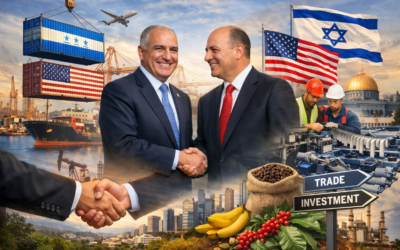
President-Elect Nasry Asfura Discusses Honduras Strengthening Trade and Investment Ties With U.S.
President-Elect Nasry Asfura of Honduras recently met with U.S. Secretary of Commerce Howard Lutnick in what is becoming a clear articulation of foreign policy priorities before his January 27 inauguration. Trade, investment, and job creation will be central themes...
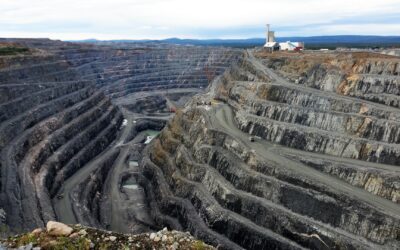
Chile Attracts Global Capital Once Again and Sets a Record for Foreign Investment
Surging copper prices, anticipated fiscal restraint, and recovering confidence have resulted in the strongest inflow of foreign capital in years, consolidating Chile’s narrative as a haven that draws global capital when investors elsewhere reassess risk. International...
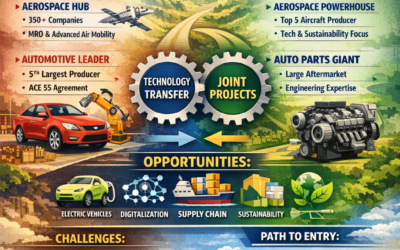
Mexico and Brazil Strengthen Collaboration in the Automotive and Aerospace Sectors
Brazil continues to position itself as one of Mexico’s main opportunities for industrial expansion, particularly when it comes to the automotive and aerospace industries. This premise was reinforced during the webinar “Opportunities for Access to the Brazilian Market”...
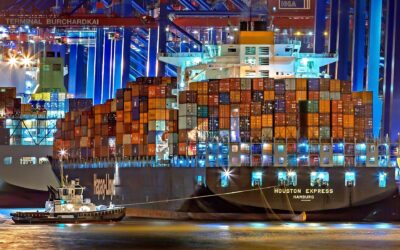
New Agreement between Guatemala and the United States Boosts Infrastructure and Improves Competitiveness, Business Chambers Say
Business chambers applaud the new agreement between Guatemala and the United States. Guatemala’s private sector hailed the signing of a new agreement between Guatemala and the United States related to infrastructure projects through technical cooperation, which...

Uruguay repositions its economy to attract foreign investment in a highly competitive regional landscape
The country conveys confidence through legal stability, but it must overcome certain disadvantages amid the new paradigm emerging across Latin America. Uruguay’s push to attract Foreign Direct Investment (FDI) is one of the government’s core priorities for the coming...

Peruvian Economy Expected to Grow 3.1% in 2026, Driven by Non-Primary Sectors
As part of its quarterly regional economic projections, the Institute of Economics and Business Development (IEDEP) of the Lima Chamber of Commerce (CCL) estimated that Peruvian GDP will grow 3.1% by the end of this year. Its performance will mainly be affected by...

The Paraguayan forestry sector experienced significant progress in 2025.
2025 continued to be a very productive year for the forestry sector in Paraguay. By year’s end, exports of forest products surpassed USD 100 million (approximately 195,816 tons). High international demand, advances in domestic processing capacity, and sustained...

Comprehensive Analysis of the Mexican Interoceanic Corridor and Its Impact on the Panama Canal
Recently, multiple media outlets have highlighted the significant progress on a new interoceanic corridor in Mexico—specifically, the Isthmus of Tehuantepec Interoceanic Corridor (CIIT)—as an alternative to the Panama Canal for international trade. Reports emphasize...

Uruguay Modified Its Investment Promotion Regime to Boost Growth and Support SMEs
Uruguay recently updated its investment promotion regime to support faster growth and increase access to tax benefits for small and medium-sized enterprises (SMEs). President Yamandú Orsi’s administration removed a USD 500,000 investment threshold for smaller...
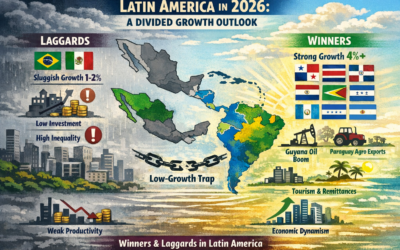
The Countries Set to Lead Latin American Economic Growth in 2026
Latin America in a “Low-growth Trap” Latin America is headed into 2026 without a clear path to robust growth. The Economic Commission for Latin America and the Caribbean (ECLAC) projects a tepid 2.3% regional expansion for 2026, confirming four straight years of...

What impact could the trade agreement between Mercosur and the European Union have on Argentina’s automotive market?
Tariff reductions would be gradual, beginning with a quota. Argentina’s local automotive industry, unlike Brazil’s, saw declines in production and exports in 2025 and would also need to export vehicles to Europe. The free trade agreement between Mercosur and the...