
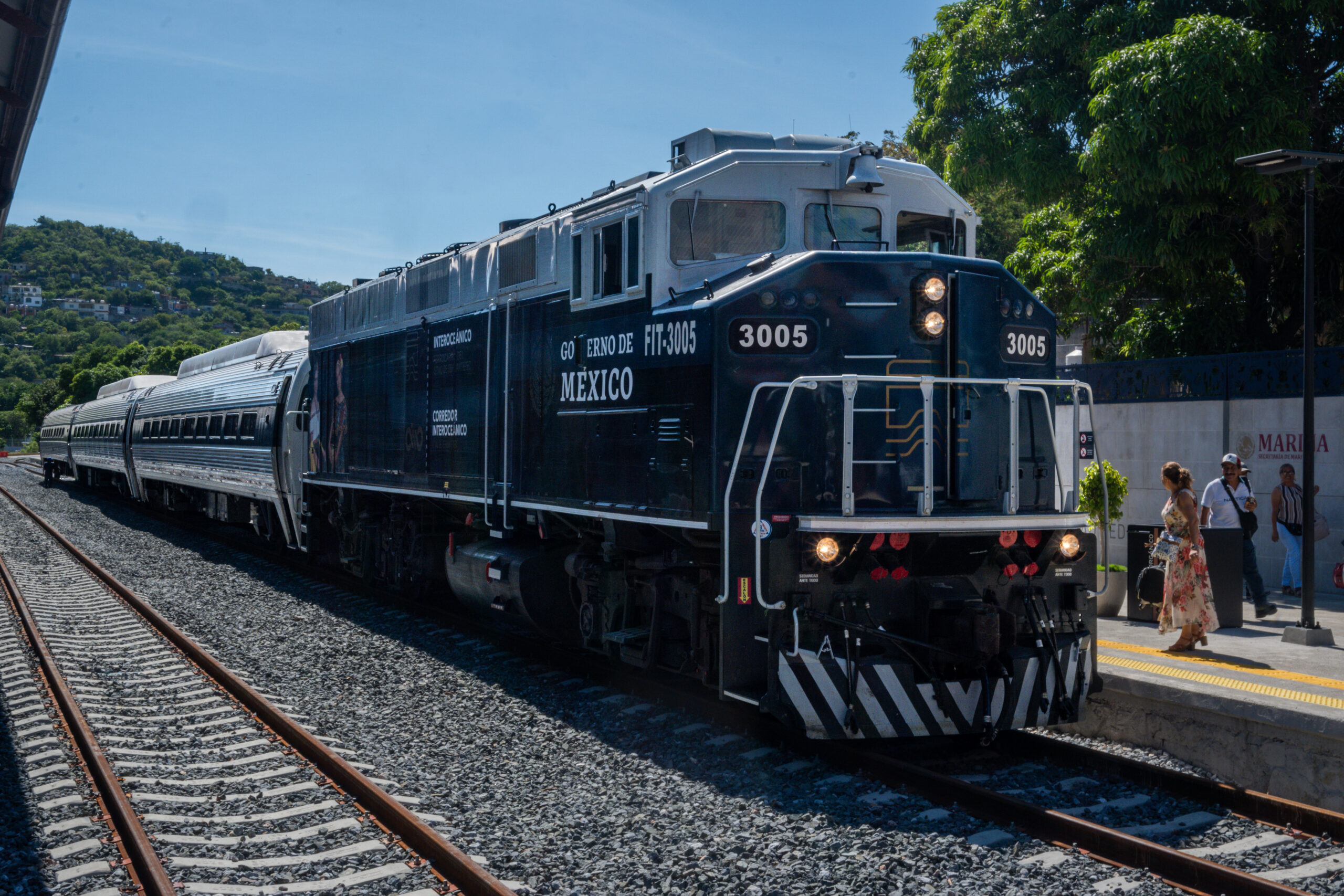
Recently, multiple media outlets have highlighted the significant progress on a new interoceanic corridor in Mexico—specifically, the Isthmus of Tehuantepec Interoceanic Corridor (CIIT)—as an alternative to the Panama Canal for international trade. Reports emphasize that this new infrastructure could “change global trade” by connecting the Pacific and the Atlantic through a modern multimodal corridor that integrates railways, ports, highways, and advanced logistics zones. In this context, the emergence of the Mexican Interoceanic Corridor has drawn growing attention from global supply chain analysts.
What Is the Isthmus of Tehuantepec Interoceanic Corridor?
The CIIT is not a traditional maritime canal, but rather a dry, multimodal route that connects the Pacific Ocean (Salina Cruz) with the Gulf of Mexico (Coatzacoalcos) via a reinforced railway and modernized ports, complemented by supporting infrastructure such as highways, energy systems, and logistics facilities. As an Interoceanic Corridor, it seeks to provide a land-based alternative for the movement of transcontinental cargo.
According to additional reports, this project—years in development—has been promoted by the Mexican government, with a core strategic objective of competing with the Panama Canal’s transit capacity by offering shorter transit times and reduced dependence on weather conditions.
Operational Status and Scope
Recent news confirms that the CIIT has begun partial operations. A symbolic milestone was the arrival of an initial shipment of vehicles in 2025, in which automobiles traveled from Asia across Mexico by rail to the Gulf Coast in a significantly shorter time than the journey via Panama.
However, operational challenges have also been reported, including train accidents that have sparked internal debates over resource management and safety. These incidents underscore that the Mexican Interoceanic Corridor is still in a consolidation phase, despite its strategic promise.
Comparative Advantages Versus the Panama Canal
Analyses from a number of media outlets identify several advantages of the Mexican corridor over the Panama Canal:
- Shorter transit times under normal and adverse conditions, with examples of interoceanic crossings completed in days rather than weeks.
- Reduced dependence on water resources, while the Panama Canal continues to face drought-related challenges and daily transit limitations.
- The ability to transport diverse cargo types, including containers, vehicles, and industrial goods, with strong potential to attract high-volume trade flows.
Other international analyses emphasize that the project boosts regional logistics development, improves Mexico’s internal connectivity, and offers a robust alternative—particularly during periods of congestion or adverse climatic conditions affecting Panama. In this sense, the Mexican Interoceanic Corridor is increasingly viewed as a complementary safety valve for global logistics.
Debate: Threat or Complementarity?
There are contrasting perspectives on whether the corridor represents a direct threat to the Panama Canal:
- Optimistic regional viewpoints argue that the CIIT is a genuine competitor, even signaling a “new era” in interoceanic routes capable of attracting global trade flows and reducing the Canal’s historical dominance.
- Panamanian and specialized sources counter that, despite the corridor’s potential, the Panama Canal does not face an immediate competitive disadvantage, as its relevance is sustained by continuous investment and a deeply established traffic base.
This debate is highly relevant, as logistics competitiveness depends not only on infrastructure but also on integrated value chains, operational reliability, trade agreements, and tariff structures.
Geopolitical and Economic Perspective
Beyond traditional comparative advantages, a key geopolitical dimension must be considered. The CIIT could evolve into an alternative corridor that enables:
Diversification of routes from Asia (including China and India) to U.S. and European consumer markets, potentially easing congestion in Panama and mitigating risks linked to regional tensions.
An indirect challenge to the geostrategic dominance of the Panama Canal as a critical node in global trade, should large cargo volumes shift toward land-based alternatives.
The provision of an alternative logistics platform for powers such as China, allowing them to mitigate political pressures or technological restrictions imposed by other global actors.
This geopolitical component is often underrepresented in technical and economic analyses. In an era marked by trade tensions, tariff wars, and technological rivalries, logistics routes increasingly function as instruments of power and influence. Within this framework, the Mexican Interoceanic Corridor should be understood not only as a logistics project but as a factor in the broader reconfiguration of global trade geopolitics.
Conclusion
Reports on the Isthmus of Tehuantepec Interoceanic Corridor in Mexico confirm that the project has moved from concept to an emerging operational reality, with substantial structural progress and legitimate debates regarding its impact. Comparisons with the Panama Canal reveal both clear competitive advantages and notable operational and political challenges.
Nevertheless, the geopolitical dimension—encompassing North America–China–Asia dynamics, China’s manufacturing dependence, and the strategic interests of global powers in diversifying logistics routes—remains essential yet remains insufficiently weighted in many traditional analyses. Understanding this geopolitical layer allows the CIIT to be seen not merely as a logistics competitor, but as a strategic element in the evolving geoeconomics of global trade—one that could, over the medium to long term, influence the role and relevance of the Panama Canal.