
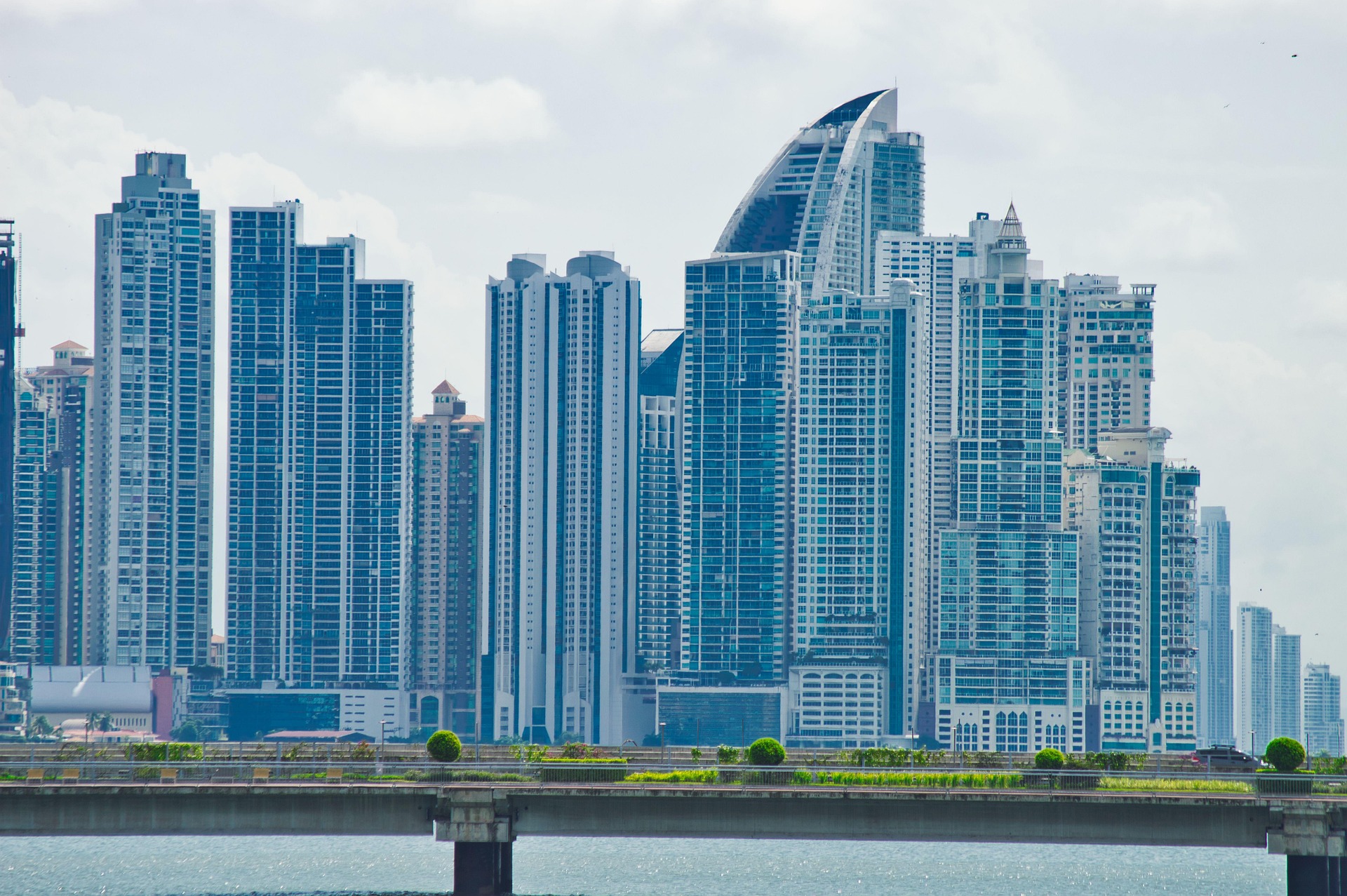
The Central American nation has assets such as the Panama Canal, ports, and the banking system that give it a privileged place in global supply chains and reinforce the competitive advantages of Panama in international trade and logistics.
Panamanian-American relations are currently positive. They mark a phase of convergence after the diplomatic distancing registered in previous months and reported exactly one year ago. At that time, repeated statements from the government of Donald Trump questioned China’s commercial and technological footprint in Panama through infrastructure projects and operations in strategic sectors such as the Panama Canal and logistics platforms.
Panama responded politically and commercially to those opinions with statements defending the neutrality of the Canal and the sovereignty of local companies in conducting their business. Now, diplomatic dialogue channels seem to point to agreement on issues of mutual interest and the deepening of economic cooperation, strengthening the competitive advantages of Panama as a trusted partner for the United States.
Kevin Marino Cabrera, U.S. Ambassador to Panama, endorsed this perspective, highlighting that Panama continues to count on Washington as its main commercial partner and largest investor in terms of foreign direct investment (FDI) in the local economy.
The envoy made the declarations in a note published by the Adrienne Arsht Latin America Center (AALAC) based on excerpts of his participation at the Atlantic Council’s U.S.–Panama Economic Security Working Group event.
“The Panama Canal, ports, banking, and regional connectivity provide U.S. firms and their Panamanian counterparts unique competitive advantages as trusted nodes in global supply chains,” Kevin Marino Cabrera said.
The ambassador explained that Panama has several national assets that strategically position it to take advantage of the diversification of supply chains, consolidating the competitive advantages of Panama in multimodal logistics and international commerce.
The strength of its logistics infrastructure was mentioned by Marino Cabrera. In this regard, he explained that Panama’s geographical location makes it a natural junction point between the Atlantic and Pacific oceans through the Panama Canal.
The Americas’ Financial Hub
He also stated that Panama’s banking services and financial ecosystem have earned the country’s reputation as one of the most open and efficient in Latin America, making it the financial hub of the Americas and reinforcing the competitive advantages of Panama in finance and trade facilitation.
“In this regard, the embassy welcomes Panama’s efforts to attract new investments to grow the economy, boost innovation, and create quality jobs for Panamanians,” Cabrera added.
Kevin Marino Cabrera’s intervention was part of the activities developed by the Adrienne Arsht Latin America Center, which has fostered increased dialogue with regional governments on economic and security issues.
What Does AALAC Do?
The Adrienne Arsht Latin America Center (AALAC) is the Atlantic Council’s project dedicated to promoting political, economic, and security cooperation between the United States and Latin American nations. Through research reports, leader forums, and strategic partnerships, AALAC works to advance democracy, prosperity, and regional stability through integrated economic relations.
Within this framework, AALAC promotes working groups such as the U.S.–Panama Economic Security Working Group mentioned above, dedicated to the following:
- Supply chain security
- Resilience in infrastructure
- Transparency standards in supply chains
- Cybersecurity and digital trade platforms
Kevin Marino Cabrera also pointed out that Panama’s diplomatic position allows it to facilitate conversations between nations. The diplomat cited Panama’s hosting of events such as the CAF International Economic Forum for Latin America and the Caribbean as an example of the role it plays regionally.
Panama’s Economic Importance
In his opinion, Panama’s trade position complements its logistics capacity, leading the country to consolidate itself as a regional trade and investment platform, further expanding the competitive advantages of Panama in global commerce.
“I think Panama’s unique ability to convene the region and its commitment to dialogue enhance its economic and logistical advantages by providing diplomatic credibility as a convening platform,” Kevin Marino Cabrera said.
Finally, Cabrera Marino highlighted the importance of increasing security and control standards in Panama’s strategic infrastructure.
The ambassador called for greater transparency in ports, logistics platforms, financial transactions, and cybersecurity.
He went on to state, “I remind you that technological competition, supply chain interruptions, cybersecurity breaches, and geopolitical tensions are challenges that have shaken global commerce in recent years.”
Digitalization of international trade is advancing, so secure logistics hubs will become even more valuable as businesses seek alternatives to concentrate their supply chains.
With that in mind, Panama has redoubled its investments in updating its logistics infrastructure and compliance with international standards. These factors make Panama attractive to multinational companies looking for regional hubs or distribution centers in the continent.
Panama Has Big Competitive Advantages in the Trade War
In his speech, Kevin Marino Cabrera mentioned specific projects that Panama is developing to modernize its logistics and financial hub. They include:
- Modernization and expansion plans for the ports
- Expansion of airport infrastructure
- Deployment of digital platforms for foreign trade and customs
- Development of smart logistics corridors and multimodal transportation
At the geographic level, the entrance to the Panama Canal ranks first in Panama’s trade advantages. The waterway is one of the busiest in the world in terms of cargo transit and is strategically located, joining two oceans.
In addition to the Canal, Panama has other competitive advantages in logistics and transportation that integrate its intermodal system:
- Ports with direct access to deep waters on both oceans
- The railway that crosses the isthmus
- Free trade zones and logistics parks
- International banking network and financial services
He also cited Tocumen International Airport as the largest airport hub in Latin America regarding passenger traffic and connections between North America, South America, and the Caribbean.
That multimodal connectivity in maritime, air, rail, and digital infrastructure is another of Panama’s key strengths.
China and the Panama Canal: Economic Security
Panama is making these announcements during a global race for supply chain control and trade routes exacerbated by the COVID-19 pandemic.
Countries located in strategic geographic positions with multimodal connectivity and infrastructure capacity are positioning themselves as privileged nodes in diversified supply chains.
Panama has readjusted its relationship with Washington after having felt the pressure of Trump’s accusations of a lack of controls and transparency in Panamanian ports and finance in favor of Chinese interests.
Despite previous warnings issued by Washington regarding the presence of Chinese companies such as Huawei in the Panamanian market, the interest in cooperating with Panama is now focused on investment, innovation, and diversifying economic security.
For Kevin Marino Cabrera, Panama plays a vital role in guaranteeing supply chain security between the two countries.
Panama’s alliances with China undoubtedly positioned it within President Trump’s foreign policy priorities. However, currently, the country seeks to unify its views with the United States and diversify its partnerships to continue positioning itself as a regional powerhouse.