
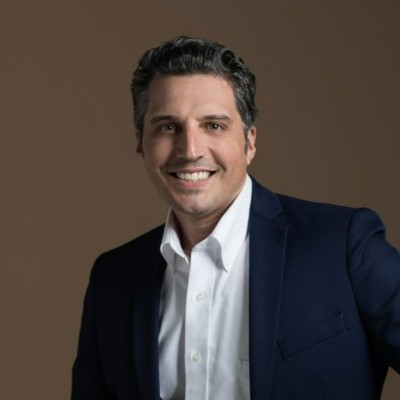
John Bozek
Chief Strategy Officer
Invest Puerto Rico
jbozek@investpr.org
LATAM FDI: Hello, welcome to another episode of LATAM FDI’s podcast. In these recordings, uh, we talk to people in Latin America about topics related to foreign direct investment, or FDI. Today, we have John Bosek with us. John is with an organization called Invest Puerto Rico. John, can you tell us a little bit about yourself and your organization?
John Bozek: Sure. Thank you, Steven. So, as you mentioned, my name is John Bosak. I’m the Chief Strategy and Research Officer at Invest Puerto Rico. I’m an economist with a background in economic development, both here on the island and in New York. Invest Puerto Rico is the island’s investment promotion agency. So, we are not a government agency, but we work closely with the government to promote Puerto Rico and to attract foreign direct investment, you know, job growth, companies that are interested in coming to the island. And I’ve been working with Invest Puerto Rico for about 7 years now.
LATAM FDI: Okay, John. Well, I have a series of questions about your activities with Invest Puerto Rico that I hope the listeners will find interesting. First, let me start off with the first one. Puerto Rico has undergone some significant economic shifts in recent years, especially following the debt crisis and Hurricane Maria. How would you describe the island’s economic recovery today, and what sectors are currently driving the most growth?
John Bozek: Sure. So, as you mentioned, you know, we have had a public debt crisis. It’s been, it’s been going on for a while now. A lot of that was tied to the government maintaining spending in the early 2000s. When tax revenues weren’t keeping up with spending. They were borrowing to fund OPEX rather than capital improvements, which is not acceptable. But over the last few years, we’ve been coming out of that crisis and getting the government’s financial house in order. Meanwhile, as you mentioned, you know, we did have a hurricane, a major hurricane, a 100-year storm back in 2017, so almost 10 years ago now. You know, the island is, you know, recovered from the storm. We have been for probably 7 or 8 years now, but there are still some lingering effects. There was a population decline as a result of the storm, and our Power infrastructure, which was already not in the greatest shape, also suffered. Power infrastructure on the island has been slow to rebuild. That said, there are bright spots in the economy. Puerto Rico is the number one manufacturer of pharmaceutical products in the United States.
Puerto Rico is a U.S. territory, and we’re also a leading producer of medical devices. We’re the world’s leading pacemaker manufacturer. The majority of disposable contact lenses in the US are produced in Puerto Rico. You know, we have, you know, again, one of the largest pharmaceutical manufacturing bases in the US. Our unemployment rate is currently at one of the lowest levels in the island’s history, since we started recording it. It’s still a little bit above the U.S. unemployment rate. It’s around 5-5.5% here on the islands. But that’s compared to the rest of the Caribbean, you know, where there’s a lot of informal economic activity. Our unemployment rate is currently at a historic low. And tourism numbers have been at record levels, really, since the pandemic. And that’s due to several factors. One, we’ve— back in around 2020, the tourism marketing was outsourced from the government to a destination marketing organization, and they were really aggressive in attracting additional tourism dollars to the island. Also, the boom in Airbnb and, you know, shared— how do they call that— short-term rental housing.
You know, it kind of took the lid off the hotel room limits we’ve had, which limited our tourism levels and increased the number of rooms available. So, that really helped our tourism sector. And then, because of the pandemic, people couldn’t travel internationally, but Puerto Rico is—again, you don’t need a passport if you’re a US citizen. So, many people chose to come to the island during that time. And also, we’ve had, you know, one of the largest musical acts in the world in the last few years. Bad Bunny has also attracted significant musical tourism to the island. So that’s a bright spot. We’ve determined at Invest Puerto Rico that manufacturing remains the strongest driver of our economy. It represents about 45% of our GDP, which is very high, you know, compared to the rest of the world and compared to the rest of LATAM. And a lot of times people think, you know, a Caribbean island, beautiful beaches, you know, that tourism would be either the main driver or one of the main drivers, but it only really represents about 7-8% of Puerto Rico’s GDP.
LATAM FDI: Well, you mentioned manufacturing. In light of that, how is Puerto Rico positioning itself today to compete globally? This is especially relevant in light of nearshoring trends and supply chain realignment that’s affecting the United States.
John Bozek: Sure. Since the pandemic and the tariff situation over the past year and a half, Puerto Rico has been seen as a lower-cost U.S. jurisdiction for high-value-added products. And, you know, the main ones, as I mentioned earlier, are pharmaceuticals and medical devices. You know, another sector is the aerospace industry. Aerospace design and engineering, and aerospace manufacturing. And, you know, we’ve really seen ever since the supply chain crisis around the pandemic, and again, the tariff situations, you know, we are U.S. territory. So, there are no tariffs. You know, obviously, there are tariffs on importing raw materials from other nations that we need to use to manufacture and add value to. But when we, you know, ship back to the US, there are no tariffs. So a lot of multinational companies that already had operations on the island, such as Amgen, Eli Lilly, Raytheon, and others, you know, when they were looking at their global supply chains in light of what’s been happening in the last few years, You know, instead of expanding in, you know, maybe European production or production in Asia, they’ve decided to do production in Puerto Rico.
And you know, Invest Puerto Rico promotes the numerous advantages of that. One, as I said before, we’re in a US jurisdiction, so you know, US federal law, FDA regulation, and inspections govern activities. So that’s important for pharmaceuticals. Anything that has to do with the Department of Defense or the Department of War spending, you know, we’re US citizens, US federal law again. So, you know, that gives us an advantage over foreign jurisdictions. Also, our cost structure is advantageous. Salaries on the island in some of these key sectors are generally, you know, it depends on what you’re talking about, but generally 20 to 30% lower than mainland salaries. Mainland US salaries. So, in our manufacturing sector, we have highly skilled engineers and technical workers. And the cost that, you know, the cost on the labor side is going to be lower than some of our competition, say, in Connecticut or California or Colorado or some of these other states that also have large aerospace sectors or pharmaceutical sectors. And then lastly, you know, we’ve had— since we’re a US territory, we’re not subject to federal taxation. So, we can offer some of the most attractive tax incentives, you know.
So basically, for manufacturing, it’s 0% corporate income tax on the federal side and 4% on the local side. So that’s very attractive for these large manufacturing facilities. And then for export of services, and that could be any type of service, software development, design, and engineering, as I mentioned, in aerospace, for example, any export of service from Puerto Rico, so an economic activity done from the island but serving somewhere else, either in the mainland US or another country, that economic activity is only taxed at 4%. We, at Invest Puerto Rico, explain that these are attractive tax incentives where, when you add everything else: the labor costs, US jurisdiction, you know, strategically located in the Caribbean, you know, it’s a pretty attractive package that we’ve been able to offer. And we’ve seen some of the results of Eli Lilly’s recent reshoring efforts: at the end of last year, it announced a $1.2 billion investment in a drug manufacturing facility. For example, Collins Aerospace recently announced a major expansion of one of its facilities on the island. We recently had a solar plant and panel manufacturer announce a large project in Aguadilla, Puerto Rico.
We’ve seen a lot of manufacturing activity being reshored to the island over the last year or so. So, it’s positive information. This is positive news in that sense.
LATAM FDI: You mentioned the availability of engineers for some industries in Puerto Rico. But in terms of workforce in general, what steps does Puerto Rico take to attract, retain, and upscale talent, particularly in the high-value industries that you just alluded to?
John Bozek: Sure. And that’s actually one of our main challenges: retaining the workforce. You know, Puerto Rico is a fairly small island. We’re about 100 miles wide by about 35 miles north-south, and we have about 3— a little more than 3 million people, 3.1, 3.2 million people. But because we’re US citizens, a lot of times young people go to university in the US and then they stay, or they, they get a job, their first job in the US, and they stay in the US, um, or they move to the US, you know, looking for— especially outside of the metro area of San Juan, Maybe there’s not as many well-paid job opportunities in the rest of the island. So, you know, they might move to the US, and a lot of times, they move to the US thinking that they’re going to come back to the island, but they may end up getting married or buying a house or pursuing their careers in Florida or in New York or Connecticut, and maybe not coming back to the island. So, it is a challenge.
And, you know, what we’ve been doing in terms of workforce development the last few years is— and I think this is a strategy that other economic development organizations, such as Invest Puerto Rico and, you know, related universities, academia, etc., and other places in the U.S. and in the world are also doing. But we’ve been focusing on maybe not 4-year degrees, but stackable skills development. So, these are things that could be in the tech sector. It could be software development skills or AI skills, things that you don’t need a full 4-year degree for. Maybe you can attend a 3- or 6-month program at the university. You know, in the pharmaceutical sector, for example, you know, maybe we don’t need full engineers for every single role. Maybe it’s just a technician, technical skills. And that could be, you know, maybe a 6-month program or an 8-month program, you know, working with some of the local colleges. We’ve been really trying to shift to match the jobs that are available and, you know, the talent that the island has to offer to make sure that those things are kind of lining up.
But it remains a challenge. You know, our construction sector, for example, faces workforce shortages. And a lot of that has to do with, you know, our construction and our construction work is very concentrated post the hurricane on rebuilding efforts. So, when some of the large construction contractors are fully dedicated to those federally funded rebuilding projects. So, for other types of projects, such as a new housing or manufacturing facility, it might be difficult to find construction workers. We have seen some issues that are not very different from those of other island economies in terms of, you know, retaining the talent we need for economic development.
LATAM FDI: You talked a little bit about the fact that you don’t have to pay federal tax. In Puerto Rico, other incentives have been put in place to attract investors and entrepreneurs. Could you tell us a little bit about Act 60, how it has been implemented, and what kind of long-term impact you think it will have?
John Bozek: Sure. Act 60 consolidated all the tax incentives created over the years in Puerto Rico, whether for manufacturing, research and development, the export of services, or tourism, and put them under one code. It really kind of, you know, there were tax incentives on the books that dated back to the 1950s and ’60s. So, Act 60, enacted in 2017, was an effort by the legislature and the Department of Economic Development here on the island to organize and consolidate all of those things under one umbrella. Act 60 is divided into different incentives we offer and by sector. As I mentioned earlier, there are tax incentives for manufacturing. There are tax incentives for exporting services. There are tax incentives for tourism-type activities. There are also tax incentives for research and development. There are tax credits available for research and development, which is very important for our pharmaceutical, aerospace, and medical device sectors. And then there’s also an incentive for individual investors, which is kind of one of the most controversial parts of Act 60.
And, you know, there are people who are kind of maybe opposed to it, but there are also people who support it. And that is really aimed at bringing investors and high-net-worth individuals to the island. And again, because we’re not subject to U.S. federal tax, you know, and that’s also on the personal income side, we’re able to offer, for example, 0% tax on capital gains, 0% tax on dividends. So that’s very attractive for, for, you know, people who, who maybe live off of their, their investments. So, you know, since that law was put on the books back in 2012, we have seen an influx of, you know, high-net-worth individuals, mostly from high-tax jurisdictions in the U.S., who come to Puerto Rico. You know, a lot of them live in luxury developments on the beach. And, you know, there have been some positive effects of that tax incentive. Especially in the real estate sector. And then also a lot of those individuals are also pretty entrepreneurial. They’ve started businesses here on the island and hired locally, including in the tech sector. So that’s one of the more controversial parts of Act 60.
But you know, in net terms, I think the particular chapter on individual investors has been positive as well.
LATAM FDI: Looking ahead, what in your opinion are the most promising opportunities for economic development, let’s say, in the next 5 to 10 years?
John Bozek: So, one, you know, I think we— Puerto Rico is already recognized, especially in the life sciences sector, as a leader. You know, we have the talent, we have the facilities, we have the history. Of being able to, you know, 60 years, 70 years of history in terms of, you know, life science manufacturing. At Invest Puerto Rico, we believe we will continue to be a leader there moving forward. And, you know, the government locally here is dedicated to putting, you know, policies in place to keep that moving because it is such a large part of our economy. I do think that there are opportunities in the future, especially around our growing aerospace sector. You know, we have some big names already operating on the island: Pratt & Whitney, Lufthansa, Lockheed Martin, Raytheon, RTX. That sector, you know, 10, 15 years ago didn’t really exist, but it’s grown kind of exponentially, and I continue to see that sector growing here on the island. And then, you know, as our tourism sector matures, you know, because we’ve been so focused on manufacturing for the last, you know, few decades, you know, we haven’t focused as much on tourism as some other Caribbean islands, you know, maybe like the Dominican Republic or Jamaica.
I think there’s a lot of opportunity to kind of take advantage of the positive headwinds in terms of tourism growth to make that sector more mature going forward. So those are some positive things and opportunities that I think we’ll continue to capitalize on moving forward. The last thing I’ll say, you know, as a center for logistics, you know, we are one of the largest— we have one of the largest cargo and passenger airports in the Caribbean here in San Juan. And we also have one of the most active maritime ports. We are experts at shipping, importing, and exporting highly sensitive materials for our pharmaceutical and medical device sectors, so our logistics sector is, you know, highly skilled and fairly advanced. I see that being a regional logistics player and a logistics hub as another positive development over the last few years, and I expect it to continue over the next 5 to 10 years as well.
LATAM FDI: Well, those are the opportunities. I’m sure there are some challenges that you at Invest Puerto Rico see as well. And what are those? John Bozek: So, you know, as I already mentioned, demographics is a challenge here on the island. You know, we have about 3.2 million people. You know, in the early 2000s, we had about 3.6 million. We’ve lost population. A lot of that had to do with the hurricane in 2017. But we’ve also had, you know, low birth rates, not unlike those in some other jurisdictions in Europe and the US. But you know, on top of that, because you know, anybody, any citizen of Puerto Rico can move to the US freely back and forth, you know, it’s harder to keep a brain drain from happening. So that’s always an issue here on the island. The second big issue that most people talk about here on the island is the cost and reliability of energy. With any island economy, that’s an issue. You know, Hawaii has similar issues. You know, other Caribbean nations have similar issues, but our power, you know, our power grid is, and continues to be a liability. We have to find innovative solutions to address some power grid issues.
For me, those are the two big, big challenges Puerto Rico faces.to remain competitive in terms of economic development, according to Invest Puerto Rico.
LATAM FDI: John, we’ve covered quite a bit of material in the last 20 minutes or so. I make the people I interview available to answer any questions listeners might have. If somebody has a question for you. How would they go about communicating with you to answer those questions?
John Bozek: Sure, um, I’d invite any of your listeners to look me up on LinkedIn, John Bozek, B-O-Z-E-K, at Invest Puerto Rico, or they could always send me an email, which is jbozek@investpr.org. My first initial and then my last name at investpr.org. And I welcome any questions from your audience.
LATAM FDI: Okay, we’ll put your LinkedIn profile on the transcript page of this particular interview, and we’ll make sure that your email address is there prominently as well. And I want to thank you for speaking with me today about Puerto Rico. You know, I, I, it’s funny, a lot of people, including myself, when you think of Latin America, you don’t necessarily include Puerto Rico in it because it’s part of the United States. But, you know, it’s, it is a Latin American entity.
John Bozek: Yeah, that is an issue. There is an awareness issue in Puerto Rico as well. For that very reason. You know, a lot of times we don’t show up in economic analyses of the US because we’re not a state, and we don’t show up in economic analyses of LATAM or the Caribbean because we’re not a country. We kind of fall into a kind of middle area. But yes, we are very much a Latin American country. You know, Spanish is the first language, but we’re also very much part of the US. Anybody who visits the island can kind of feel both cultures, you know, the positives of both cultures. So that’s one of the ways we like to position ourselves.
LATAM FDI: Well, thanks again for joining me today, and good luck as you invest with your organization and find investors to set up shop in Puerto Rico.
John Bozek: Thank you. It’s been a pleasure.
FDI inflows in Mexico and Central America rebounded 30% to 42 billion dollars
The largest economy in the region, Mexico, recorded an increase in FDI of only 13%, to 32 billion dollars. This made the country the second largest recipient in the subregion, behind Brazil.
However, the number of FDI greenfield projects announced in the country, an indicator of future investment plans, increased by 43% compared to 2020.
The greatest leap occurred in information and communication technologies. The Chinese giant Huawei, for example, announced that it would open a $4.5 billion cloud data center in Mexico.
With new investments in special economic zones, foreign direct investment to Costa Rica returned to pre-pandemic levels, nearly doubling to $3.2 billion.
In Guatemala, FDI reached a record level of 3.5 billion dollars.
FDI in the Caribbean increased by 39% to 3.8 billion dollars
The growth of external investment drove the rebound in FDI in the Caribbean economies. The Dominican Republic was the largest recipient of foreign direct investment to the region.
The island country saw its FDI increase by 21% to 3.1 billion dollars. Flows increased in mining, financial services, and special economic zones that contain manufacturing plants.
Main FDI trends by sector in the region
The Latin American and Caribbean region saw a general increase in cross-border mergers and acquisitions. Although the number increased by 49% to 244 operations, the total value of net sales (8 billion dollars) was practically unchanged from the previous year.
The services sector posted the largest increase in net sales, up 12%, to $6.4 billion, mainly in the financial and energy supply industries.
Announced regional investments increased by 16%, with most commitments going to the automotive, information and communication, and extractive industries.
The value of international project financing deals announced in the region doubled, exceeding pre-pandemic levels. Large transport infrastructure projects, especially in Brazil, and mining and renewable energy activities throughout the region were the biggest contributors to this rebound in levels of foreign direct investment.