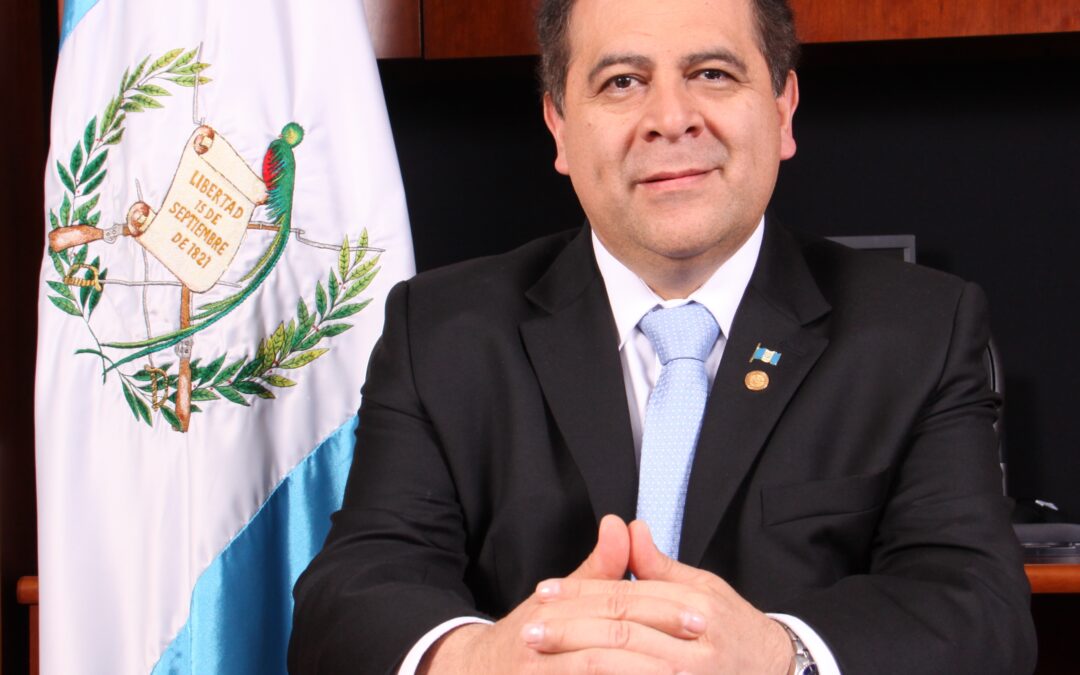
Mauricio Claver-Carone
Manager and General Partner
LARA Fund
Miami, Florida
mauricio@larafund.com
LATAM FDI: Welcome to this episode of the LATAM FDI podcast. Today, we have Mauricio Claver-Carone with us. Mauricio has a very interesting background, but at present, he is the manager and general partner of the Latin American Real Assets Opportunities Fund called Lara Fund by its acronym. I want to welcome you, Mauricio. Since you’ve got a very interesting resume, perhaps you could tell us a little about your experience related to investment in Latin America.
Mauricio Claver-Carone: Well, thank you. First and foremost, thank you so much, Steve, for the invitation. Thank you for what you do. This podcast is great. The work you do regarding Latin American FDI is fantastic. I follow everything you put out, and I think it’s a great resource for all investors looking at investment in Latin America. Frankly, it should also be in my past life to the policymakers, looking at how to have good policies that help US investors in Latin America and the Caribbean, which should be a priority, hopefully, for all investors here. Unfortunately, we’re going to go a little bit into that. Look, I’ve had a colorful career. I began my life as an attorney. By training, I began my career in the Treasury at the OCC, controlling the currency, securitizing, and banking law. There, I did Basel II, et cetera. In various situations, I went to Treasury to be a senior advisor in 2016 with Secretary Mnuchin and Undersecretary Malpass, who became President of the World Bank. From there on, I had the privilege of serving as the US Representative at the International Monetary Fund, where I had a full plate.
In the time I was there (I was there for eight months), and that’s where the big Argentina program came in 2018, so that kept my hands full. But we also were able to do many great things with Ecuador at the time, as well as with Barbados and Suriname. So that was a great opportunity there. Until I was called by President Trump to serve as a senior director for the Western Hemisphere. So basically, the President’s Senior Advisor for the Western Hemisphere at the National Security Council in the White House. That was a great privilege, which I got to do for two years, from 2018 to the end of the Trump administration in 2020, when I was elected as the first American President of the Inter-American Development Bank, where I served for two years until 2022. Now, I’m in the private sector and focusing a lot of the experiences we learned on what worked or what didn’t work regarding investment in Latin America and the Caribbean and what we preached regarding the private sector investment. I always prided myself on being someone who practices what they preach and walks to walk, not just talks to talk.
Now I’m a private equity investor, and we’ve created this Latin America Real Assets Opportunities Fund, which we know as the LARA Fund, in partnership with Hudson Sustainable Group, which was the pioneer of sustainable investment created back in 2007 by a former partner of Goldman Sachs, Neil Arbach. We’ve been off to the races. It’s been a fascinating experience seeing the opportunities that abound in investment in Latin America and the Caribbean, particularly the undercapitalized countries that pose less risk and are often overlooked, which are some of the smaller countries in the region. But I know we’ll get into that.
LATAM FDI: Yes, we’ll get into that. Today, we will discuss foreign direct investment in large countries in Latin America versus small countries. With that in mind, Mauricio, can you first tell us how the market scale influences the decision-making process for foreign direct investment in large versus small countries in Latin America?
Mauricio Claver-Carone Yes. Look, that’s been the conventional wisdom of the past, and I think that’s been a big obstacle. People have always said, Oh, the market scale is not there in the smaller countries. I frankly disagree with that. I think that’s an old way of looking at things. As a policymaker, I always used to say small countries represent big opportunities for investment in Latin America. Unfortunately, policymakers have always, regarding the Western hemisphere, overly focused on Mexico, Brazil, and Argentina. It’s almost like you focus on those three; everything else comes after. I think that’s been a mistake. I think if you look at it per se, all three of those countries are G20 countries. There are geopolitical realities. Sure, we understand all of those. But at the end of the day, as investors, particularly nowadays, we’ve overlooked and missed the biggest opportunities and, frankly, as US investors, the most pro-American countries in the region. Today, the top five growing countries in Latin America and the Caribbean are smaller countries. The highest growth economy in the world today is Guyana, based on its energy findings and the evolution of that industry there.
But followed by that, you have Panama, Costa Rica, Paraguay, and the Dominican Republic, all of which are small countries doing all the right things from the perspective of investment in Latin America to attract these investors. Now, going to your question regarding the market. Before, the excuse was like, well, you had to be in Mexico, Brazil, and Argentina, though that’s complicated by currency issues, etc. But at the end of the day, you had to be in those three countries because they’re the only ones with big enough markets. And that’s very narrow, closed-minded thinking, frankly, to save unless you were looking to sell as a distributor of some consumer good. But what do we do at LARA? We are involved in investment in Latin America. We invest in energy and infrastructure. You can see how these things have translated and have transformed over the years. The biggest infrastructure finance gap in the entire world is in Latin America and the Caribbean. At the end of the day, it doesn’t matter about the size of the market or the scale of a country. Let’s say, for example, when we invest in a renewable project, this whole fund came about initially with a big solar investment in Uruguay, which we can talk about later.
However, a 10100-megawatt solar facility in Uruguay is the same as a 10100-megawatt solar facility in Brazil. It’s a 100-megawatt facility. At the end of the day, even though the Brazilian market is so much bigger than Uruguay’s, at the end of the day, when it comes to infrastructure and energy, the market doesn’t matter. It’s the opportunity and the ability to bring a project to fruition. That’s where the big opportunity for investment in Latin America lies and where the risk factors play favorably. The reality is, and we’ve done this in our fund, the relative risk analysis of the smaller countries, including those five fastest-growing economies in the region that I just mentioned. But in addition to a lot of other smaller ones, including Uruguay, Ecuador, El Salvador, the Bahamas, Barbados, et cetera, these are countries where at the end of every day, the opportunity to come in, the investment opportunities, per se, tend to be often overlooked and tend to be a lot easier. Frankly, the biggest challenge has always been, from an investor perspective, the scale of those projects. A lot of the big investment funds, for example, haven’t been in these countries because the ticket sizes haven’t been big enough.
That’s been the problem. Now, that’s something that we’ve tailored ourselves to be first movers here in these countries for investment in Latin America because our ticket sizes are 50 to 100 million. So, they favor those countries, particularly if you’re a big fund only looking for billion-dollar tickets, then these countries may be smaller. But it doesn’t change. The market size doesn’t change the opportunity any which way, shape, or frankly, that’s been an excuse. And it’s been an excuse also that’s done a lot of damage to a lot of the countries in the region, if I may, because in the way that in the past, we looked at trade agreements, it’s bunched these countries up. For me, the biggest example is always the CAFTA-DR. At the end of the day, look at CAFTA-DR and lose its pigeon-held these countries in through literally and have ignored their comparative advantages. The funny part is that for all the talk of the CAFTA-DR in regards to manufacturing and apparel and all this stuff back in the day, the reality is CAFTA didn’t stop US apparel makers, global apparel makers, etc., from literally taking off to China and Vietnam. On the contrary, the limitations of CAFTA and pigeonholing these countries as a big group rather than looking at the individual comparative advantage of Guatemala, El Salvador, Honduras, Costa Rica, Dominican Republic, has actually held these countries back from investment in Latin America and has really withheld the opportunity to find the best opportunities for each individually tailored country instead of bunching them up.
Why? Because it goes back to your question. Because the myth was you had to create a bigger market. Because it had to be a bigger market because if not, they didn’t matter because they weren’t Mexico. I think that’s a huge mistake, one that I think hopefully policymakers will try to fix. In my policy-making days, we had created an initiative called America Crece, Growth in the Americas. The whole notion of the program was to create energy and infrastructure frameworks with countries in the region. By the end of the previous administration, we actually had half of the countries in the region involved. So, 16 countries in the region had signed on to these investment frameworks, and we were actually creating a pipeline of actual deals where they were most successful in Panama and Ecuador, and we can go into that. But the whole point was that that’s where the big opportunities were. They were just glaring at us in the face. But we were always so focused on Mexico, Brazil, and Argentina. And in the case of Mexico and Brazil, these are countries that, frankly, should have developed their upper middle-income status and should have developed deeper markets.
They’re G20 countries. There are plenty of investors there. There are great opportunities there. They don’t need us to have that ultimate focus. And by the way, just one last thing that people overlook with smaller countries, if you ask any big investor, and I’ve literally been all over the world, and I’ve talked to institutional investors everywhere. When you ask them, what are they doing regarding investment in Latin America and the Caribbean? They say, Mexico, Brazil. And then That’s it. And then you say, Okay, well, and then what are you doing now? Like, well, Mexico and Brazil, but we’ve lost money. They always had some deal that went really bad. So, they’re not even that bullish about it. And you say, Well, what happened? It’s always a currency issue. So, there’s been a currency issue. The other thing that’s overlooked where we focus on the LARA Fund is that the countries that we seek that are part of our thesis are also countries that pose very little to no currency risk at all. They’re dollarized countries like El Salvador, Ecuador, and Panama. There are pegged countries like Bthe Bahamas, Bermuda, and Band Elize that are pegged. And they’re countries that have very stable currencies and that the deals are in dollars, whether it’s Costa Rica, Uruguay, etc. Or that are based on energy and energy development like Guyana, Suriname, etc. It’s really about not being lazy. It’s about digging a little deeper and not finding excuses. I’m sorry for the long answer to your question. The bottom line is that whole market thinking has been an excuse. It’s been lazy thinking by policymakers and investors who were looking for the easy way to get either a political win by bunching a bunch of small countries up together or by literally just trying to get a big ticket on one and not really digging a little deeper to mark further investment in Latin America.
LATAM FDI: It’s a good idea to turn over a few stones to find opportunities that exist. Correct?
Mauricio Claver-Carone: You got to do the work. You got to pull up the sleeves, and you got to do the work, and you got to find them. But like I said, it’s unfortunate that the entire investing world has become a little bit lazy. You have hundreds of billions of dollars in capital that are being popped up to these big, huge institutions that are now sitting on tens of billions of dollars. They’re complaining that there are not enough deals because they need more deals. But the thing is that they only want to write. They’re sitting on so much capital that they only want to write multibillion-dollar tickets because they want to just get out that money fast enough. You literally need to roll up your sleeves and and those opportunities. In these small countries, which, Hey, look, that’s what we’re here for, Lara Fund. We’ll do the work for them. We’re looking to find those opportunistic deals for investment in Latin America that have smaller ticket sizes. But at the end of the day, they’re very good energy infrastructure deals that consider market size e,t cetera. Like I said, 100 megawatts in small countries is the same as 100 megawatts in a big country.
LATAM FDI: Exactly. Well, what are the regulatory differences between large and small countries in Latin America regarding FDI? And how do they impact the investment strategies that you implement?
Mauricio Claver-Carone: That’s another point in favor of investment in Latin America in smaller countries. If you look at the regulatory environment in a lot of the smaller countries, they are some of the most open to having the greatest fiscal investment policies and regulations, definitely compared to a lot of the bigger countries in that sense. I think of, for example, a country nobody thinks about, unfortunately, Paraguay. You would be hard-pressed to find a single country anywhere in the world with a better fiscal and regulatory framework for foreign direct investment than Paraguay. Yet people aren’t as focused on it, except obviously, if you’re in that area. The funny story is not funny because it’s tragic, but good for Paraguay. But the story you’ve seen over the last decade has been about genuine businesspeople and investors, taking their products and setting up shop in Uruguay and investing those earnings and revenue into Paraguay. And then you get to Asunción today and it looks like a skyline of Miami because literally it’s like a whole Argentine money building out the real estate there, et cetera. It’s a wonderful place to invest with wonderful regulatory and fiscal incentives and things of the sort, but people don’t think about it when they think of investment in Latin America.
You have got to dig a little deeper. Frankly, look, when you think always about Panama, Costa Rica, the Dominican Republic, et cetera, the conversation has so long been focused on these free zones and free trade zones, et cetera. At the end of the day, for me, it’s just like, these countries, at the end of the day, need to stop thinking about designated zones and making their entire country free trade zones. At the end of the day, that’s the easy path. A free zone or a concession in that sense is great, but at the end of the day, fruit functions within that sphere. Now, are they perfect? No. Are there challenges? Yes, 100%. But compared to the big countries, compared to Mexico, compared to Brazil, no. It’s like at the end of the day, it’s actually a lot easier to do business in these small countries. It’s a lot clearer, and sometimes the incentives are a lot bigger. By the way, in differentiating big and small countries, I didn’t mention the middle tier; I consider them smaller. Colombia, Peru, and Chile, that’s the middle of the road. They’re not big and they’re not small. They’re medium-sized countries in terms of investment in Latin America.
I think they’re a little bit different. I think they’re as well, and that’s why in LARA Fund, we’re also focused on those three countries. There are great opportunities. Those countries have a bit higher risk levels than the smaller countries that don’t have currency risk or have very little institutional risk. I think the risk level there is a little bit higher on the currency side, but the timing right now is really good. In those countries, you see a ton of, for whatever reason, because of the political cycles, because of other events, et cetera, you see a ton of assets that are in dire need of capital, I dare to say, distressed, all the worst you’ve got throughout the region. And great opportunities to come in. The currencies have been fairly stable, whatever has bottomed out, et cetera. When you look at a country like Colombia, yes, sure, the national government is complicated, is complex, to put it diplomatically. But business in Colombia is done very much at the city and regional level. At the end of the day, when you look at those governors and those mayors in the business pockets in Colombia, they’re all very business-friendly, et cetera.
In Chile, you’re seeing that transition as well as it relates to investment in Latin America. At the end of the day, Chile is a very strong institutional country with a very strong business community. It went through discovering itself politically, again, to put it diplomatically. But you’re seeing, again, that transition away, and what you’re going to see is a very strong pro-business wave that’s going to come into that country, also presenting good opportunities. Peru is a fascinating country. It’s just like an enigma, right? Even though it’s very difficult to remain a sitting president in Peru, it’s just very challenging, and it’s gone through all of that. The business community has, obviously, because of good leadership at the Central Bank, the currency has been very stable. The opportunities in its placing in the logistic chains are very strong, and it’s remained just a great place to be able to invest and to do business, which goes, by the way, into your previous question as well in regard to logistics. A lot of this has changed because of also regarding thinking about market size, et cetera, because nowadays the logistics chains are so complicated in that sense. People also have to think about, okay, what are the countries with the best infrastructure for logistics, regardless of their market size.
I don’t hear today ironically, I don’t hear investors today talk about Mexico as, Hey, Mexico, the federal government, it’s not easy. They don’t seem to be great with foreign investors seeking to make an investment in Latin America, but we’re still investing there because the infrastructure is developed, thanks to NAFTA, now USMCA, and the infrastructure exists there. So now, the excuse is not market size. The excuse is, Okay, yes, we like Costa Rica, but does it have the infrastructure to supply our logistics needs or our logistics, transportation, supply chains, et cetera? That’s the question now. Now we’ve gone from, do the markets, ?sIshere a market size, toando they have the infrastructure necessary to develop? Unfortunately, not, because they’ve gotten for so long, for decades now, pigeonholed into these thread lines and into thinking about… And it’s this whole notion of integration. Integration is fascinating to me because it’s become the political talk for decades. The region has to integrate, yet it’s the least integrated region globally. The different trade agreements between the different countries make them lose billions of dollars a year because they’re super complicated, et cetera. I always tell leaders of these countries to focus on your country and where it is positioned concerning investment in Latin America.
Costa Rica will be great and can be great, not because it has a free trade agreement with five other countries in the region, but because your domestic fiscal, and regulatory policies are attractive, are the best, and are where the opportunity lies. That’s what investors look at. Investors don’t care that Costa Rica has a free trade agreement with Peru, Chile, or El Salvador. They don’t care. What they care about is what our domestic framework looks like. Forget the integration talk and focus on what your country looks like, your comparative advantages, and how you can stand apart from the bunch in that sense to attract investment in Latin America.
LATAM FDI: Looking at a softer variable, I guess, would be one way to put it. How do cultural and linguistic factors play a role in approaches that you make in investing in large and small countries in Latin America?
Mauricio Claver-Carone: For the LARA Fund, the region in itself has a cultural and linguistic comparative advantage for US investors. At the end of the day, because of proximity, because we all live in the same neighborhood, and because we have Hispanic populations. I am of Hispanic descent. Because we have the cultural links, et cetera. So, it should be a friendlier place. And by the way, tourism is fascinating. At the end of the day, and particularly post-COVID, this is going to be a great area of continued growth in the region. People want to go closer to their homes. They don’t want to go as far away as they used to in many regards. These are great opportunities. So, they know these countries, et cetera. I think that in that regard, it plays an advantage. I think the challenge is thinking that these are all, and this again goes to the laziness of policymakers and, frankly, investors in the past, thinking that these countries are all the same. They’re like, Oh, yeah, yeah, yeah. Hey, we’re investing in Costa Rica. We’re doing this, or in the Dominican Republic, we’re doing this. They’re like, Oh, yeah, I’ve been to Mexico, so I know what that’s like.
No. At the end of the day, What has to be appreciated, when I was in government, I banned the use of the term Northern Triangle. I said, No one in any document, anywhere, uses the term Northern Triangle in any which way, shape, or form. What it ignores is that even in that case, El Salvador, Honduras, and Guatemala, those three countries are so different. The people are different, they look different, they eat different food, they speak with different accents. Their economies are different. Their governments are so different. What we continue to miss when we bunch these countries up is we continue to miss the particular opportunities in those countries. I’m repetitive now, but the comparative advantages that exist in those countries are important. While there’s generally a comparative advantage for us, and obviously because this is part of our neighborhood, and now, particularly post-COVID, it’s just a great opportunity. Look, here’s what’s so frustrating to me. When COVID took place, there was a unique opportunity, and we really, really banked upon it. I took this on later when I was president of the bank. We were banking on this whole notion of nearshoring and reshoring. Reshoring was real, and it is real.
It is real. Has it met its potential? No. No statistic frustrates me more than when you look at the countries that have benefited the most. If I ask you what the three countries have benefited the most from the decoupling that has taken place between US companies and China if you look at the top five countries, none of them are Latin American or Caribbean. It’s been India, Thailand, Vietnam, and Korea, all in Southeast Asia. That’s extraordinarily frustrating because the natural notion should be reshoring and nearshoring. We bring back the industry here to the US and to the region, and there you have mutual growth through investment in Latin America. For me, the concept of mutual growth is just so common sense-wise in that regard. It makes a lot of sense to us… It’s where we should be focused. But we went into then, unfortunately, the current administration there’s this whole notion of global friendshoring. And so, all of a sudden, Asia is the biggest beneficiary. When the natural affinity, like these countries, we talk about our understanding of these countries, but these countries also understand us.
The big talk is about of Chinese investment in the region and how they’re all over the place involved in investment in Latin America. I don’t know a single country, and definitely not of the smaller countries, where if you sit a Chinese investor and a US investor next to each other they say, hey, I want the Chinese investor. They want a US investor. They want this because that’s what they feel the most comfortable with. They’ve been educated in the US. They have links to the US. It’s our natural trading partners, our natural investment partners, et cetera. But it’s literally about showing up. It’s about finding the opportunities. From the country’s perspective, it’s about facilitating the opportunities by creating an environment that they can then take advantage of and not fall into the same political jargon or excuses we’re not big enough. And then you get these complexes, these are these silly complexes, oh, we’re not big enough. Oh, we can’t compete with Asia. Or we’re not, whatever. No, let’s roll up our sleeves. Find one deal at a time to promote investment in Latin America. One deal at a time, we can make this happen. We can find these opportunities. That’s what we’re now set up for in the LARA Fund.
That’s what we do. We’re finding these opportunities one at a time, and it’s amazing how much is out there and what can be accomplished.
LATAM FDI: Well, talking about going through the whole process of assessing investments of the type you seek out in Latin America, what are the profile risks associated when examining small versus large countries? How do you navigate those differences?
Mauricio Claver-Carone: That’s a great question. Look, there are three types of risk, generally speaking. There’s political risk, there’s currency risk, and there’s operational risk. From the political risk perspective, our risk analysis that we’ve done, our proprietary risk analysis of LARA Fund, we’ll show it to our investors. We believe the smaller countries provide less risk. They have strong institutions, have great opportunities, and, from a political risk perspective, have an advantage over the larger countries. From a currency risk perspective, we have already talked about this. If you look at what we call the LARA 12, which are our tier countries, a lot of the deals are in dollars, so there’s no currency risk per se. At the end of the day, these are countries that are either dollarized, pegged, et cetera, or energy deals that are dollar-based, et cetera, which minimizes that completely. At the end of the day, ultimately, in what is political risk and currency risk, and I told you what institutional investors think about, they’re interested in Mexico and Brazil because of the big tickets, but they’ve lost money at some point over the last 20 years because of currency risk. That puts political risk and currency risk in the win column for the smaller countries versus the bigger countries when considering where to site investment in Latin America.
The third part is operational risk. That’s where at the end of the day, it’s really about to sponsor the operator, and then that’s where investors like us come in. Our job for investors is to ensure and de-risk and to make sure that the operational side goes as smoothly as possible. That’s where our asset management side makes an important difference. My partnership with LARA’s partners, Hudson Sustainable Group, was all born off of the biggest solar portfolio in Uruguay. It was one of those interesting deals whereby there was a lender. It was a Chinese borrower, ironically, that defaulted because, lesson learned in the private sector, the Chinese do default, and they do it a lot because they like to distress assets in the region. There was a Chinese borrower who defaulted. There was a multilateral that had this huge long-term loan on there that we needed to get out of the way because, yes, the Chinese default, but yes, the multilateral distress because they have these big, huge long-term loans with a ton of contingencies, and so they’re not conducive to having projects operate well and go through to fruition.
Got all those out. Here comes this US investor, Hudson, who came to this project two and a half years ago, suddenly with good asset management. Basically, the project that I saw was producing 40% more energy. Some things were no-brainers. How about I put a security fence around it so people can’t cut the copper? But also just efficient management. With efficient management, it was producing 30 or 40% more energy. In two and a half years, it was sold to a Canadian fund with almost a 24% net IRR. Wow. Imagine that. By the way, when people talk about exits in the private equity world, et cetera, today, there are people, investor funds are looking for functioning assets that work, and they’ll come in, and they’ll buy them There’s no doubt about that. So, that opportunity exists. Really, where the operational risk, where funds like ours come in as LARA, is that we make sure and wde-riskon the operational side. That’s our job. Now, here’s something interesting that I’ve learned. It’s funny how you go from a treasury banking lawyer to a policymaker to an international financial institution head, and then as a private equity investor, there is. It helps explain a lot of the challenges we had before, whether it’s in the multilateral space or the government, there’s not well-developed private equity culture in Latin America and the Caribbean.
It’s mostly a debt culture, with the exception somewhat of Brazil and Mexico to a degree, where private equity funds are in that space to make assets, et cetera, more efficient. But in the smaller countries where there is investment in Latin America, in the medium countries in particular, there’s really not a private equity culture. I think that’s a great opportunity because our goal and coming in as partners, we’re looking to be in these projects to help make them more efficient, to help them create value, to add value, to create value, to grow, and then welcome in other investors in that regard. It’s like a value chain multiple that’s created there. It’s a great opportunity. It’s been, I think, a challenge in the past, but it’s a great opportunity. But it’s also a lot of education. We’ve realized there’s been an educational perspective of explaining to people why It doesn’t take a lot of effort because they get the notion of like, Wow, it’s great to have a US investor here that is going to help get this asset running and make it work and make it work more efficiently with their resources and with their strategic partnerships and with their know-how, et cetera.
It’s a win-win for everyone. It’s a win for the domestic operators. It’s a win for the US investors. It’s a win for everyone. It’s what a true partnership looks like.
LATAM FDI: One thing that we’re pleased with at LATIM FDI is that our listenership seems to be growing steadily. And because that is the situation, we like to ask people we interview if they would be willing to take questions from listeners. And if they are willing to take questions, how would the listeners contact someone like yourself with your expertise to be able to ask what they have on their minds?
Yeah, I would love that. I welcome that. I’m on LinkedIn. Mauricio Claver-Carone. I’m easy to find. Whether through you and your side or mine, I am happy to connect and happy to answer questions and explore opportunities.
LATAM FDI: Okay. Then, we’ll do what we do with all of our other interviewees at the top of the section on the page where the transcript begins. We’ll have your name and your LinkedIn link attached to that. We’ll have the name of the Lara Fund. We’ll have your website, and we’ll include your email so that anybody who has any questions or has any potential leads for you in terms of good investment opportunities will be able to get in contact with you.
Mauricio Claver-Carone: I look forward to it.
LATAM FDI: Well, thanks a lot for speaking with me today. It was very interesting, and good luck.
Mauricio Claver-Carone: Thank you, Steven. Thank you for all your work.