+1 (520) 780-6269 investment@latamfdi.com
The automotive industry in Argentina plays a vital role in the nation’s economy

The automotive industry in Argentina plays a vital role in the nation’s economy

Introduction

The automotive industry in Argentina has long been a cornerstone of the nation’s economy, playing a pivotal role in shaping its economic landscape and development. With a rich history dating back to the early 20th century, Argentina’s automotive sector has become one of Latin America’s largest and most influential. This essay explores the multifaceted role of the automotive industry in Argentina’s economy, delving into its historical roots, economic significance, challenges, and prospects.

Historical Overview

Argentina’s automotive industry has a storied past that can be traced back to the early 20th century. The first automobile assembly plant, Ford Motor Argentina, was established in 1913 in Buenos Aires, marking the industry’s formal inception. Over the decades, the industry experienced significant growth, with various international automakers setting up shop in the country. The growth was driven by increased demand for automobiles, favorable government policies, and a skilled labor force.

One of the critical milestones in the industry’s history was the enactment of Law 24,449 in 1995, which aimed to promote the automotive sector. This law introduced several incentives, including tax breaks and import restrictions, to encourage domestic production and stimulate industry growth. These measures attracted significant investments from global automakers, leading to the expansion of manufacturing plants and the development of a comprehensive supply chain ecosystem.

Economic Significance of the Automotive Industry in Argentina

The automotive industry is crucial in Argentina’s economy, contributing significantly to various aspects of its economic well-being.

Employment Generation: The industry is a significant employer in Argentina, providing direct and indirect jobs to a substantial portion of the population. It encompasses various activities, including manufacturing and assembly, research and development, logistics, and sales. The sector’s extensive value chain creates employment opportunities not only within the automakers themselves but also among suppliers and service providers.

Contribution to GDP: The automotive industry substantially contributes to Argentina’s Gross Domestic Product (GDP). It generates revenue by producing and selling vehicles, parts, and related services. Additionally, the sector’s multiplier effect further enhances its economic impact by stimulating demand in other industries, such as steel, plastics, and electronics.

Export Potential: Argentina’s automotive industry has a significant export orientation. The country has established itself as a major exporter of automobiles and auto parts, primarily to neighboring countries in Latin America. Exports are vital in earning foreign exchange and balancing the trade deficit, contributing positively to the country’s external accounts.

Technological Advancement: The automotive industry has driven technological advancements in Argentina, fostering innovation and research and development activities. These advancements have a spill-over effect, benefiting other industries and sectors, such as metallurgy, electronics, and software development.

Regional Development: The automotive industry’s presence extends beyond the major urban centers, helping to promote regional development. Manufacturing plants and related infrastructure are often located in areas with a significant economic impact, stimulating growth in previously underserved regions.

Challenges Faced by the Automotive Industry

While the automotive industry has played a crucial role in Argentina’s economy, it has faced various challenges over the years.

Economic Volatility: Argentina has a history of economic volatility, including hyperinflation and currency devaluation. These economic uncertainties can impact the industry’s stability, affecting domestic sales and export competitiveness.

International Competition: The global automotive industry is highly competitive, with numerous countries vying for market share. Argentina must contend with countries that offer lower production costs and more favorable business environments, making it necessary to enhance competitiveness continuously.

Regulatory Changes: Changes in government policies and regulations can have a significant impact on the automotive industry. Shifts in import/export rules, tax policies, and incentives can create uncertainty for automakers and suppliers.

Infrastructure and Logistics: Efficient logistics and transportation infrastructure are essential for the industry’s success. Delays in the supply chain and challenges in transportation can disrupt production schedules and increase costs.

Technological Advancements: While technological advancements are beneficial, they pose challenges for traditional manufacturing processes. The industry must continuously invest in research and development to stay ahead of technological changes.

Future Prospects of the Automotive Industry in Argentina

Despite the challenges, the automotive industry in Argentina has a promising future. Several factors contribute to its long-term prospects:

Investment and Innovation: Argentina’s automotive industry is expected to attract further investment from domestic and international players to remain competitive. Investments in research and development and innovation will be crucial to producing technologically advanced and environmentally friendly vehicles.

Export Potential: The industry’s export potential remains robust, with opportunities to expand into new markets. Capitalizing on regional trade agreements and exploring global markets can boost exports further.

Electric and Sustainable Mobility: The global shift towards electric and sustainable mobility presents an opportunity for Argentina to position itself as a key player in producing electric vehicles and related components. With abundant natural resources, such as lithium, the country is well-positioned to excel in this emerging market.

Government Support: Continued government support through favorable policies and incentives can help drive growth and stability in the automotive sector. Collaboration between the public and private sectors will be crucial for the industry’s success.

Conclusion

The automotive industry in Argentina has played a vital role in the country’s economic development, providing employment, contributing to GDP, and driving technological advancements. The industry’s prospects remain promising despite various challenges, including economic volatility and international competition. With a focus on innovation, sustainability, and global competitiveness, Argentina’s automotive sector is poised to continue making significant contributions to the nation’s economy in the years to come.

In order to explore opportunities for investment in Argentina, contact LATAM FDI.
Interoceanic Corridor of the Isthmus of Tehuantepec: An Alternative for World Trade

Interoceanic Corridor of the Isthmus of Tehuantepec: An Alternative for World Trade

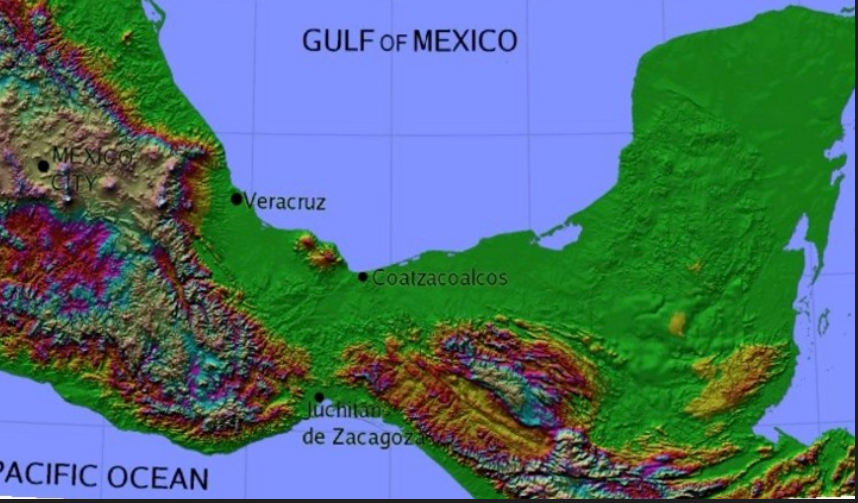
The Interoceanic Corridor of the Isthmus of Tehuantepec will interconnect the Southern Mexican ports of Coatzacoalcos and Salina Cruz. It will impact the movement of goods and the economy with ten development poles along its 324 kilometers.

Through the Interoceanic Corridor of the Isthmus of Tehuantepec (CIIT), the current administration of Manuel Andres Lopez Obrador seeks to improve and accelerate the passage of goods of all kinds between the Pacific Ocean and the Gulf of Mexico.

The project, promoted by the Mexican federal government, proposes modernizing the ports of Salina Cruz, in Oaxaca, and Coatzacoalcos, in Veracruz, and rebuilding and modernizing the infrastructure that interconnects them. The project will directly or indirectly impact 79 municipalities: 46 in Oaxaca and 33 in Veracruz.

The Institutional Program, published on July 3 in the Official Gazette of the Federation, details that the main objective of the corridor is to “consolidate itself as a promoter and coordinator of public policies and national activities focused on the economic and social development of the region with objectives and strategies that seek to promote economic reactivation, the internal market and employment.”

According to President Andrés Manuel López Obrador, the highway currently being built is on the road route that has connected both ports for decades. It is expected to be ready in December.

In addition, the railway linking both ports on the Interoceanic Corridor of the Isthmus of Tehuantepec is being reconstructed, and the creation of 10 industrial parks along 324 kilometers is being promoted.

More than a railway

The Interoceanic Corridor of the Isthmus of Tehuantepec  is a comprehensive project that includes:

  • Industrial parks.
  • Development and innovation poles.
  • Free zone of the Isthmus of Tehuantepec.
  • Merchandise transport.

After many years of attempts, the Federal Government launched a vast infrastructure project to accelerate the passage of all types of merchandise between the Pacific Ocean and the Gulf of Mexico.

One of the most relevant projects of the current administration contemplates improving and accelerating the passage of goods of all kinds between the Pacific Ocean and the Gulf of Mexico, an aspiration of the Mexican government for centuries.

This is the Interoceanic Corridor of the Isthmus of Tehuantepec (CIIT), a project promoted by the federal government, which aims to modernize the ports of Salina Cruz, in Oaxaca, and Coatzacoalcos, in Veracruz.

There is a distance of 324 land kilometers from port to port, and it currently takes about six hours to travel by land from one to the other.

The roadway currently being built is on the highway route that has linked both ports for decades. However, it is a new asphalt strip with better features for transporting heavy trucks and cargo.

In addition, the railway linking both ports on the Interoceanic Corridor of the Isthmus of Tehuantepec is being reconstructed. It will be essential for the transfer of all kinds of merchandise at a lower cost than by truck.

The train track will be essential because it will connect the interoceanic corridor with the Mayan Train, with a branch from Coatzacoalcos to Palenque.

In addition, the train is expected to have a diversion to the border with Guatemala, going from Salina Cruz along the coast to Tapachula.

Renewed ports on the Interoceanic Corridor of the Isthmus of Tehuantepec

In addition to the modernization of land roads, the project also includes expanding the ports of Coatzacoalcos and Salina Cruz.

In Coatzacoalcos, the platforms of the port area have already been expanded, and the bottom of the port has been dredged to expand its draft and allow the arrival of larger cargo ships.

Currently, most activity is concentrated in the port of Salina Cruz.

A breakwater is being built to give the port more stability. It will be a vital port that will take a while to build in stages.

In Salina Cruz, work is also being done on the modernization of the refinery and the construction of a coking plant to process fuel oil and convert it into gasoline. Only in the refinery it is an investment of more than 100 billion Mexican pesos.

More industrial parks

The Mexican government launched the bidding contests for the ten industrial parks or development poles that will form part of the interoceanic corridor of the Isthmus of Tehuantepec, between Coatzacoalcos and Salina Cruz ports. There are ten parks along the entire strip of the isthmus, with an average of 300 hectares per park, with water, gas, and electricity.

The intention of the Mexican president is that, in the industrial parks, goods of all kinds can arrive, be processed, have value-added, and be dispatched to one of the two ports to transport them by road, train, and ocean conveyance to the markets of the United States, Asia, and America from the south.

Two power plants will be built to provide electricity for the project, and wind energy equipment will be purchased from the Spanish company Iberdrola.

From colonial times, a corridor was contemplated to go from the Pacific to the Gulf. The isthmus was the object of the desire of the United States government to create a fast passage between both ports. Still, its attention focused on the Panama Canal, which is now saturated.

Currently, President López Obrador asserts that the interoceanic corridor of the Isthmus of Tehuantepec will be an alternative to the overcrowded canal and an opportunity to reduce the economic and social backwardness of the Tehuantepec isthmus. Additionally, the project will reverse the deterioration that has prevailed for a long time in the region’s industrial sector.

According to a diagnosis included in the institutional program, “the root cause of this situation, described in very general terms, is the absence for an excessively long period of public investment in key areas for economic development. This includes the maintenance and development of infrastructure communications, transport and telecommunications, and the supply of electricity, water, public services and other inputs that industry requires.”

In order to explore opportunities for investment in Mexico, contact LATAM FDI.

Doing business in Peru: Things to consider

Doing business in Peru: Things to consider

If you are interested in doing business in Peru, the country offers many commercial opportunities. Among the most prominent sectors are construction, architecture, engineering services, mining suppliers, higher education services, the software industry, gourmet products, and packaging and labels for agribusiness. Not surprisingly, many foreign companies are turning their attention to Peru as a gateway to Latin America.

To start a business in Peru, creating a network of contacts and establishing meetings with the key players in the market or niche of interest is crucial. Having a local partner is essential to succeed in the Peruvian market. Peruvian businessmen value the quality of products, speed of delivery, competitive prices, and compliance with commitments. When doing business in Peru, arranging and confirming meetings in advance is advisable.

Negotiations in Peru usually start with the most senior people within the company, both in the public and private sectors. However, on occasion, middle-ranking people may also participate. During negotiations, haggling is common and is used to reach an agreement. To achieve a successful negotiation while doing business in Peru, it is vital to show mastery of the subject matter at hand, be congenial, and avoid confrontations with Peruvian counterparts.

Regarding legal issues related to doing business in Peru, having an agent or legal representative is mandatory if you want to do business with the State. The country offers a favorable legal framework for foreign investment, although it can sometimes be complicated. In addition, Peru has essential industries such as mining, manufacturing, energy, tourism, and real estate, providing opportunities for business in different sectors.

Advantages of doing business in Peru

Peru offers several advantages for those interested in doing business in the country. Next, we will mention some main reasons why doing business in Peru is an excellent option.

Despite recent economic challenges, Peru stands out as one of the most stable economies in the region. Thanks to its solid legal framework and focus on economic development, Peru has maintained a robust economy that is resistant to external fluctuations. This provides a safe and conducive environment for foreign direct investment and business growth.

Peru offers a wide range of business opportunities in various sectors. The construction industry, engineering, mining, higher education, information and communication technology, and gourmet food production are just a few examples of the sectors where entrepreneurs can find interesting business opportunities. In addition, the country has low establishment costs for foreign companies, which makes doing business in Peru even easier.

Peru is known for its abundance of natural resources. This is another crucial reason for making it an attractive foreign investment destination. The country is one of the leading mineral producers in the region and the world. The country stands out in producing copper, silver, tin, zinc, and gold. In addition, Peru has a great diversity of natural resources, from fertile soils for agriculture to a wide variety of flora and fauna, which offers opportunities for agribusiness and ecological tourism.

The most lucrative sectors to do business in Peru

For businesses looking for profitable opportunities in Peru, several sectors stand out for their growth and investment potential. Here are the main sectors that may be of interest to foreign investors:

  • Tourism: Peru is a popular tourist destination thanks to its history and impressive landscapes. The hotel industry, gastronomy, transportation, and tourist services are areas where business opportunities can be found.
  • Agriculture and agroindustry: With its diversity of climates and soils, Peru is ideal for agricultural production. The export of Peruvian farm products, such as asparagus, mangoes, and specialty coffees, has experienced significant growth.
  • Renewable energy: The Peruvian government has implemented policies to promote the development of renewable energy in the country. The solar, wind, and biomass energy sectors offer opportunities for doing business in Peru in the generation and distribution of clean energy.
  • Information technology: The information technology sector in Peru has experienced significant growth in recent years. Software development, technological services, and digital solutions offer opportunities for foreign investors.
  • Mining: Peru is one of the leading mineral producers worldwide. The exploration, extraction, and processing of minerals are areas where you can find business opportunities.

It is crucial to note that each sector has regulations and legal requirements. Before investing in any business or doing business in Peru, it is advisable to conduct a detailed analysis to understand the specific opportunities and challenges of operating in each sector.

The process to establish a business in Peru

Establishing a business in Peru involves several essential steps that must be followed. First of all, it is necessary to evaluate the type of business you want to start, the place of work, the obligations, and the benefits obtained by establishing a formal enterprise.

First, it must be decided if the business will be established as a Natural Person or Legal Entity. If the second option is chosen, it will be necessary to select the business name and the type of company, considering whether it will be established individually or with partners, as well as the capital with which the business will be started.

Then, when doing business in Peru, the investor must select the appropriate tax regime for the company. This will depend on the type of activity that will be engaged in. Once these decisions are made, the next step is to formalize the business. To do this, investors doing business in Peru can register as a Natural Person or follow the process for the Registration/Incorporation of a company as a Legal Person.

If you are an investor who plans to open the business in your own or rented premises, it will be necessary to obtain an operating license. These licenses are requested in the corresponding municipalities. It is essential to contact the appropriate municipality for specific requirements and more information on obtaining an operating license when doing business in Peru. In addition, the National Institute of Statistics and Information’s (INEI) Geographic Information System for Entrepreneurs (SIGE) can be used to verify the existence of similar businesses in the area where you want to establish your own.

If investors need to hire staff to start a company, it is vital to consider the labor law and obligations that this implies. Finally, depending on the type of products to be sold, it may be necessary to obtain special permits. Remember that these are the general steps to establish a business in Peru, and it is crucial to investigate and comply with the specific requirements of each case.

The culture of doing business in Peru

Some specific practices and customs characterize the business culture in Peru. First of all, it is common for meetings not to start at the established time. Despite this, it is advisable to arrive on time as a sign of seriousness and respect. Business meetings are usually held in the morning from 9:00 a.m. to 12:00 p.m. or in the afternoon from 3:00 p.m. to 6:00 p.m.

The most common greeting in business is the handshake for both men and women. However, among people in a friendly relationship, it is common to use hugs, pats, or kisses on the cheek for women. During the greeting, touching the other person’s arm with the left hand is common, especially among men.

In conversations, it is crucial to consider the volume and tone of voice since Peruvians tend to speak in a low voice and consider speaking loudly disrespectful. In addition, when doing business in Peru, avoiding ideological or political discussions is advisable since they can affect commercial relations.

  • As for negotiations, they usually start with the most senior people within the company, whether private or public. However, representatives of middle-level positions can sometimes participate, especially if the meeting concerns the transaction’s technical aspects. During negotiations, it is common to use “bargaining” as part of the process, both in large deals and everyday life.
  • If you want to do business with the State, having an agent or legal representative is mandatory.
  • Regarding business opportunities in Peru, construction, architecture, and engineering services, suppliers for mining, higher education services, the software and ICT industry, gourmet products, as well as containers, packaging, and labels for agribusiness stand out.
  • To start a business in Peru, it is essential to establish a network of contacts and have a local partner. Peruvian businessmen value the quality of the products, the delivery opportunity, competitive prices, quality and quantity compliance, supplier certifications, and the absence of intermediaries.
  • Regarding cultural barriers, the handshake is the most common greeting when introducing yourself.

Legal environment for business in Peru: A detailed overview

The legal environment for business in Peru presents important aspects that must be considered. One is the need for local support to set up and run a business. This involves providing detailed information, such as identifying the personnel in charge of the management and administration of the company.

Another relevant aspect in Peru is transparency in business practices. Corruption remains an issue to be dealt with in the country. Therefore, companies must maintain legal and transparent business practices to comply with Peruvian law. Additionally, Peruvian law recognizes corporate criminal liability applicable to bribery, emphasizing the importance of maintaining ethical and transparent business practices.

Doing business in Peru presents an array of enticing opportunities for both local and international entrepreneurs. The country’s strategic geographical location, boasting access to multiple global markets, serves as a gateway for trade in South America. Peru’s commitment to economic liberalization and open-market policies has created a favorable business environment, promoting foreign investment and stimulating growth across various sectors. With a steadily growing economy and abundant natural resources, Peru offers a strong foundation for flourishing industries such as mining, agriculture, and tourism. The government’s initiatives to streamline bureaucratic processes and enhance infrastructure further enhance the appeal of investing in Peru. Additionally, a young and increasingly skilled workforce and an expanding middle class contribute to a growing consumer market ripe with potential. As political stability becomes more entrenched and efforts to improve transparency and governance continue, the allure of doing business in Peru only strengthens.

For more information on doing business in Peru, contact LATAM FDI.

Shared service centers in Uruguay: Why there’s a boom

Shared service centers in Uruguay: Why there’s a boom

Shared service centers in Uruguay are attractive due to the quality of the country’s labor force.

In recent years, Uruguay has positioned itself as a strategic point for installing Shared Services Centers (CSC). These centers have gained popularity in the current context. According to data from Uruguay XXI, today, the country has more than 50 CSCs that generate around 11,670 jobs. 80% of their operations are in captive centers, while 20% of shared service centers in Uruguay are international service providers.

Seventy-six percent of these companies are in free zones, while the remaining 24% are in the metropolitan Montevideo area. The primary industries CSCs in Uruguay cover are pharmaceuticals, commodity trading, technology, retail, and chemicals.

The signing of President Luis Lacalle Pou’s authorization for the creation of a free service zone in Punta del Este is the most recent sign that Uruguay is taking a proactive approach to attracting these types of centers to the country. What reasons lead businesses to establish shared services in Uruguay? What are the strengths of the country? What are the centers for? What possibility is there for further development in the future?

Quality workers and stability

Valentina Sena, Business Development Manager at KPMG Uruguay, indicates that the “quality of the Uruguayan labor force has played a fundamental role” in attracting the CSCs.

“When we speak with CSC leaders, it is common for them to highlight proactivity, the ability to innovate and ‘think outside the box,’ as well as the level of productivity of the Uruguayan workers,” Sena asserted.

Similarly, Ana María Peluffo, Human Resources manager of BASF Services America, declared that the differential offered by Uruguay is in its people. “Uruguayan professionals are people with an excellent learning capacity. The Uruguayan worker is a flexible, curious professional, making a lot of sense to invest because he learns, develops, and has an outstanding capacity for creativity,” he maintained.

Ignacio Del, general manager of the World Trade Center Free Zone, where close to 9,500 people work, points out that when companies arrive in Uruguay, they find good levels of technical education in terms of languages and technology.

“They find a country that has good people to integrate into their work teams, and that makes them try to establish shared service centers in Uruguay first, and as they begin to work, due to all these characteristics, they begin to increase their employee base,” Del said.

Peluffo also highlighted Uruguayan connectivity, the capacity for technology development, and excellent quality of life as essential elements when different CSCs decide to settle.

Del emphasized the country’s stability from both a political and a social point of view. “Investors know that they can come to set up shared service centers in Uruguay, and they won’t have any problems. Looking at a region in turmoil, they know that in Uruguay, the rights of companies will be respected and that government policies toward business will have some stability over time,” he said.

“Sometimes the decision to install a CSC in Uruguay occurs as part of a natural process of familiarization with the country and following the clarity of its rules of the game and its political and economic stability,” said Sena.

Uruguay XXI explained that “access to talent, together with the stability and certainties that the country offers are the main attributes that have supported both the original decision of the companies to install their CSC for the Americas in Uruguay, as well as that of betting on its sustained growth in the country.”

The labor demanded by this type of company needs to be of elevated quality, and the remuneration is commensurate.

“We are talking about a level above a call center type activity; they are jobs that have high added value,” said Jaime Miller, president of Uruguay XXI.

Peluffo, for his part, said that BASF is an organization that trains its people and that it is interested in people who can maintain performance quality at high levels and have long cycles in the company. In this sense, “the salary proposal accompanies this process. Neither much more nor much less, we want to be interesting in the sense that a professional sees an offer from BASF and does not have to pre-qualify it above or below any other market proposal,” he added.

Shared service centers in Uruguay: The future and opportunities

The chemical company BASF is restructuring its shared services center in Uruguay, BASF Services Americas. It will now have Montevideo as a hub for the region, North America, and South America.

Peluffo marked the difference between hub and CSC and explained that the hub installation implies “the integration of services into much more finished concepts in terms of providing a solution to the client.”

“In the hub, the processes are integrated, simplified, and supported by potent integration systems that automate everything that is transactional or operational. So, people dedicate themselves to doing much more value-added work, understanding customers, development, and providing new solutions,” he added.

Around 600 people are employed at Uruguay’s BASF shared service center today. With the restructuring process and the hub installation in Montevideo, the company aims to generate another 200 positions for Uruguayan workers by the end of 2023.

From Uruguay XXI’s perspective, they understand that this increase in the functions carried out by the CSCs is the result of a shift from a specialized model with processes disseminated in different centers without coordination among themselves towards multifunctional CSCs. These shared services centers in Uruguay share unified governance for the various functions, translating into better performance focused on particular regions.

Furthermore, they consider moving from transactional processes, which remain the majority within the CSCs, towards activities with greater added value.

In the future, Robotic Process Automation (RPA) will increasingly be a part of Uruguayan CSCs. This technology reduces the effort of routine tasks, frees up resources to focus on higher value-added tasks, generates better data for analysis and decision-making, and optimizes human resource management, making it possible to offer improved and more efficient services.

Here, new opportunities arise for shared service centers in Uruguay. “The weakness that Uruguay had before was that it did not have many people. It is no longer so important today because a robot does the most repetitive transactional part. The added value part is done by qualified personnel, so we have a better position there because we can become a high-added value shared service hub, where the number of people and costs don’t matter so much, but rather the quality and level of services that are provided,” said Miller.

Options for locations of shared service centers in Uruguay

The Uruguayan government has shown signs of wanting to attract investors not only to Montevideo but also to other regions of the country, which it considers to have the potential to house CSCs and become additional poles of development.

In this sense, in 2021, the president of Uruguay, Luis Lacalle Pou, signed the authorization for the creation of a service-free zone in Punta del Este, and the World Trade Center Punta del Este will be the first service-free zone to be installed in the country’s leading tourist venue.

The general manager of the WTC Free Zone in Montevideo, Ignacio Del, said there is confidence that “many people want to go and live in Punta del Este and work there. In the same way, it will become an attractive hub for companies to set up shared service centers in Uruguay.

For the president of Uruguay XXI, it is always convenient to have a diversity of locations, especially considering that there is a tendency for Punta del Este to house residents permanently. “That there is a free zone there will add to the attractiveness of Uruguay. This sends a message that global services are important to the Uruguayan government’s agenda. These are very positive initiatives that seek not only to expand or broaden the base from which services can be provided but also to decentralize,’ maintained Peluffo.

Sena understands that Punta del Este is an attractive option not only for shared service centers in Uruguay that decide to set up from scratch but also “for CSCs already established in Montevideo who want to have a satellite center there, which allows them to attract new employees and/or expand its operations.

The Salto Grande region and the department of Rivera in Uruguay are also seen as having the potential to attract CSCs.

According to Miller, Salto and Rivera have “great potential” since, with the advance of teleworking, the importance does not depend on the center’s location but rather on the abundance of qualified human resources that can be found in the area. “Medium-sized cities are increasingly attractive for companies looking for alternative sites to set up operations,” he added.

“Rivera is another important place due to the ability of much of the workforce to speak Portuguese. In this sense, if Uruguay could generate a policy that makes it easier to sell services to Brazil, Rivera would undoubtedly be a place where an additional pole for shared service centers in Uruguay could be established,” explained Miller.

 Conclusion

Uruguay stands out as an excellent destination for establishing shared service centers due to its blend of a skilled workforce, strategic location, and stable business environment. With a well-educated talent pool proficient in languages like English, Spanish, and Portuguese, the country offers a resourceful workforce capable of delivering high-quality services across various domains. Its favorable time zone ensures convenient collaboration with North and South American markets. Political stability, low corruption levels, and a supportive government provide a reliable and secure business environment. Moreover, the country’s modern infrastructure, coupled with competitive labor costs, enhances the operational efficiency and cost-effectiveness of shared service centers in Uruguay. Uruguay’s combination of skilled human capital, geographical advantage, and conducive business atmosphere makes it a compelling choice for companies seeking to establish efficient and successful shared service centers.

For information on establishing a shared service center in Uruguay, contact LATAM FDI.

The Association of Latin American Integration (ALADI): Fostering Regional Cooperation and Economic Integration

The Association of Latin American Integration (ALADI): Fostering Regional Cooperation and Economic Integration

Introduction

The Association of Latin American Integration (ALADI) is a significant regional organization that has played a crucial role in promoting economic integration and cooperation among its member countries. Founded in 1980, ALADI has facilitated dialogue, trade, and economic development within the Latin American region. Its mission revolves around fostering economic cooperation, advancing trade liberalization, and enhancing the well-being of the citizens of its member nations. This essay delves into the history, structure, objectives, achievements, and challenges faced by ALADI, highlighting its critical contributions to Latin American integration.

Historical Background

The Association of Latin American Integration traces its origins to the Treaty of Montevideo of 1980, formally establishing the organization to promote Latin American economic integration. This treaty replaced the Latin American Free Trade Association (LAFTA) that existed since 1960. The transition from LAFTA to ALADI represented a shift from a predominantly trade-focused approach to a more comprehensive strategy encompassing economic cooperation, industrial development, and broader regional integration. The features of the Treaty of Montevideo included:

Comprehensive Objectives: The treaty expanded the scope of the organization’s objectives beyond traditional trade-focused goals. While LAFTA primarily concentrated on trade liberalization, ALADI’s objectives encompassed broader aspects of economic integration, including industrial development, investment promotion, and cooperation in various sectors.

Flexible Integration: Unlike the previous trade-centric approach of LAFTA, the Treaty of Montevideo recognized that member countries had different levels of development and varying economic priorities. This understanding allowed for more flexibility in integration efforts, considering each member nation’s specific needs and capacities.

Principles of Equality and Non-Discrimination: The treaty emphasized the principles of equality and non-discrimination among member countries. This approach ensured that all member nations had equal participation and opportunities within the organization’s programs and initiatives.

Gradual Tariff Reduction: The treaty introduced an incremental and phased approach to tariff reduction among member countries. This approach acknowledged the need for a structured transition period to minimize disruptions to domestic industries and economies.

Harmonization of Customs Procedures: The Treaty of Montevideo highlighted the importance of harmonizing customs procedures among member nations—this measure aimed to facilitate smoother cross-border trade by reducing administrative barriers and delays at customs checkpoints.

Institutional Framework: The treaty established the institutional structure of ALADI, defining its decision-making bodies, committees, working groups, and their respective functions. This structure provided a framework for member countries to engage in discussions, negotiations, and cooperation across various economic sectors.

Cooperation in Non-Tariff Areas: In addition to trade and tariffs, the treaty emphasized cooperation in non-tariff areas, including industrial policy, investment promotion, agriculture, transportation, and energy. This multifaceted approach recognized that economic integration required collaboration in various sectors beyond trade.

Safeguard Mechanisms: The treaty included safeguards to address the potential adverse effects of liberalization on domestic industries. This demonstrated a commitment to balance liberalization with protections for sensitive sectors.

Sustainable Development: The treaty underscored the importance of sustainable development and environmental protection as integral components of regional integration. This approach acknowledged the need to balance economic growth with environmental preservation.

Technical Assistance and Capacity Building: The treaty highlighted the significance of providing technical assistance and capacity-building programs to member countries. These initiatives aimed to enhance the capabilities of less-developed nations to actively participate in integration processes.

Structure and Membership

The Association of Latin American Integration membership comprises thirteen Latin American countries, spanning from Mexico to the southernmost tip of South America. These member nations include Argentina, Bolivia, Brazil, Chile, Colombia, Cuba, Ecuador, Mexico, Paraguay, Peru, Uruguay, and Venezuela. The organization operates on the principles of equality and non-discrimination among its members, allowing them to participate in various programs and initiatives based on their specific interests and capacities.

ALADI is guided by a system of specialized committees and working groups that address diverse areas of economic cooperation, including trade, industrial policies, investment, transportation, and more. These committees are platforms for member countries to discuss common challenges, share experiences, and formulate joint strategies.

Objectives and Achievements

The Association of Latin American Integration has core objectives encompassing a range of goals to foster regional integration and development. These objectives include:

Trade Facilitation: ALADI seeks to facilitate trade among its member countries by promoting the reduction of tariff and non-tariff barriers, harmonizing customs procedures, and simplifying trade documentation.

Economic Cooperation: The organization fosters economic cooperation through the exchange of information, best practices, and experiences in various sectors to promote sustainable economic development.

Industrial Policy: The Association of Latin American Integration supports formulating industrial policies that enhance competitiveness, innovation, and productivity, contributing to the growth of regional industries.

Infrastructure and Transportation: The organization promotes the development of regional transportation networks and infrastructure, facilitating the movement of goods and people within the region.

Investment Promotion: ALADI works to attract foreign direct investment to the region by creating a favorable environment and offering incentives for investment.

Achievements

Over the years, the Association of Latin American Integration has achieved notable successes in furthering Latin American integration:

Trade Agreements: ALADI has negotiated and implemented trade agreements among its member countries, fostering intra-regional trade and reducing trade barriers.

Harmonization of Customs Procedures: The organization has facilitated the harmonization of customs procedures, contributing to smoother trade flows and reduced transit times.

Infrastructure Development: ALADI has supported infrastructure development projects promoting economic connectivity, such as regional transportation networks and energy integration.

Challenges and Future Prospects

Despite its achievements, ALADI faces several challenges in its pursuit of deeper regional integration:

Divergent Interests: Member countries have varying economic priorities and levels of development, which can lead to differences in approach and hinder cohesive decision-making.

Institutional Strengthening: ALADI’s institutional capacity and resources must be strengthened to address the diverse challenges faced by the region effectively.

Global Competition: In a rapidly changing global economic landscape, ALADI must remain adaptable and innovative to compete effectively and secure its position in international markets.

Conclusion

The Association of Latin American Integration (ALADI) has emerged as a critical player in advancing economic cooperation and integration within the Latin American region. Through its commitment to promoting trade, industrial development, and economic cooperation, ALADI has contributed significantly to the growth and development of its member countries. As the organization continues to address challenges and adapt to changing global dynamics, its role in shaping the future of Latin American integration remains as crucial as ever.