+1 (520) 780-6269 investment@latamfdi.com
What is the Pacific Alliance?

What is the Pacific Alliance?

The Pacific Alliance comprises Chile, Colombia, Mexico, and Peru. It is a mechanism for economic and trade integration based on four pillars: free movement of goods, services, capital, and people. It is an innovative, flexible integration strategy with clear, pragmatic goals consistent with member companies’ development models and foreign policies.

The Pacific Alliance (PA) was established in April 2011 by Chile, Colombia, Mexico, and Peru through the Framework Agreement, which entered into force in July 2015, and its commercial protocol, which entered into force on May 1, 2016.

What are the goals of the Pacific Alliance?

The Pacific Alliance seeks to build, in a participatory and consensual manner, an area of deep integration to move progressively toward the free movement of goods, services, capital, and people.

It exists to promote more significant growth, development, and competitiveness of the economies of the participating parties, intending to achieve greater well-being, overcoming socioeconomic inequality, and the social inclusion of its inhabitants.

It seeks to become a platform for political articulation, economic and commercial integration, and projection to the world, with particular emphasis on the Asia Pacific region.

Who participates in the Pacific Alliance?

Member Countries (4): Colombia, Chile, Mexico, and Peru.

Observer States (61):

America (14): Argentina, Canada, Costa Rica, Ecuador, El Salvador, the United States, Guatemala, Haiti, Honduras, Panama, Paraguay, the Dominican Republic, Trinidad and Tobago, and Uruguay.

Africa (2): Egypt and Morocco.

Asia (12): China, Korea (South), the United Arab Emirates, India, Indonesia, Israel, Japan, Kazakhstan, Pakistan, the Philippines, Singapore, and Thailand.

Oceania (2): Australia and New Zealand

Europe (31): Armenia, Austria, Belgium, Azerbaijan, Belarus, Croatia, Denmark, Czech Republic, Finland, France, Germany, Georgia, Greece, Hungary, Ireland, Italy, Lithuania, Norway, Netherlands, Poland, Portugal, Slovakia, Slovenia, Spain, Romania, Serbia, Sweden, Switzerland, Turkey, and Ukraine.

Associated States (1): On January 26, 2022, within the framework of the XVI Summit of the Pacific Alliance, the FTA between Singapore and the Pacific Alliance was signed. When entered into force, this will make Singapore the first Associated State of the Alliance.

The Pacific Alliance is negotiating with three other Observer States that are candidates for Associated State status. These countries are Australia, Canada, and New Zealand.

The next candidate with whom negotiations will begin to become an Associated State is South Korea. Ecuador requested to start negotiations to acquire this same category, but its entry could occur in the category of Member Country.

How does it work?

In the Pacific Alliance, there are different decision-making bodies whose decisions are always made by consensus.

Summits bring together the presidents of the Member States. It is the highest decision-making body of the Pacific Alliance, in which the progress of the mechanism is evaluated, and instructions are given on its future work.

The Council of Ministers brings together the Ministers of Foreign Affairs and Ministers of Foreign Trade of the Member States to verify compliance with the Presidential Mandates. The Council defines the political guidelines of the Pacific Alliance in its relationship with third States or integration schemes, establishes the working groups that it deems appropriate to achieve the objectives, and carries out the actions of the Alliance, among others.

The High-Level Group (GAN) brings together the Vice Ministers of Foreign Affairs and Vice Ministers of Foreign Trade. It carries out periodic and detailed monitoring of compliance with the Alliance’s commitments, as well as the work of the Technical Groups.

National Coordinators bring together the national coordinators of the Alliance countries. The functions of this group are the same as those of the GAN, but its monitoring tasks are carried out permanently. The National Coordinators are in charge of consolidating a work agenda with the observer States, third States, and other regional forums, emphasizing Asia-Pacific.

Technical instances: the Pacific Alliance has thirty technical instances in charge of executing the different presidential mandates in matters within their respective competencies, often in coordination with other instances. The Cooperation Council is in charge of monitoring cooperation with the Observer States.

Presidency Pro Tempore (PPT): The PPT of the Pacific Alliance rotates annually in alphabetical order. Mexico has exercised the PPT since the XVI Summit, which took place on January 26, 2022, in Bahía Málaga-Buenaventura, Colombia. Subsequently, the PPT was delivered to Peru at the beginning of 2023, within the framework of the XVII Summit of the mechanism.

Why is the Pacific Alliance important?

  • The Alliance, as a process of deep integration, has set itself challenging goals, which have been fulfilled based on the Mandates issued by the heads of State. 
  • The Pacific Alliance is one of the most innovative integration strategies in the region, as it is an open and flexible process with clear, pragmatic goals consistent with the development models of the participating nations.
  • In only 11 years of existence, the Pacific Alliance has achieved significant results in all the process objectives, advancing progressively towards the free circulation of goods, capital services, and people, making it an international benchmark in terms of integration. The Pacific Alliance is consolidated as the eighth largest economy in the world, with a population close to 230 million inhabitants, attracting nearly fifty-six million tourists each year and 38% of the FDI that reaches Latin America. Additionally, it represents approximately 40% of the region’s GDP, which, on the one hand, makes it an attractive market for global trade, and, on the other, it strengthens its capacity for international insertion.

Main Achievements of the Pacific Alliance

  • Eight shared Embassy locations (Algeria, Vietnam, Azerbaijan, Ghana, Hungary, Ireland, Morocco, and Singapore).
  • Carrying out significant joint activities for trade, investment, and tourism promotion.
  • Integration of the stock markets in the Latin American Integrated Market (MILA), constituting the financial arm of the Alliance.
  • The Business Council of the Pacific Alliance (CEAP) has been an important initiative of the private sector to give recommendations to governments to build a useful work agenda for business facilitation.
  • Two thousand eight hundred thirteen students from four countries have benefited through the Academic and Student Mobility Platform.
  • Elimination of tourist and business visas between the four countries.
  • The signing of an Inter-institutional Agreement for a Vacation and Work Program promotes cultural exchange between the young people of the Pacific Alliance countries.
  • Subscription of a Consular Assistance Agreement allows nationals of the four countries to receive consular assistance in states without diplomatic or consular representation of their country of origin.
  • Short-stay visa exemption for foreigners residing in member countries of the Pacific Alliance.
  • Subscription of 9 Joint Declarations with the Observer States, regional integration blocks, and international organizations to strengthen relations and specify cooperation activities on issues of mutual interest: Canada, Spain, Japan, Singapore, Association of Southeast Asian Nations (ASEAN), Eurasian Economic Commission (EEC), Mercosur, European Union, and OECD.
  • Strategic Vision of the Pacific Alliance for the year 2030, which focuses on four axes to achieve an Alliance: more integrated, more global, more connected, and more citizen, with ambitious and achievable goals in line with the Sustainable Development Goals of the United Nations Organization.
  • Presidential declarations on Gender and Women’s Empowerment, Sustainable Management of Plastics, Regional Digital Market, and Creative Economy seek to implement concrete actions that strengthen and give special impetus to these issues in the Pacific Alliance.
  • The Declaration of Bahía Málaga-Buenaventura includes the new mandates for the Technical Instances that make up the mechanism and are part of the road map or work plan of Mexico as Pro Tempore Presidency of the Alliance during the period 2022-2023.
  • An FTA was signed with Singapore, which, once it enters into force, will make this country the first Associated States of the Pacific Alliance.
  • Negotiations are ongoing with Australia, Canada, and New Zealand, aimed at accessing the category of Associated States, and the start of the talks with Korea was announced.

The last Pacific Alliance Summit

The XVI Summit of the Pacific Alliance took place in Bahía Málaga-Buenaventura, Colombia, on January 26, 2022.

On January 26, the XVI (sixteenth) Summit of the Pacific Alliance was held in Bahía Málaga – Buenaventura. The Presidential Declaration and a Declaration for Strengthening the Creative Economy (Orange Economy) were signed at this Summit. Likewise, the Implementation Plans of the Roadmap of the Declaration on the Sustainable Management of Plastics and Gender Equality were approved. These initiatives contain concrete actions to strengthen these issues in the region. Regarding trade, the FTA was signed with Singapore, and the commitment to start negotiations with Ecuador for its entry as a Member country and Korea for its entry as an Associated State was established. Similarly, the Regulatory Cooperation Annexes on household cleaning products and medical devices were adopted. These accords will facilitate their commercialization in the four countries.

Recent treaties and/or declarations

  • Declaration of Bahía Málaga-Buenaventura, December 26, 2022.
  • Presidential Declaration for the Strengthening of the Creative Economy.
  • Joint Declaration between the Pacific Alliance and Singapore.
  • Free Trade Agreement between Singapore and the Pacific Alliance.

The Pacific Alliance is a regional integration initiative in Latin America that promotes economic and political cooperation among its member countries. It was established on April 28, 2011, and its founding members are Chile, Colombia, Mexico, and Peru. Since its inception, the Alliance has become a significant regional economic and trade bloc. Overall, the Pacific Alliance is an essential initiative in Latin America, fostering economic development, cooperation, and integration among its member countries while promoting their interests on the global stage.
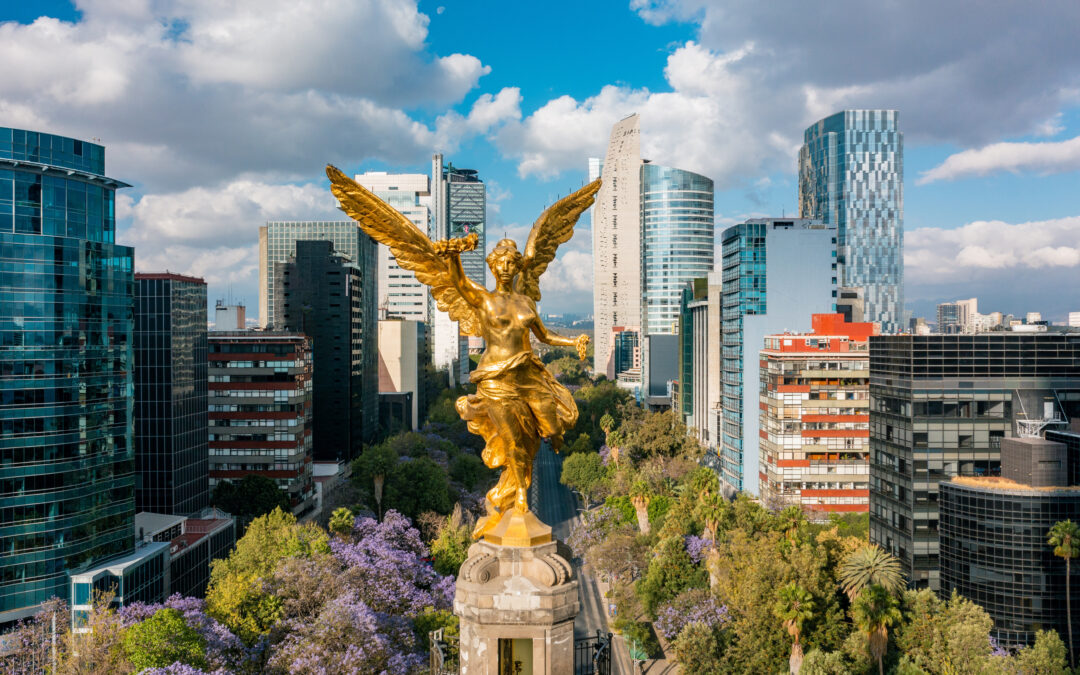

Principal Mexican trade agreements in 2023

Principal Mexican trade agreements in 2023

Mexico has been characterized as one of the most open economies in Latin America and the world since there are Mexican trade agreements with more than 46 countries.

For this reason, it has established itself as a benchmark for other developing regions, favoring businessmen with tariff preferences under the treaty to which they are subscribed.

The following article will mention the main Mexican trade agreements in force in 2023, highlighting their importance on the international scene and their implications for the country’s economy.

What are international trade agreements?

The Government of Mexico defines a trade agreement as “an agreement established by two or more countries under the protection of international law and to improve their relations in economic and trade terms.”

The alliance can be bilateral or multilateral, but it always includes reducing or eliminating tariff and non-tariff barriers, such as import quotas, sanitary and phytosanitary matters, or technical trade barriers.

While in the free trade agreement (FTA), rules and guidelines are established for exchanging products and services, leaving aside obstacles such as taxes or rates on imports and exports. The idea is to consolidate markets for the national products of each country, presenting competitive offers.

According to the Mexican Government, the treaties are designed to promote international investment flows and provide certainty to the operations carried out by foreign businessmen.

What are the most important Mexican trade agreements?

Currently, Mexico has 14 current international trade agreements signed with 46 countries, 32 agreements for the promotion and reciprocal protection of investments with 33 countries, and nine limited-scope agreements within the framework of the Latin American Integration Association (ALADI). Additionally, it is a member of the Trans-Pacific Partnership Agreement.

Although the Mexican trade agreements are valuable for our country, some are more relevant. This is either because they are entered into by more than one nation or because of their implications. Those that stand out among them include the:

Free Trade Agreement United States – Mexico – Canada (USMCA). It is the best known and most relevant for Mexico because the commercial relationship between the countries of North America is essential for continued technological and economic growth.

In 2020, the agreement replaced the North American Free Trade Agreement (NAFTA) that entered into force in 1994. New provisions included more rigor in verifying the country of origin for the textile, chemical, and automotive industries.

A chapter on digital trade was also included, in which customs duties are not imposed on digital products, in addition to cooperating on key aspects of cybersecurity.

Free Trade Agreement Mexico – European Union (TLCUEM). This Mexican trade agreement has been in force since July 2000. Germany, Austria, Belgium, Denmark, Spain, Finland, France, Greece, the Netherlands, Ireland, Italy, Luxembourg, Portugal, the United Kingdom, Sweden, Cyprus, Slovenia, Malta, the Czech Republic, Hungary, Poland, Estonia, Slovakia, Latvia, and Lithuania participate.

It seeks to promote trade between Mexico and the countries of the European Union, as well as to establish a legal framework for economic relations in both blocks.

The TLCUEM’s goals are eliminating tariffs for most products and protecting intellectual property, competition, transparency, and economic cooperation.

Free Trade Agreement Mexico – European Free Trade Association (EFTA). The Mexican trade agreement was signed in 2001 by four European countries: Iceland, Liechtenstein, Norway, and Switzerland, to strengthen the relationship between the signatories in political and economic terms.

Mexico-Israel Free Trade Agreement. This accord was signed in 2000 to intensify trade and the economy by easing taxes and import restrictions from both countries.

Mexico-Uruguay Free Trade Agreement. Its purpose is regional economic integration and to constitute a more extensive and secure market for goods and services produced in their territories.

Mexico-Panama Free Trade Agreement. This Mexican trade agreement was signed on April 3, 2014, and entered into force in July 2015.

This agreement has worked on the country’s economic integration with Central America, reinforcing legal security in international transactions and consolidating new markets for Mexican exports.

The signing gave way to an agreement with better conditions and a balance between commercial commitments, the expansion of world trade, and international cooperation.

  • There is also the relationship between Mexico, Peru, Colombia, and Chile through the so-called Pacific Alliance, in which thirty-two observer countries participate.

The four nations account for 38% of the GDP of Latin America and the Caribbean. This makes it a very beneficial cooperation between the signatory nations. Only in 2010, this group exported close to 445 billion dollars worth of goods.

  • Likewise, the Comprehensive and Progressive Agreement for Trans-Pacific Partnership (TIPAT), or CPTPP for its acronym in English, is in force.

This agreement was concretized among eleven Pacific nations, including Australia, Brunei, Canada, Chile, Japan, Malaysia, Mexico, New Zealand, Peru, Singapore, and Vietnam, with some Asian and American regions.

The group of countries accounts for more than 14.9% of world trade and 13.5% of GDP. Hence, Mexico maintains the FTA with several nations individually.

Benefits of Mexican trade agreements

Mexico’s trade agreements are profitable for the nation’s economy and companies and consumers.

As mentioned at this blog post’s beginning, foreign trade is key to development. Hence, Mexico has signed to date 14 trade agreements that promote the exchange of goods and services with other countries.

Among the benefits of Mexican trade agreements are:

  • Cost reduction for consumers, company market expansion, increased competitiveness, and job creation.
  • Lower tariff barriers can hinder the flow of goods and services.
  • Prívate investment promotion.
  • The mprovement of the regulations that protect intellectual property, electronic commerce, and employability.
  • Greater options for goods and services in a country for consumers and companies.
  • The further promotion of business competitiveness by achieving the development of innovative technologies and practices.
  • The strengthening of regional economic integration.
  • The opening of greater access to broader markets.
  • The promotion of competitiveness and access to a greater variety of products and services.
  • Support for the removal of standards and trade barriers.
  • The promotion of the exchange of technology.
  • The creation of long-term stability for investors, which can also promote jobs in export industries.

In their totality, Mexican trade agreements have generated a significant impact on the country’s economy and its relations with other nations.

Although the agreements have received some criticism and faced some challenges, they have generally strengthened new trade and investment opportunities through the negotiation of positive commercial terms between Mexico and its economic partners.

A brief history of the aerospace industry in Brazil

A brief history of the aerospace industry in Brazil

In recent decades, the aerospace industry in Brazil has expanded. One aspect of the industry’s growth that has been achieved in recent times is its expanded activities in the defense-related export sector. The country’s industry has been transformed from an exclusive supplier to the private sector to more significant military-related sales to leverage growth in international markets further.

In this article, we present some interesting points about the history of the aerospace industry in Brazil.

Santos Dumont

The founder of the aerospace industry in Brazil is recognized to be Alberto Santos Dumont or just Santos Dumont. Considered the father of the aviation sector, he was fascinated by combustion engines from a young age. He had a dream to create a device that allowed man to fly. In 1906, Santos Dumont and the famous 14-Bis plane managed to accomplish this feat. In a flying club in France, a device heavier than air flew, before a supervisory committee, approximately three feet from the ground and for a distance of about 200 feet.

After this first achievement of the aerospace industry in Brazil,  a similar flight was carried out for a distance of about 720 feet at a height of approximately 20 from the ground. As a result of these initial achievements, Santos Dumont became known worldwide and placed the country on the route towards the development of the aerospace industry in Brazil.

Single engine monoplane São Paulo (1910)

After the first achievements registered by Santos Dumont, the father of Brazilian aviation developed an aircraft that was known as the “Avião São Paulo,” or the São Paulo Airplane. This was the first fully built aircraft in Brazil. Its prototype was flown over the city of Osasco. It was piloted by the French aviator Dimitri Sensaud Lavaud.

Until this time, the early initiatives that led to Brazil’s aerospace industry’s development were the result of individual efforts. However, the personal initiatives carried out by hobbyists inspired feats that contributed uniquely to the creation of the industry as it is today.

World War I

After the First World War, an aircraft manufacturing factory in Brazil was established. Brazilian industrialist Henrique Lage initiated this project. Lage was a specialist in maritime shipping lines. He believed that aviation constituted a promising manufacturing trend and decided to reorient the direction of his business.

Through his Companhia Nacional de Navegação Aérea (CNNA), Lage signed a contract for production for customers in Great Britain. As a result of this, CNNA started to produce airplanes and aeronautical engines in Rio de Janeiro,

Advances in the aerospace industry in Brazil in the 1940s

In the 1940s, a new phase of the aerospace industry in Brazil began with the creation of more than 20 companies in the sector.

The large-scale emergence of the aerospace industry in Brazil was motivated by the creation of the Brazilian Ministry of Aeronautics as well as by the demand for aerospace industry output precipitated by the advent of the Second World War in Europe.

The creation of Embraer

Embraer (Empresa Brasileira de Aeronáutica S/A was founded in 1969. It was a critical component of a project to implement Brazil’s military plans and was co-founded by the aeronautical engineer Ozires Silva. This plan sought to establish a domestic and sovereign aerospace industry in the country, such as those for the oil and steel industries.

Embraer was established with mixed capital, with 51% of the shares belonging to the State and 49% the property of private capital. As a milestone of its creation, the Brazilian engineers that were a part of the project were challenged with creating a 12-seat twin-turboprop plane. That airplane would become known throughout the world by the name of Bandeirante.

In the 1990s, the company went through a privatization process. Embraer remains in the hands of private capital to this day.

The trajectory of the aeronautical industry in Brazil

Since the beginning of its trajectory, the Brazilian national aviation industry has sought to establish itself in an economically sustainable way.

The first phase of the aerospace industry in Brazil was its inception with pioneers such as Santos Dumont. The second was marked by events that took place in the 1930s. At that time, the Department of Civil Aviation was created. In the 1940s, Brazil established its Ministry of Aeronautics. Finally, the creation of Embraer took place at the end of the 1960s.

The third phase corresponds to post-privatization. The main characteristic of this phase is the Brazilian aerospace industry’s new international reach. As a result of its robust development, Embraer reached third place in the world among the largest aerospace manufacturers, following only Boeing and Airbus.

This characteristic demonstrates the potential of Brazil’s aerospace industry and the valuable opportunities that may continue to arise.

The current state of the aerospace industry in Brazil

Brazil has a well-established aerospace industry with several notable achievements. Here are some key features of the current aerospace industry in Brazil

Embraer: Embraer (Empresa Brasileira de Aeronáutica) is the largest aerospace company in Brazil and one of the world’s leading regional aircraft manufacturers. It produces various commercial, military, and executive aircraft, including the popular E-Jet series. Embraer has a strong presence in both the domestic and international markets.

Military Aviation: Brazil has a significant focus on military aviation. The country has developed indigenous military aircraft, such as the AMX fighter and the Super Tucano turboprop aircraft, which are widely used by the Brazilian Air Force and exported to other nations.

Space Industry: Brazil has a space program led by the Brazilian Space Agency (AEB). It has developed the VLS-1 (Satellite Launch Vehicle) and operates the Alcântara Launch Center. The space industry in Brazil focuses on satellite development, space research, and applications such as remote sensing and telecommunications.

Research and Development: Brazil invests in research and development (R&D) activities related to aerospace technology. ITA mentioned earlier, is a prestigious institution that offers aerospace engineering programs and contributes to technological advancements in the sector. There are also partnerships between universities, research institutes, and the industry to promote innovation.

International Collaborations: Brazil actively collaborates with other countries and participates in international aerospace programs. For instance, Brazil is a partner in the Airbus A380 program and has contributed to the development of various components for the aircraft.

Job Creation: The aerospace industry provides employment opportunities in Brazil. It encompasses various sectors, including manufacturing, engineering, research and development, maintenance, and support services. The industry’s workforce comprises highly skilled professionals contributing to the country’s development of human capital.

Economic Growth and Revenue Generation: The aerospace industry in Brazil contributes to the nation’s economic growth and generates revenue through multiple channels. Domestic aerospace companies like Embraer contribute to the country’s export earnings by selling aircraft and related services to international markets. The industry also fosters innovation and technological advancement, attracting investments in Brazil and driving economic activity.

Technology Transfer and Spillover Effects: The aerospace industry in Brazil often involves collaborations with international partners, enabling technology transfer and knowledge exchange. These partnerships can lead to spillover effects, benefiting other sectors of the economy. For example, advancements in aerospace technology can have applications in areas such as telecommunications, defense, and materials science.

Workforce and Supply Chain: Brazil has a skilled workforce in aerospace engineering and related fields. The country has developed a robust supply chain to support the aerospace industry, including producing components and systems.

Export Potential: Brazil’s aerospace industry, mainly through companies like Embraer, has a strong export orientation. The country exports aircraft, components, and related services to customers worldwide. These exports contribute to Brazil’s trade balance and help generate foreign exchange reserves.

Challenges and Opportunities: Like any industry, the Brazilian aerospace sector faces challenges, including competition from established players, technological advancements, and funding constraints. However, Brazil also has growth opportunities, such as expanding its market share in regional aircraft, leveraging its military aviation expertise, and exploring space technology advancements.

Overall, the aerospace industry in Brazil has, from its beginnings to the present, become a strategically important component of the nation’s economy. It continues to create jobs,  spur economic growth, and technological development,  generate export earnings, preserve national security, and drive research and development. It catalyzes innovation and high-value manufacturing, enhancing Brazil’s global competitiveness in the aerospace sector.


The medical device industry in Mexico in 2023: A trajectory of growth

The medical device industry in Mexico in 2023: A trajectory of growth

According to the document “Knowing the medical device industry,” prepared by the National Institute of Statistics and Geography (INEGI) and the Mexican Association of Innovative Industries of Medical Devices (AMID), three economic activities have been identified in Mexico that reflect the economic behavior of the medical device industry in Mexico.

The first is the manufacture of disposable material for medical use, the second activity is the manufacture of non-electronic equipment for medical, dental, and laboratory use, and the third is the manufacture of non-woven fabrics (compressed).

It is worth mentioning that medical devices not considered in these economic activities are produced in other activities or are imported products.

The study states that, in this way, by the amount of what was produced, the manufacture of disposable material for medical use was the most important activity since the production value was 13.8 billion dollars in 2021, which reflects an increase of 11.1% compared to the previous year, due to the rise in demand for these products due to the COVID-19 pandemic.

In this case, the average annual growth from 2013 to 2021 was 4.2%.

For its part, the manufacture of non-electronic equipment for medical, dental, and laboratory use had a production of 1.8 billion dollars in 2021, with a growth of 2.9% compared to the previous year. Likewise, the average annual growth rate was 6.2% from 2013 to 2021.

Finally, the growth in the manufacture of non-woven fabrics (compressed) was 4.7% from 2020 to 2021. While from 2013 to 2021, this activity grew 1.3% on average each year.

It should be noted that according to the report, production, employment, and wages showed increases in the medical device industry in Mexico or have remained stable in recent years.

“These increases were due to the increase in demand for products from this industry, derived from the COVID-19 pandemic, a situation that contrasts with what happened in most economic activities, which reduced production, employment, and wages in those years,” the report details.

Exports and imports of the medical device industry

The INEGI and AMID report indicates that  2020 exports of medical devices reached 10.7 billion dollars in 2020 and imports 5.24 billion dollars, which generated a surplus of 5.46 billion dollars.

“Mexico exported the vast majority of medical devices to the United States (96.7% of the total) in 2020, a percentage corresponding to 9.6 billion dollars. In addition, the origin of imports of these products was mainly the United States (60.7%) and China (12%); both accumulated 72.7% of the total,” details the document.

Other export destinations were France, China, the United Kingdom, the Netherlands, and Germany. At the same time, Mexico also imported from countries such as Germany, Malaysia, South Korea, Japan, Italy, Ireland, Pakistan, and Taiwan, among others.

It should be noted that, from 2003 to 2020, exports of medical devices grew by an annual average of 8.6% and imports by 7.9%, which caused the surplus balance of the trade balance to increase by a yearly average of 9.4%.

Aerosol therapy devices, respiratory resuscitation devices, and other respiratory therapy devices totaled 9.2 % of total exports.

On the import side, the two fractions that stood out were ozone therapy, oxygen therapy or aerosol therapy devices, respiratory resuscitation devices, and other respiratory therapy devices and diagnostic reagents for the determination of immunological tests utilizing monoclonal antibodies, even in the form of games, which accumulated 8.4% of the total.

Foreign direct investment in the medical device industry in Mexico

Information from Data México states that, in the period from January to September 2022, the Foreign Direct Investment (FDI) of the industrial branch Manufacture of non-electronic equipment and disposable material for medical, dental, and laboratory use, and ophthalmic articles was 126 million dollars.

It should be noted that, from January 1999 to September 2022, the amount of FDI was 1.8 billion dollars.

Likewise, in the first nine months of 2022, the states that received the highest FDI for the medical device industry in Mexico were Chihuahua, with 79.1 million dollars, and the state of Mexico and Baja California, with 12.6 million dollars.

While from January 1999 to September 2022, the states that have received the highest FDI are Chihuahua, with 1.15 billion dollars; Baja California, with 406 million dollars; and Mexico City, with 147 million dollars.

For their part, the leading countries of origin of FDI in the medical device industry in Mexico from January 1999 to September 2022 were the United States, with 54.8 million dollars, Canada, and the Netherlands. Meanwhile, from January 1999 to September 2022, the countries that contributed the most to FDI were the United States with 1.41 billion dollars, Germany with 193 million dollars, and Canada with 105 million dollars.

The medical device industry in Mexico is prominent in several states

Several Mexican states have emerged as leaders in the medical device industry in Mexico. Below are some of the critical states known for their significant contributions to the sector:

  • Baja California: This state, particularly Tijuana, is a prominent hub for medical device manufacturing in Mexico. It hosts many companies involved in the production of medical devices, including orthopedic implants, surgical instruments, and electronic medical equipment.
  • Chihuahua: Chihuahua is another important state for medical device manufacturing. The city of Ciudad Juarez is known for its well-established medical device industry, specializing in areas such as electromechanical devices, dental equipment, and prosthetics.
  • Guanajuato: The state of Guanajuato, particularly the cities of León and Irapuato, has a strong presence in the medical device manufacturing sector. It is known for producing various medical equipment, including diagnostic devices, surgical instruments, and orthopedic implants.
  • Jalisco: Jalisco, with its capital city Guadalajara, is recognized as a critical center for medical device manufacturing in Mexico. The state has a well-developed infrastructure and expertise in various areas, such as ophthalmic devices, cardiovascular devices, and general medical equipment.
  • Nuevo León: The state of Nuevo León, with its industrial city of Monterrey, has a thriving medical device manufacturing sector. It produces various medical devices, including orthopedic implants, surgical instruments, and electromedical equipment.

These states have attracted significant investment in the medical device industry in Mexico due to favorable business environments, skilled labor, proximity to the United States market, and infrastructure support. However, it’s worth noting that medical device manufacturing is not limited to these states, and other regions in Mexico also contribute to the industry.


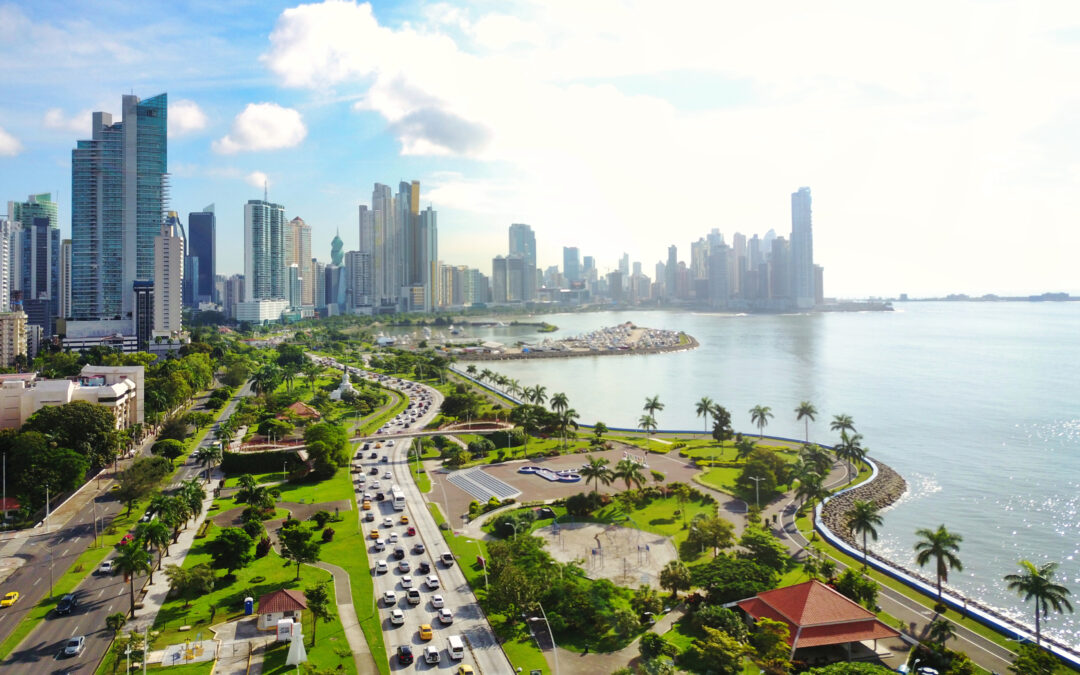
Doing business in Panama: 10 reasons to be there

Doing business in Panama: 10 reasons to be there

There are numerous advantages available to companies that are doing business in Panama.  They include:

Security and Stability

Panama is widely considered a “safe haven” due to its political and socioeconomic stability. It benefits from special treaties with the United States, ensuring protection during conflict. The security of Panama is affected by its economic prosperity. Panama has experienced consistent economic growth in recent years due to its strategic location, the Panama Canal, and a well-developed service sector. The country’s relative economic prosperity has helped reduce some social and economic inequalities that can contribute to crime rates. As the safest country in Central America, it attracts a diverse expat community from around the world that enjoys the security and stability of doing business in Panama.

Ease of commercial configuration

Doing business in Panama by establishing a corporation is a simple process. Forming a corporation in Panama takes just a few business days. Additionally, a business operations permit can be obtained online with a small setup fee or tax. Establishing a sole proprietorship with a business operations permit that costs only $15 is also possible. Municipal taxes are generally low and vary depending on the nature of the business and the municipality.

A stable currency

Since its creation as a nation in 1903, Panama has adopted the US dollar along with its currency, the balboa. The balboa is linked to the US dollar, and both currencies circulate within the country.

Local bank transactions are generally quoted in balboas when doing business in Panama, while international transactions are quoted in US dollars.

Favorable tax structure

When doing business in Panama, the country offers a relatively simple tax structure for businesses. Panama imposes a low value-added tax (VAT), or sales tax, of just 7%, compared to 17-21% rates in neighboring Central American countries. Corporate income tax stands at a modest 25% on net income after expenses, and taxes on dividends range from 5-10%. Panama follows a territorial tax system, which means that the government only taxes income generated within the territory of Panama. Non-Panamanian income remains tax-free for Panamanian businesses, residents, and citizens. However, it is essential to note that US persons residing in Panama are subject to worldwide income taxes by the US.

Political and Economic Stability

Doing business in Panama benefits from the fact that it has maintained a stable democratic government since 1989 without significant political unrest. Additionally, Panama has experienced consistent annual GDP growth since 2005, along with low inflation rates. Much like the United States, the government of Panama is structured as a presidential democratic republic. Some of the key institutions that make up the government of Panama include:

The government of Panama is structured as a presidential representative democratic republic. The key institutions that make up the government of Panama include the following:

  • Executive Branch: The executive branch is headed by the President of Panama, who is both the head of state and the head of government. The President is elected by popular vote for a five-year term and exercises executive power. The President appoints ministers and officials to oversee government departments and agencies.
  • Legislative Branch: The legislative branch comprises the National Assembly (Asamblea Nacional). It is a unicameral body composed of 71 deputies elected by popular vote for five-year terms. The National Assembly is responsible for enacting laws, approving the national budget, and overseeing the executive branch’s actions.
  • Judicial Branch: The judicial branch interprets and applies the law in Panama. The Supreme Court of Justice (Corte Suprema de Justicia) is the highest judicial authority in the country. It comprises nine justices appointed by the President and confirmed by the National Assembly. The judicial system also includes lower courts, specialized courts, and tribunals.

Robust Banking System

One of the most prominent reasons there is ease of doing business in Panama is that the country’s banking system is known for its soundness and conservative lending practices, which contributes to its overall stability. The regulatory body governing banks in Panama is the Superintendency of Banks of Panama (Superintendencia de Bancos de Panamá). It is an autonomous government agency responsible for overseeing and regulating the banking sector in Panama. It works closely with other regulatory bodies, such as the Ministry of Economy and Finance, to ensure the stability and integrity of the financial system in Panama.

Advanced infrastructure and communication

High-speed Internet connections throughout the country and modern telephone equipment for international communication make doing business in Panama easy. Additionally, the nation’s roadways are in good condition. They include 4-lane highways that connect the capital with the main provincial capitals and Costa Rica. The Panama Canal allows for the efficient transportation of goods, while domestic airports facilitate fast domestic air travel.

Few natural disasters

Unlike many other regions, Panama is relatively free from natural disasters such as hurricanes, tornadoes, and tidal waves. While minor earthquakes occasionally occur, they are infrequent and pose little threat.

Bilingual environment

While Spanish is the primary language, English is widely spoken in Panama due to the significant English-speaking expat community. The involvement of the United States in constructing and maintaining the Panama Canal until 1999, when it was turned over to the Panamanian government, further contributed to the prevalence of English in the country. English is widely spoken and understood in Panama, particularly in urban areas and sectors such as tourism, hospitality, finance, and international business. The country’s education system emphasizes English language education, and many schools offer English as a mandatory subject from an early age. Panama’s universities and language institutes also provide English language programs and courses. The availability of English speakers facilitates doing business in Panama.

Proximity and Connectivity

Panama City’s Tocumen International Airport offers direct flight connections to more than 100 cities worldwide. Several international airlines serve Panama, ensuring convenient travel options for citizens of Canada, the United States, Latin America, and Europe. Tocumen International Airport is the busiest airport in Central America and is a major hub for air travel in the region.

These factors make Panama an attractive destination to live and do business, offering a safe environment, favorable tax policies, stable infrastructure, and a prosperous international community.

For more information on doing business in Panama, contact LATAM FDI.