
+1 (520) 780-6269 investment@latamfdi.com
The Honduran interoceanic train project is presented in the United States

The Honduran interoceanic train project is presented in the United States

The delegation comprised Foreign Minister Eduardo Enrique Reina, the Private Secretary of the Presidency, Héctor Zelaya, and the Honduran Ambassador to the United States, Javier Bu. Has presented the Honduran interoceanic train project to several countries. It is estimated that the project will require an investment of 20 billion dollars

A Honduran delegation visited the United States

An official delegation from the Honduran government recently conducted a tour of the United States to present the project of a Honduran interoceanic train, which seeks to connect the Pacific Ocean with the Atlantic to promote the development of Central America.

The first meeting in Washington was conducted with the Undersecretary of Economic Growth, Energy and Environment of the United States Department of State, José W Fernández.

The objective was “to advance bilateral issues with the United States and especially to discuss and present the scope and details of the interoceanic mega project that will transform the country,” said the Foreign Minister of Honduras, Eduardo Enrique Reina, who headed the delegation. He was accompanied by the private secretary of the Presidency, Héctor Zelaya, and the Honduran ambassador to the US, Javier Bu.

Fernández said he feels “deeply grateful” to the Honduran Foreign Minister for visiting and presenting the Honduran interoceanic train project.

The project “promises to be an engine of growth for Honduras and the entire Central American region. The United States greatly values its relationship with Honduras, and we look forward to finding new ways to improve our bilateral ties,” Fernández stressed on the X social network.

Unleash Your Growth Potential:
Attract Foreign Direct Investment (FDI)

Learn how our proven strategies bring international capital to your organization. Schedule a free consultation today to discuss your unique needs and discover how we can unlock your growth potential. 

The Honduran interoceanic train project is a long-term effort

According to Honduran authorities, the project, which has already been presented to other countries, will have an estimated investment of US$20 billion, and its construction will take between 10 and 15 years.

He added that the development scheme of this “megaproject will be through the creation of a transnational company.”

The National Commission for the Construction of the Interoceanic Railway (Confi), headed by Héctor Zelaya, is in charge of executing the Honduran interoceanic train project that aims to connect Puerto Castilla, in the Caribbean department of Colón with Amapala on the Isla del Tigre, Gulf of Fonseca, in the Pacific. Honduras, El Salvador, and Nicaragua share the Gulf of Fonseca.

The president of Honduras, Xiomara Castro, said in October 2023 that the Honduran interoceanic train project seeks to link the Atlantic with the Pacific. “It is a project to promote the economic and social development of the Central American region.

The Economic and Trade Benefits of the Honduran Oceanic Train Project

The Honduran Oceanic Train Project presents a transformative opportunity for the country’s economy by fostering increased international trade, job creation, foreign direct investment, and overall economic growth. This ambitious infrastructure initiative is poised to deliver significant benefits across various economic dimensions.

Increased International Trade 

The Oceanic Train Project is set to bolster Honduras’s position as a vital logistics hub in Central America. The railway will facilitate more efficient movement of goods by connecting the Atlantic and Pacific coasts. This will reduce transportation costs and transit times, making Honduran exports more competitive globally. Additionally, the project is expected to attract more maritime traffic to Honduran ports as shippers seek quicker and more cost-effective routes for their cargo. The enhanced connectivity will likely lead to increased trade volumes with neighboring countries and global markets, fostering economic integration and diversification.

Job Creation

The construction and operation of the Oceanic Train will generate substantial employment opportunities. The project is expected to create thousands of jobs in engineering, construction, and related sectors during construction. This employment surge will reduce unemployment rates and stimulate local economies through increased demand for goods and services. Once operational, the railway will require a maintenance, operations, and administration workforce, providing long-term job stability for many Hondurans.

Foreign Direct Investment resulting from  the Honduran interoceanic train project

The scale and scope of the Oceanic Train Project are likely to attract significant foreign direct investment (FDI). International investors and multinational corporations may view the project as an opportunity to establish a foothold in a growing and strategically positioned market. FDI inflows can bring in capital, technology, and expertise, which are crucial for the successful completion and operation of the railway. Moreover, the presence of foreign investors can enhance the country’s business environment and boost investor confidence, encouraging further investments in various sectors of the economy.

Economic Growth and GDP Enhancement

The cumulative impact of increased trade, job creation, and foreign investment will contribute to the overall economic growth of Honduras. The Oceanic Train Project is expected to enhance productivity by improving infrastructure, a critical component for sustainable economic development. The project’s multiplier effects will extend to various sectors, including manufacturing, agriculture, and services, leading to higher GDP growth rates. Enhanced trade routes and reduced transportation costs will also lower the price of goods, increase disposable income and consumer spending, and further drive economic growth.

Conclusion

The Honduran interoceanic train project, presented by a delegation including Foreign Minister Eduardo Enrique Reina and other key officials, aims to connect the Pacific and Atlantic Oceans to boost Central America’s economic development. With an estimated investment of $20 billion and a construction timeline of 10 to 15 years, the project promises to transform Honduras into a crucial logistics hub, enhancing international trade, job creation, and foreign direct investment. The initiative, spearheaded by the National Commission for the Construction of the Interoceanic Railway, is expected to generate significant economic growth by improving infrastructure, reducing transportation costs, and fostering regional economic integration.

Don't Miss Out: Limited Spots Available for Free FDI Strategy Sessions

Foreign Direct Investment can fuel your organization's success. But competition is fierce. Secure your spot today for a free, no-obligation consultation with our FDI experts. Learn how to attract global investment and take your business to the next level.


What will the future of the relationship between Argentina and China look like?

What will the future of the relationship between Argentina and China look like?

Javier Milei, Argentina’s new president, has called for reforming the country’s foreign policy and reducing ties with China. Transforming relations between Argentina and China won’t be that simple.

Since taking power in December, Argentina’s new government, led by the libertarian Javier Milei, has signaled a sharp turn in its foreign policy that could reconfigure the relationship with China.

Following the strengthening of the bilateral bond over the past two decades, which led to growing trade exchange, diplomatic cooperation, and more significant investment and financial assistance from China, President Milei and members of his team have now expressed their desire to raise greater alignment with the United States and at the same time the weakening of relations with China.

Analysts say that Argentina’s new positioning under the Milei government has raised alarm bells, given China’s great importance in the national economy: the Asian country is Argentina’s second trading partner and the destination of about 10% of its exports. At the same time, the structural and long-term nature of the trade and investment relationship allows us to anticipate a certain inflexibility of the association between both countries.

Milei’s decisions and gestures towards China

The most outstanding political event regarding the relationship with China since the Milei era began has been the refusal to join the BRICS group of emerging economies, a bloc of which China is a member along with Brazil, Russia, India, and South Africa. Argentina planned to join in January after being invited in 2023, thanks to the push from Brazil and China in the candidacy. In a letter sent to the group at the end of December, Milei maintained that the current foreign policy axes differ from those of the previous government of former President Alberto Fernández.

Asked about the situation in Argentina, Chinese Foreign Ministry spokesperson Wang Wenbin commented that China is ready “to work with Argentina to cement mutual political trust, enhance high-quality Belt and Road cooperation and take advantage of our complementary advantages.”

After this series of ups and downs in the first months of Milei’s government, Mondino and Chinese Foreign Minister Wang Yi met in February on the sidelines of the Munich Security Conference. Both took advantage of the occasion to reiterate their commitment to maintaining solid relations between Argentina and China.

In mid-January, Foreign Minister Diana Mondino met with the Chinese ambassador to Argentina and noted that “there is no doubt about the importance of commercial exchange between both countries.” In turn, the ambassador stated that she hopes that “the friendship and cooperation” between both countries will continue with the Milei government.

The commercial relationship between Argentina and China

Last year, China represented 7.9% of Argentine exports, totaling 5.3 billion dollars. It was the third largest buyer, behind Brazil and the United States. In addition, it represented 19.7% of imports, a total of 14.5 million dollars, only behind Brazil.

Among the main export products are soy derivatives, beef, grain barley, shrimp, prawns, and lithium carbonate. Meanwhile, among the imports from China are components for cell phones, televisions, and other electrical appliances, cars and auto parts, fertilizers, and electric generators.

Despite the bumps since Milei’s rise, it seems unlikely that the agricultural relationship between both countries will be affected, given its importance for both parties, suggests Mario Quinteros, a former Argentine diplomat in China: “Milei has had unconstructive attitudes in relationship to China. However, it is necessary to remember that China operates with a long-term perspective and that on a commercial level, there is mutual benefit: Argentina’s agricultural exports improve its trade balance but are also important to ensure China’s food supply.”

For his part, Gonzalo Ghiggino sees the relationship between Argentina and China as necessary. “Milei will most likely keep the relationship on autopilot. In the trade issue, there are certain risks, since although China can find new suppliers of soy and meat in Brazil, Australia, and the United States, Argentina would not find an alternative buyer to China.”

Economist Julio Sevares, author of the book “Clash of Giants: US vs. China and Reglobalization,” adds a vital point linked to the trade issue: “There are negotiations for the entry of products into China, such as wheat, which has just been approved after 25 years of negotiations. A possible commercial impact of the deterioration of political ties could occur on this side.”

A “cooling” of the relationship between Argentina and China?

Maria Francesca Staiano, coordinator of the Center for Chinese Studies at the University of La Plata, remembers that former president Mauricio Macri (2015-2019) also proposed prioritizing the alliance with the United States and Europe and campaigned politically with a speech that put into doubt Argentina’s ties with China. However, it was not as aggressive as Milei, who has called China a “murderer.”

However, Macri could only detach himself a little from the relationship between Argentina and China due to the deep economic interdependence and the current cooperation agreements. In fact, in 2017, he participated in the Belt and Road Forum in Beijing (although Argentina would not join the initiative until 2022, under his successor Fernández). “With Milei, the same thing is going to happen: after a first cooling phase, the situation is going to be recomposed,” says Staiano.

Jorge Malena, director of the postgraduate course in China Studies at the Argentine Catholic University (UCA), considers that although there were statements by Milei during the presidential campaign and at the beginning of his government that indicated a weakening in the relationship between Argentina and China, reality shows that during the start of the administration, a modification of the position vis-à-vis Beijing has taken place.”

An example of the change occurred when China suspended a tranche of the $6.5 billion currency swap negotiated under the previous Argentine administration.

Without this section of the swap, it would have been impossible to contain the fall in GDP to 1.1% and for unemployment to be at its lowest levels since 1991, given the historic drought,” explains Jorge Carrera, former vice president of the Central Bank of Argentina, referring to the three years of drought that seriously affected the country’s agricultural production. It would be a mistake for this government to neglect the relationship between Argentina and China and for this to affect this source of financing.

Investments

China has a growing investment impact in Argentina’s mining sector. Seven of the 12 projects with Chinese capital in the country are lithium, two gold-silver, one silver-copper-lead, one copper-gold, and one iron. For Ghiggino, “those operations are unlikely to be endangered because lithium has a strategic nature.”

Among the main investment commitments in lithium is that of Ganfeng Lithium, the Chinese mining giant, to develop the Mariana project and the agreement between Lítica

Unleash Your Growth Potential:
Attract Foreign Direct Investment (FDI)

Learn how our proven strategies bring international capital to your organization. Schedule a free consultation today to discuss your unique needs and discover how we can unlock your growth potential. 

 Resources and Ganfeng to acquire the Pozuelos Pastos Grandes project, both in the province of Salta.

Argentina has a currency swap line with China worth 18 billion dollars, allowing it to pay part of its international debts. During 2023, Argentina was able to use 5 billion dollars from the swap.

In turn, the Chinese company Shandong Gold has a 50% stake in the Veladero gold deposit, Zijin Mining is carrying out the Tres Quebradas lithium project in Catamarca, and the French mining group Eramet partnered with the Chinese steel company Tsingshan to develop the lithium plant in the Centenario-Ratones salt flat.

For the former Argentine ambassador to China, Diego Guelar (2015-2019), “China is not going to be tempted by short-term statements, and instead, the long-term vision will prevail. However, political ups and downs will affect the dynamics of infrastructure investments.”

The uncertainty surrounding infrastructure works with financial contributions from China takes on a very relevant dimension in the context of the abrupt decline in public works announced by the Milei government to carry out its strong fiscal adjustment plan. “Financing for infrastructure investments could fall in a context where it is more necessary than ever,” warns Gonzalo Ghiggino. At the same time, Guelar highlights the potential that Argentine provinces have to make cooperation agreements with their counterparts in China.

China’s most significant infrastructure investment project is the construction of two hydroelectric dams on the Santa Cruz River in the province of the same name. Although it began in 2015, political and macroeconomic instability delayed the progress to the point that the work still needs to be completed.

In renewable energies, China is also a central player for Argentina. Among the most relevant national projects financed by China are the Loma Blanca (Chubut) and Miramar (Buenos Aires) wind farms, operated by the firm Goldwind, and the Vientos del Secano project (Buenos Aires), by Envision Energy. In solar energy, the most relevant project is the Cauchari Park, the largest in the country, for which the province of Jujuy has agreed with the company Shanghai Electric Power to construct a new expansion by 2024.

Another important chapter of the relationship between Argentina and China is transportation. Among the most critical projects is rehabilitating the Belgrano Cargas railway line, which the Chinese company CMEC has been carrying out. The company has already spent almost $2.5 billion. CMEC also showed interest in financing the reactivation of the Norpatagónico Train.

The investment projects are part of the political agreements reached with China during the previous government, which include financing of 14 billion dollars under the mechanism of the Strategic Dialogue for Economic Cooperation and Coordination (DECCE) and a second package of 9.7 billion dollars that the country would present in the framework of its accession to the Belt and Road Initiative.

“Concerning investments, those originating from agreements between States or public organizations, which include a contribution from the Argentine State, have had difficulties for years and suffered delays and cancellations due to the lack of local funds, a situation that will worsen in the immediate future due to the fiscal adjustment program that the current government is carrying out,” says economist Sevares.

Conclusion

The future of the relationship between Argentina and China under President Javier Milei’s administration remains uncertain but complex. Despite Milei’s intention to shift Argentina’s foreign policy alignment towards the United States and reduce ties with China, the deep economic interdependence between the two nations presents significant challenges to any drastic policy changes.

China is Argentina’s second-largest trading partner, a vital export destination, and a significant source of imports and investment. This economic relationship encompasses key sectors such as agriculture, mining, and infrastructure, making a complete severance impractical. Furthermore, Argentina’s reliance on Chinese financing and investment for infrastructure projects and economic stability underscores the structural inflexibility of the bilateral relationship.

While Milei’s initial gestures, such as rejecting Argentina’s planned entry into the BRICS group and expressing strong rhetoric against China, signal a potential cooling of relations, the mutual benefits derived from trade and investment suggest a more nuanced evolution. Analysts predict that after an initial phase of political tension, the relationship between Argentina and China will likely stabilize, driven by long-term economic interests and practical necessities.

China’s strategic investments in Argentina’s mining sector, particularly in lithium, and its involvement in critical infrastructure projects like hydroelectric dams and renewable energy initiatives highlight the ongoing importance of Chinese capital. Despite Milei’s fiscal adjustments and potential reductions in public works, these investments are expected to persist due to their long-term nature and strategic importance.

The relationship between Argentina and China will likely experience periods of tension and realignment under Milei’s presidency. However, the deep-rooted economic ties and mutual benefits will compel both nations to navigate these changes pragmatically, ensuring that their potentially altered partnership remains robust and essential for Argentina’s economic stability and growth.

Don't Miss Out: Limited Spots Available for Free FDI Strategy Sessions

Foreign Direct Investment can fuel your organization's success. But competition is fierce. Secure your spot today for a free, no-obligation consultation with our FDI experts. Learn how to attract global investment and take your business to the next level.

In 2024, the spotlight of Spanish investment in Latam will be on Mexico, Colombia, and Chile

In 2024, the spotlight of Spanish investment in Latam will be on Mexico, Colombia, and Chile

Despite the challenges of low growth, weak expansion, and institutional instability in some countries, Spanish investment in Latam remains robust. Companies plan to significantly increase their investments in 2024, a region that already holds significant weight, accounting for more than 58% of large national Spanish companies and 38% of SMEs.

Cuba, Nicaragua, and Venezuela lag behind

This year, Spanish firms strategically directed their interest toward Mexico, Chile, Colombia, Peru, Brazil, Panama, and the Dominican Republic. These countries are perceived as the most attractive destinations, reflecting the current market conditions and geopolitical factors. In contrast, Cuba, Nicaragua, and Venezuela, while still part of the region, are not the primary focus due to their unique challenges.

According to the ‘XVI Spanish Investment Report in Ibero-America’ from IE University, Spanish companies plan to increase their investments in Latam in 2024 and express robust confidence in the region’s economic future. A significant 82% of these companies expect their turnover in the area to increase in the next three years, a clear indication of their positive outlook and belief in the growth potential of Ibero-America. This optimistic view is a strong endorsement of the region’s economic prospects.

Among SMEs, 80% plan to increase their investments in 2024. Of these, 60% will focus on organic growth, while 38% will combine organic growth with strategic purchases. Only 2% plan to reduce their investments, indicating a strong belief in the growth potential of Ibero-America.

Most Spanish companies (73%) anticipate a similar economic situation in 2023, a year that performed better than initially predicted. This positive outlook is solid for Mexico, which, despite the institutional stoppage due to the presidential elections, is ranked first in both valuation and as the best investment destination. Such optimism reflects the resilience and confidence of Spanish companies in the face of challenging economic conditions.

Companies with Spanish investment in LATAM believe that Mexico, Chile, Colombia, the Dominican Republic, Uruguay, Brazil, Peru, and Panama will have the best economic performance in 2024. On the contrary, they believe that Bolivia, Nicaragua, El Salvador, and Cuba will be the countries with the most complicated situation. Argentina leaves the last positions due to the expectation created by Milei, and Ecuador drops due to violence, despite the change with its president Noboa.

Spanish companies foresee more investment in 2024 in 7 of the 19 Ibero-American countries, mainly in Mexico and Colombia. Chile, Peru, Brazil, the Dominican Republic, and Panama are positively viewed. The investment will be maintained in the rest of the markets, including Argentina, Ecuador, Uruguay, and Paraguay.

The risks perceived by companies with Spanish investment in LATAM  have increased significantly for the second year, and a growing number of firms see political instability (84%) as a significant risk or threat to their businesses. Citizen insecurity is becoming more and more worrying (45%). Among the challenges, companies also point out the weight of inflation and exchange rate instability and their impact on sales (49%), as well as legal uncertainty (40%), the economic slowdown (35%), and the deficiency in infrastructure. (18%). Political instability is worrying for companies with Spanish investment in LATAM. This is the case, particularly with countries such as Ecuador.

Regarding the competitive attractions to investing in the region, 67% of the firms highlight, by far, the internal markets (especially Brazil, Mexico, and Colombia) ahead of qualified labor (33%), highly valued in Colombia, Argentina, and Chile. Also, access to raw materials (27%), free trade pacts (27%), the competitiveness of the area (24%), and an advantageous geographical location (22%) are investor considerations. On the other hand, China, apparently the most feared for its penetration in Latam, is not considered a ‘risk’ by Spanish firms since 70% do not consider it a significant competitor.

Unleash Your Growth Potential:
Attract Foreign Direct Investment (FDI)

Learn how our proven strategies bring international capital to your organization. Schedule a free consultation today to discuss your unique needs and discover how we can unlock your growth potential. 

Tax frameworks affecting Spanish investment in LATAM

Brazil, Argentina, Venezuela, Colombia, and Bolivia are identified as the countries with the most complex fiscal environments for investors and, in the case of the first, are added protectionist policies that deter many SMEs despite the possibilities that the country offers. Panama, Paraguay, Uruguay, the Dominican Republic, El Salvador, and Honduras stand out as destinations with a more ‘friendly’ tax framework. However, for more than 50% of the firms, taxation in the area does not sufficiently encourage their expansion there.

In terms of presence in Ibero-America in 2023, Mexico was once again where the most prominent companies (82%) and Spanish SMEs (62%) have investments. Colombia has 75% and 62% in second place, respectively. The list is completed by Chile (63% and 44%). Peru and Brazil have 53%. In Central America, Costa Rica and Guatemala are the countries with the most significant presence of Spanish firms. In contrast, Cuba has a percentage of Spanish investment focused on tourism only 2%. Companies put the brakes on investment there in 2023 due to the economic crisis and poor infrastructure.

Mexico City is the investors’ favorite

Mexico City is the metropolis Spanish companies prefer for the ninth consecutive year to locate their central operations in the region. But this year, Bogotá surpasses Miami in second place for the first time, although when deciding where to live, Miami remains the preferred place, followed by Santiago de Chile. Fifty companies with a presence in the region have collaborated in the IE University report, including Santander, BBVA, CAF, Abertis, Iberia, Mapfre, Ríu, and Telefónica.

The report was released shortly after the World Bank (WB) lowered Latam’s growth expectations for this year from 2.3% to 1.6% (2.2% in 2023) due to the economic situation in Argentina and violence and insecurity, which hinders macro progress in several countries in the area and makes Spanish investment in LATAM difficult. By 2025, the World Bank forecasts growth of 2.7%.

Brazil will grow 1.7% this year and 2.2% next year; Mexico will do so at a rate of 2.3% and 2.1%; Chile, 2% and 2.2%; Colombia of 1.3% and 3.2%; Costa Rica of 3.9% and 3.7%; Ecuador, 0.7% and 1.7%; Peru of 2.7% and 2.4% and Uruguay of 3.2% and 2.6%. For its part, Panama will advance by 2.5% and 3.5%; Dominican, 5.1% in 2024 and 5% in 2025; Guatemala, 3% and 3.5%; Nicaragua 3.7% and 3.5%; El Salvador, 2.5% both years; Honduras, 3.4% and 3.3%; Paraguay, 3.8% and 3.6% and Bolivia 1.4% and 1.5%. Argentina will see GDP fall 2.8% this year and grow 5% in 2025.

In conclusion, Spanish investment in LATAM remains robust and optimistic despite the region’s challenges, including political instability, citizen insecurity, and economic volatility. Both large and SMEs, Spanish companies are significantly increasing their investments, particularly in Mexico, Colombia, and Chile, while strategically avoiding higher-risk countries like Cuba and Venezuela. The favorable outlook is driven by solid internal markets, access to qualified labor, and advantageous trade pacts, with Mexico City remaining a key hub for Spanish operations. As economic forecasts indicate modest growth for many LATAM countries, Spanish firms are poised to capitalize on the region’s potential. This underscores the enduring confidence in Spanish investment in LATAM’s economic future.

Don't Miss Out: Limited Spots Available for Free FDI Strategy Sessions

Foreign Direct Investment can fuel your organization's success. But competition is fierce. Secure your spot today for a free, no-obligation consultation with our FDI experts. Learn how to attract global investment and take your business to the next level.

What are the tax benefits for foreigners in Uruguay?

What are the tax benefits for foreigners in Uruguay?

In recent years, the small South American nation has attracted many business people and citizens searching for stability, security, and tax benefits for foreigners in Uruguay.

The president of Uruguay, Luis Lacalle Pou, has announced plans to attract foreign residents, including business people, to increase the country’s population.

Uruguay followed a trajectory similar to that of Argentina in the 19th century in terms of attracting immigrants. Significant emigration to Uruguay has been an interesting phenomenon in recent years and is expected to continue.

Uruguay’s current political and economic stability and favorable tax system make it an attractive destination for foreign entrepreneurs seeking tax benefits.

Furthermore, Uruguay offers a high quality of life and a favorable business environment for foreign investors.

In recent years, a fascinating phenomenon has captured the attention of those who closely follow the business landscape in Latin America: the emigration of businessmen seeking to take advantage of tax benefits for foreigners in Uruguay.

Uruguay offers stability, security, and tax benefits

This displacement is not simply an exodus but a strategic movement seeking stability, security, and tax benefits, fundamental elements for companies flourishing in a favorable environment.

Uruguay has emerged as a beacon of opportunity for foreign entrepreneurs seeking a haven and an environment conducive to the growth of their businesses.

With its well-established political and economic stability, Uruguay has proven to be an attractive and welcoming destination for those seeking more than just a change of location.

It is essential to highlight that the tax benefits for foreigners in Uruguay apply to businessmen and women from many nations.

The breadth of tax advantages and legal security is generously extended to all foreigners who choose to reside or invest in this corner of Latin America.

This openness to the diversity of foreign investors enriches local Uruguayan business dynamics and encourages the construction of a globalized and collaborative business environment.

The migratory stream of foreign people in business has found a home in various locations in Uruguay, each with its economic potential.

In Carrasco (Montevideo), Colonia, and, of course, Uruguay’s prestigious resort, Punta del Este, the installation of most foreign nationals has been observed, creating a diverse and enriching business fabric.

This flow of emigration has not only strengthened economic ties between Argentina and Uruguay but has also contributed to creating business synergies that transcend national borders.

Tax benefits for foreigners in Uruguay have made Uruguay a strategic investment destination

Diversification and the exchange of business experiences have raised Uruguay’s profile as a strategic investment destination in the region.

The choice of Uruguay as a destination for foreign business emigration is not made on a whim. Still, it is a decision based on the search for stability and opportunities and the possibility of taking advantage of tax benefits for foreigners in Uruguay.

This phenomenon benefits entrepreneurs seeking a new horizon and strengthens the foundations of economic collaboration in Latin America.

Uruguay is a beacon of security, stability, and growth, attracting an international community of business visionaries.

This phenomenon, without a doubt, is an intriguing chapter in the history of business in Latin America.

A Decade of Transformation

Over the last decade, a phenomenon beyond mere relocation has been present: the practically exponential doubling of foreign individuals and families,  in particular,  who have found a suitable refuge for their life and business projects in Uruguay.

This growth has tangibly manifested itself, even going beyond the limits of the educational capacity of Punta del Este, where a lack of space in schools has become a palpable indicator of this migratory phenomenon.

At the heart of this influx of new immigrants is a vital component that has attracted business people and citizens from other countries: the Uruguayan tax system.

Uruguay has based its attractiveness as an investment and residence destination on the tax benefits and the unique approach of its tax regime based on the source principle.

This principle of territoriality has been a beacon of stability and predictability for those seeking to settle and benefit from tax benefits for foreigners in Uruguay.

The essence of this policy lies in taxing only income of Uruguayan origin, regardless of the nationality, domicile, or residence of the participants in the transactions.

This approach has created a clear and favorable tax environment, providing residents and business owners with the security of knowing exactly what income will be subject to tax.

Choosing Uruguay as a home for business and personal life, rather than being a simple matter of geography, has become a strategic act backed by the tangible advantages offered by its tax regime.

This progressive approach has been fundamental in consolidating Uruguay as a beacon of regional fiscal stability.

The magnitude of this migratory and business flow to Uruguay underlines the country’s quality of life and the trust placed in its tax system.

As the foreign business community continues to opt for Uruguay as a destination, new opportunities for collaboration and exchange are emerging that promise a solid and prosperous business future in the region.

The recent multiplication of foreign residents in Uruguay is not only an indication of the country’s stability but also a testimony to the solidity and attractiveness of its tax regime, thus consolidating its position as a desired refuge for those seeking a promising future. in Latin America.

Unleash Your Growth Potential:
Attract Foreign Direct Investment (FDI)

Learn how our proven strategies bring international capital to your organization. Schedule a free consultation today to discuss your unique needs and discover how we can unlock your growth potential. 

The Clear Tax Horizon of Uruguay: Principles and Exceptions in Law 18083

The attractiveness of Uruguay as a destination for companies and individuals seeking tax benefits for foreigners in Uruguay lies in its advantageous geography and the clarity and coherence of its tax regime.

At the core of this structure is Law 18083, which precisely defines the limits and exceptions of the tax burden. This is the fundamental principle that guides the Uruguayan tax system.

In other words, taxes are applicable when the activities are carried out in Uruguayan territory, the services are provided in the country, or the goods are physically located in the exterior.

This territorial approach provides clear guidance for residents and business owners, eliminating uncertainties and ensuring fair application of tax obligations.

Law 18083 firmly establishes that income considered Uruguayan sourced comes from activities carried out on Uruguayan soil, assets located within the country, or rights used economically in this territory.

A distinctive and relevant aspect of this law is that these provisions are independent of the nationality, domicile, or residence of the parties involved in the operations and where the legal transactions are held.

However, in the tax sphere, as in any legal system, there are holes in this principle. Law 18083 establishes specific exceptions that deserve attention.

These carefully outlined exceptions allow for a flexible and adaptive interpretation of the tax regime, thus promoting attracting foreign investments and encouraging economic diversification.

Uruguayan tax legislation, anchored in Law 18083, offers residents and entrepreneurs a transparent and equitable framework.

By adopting the source principle, Uruguay emerges as an attractive destination not only for its natural beauty but also for the transparency and predictability of its tax system and the tax benefits for foreigners in Uruguay.

With these solid foundations, the country is positioned as a beacon of stability and certainty in the region, attracting those who seek an environment conducive to business development and a full life.

Tax Residency in Uruguay: A Journey of International Requirements and Considerations

On the journey to tax residency in Uruguay, foreign individuals face a path marked by specific requirements. However, the complexity of this journey becomes more acute when considering international perspectives on tax residency.

Complying with the requirements established by the Uruguayan authorities is the first step to obtaining the desired tax residence in this South American country.

However, it is crucial to highlight that obtaining tax residency in Uruguay only sometimes automatically translates into a change in tax status in the immigrant’s country of origin.

Uruguay, respectful of the tax sovereignty of each individual, establishes precise requirements for tax residence in its territory.

These requirements may include minimum periods of stay, substantial investments, or active participation in the local economy.

However, the reality is that the tax status in the country of origin may not necessarily reflect the tax residence obtained in Uruguay.

In some cases, international tax laws may consider an individual as a tax resident in their country of origin, even if they meet all the requirements established by Uruguay.

This duality can create complexities and requires careful consideration of the tax legislation in the country of origin and Uruguay.

Those embarking on this path must be fully aware of the international tax implications and seek specialist advice to navigate this intricate landscape.

Obtaining tax residency in Uruguay is valuable, but careful coordination with international tax matters is critical to avoiding unpleasant surprises.

Obtaining tax residency in Uruguay for foreign individuals carries specific requirements, but other countries’ interpretations of tax status can add additional complexity.

In this context, professional guidance becomes invaluable, ensuring that every step taken is aligned with local and international regulations, thus allowing individuals to enjoy the benefits of their new tax residence without setbacks.

In conclusion, Uruguay has firmly established itself as a beacon of stability, security, and opportunity for foreign entrepreneurs and residents seeking a favorable environment for personal and business growth. Based on the principle of territoriality, the country’s unique tax regime offers significant tax benefits for foreigners in Uruguay by taxing only income sourced within its borders. This transparent and predictable tax structure and the country’s political and economic stability have made Uruguay an attractive destination for international business people and citizens from diverse nations.

Uruguay’s openness to foreign investment and its strategic emphasis on creating a globalized and collaborative business environment have resulted in a notable influx of foreign residents, significantly enriching the local business landscape. Prominent areas like Carrasco, Colonia, and Punta del Este have become vibrant hubs of international business activity, highlighting the country’s appeal.

However, navigating the path to tax residency requires careful consideration of Uruguayan and international tax regulations. The complexities of tax status in an individual’s country of origin necessitate professional guidance to fully leverage the tax benefits for foreigners in Uruguay without encountering unforeseen complications.

Ultimately, the influx of foreign entrepreneurs and residents underscores Uruguay’s position as a desirable refuge in Latin America, offering a combination of quality of life, business opportunities, and tax benefits for foreigners in Uruguay. This growing trend enhances Uruguay’s economic fabric and fosters regional collaboration, promising a prosperous future for all who choose to make this nation their home.

Don't Miss Out: Limited Spots Available for Free FDI Strategy Sessions

Foreign Direct Investment can fuel your organization's success. But competition is fierce. Secure your spot today for a free, no-obligation consultation with our FDI experts. Learn how to attract global investment and take your business to the next level.

The  IMF will extend 1 billion dollars of credit  to Ecuador

The  IMF will extend 1 billion dollars of credit  to Ecuador

The Ministry of Economy reported on May 31, 2024, that the International Monetary Fund (IMF) would disburse the first $1 billion credit to Ecuador as part of a total line of credit of $4 billion.

The agreement will last 48 months, according to a statement that asserts that the IMF “supports Ecuador’s economic program.”

Credit to Ecuador will also come from other organizations

According to the minister of economy, Juan Carlos Vega, this line of credit will allow the country to access financing from multilateral organizations such as the World Bank and the Inter-American Development Bank.

This first disbursement from the IMF will materialize the agreement with Ecuador, announced in April by Varapat Chensavasdijai, head of the IMF mission. On a visit to this country, Chensavasdijai indicated that the resources are provided to improve the standard of living of Ecuadorians, especially the most vulnerable societal sectors, and promote sustainable growth.

In the statement, the IMF identifies the purpose of the credit to Ecuador as “building fiscal and debt sustainability, expanding the social safety net, improving the financial sector’s resilience, and further strengthening transparency and governance.”

The economic analyst and professor at the Andina University, Carlos Larrea, in statements to the Associated Press, assured that this credit to Ecuador is tied to a series of requirements” that if not met, the rest of the disbursements will not arrive” Larrea went on to say that among the main requests of the IMF are the reduction of the fiscal deficit and the elimination of subsidies to fuels that are being extended in the country.

“It is not certain that Ecuador can comply with such adjustments, especially the elimination of subsidies for gasoline and diesel,” Larrea warned. He also said that “although (these fuels) are very harmful to the country,” their elimination is unpopular.

The rate of interest is considered to be high

This IMF credit to Ecuador has been granted at an interest rate of 5.1%. Larrea explained and specified that the country needed liquidity despite a high-interest rate. “If the country did not obtain this credit to Ecuador, the fiscal situation would have become unmanageable.” He recalled that a few years ago, the interest rate of that organization was around 1%.

Unleash Your Growth Potential:
Attract Foreign Direct Investment (FDI)

Learn how our proven strategies bring international capital to your organization. Schedule a free consultation today to discuss your unique needs and discover how we can unlock your growth potential. 

Presidents Lenín Moreno (2017-2021) and Guillermo Lasso (2021-2023) tried, during their governments, to raise fuel prices. Both rulers had to backtrack on their intentions after violent popular uprisings were called. They were led by the Indigenous movement and put the continuity of those administrations at risk.

For this year, the government of President Daniel Noboa estimates that the country will have a fiscal deficit of 5.7 billion dollars. Some of the amounts would be covered with credits, such as the one from the IMF and another recently announced with the Andean Development Corporation, which will be for 800 million dollars. In addition, the government seeks to raise revenue by increasing the value-added tax, which rose in April from 12% to 15%.

Economic analyst Carlos Larrea maintains a positive outlook

The IMF’s extension of a $1 billion credit to Ecuador, part of a more extensive $4 billion line of creit, marks a critical juncture for the country’s economic stability and growth. This financial lifeline, set to span 48 months, underscores the IMF’s commitment to supporting Ecuador’s economic program. It opens doors for further financing from key international institutions like the World Bank and the Inter-American Development Bank. The credit to Ecuador is designed to enhance fiscal and debt sustainability, expand social safety nets, bolster financial sector resilience, and promote transparency and governance. Despite the positive outlook, economic analyst Carlos Larrea cautions that this credit is contingent on stringent conditions, including reducing the fiscal deficit and phasing out fuel subsidies. While essential for long-term stability, these conditions pose significant challenges given their unpopularity and past civil unrest triggered by similar measures. Although higher than past rates, the 5.1% interest rate on this credit to Ecuador reflects the urgent need for liquidity in a country grappling with a projected fiscal deficit of $5.7 billion. The government’s efforts to address this deficit include the IMF credit, an $800 million loan from the Andean Development Corporation, and tax revenue enhancements, such as the recent VAT increase from 12% to 15%. Historically, attempts to adjust fuel prices have faced strong opposition, leading to political instability, as seen during the administrations of Lenín Moreno and Guillermo Lasso. President Daniel Noboa’s administration must navigate these turbulent waters carefully to maintain economic progress and social harmony. The success of the credit to Ecuador hinges on striking a delicate balance between necessary fiscal reforms and maintaining public support, ensuring the intended benefits reach the most vulnerable and foster sustainable growth.

Don't Miss Out: Limited Spots Available for Free FDI Strategy Sessions

Foreign Direct Investment can fuel your organization's success. But competition is fierce. Secure your spot today for a free, no-obligation consultation with our FDI experts. Learn how to attract global investment and take your business to the next level.

Advances in the Mexican aerospace sector in 2024

Advances in the Mexican aerospace sector in 2024

The Mexican aerospace sector embraces innovations and sustainability, promising a promising future in 2024

In 2024, the Mexican aerospace sector will significantly benefit from adopting advanced automation and digitalization technologies. This advancement will enable more efficient production and improved product quality, significantly reducing downtime and manufacturing errors.

Sustainability and environmental responsibility

Aerospace manufacturers in Mexico are intensifying their efforts to incorporate sustainable practices. The focus is on utilizing renewable energy and advanced recycling systems, which comply with environmental regulations and improve companies’ public image.

Adopting lightweight materials and optimized design processes will contribute to producing more efficient and eco-friendly components. In parallel, the Mexican aerospace sector will expand skills development initiatives in its workforce, preparing employees to handle new technologies and fostering the growth of specialized talent in technical and engineering areas.

Development of new skills and job training

The demand for advanced technical skills in the Mexican aerospace sector is growing with the increase in technology in manufacturing processes. Training and professional development programs are in full swing, preparing the workforce for future challenges.

The Mexican aerospace sector continues evolving with the accelerated integration of advanced technologies. The adoption of collaborative robots, machine learning, and digital twins will mark the next year, boosting productivity and safety in production plants. Additionally, implementing data-driven systems and connectivity will advance, enabling unprecedented process optimizations through AI simulations and smart sensors for real-time adjustments.

International connectivity and collaboration in the Mexican aerospace sector

The collaboration between Mexican companies and global aerospace leaders strengthens Mexico’s international market position. The alliances foster innovation and the exchange of technical knowledge, benefiting the entire industry.

Using lighter materials and efficient production techniques is transforming the manufacturing of aerospace components in Mexico. These improvements contribute significantly to the reduction of fuel consumption and carbon emissions.

Proactive government policies and free trade agreements position Mexico as a competitive leader in the aerospace industry. The combination of strategic location, skilled workforce, and government support is attracting more foreign investments.

Technological innovation

The Mexican aerospace industry shows robust and sustained growth, with optimistic projections for the coming years. The combination of innovation, sustainability, and talent development is critical to its success.

The aerospace sector is becoming an essential engine for the Mexican economy, generating thousands of jobs and contributing significantly to the country’s GDP. This economic impact is helping to improve living standards and financial stability in key regions.

Where  are the most significant Mexican aerospace sector clusters and what do they produce

The Mexican aerospace industry has experienced significant growth over the past few decades, becoming one of the critical sectors in the country’s economy. According to the latest data, over 300 aerospace manufacturers operate in Mexico. These manufacturers employ over 60,000 workers, contributing significantly to the country’s industrial workforce and economic output.

The aerospace industry in Mexico is geographically concentrated in several major clusters, each with specialization and strengths. The primary clusters are Baja California, Sonora, Chihuahua, Querétaro, and Nuevo León.

Unleash Your Growth Potential:
Attract Foreign Direct Investment (FDI)

Learn how our proven strategies bring international capital to your organization. Schedule a free consultation today to discuss your unique needs and discover how we can unlock your growth potential. 

Baja California

Baja California, particularly Tijuana and Mexicali, hosts a significant portion of companies in the Mexican aerospace sector. This region is known for its focus on manufacturing aircraft components, such as turbine components, landing gear, and wiring systems. Companies like Honeywell, Gulfstream, and UTC Aerospace Systems have substantial operations in this area. The proximity to the U.S. border provides logistical advantages, facilitating easier export and import processes.

Sonora

Sonora, with the communities of Guaymas and Empalme as its central aerospace manufacturing hub, is another crucial player in Mexico’s aerospace sector. This cluster is particularly noted for its expertise in producing aerostructures and precision machining for aerospace engine parts. The presence of companies such as Hughes Aerospace and the Parker Hannifin Corporation highlights the region’s specialization in producing complex metal parts and assemblies for aircraft. The focus on high-quality machining processes supports the global supply chain for major aerospace manufacturers.

Chihuahua

The state of Chihuahua, with its capital city of the same name, is an important center for the Mexican aerospace sector, especially in manufacturing wire harnesses, electrical systems, and aerospace plastics. This region is home to major players like Safran and Honeywell, which have extensive operations in the area. Chihuahua’s aerospace industry benefits from its skilled labor force and robust educational institutions, which provide specialized training in aerospace technologies.

Querétaro

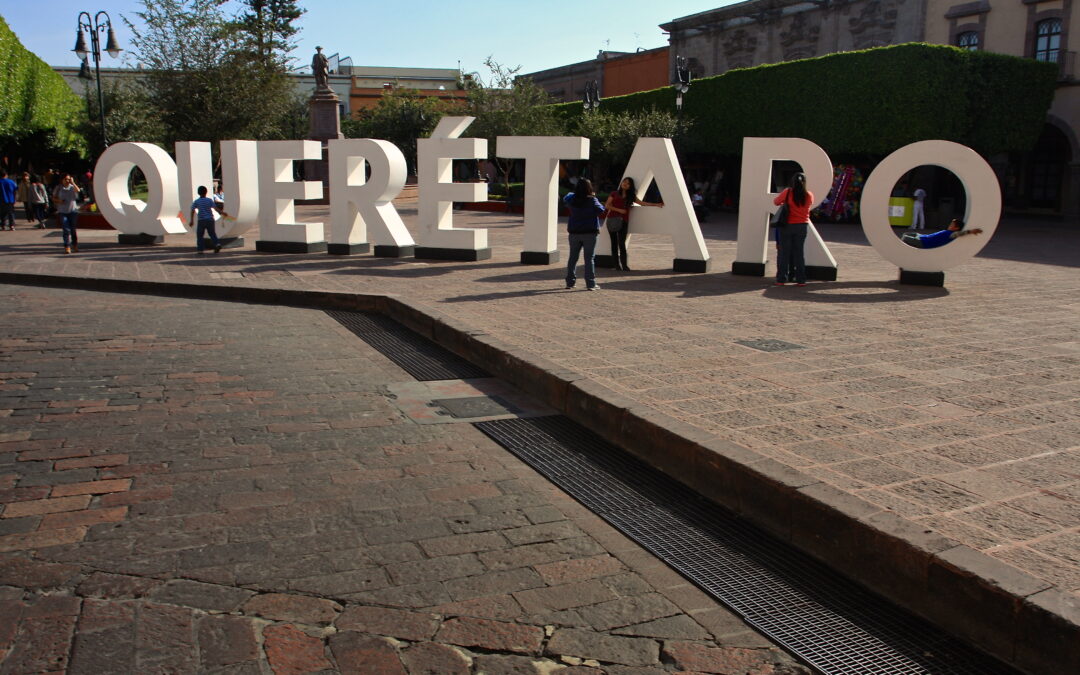
Querétaro stands out as one of the most dynamic aerospace clusters in Mexico. The region has attracted numerous international companies, including Bombardier, Airbus, and Safran. Querétaro is known for its advanced manufacturing capabilities in aerostructures, engine components, and maintenance, repair, and overhaul (MRO) services. The National Aeronautics University in Querétaro (UNAQ) fosters a strong connection between industry and academia, ensuring a steady supply of highly trained aerospace engineers and technicians.

Nuevo León

Nuevo León, with Monterrey as its industrial heart, also plays a significant role in the Mexican aerospace sector. The cluster here is renowned for producing advanced materials, composite parts, and high-tech machining. Companies like General Electric (GE) and Rolls-Royce have established operations in Nuevo León, leveraging the region’s industrial infrastructure and skilled workforce. Monterrey’s strategic location and developed logistics network support its aerospace manufacturing and distribution activities.

In conclusion, the Mexican aerospace sector is poised for a transformative year in 2024, characterized by remarkable advancements in automation, digitalization, and sustainability. This sector embraces cutting-edge technologies and prioritizes environmental responsibility by adopting renewable energy sources and advanced recycling systems. The shift towards lightweight materials and optimized design processes is set to enhance efficiency and reduce carbon emissions, aligning with global environmental standards.

The commitment to skills development and job training is evident as the sector gears up to meet the increasing demand for advanced technical skills. Training programs are preparing the workforce for the integration of collaborative robots, machine learning, digital twins, and data-driven systems, all of which are expected to boost productivity and safety in manufacturing plants. This technological evolution, combined with a focus on real-time adjustments and AI simulations, underscores the sector’s forward-looking approach.

Geographically, the Mexican aerospace sector is robustly supported by several vital clusters, each contributing to the industry’s diverse capabilities. Baja California excels in manufacturing turbine components and landing gear, while Sonora is renowned for precision machining of aerostructures and engine parts. Chihuahua stands out for its expertise in wire harnesses and aerospace plastics, and Querétaro is a hub for advanced aerostructures, engine components, and MRO services. Nuevo León complements these strengths by producing advanced materials and composite parts.

Don't Miss Out: Limited Spots Available for Free FDI Strategy Sessions

Foreign Direct Investment can fuel your organization's success. But competition is fierce. Secure your spot today for a free, no-obligation consultation with our FDI experts. Learn how to attract global investment and take your business to the next level.