The advance of China in the economy of Bolivia is becoming increasingly more assertive. This is not only due to loans that the Asian giant has made to the South American nation but also due to the growing Bolivian presence of Chinese companies in areas such as construction, mining, and now in the exploitation of lithium, in addition to the use of yuan.
China is Bolivia’s main bilateral creditor. The Bolivian debt to China as of May 31, 2023, was 1.4 billion dollars, according to the Central Bank of Bolivia (BCB).
The bilateral trade balance leans in favor of China, with a negative balance for Bolivia of 498 million dollars between January and May 2023, according to data from the National Institute of Statistics (INE).
The most prominent presence of China in the economy of Bolivia is currently in the area of construction, particularly roads because these works are financed with credits from that country, the Minister of Economy, Marcelo Montenegro, explained to the international press.
Mining sector participation
Chinese interests are also significantly involved in the Bolivian mining sector. This has been criticized, especially by the country’s opposition party, which has repeatedly denounced that Chinese companies operating in gold mining are camouflaged in local cooperatives. It is alleged that they are causing severe environmental damage. Most notably, this occurs in protected areas in the north of La Paz.
Now, China focuses on Bolivia’s economy on the exploitation of lithium. Recently, two Chinese companies have secured participation through agreements with the Government to apply their direct lithium extraction (EDL) technologies in the Bolivian salt flats.
One is the CATL BRUNP &MOC (CBC) consortium, which committed an investment of 1.4 billion dollars in the assembly of two EDL plants in the Coipasa salt flats in the Andean region of Oruro and Uyuni, in Potosí, where the majority of Bolivian lithium reserves are concentrated.
The second is Citic Guoan, which will invest 857 million dollars to install an EDL plant in Uyuni.
Strategic Ally
At the World Trade and Investment Promotion Summit of the Chinese Council for the Promotion of International Trade, the Bolivian president, Arce, highlighted the cooperation with China in the development of lithium and its role in trade and investments in Latin America at the end of May 2023.
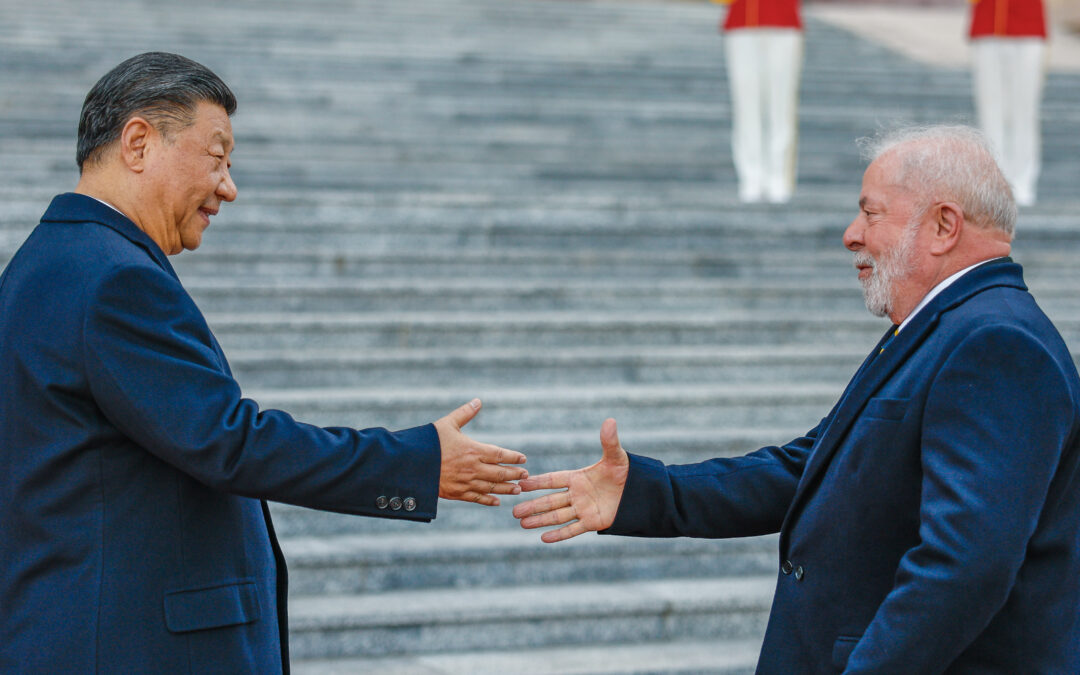
The Arce Government, which has an ideological affinity with Chinese President Xi Jinping, recently began to promote the advancement of China in the economy of Bolivia and the use of yuan to carry out international transactions due to the lack of dollar reserves available in Bolivia since the end of February 2023.
Minister Montenegro reported that since March 2023, foreign trade transactions worth 278.8 million yuan (about 38.8 million dollars) have been carried out through the state-owned Banco Unión.
Montenegro stated that the figure is a good start and, although it does not mean that the dollar has already been replaced, there is a global trend towards that outcome.
In his opinion, “China will continue to have an important space” in the Bolivian economy, which will expand with the investments announced in lithium deposits.
Pros and Cons
The manager of the private Bolivian Institute of Foreign Trade (IBCE), Gary Rodríguez, recently stated that “there is no doubt that the advance of China in the economy of Bolivia has acquired increasing importance in the last ten years.” This circumstance is due to the “logic of expansion” of the Asian giant globally through finance and foreign trade.
In addition to being the main bilateral creditor, China is Bolivia’s “first foreign supplier.” In 2022, Bolivia purchased “almost 4,500 high-value-added products for just over $2.5 billion from China,” Rodriguez pointed out.
An advantage of opening the doors to the presence of China in the economy of Bolivia is “the possibility of activating production and export potential based on that megamarket, which is giving enormous returns to countries like Chile and Peru.” However, there is the risk of generating a “high dependence on a single country,” which, in addition, is the “second world power,” he added.
Regarding the use of the yuan, Rodríguez considered that as long as the United States “is the world power that it is and the Federal Reserve is independent, the dollar will continue to be the world currency par excellence.”
In his opinion, paying Bolivian imports with yuan would be interesting to help reduce the demand for dollars in the country and “decompress the pressure that exists today on the exchange rate, and that is giving rise to a parallel market with a more expensive dollar.
In conclusion, the increasing presence of China in Bolivia’s economy is undeniable, marked by significant investments, bilateral trade relations, and the utilization of the yuan in international transactions. While this partnership offers economic growth and development opportunities, it also raises concerns about dependency and environmental impact. The strategic alignment between Bolivia and China’s governments underscores this relationship’s significance, particularly in construction, mining, and lithium exploitation sectors. As Bolivia navigates this evolving economic landscape, balancing the benefits and challenges of its engagement with China will be crucial for sustainable development and long-term prosperity.
LATAM FDI: Welcome to another episode of the LATAM FDI podcast. Today, Joe Novitski is with us. Joe is in Medellin, Colombia, and he is the head of business development for a company called Ongresso. Joe, I’m not going to say much more. I will let you introduce yourself and briefly introduce your company to begin discussing doing business in Medellin.
Joe Novitzki: Steve, thanks a lot for having me. I’m happy to be here. A little bit about me: I’m originally from the Minneapolis, Minnesota, area. Back in 2015, I got an idea about helping connect US businesses to Latin America. Four years later, that became a reality after traveling through the region and founding a company called Ongresso. We help US and European businesses expand to the region. I’ve spent a few years working in sales and business development, specifically with US companies looking to enter the region with an interest in doing business in Medellin. So Ongresso is a company specializing in international expansion, specifically focusing on the Latin American region. We help companies expand their presence to Latin America and then within the region if they’re already there.
LATAM FDI: Joe, we’ll look at your company and its service offerings more in-depth and specifically toward the end of this podcast. But first, let’s concentrate on giving our audience some information. What is important for them to know about doing business in Medellin, and what does Medellin have to offer? So, the first question that I have for you is a question about the strategic geographical location of the city and how that makes Medellin a hub for business and trade.
Joe Novitzki: Yeah, this is, I think this is a big issue, actually, the geographical location. I’d start by referencing the country of Colombia as a whole and just some of the advantages that all of the major cities will enjoy within the country. Some of those things are like, we’ve seen many companies from the US and Europe set up nearshoring teams and BPO operations across Bogota, Medellin, Cali, and Baranquilla. Those are for a couple of main reasons primarily related to that geographical location. One is proximity to the US. There are flights to Miami that are just three to three and a half hours almost directly north, which makes it really easily accessible for some of those corporate visits, maybe some training sessions, transfer of equipment for teams, or even incentive trips for employees who get to go visit the US. Then the second thing is being within the same region are those shared time zones that make communication between the US and Colombian teams very easy during those business hours. This is opposed to some of those outsourced teams you see in the Philippines or India, which makes the communication aspect tricky. So, Colombia falls into either the eastern time zone or the central time zone, depending on daylight savings, and it can be a really convenient place to do business.
Regarding imports and exports, Colombia has major ports on both the Pacific, with the port of Buenaventura and then also on the Caribbean side, with Cartagena and Barranquilla. Those major shipping lanes make it easily accessible for imports and exports. Also, being centrally located within Latin America, it is a great hub to access any other region’s other countries. From Mexico up north down to Chile and Argentina in the southern cone, it can be a really good place to establish a hub for trade. Now, specifically, regarding doing business in Medellin, I’d say one of the things, due to a number of factors, it is actually the top exporting region in all of Colombia. And so geographical location and infrastructure are among some of the positive factors. But the biggest geographical draws aside from that access to major ports and land transportation routes are one. It has very fertile land, providing a base for its strong agricultural sector. Medellin actually has a really massive flower industry, making Colombia the world’s second-largest exporter of flowers, only behind the Netherlands. Then, as many people already know, it’s very popular for its coffee.
There’s a lot of coffee here in Medellin and the state of Antioquia region, and Colombia is the fourth largest exporter in the world of coffee. Having lived here in Medellin, I’d like to mention that we’re close to the equator. You might think it would be pretty hot and humid, but it has a pretty Goldilocks climate at almost 5000ft above sea level. This makes it an attractive place to live and do business in Medellin. The temperatures lately, on average, have been highs of 80 during the day and lows of the 60s at night. It has earned its nickname of the city of Eternal Spring, and it attracts a lot of talent interested in doing business in Colombia.
LATAM FDI: Speaking specifically about doing business in Medellin, as we continue here, what incentives does the city offer in terms of establishing enterprises? What does the government of Medellin do to encourage companies like yours to set up operations?
Joe Novitzki: Yeah, such a good question. There have been historical plans that have come and gone periodically. One of them, with the former mayor, Daniel Quintero, set up a policy encouraging technology companies to do business in Medellin. We’ve seen this particular scheme in several initiatives over the years. Still, it has a progressive tax scheme that says the first year of operation, no income tax liability whatsoever, and then the next year, 80%, 60%, and 40% off. This gives you a soft landing to get your business up and running. Aside from that, a progressive tax scheme in the surrounding municipalities offers those same tax breaks on certain types of property, industry, and commerce investments. Businesses have to meet certain criteria and whatnot. But again, the tax exemption can be as much as 100% in the first years of operation to get businesses up and running. Aside from that, there are the free trade zones, which offer tax incentives on sales, duties, and income tax, and then also free trade agreements that connect Colombia to roughly 60 countries.
LATAM FDI: How do local infrastructure and the network it has for doing business in Medellin contribute to the ease of operating for companies working in the city?
Joe Novitzki: A number of things come to mind, one being a project that I suppose I personally have benefited from over the years of living here. But Medellin’s international airport is actually just outside the city in a city called Rio Negro. Historically, there were only mountain passes as the access roads. About five years ago, they opened the tunnel of the Orient, which cut the time it takes to get to and from the airport. Travel time to the free trade zone that is out there has been cut in half. Access to the airport has become much easier for individuals and businesses. Another project that’s currently going on right now is that they’re constructing a new port out at the coast of the Antioquia, the state that Medellin is in. They’re constructing a port out there called the Port of Antioquia. Also, a highway system will accompany that to better connect the land and port out to Medellin and then to Antioquia as a whole. That’s scheduled to be completed in 2025. I hope it runs on schedule, but that’s something that we should see in the next year or two.
Aside from that, I would also say that another thing that promotes doing business in Medellin is that it has a convention center with a pretty large capacity. It hosts several large international conventions yearly, including Colombia Moda, the largest fashion show in all of LATAM. There’s also Expo Belleza for the beauty industry and Expo Agro Futuro, which is a very big agricultural trade show. Those are just a few examples, but I think ten to 15 major expos come through each year, making it a destination for networking, doing business in Medellin, and creating new connections. Finally, Medellin, located in a mountain valley, has little room to expand its road networks. That being the case, it still has a pretty solid public transportation system to get people around the city. It has an above-ground metro line that runs the entire valley length, and some feeder lines connect to buses. There’s a tram that connects to it, and then there are even gondolas that run up the side of the mountain. For those businesses that need to be close to public transport, there are access lines to get workers into an office and whatnot; it provides that infrastructure.
LATAM FDI: I’ve read about and know from a couple of people involved that Medellin has become a very attractive place for digital nomads. Can you tell our listeners a little bit about that phenomenon?
Joe Novitzki: Yes. With digital nomads, again, I think that it began just with people hearing travel bloggers talking about the nice environment, the nightlife, and the other expats who have come here. It’s really easy to meet and connect with other digital nomads and people who are on that kind of like-minded path and want to share experiences with others who are going through the same things that they are. On top of that, again, I mentioned the weather and the climate. It’s a beautiful place to pass through. Another thing that happened just a couple of years ago was the creation of digital nomad visas. Before, people would have to only up to 180 days a year in Colombia, and you’d have to break that up every 90 days. You can stay up to two years, depending on how long they grant you. A number of reasons have made it very attractive to do business in Medellin as a digital nomad location.
LATAM FDI: It looks like they’ve taken some measures to attract technologically adept people to Medellin. Can you tell me about specific things that perhaps the government has done to encourage technological advancement in research and development in the city?
Joe Novitzki: Yeah, absolutely. The first thing that comes to mind is an initiative introduced by President Duque in 2017. It was called the Orange Economy, a policy he launched to foster investment in the creative and cultural sectors and technology. This was another initiative that offered a soft landing or starting point for businesses that met certain criteria. Some of those technological companies would receive land and, again, have the tax benefit of no income tax for five years and then certain VAT exemptions as well. And then even access to seed capital in some cases, depending on what type of project they were trying to get up and running. That policy has since expired, but in its place, others have arisen. For example, there’s one that came up, I want to say, a few years ago, the regulatory sandbox, and that specifically relates to the fintech sector. And so essentially, it’s just a framework that encourages fintech businesses to enter the market, to test and develop their new products and services. This happens while the government supervises and develops needed regulations simultaneously and keeps an eye on the financial consumers, ensuring that they’re not getting hurt by some of the new products and services being tested.
Aside from that, many tech companies have shown up to be doing business in Medellin as well. Because of the human capital available that is available here, companies come. Medellin is home to over 30 universities. The stream of talent for companies to hire is pretty constant, and a lot of solid talent is available. Then finally, last but certainly not least is Ruta N, a government corporation that aims to drive investment and development in the specific areas of science, technology, and innovation. The organization has really played an integral role in creating Medellin’s rich business environment, especially in those areas. So, along with ProColombia, the National Investment Agency, and ACI Medellin, which is the local investment agency, Ruta N has done a great job launching programs that attract talent, capital, and international businesses to the city, offering things like financing assistance. They help recruit and train skilled workers if companies looking at doing business in Medellin can’t find them. They’ll provide physical office space at favorable rates as well. Many different things are going on that have attracted tech talent and companies.
LATAM FDI: We talked a little bit about Colombia as a whole and Medellin specifically. Let’s look a little bit at what Ongresso can do for companies that want to do business in the region. Can you give us a little bit of information with regard to that as well?
Joe Novitzki: Regarding the types of companies that Ongresso looks to serve, our client base is basically Western-based companies, US and European companies, that are looking to expand their presence to or within the region. We focus on two main client profiles. Those are, number one, the companies looking to establish nearshoring or outsourcing operations to access their teams or clients in the US and provide service there. For those companies looking at doing business in Medellin and the region, we recruit and help them find talent, hiring that talent as their employer of record in the countries where we have our own legal entities. If they reach a critical point or companies who just want to get started with the company right off the bat, we will do the company formation. We’ll run their taxes, accounting, legal, payroll, all of that back office work and so that they can focus on their core activities training their people, and then we’ll take care of the rest. The second profile that we typically work with is those companies that want to sell their products or services on the local markets. These are companies that typically need information and market research.
They need to know who their competitors are, the price points for their products or services, and the history of the markets there, and then determine if they want to enter. If they do, a lot of the time, they’ll need to find a distributor. Then, we’ll do a partner search for them. We’ll set up the site visit and arrange those meetings so that they can take over the negotiations from there. And then, while we don’t offer these services in particular services in-house, we also have partners who provide assistance with sanitary registrations, title holders, and things like that. Importer of record for those companies that are medical device companies or pharmaceutical or agricultural companies that need that. Our partner network can take care of those clients as well.
LATAM FDI: Joe, we’ve gone over some pretty good information in a short period of time. One thing that we find as a result of doing these podcasts is that listeners approach us with questions about the topic we’ve discussed. What we like to do in that case is point people to those that we do the podcasts with for information. So, is there any way that people can contact you if they have any questions resulting from having heard what we’ve discussed?
Joe Novitzki: Yeah, absolutely. I’d say the best place to find out more about Ongresso and what we do is on our website, which is www.ongresso.com. The other place is you can also reach me by email, which is my name: joe.novitzki@ongresso.com. I’d say those are the two places.
LATAM FDI: Joe, one thing that we find that people like, too, is a link to a LinkedIn profile. Do you have one we can link to and put it on our page for the podcast?
Joe Novitzki: Yeah, of course. I’ll send that over to you.
LATAM FDI: Okay, so we’ll have Joe’s email address and a link to his website. We’ll have a link to his profile. Joe, I want to thank you for joining me today. And we want to wish you the best of luck with your company, and I hope that you enjoy that wonderful, perpetual springtime weather in Medellin.
Joe Novitzski: Awesome. Well, thanks to all the listeners for tuning in. And Steve, I really appreciate you having me on your show to talk about doing business in Medellin. Let’s definitely keep in touch.
Brazil has vast natural resources, a diverse economy, and an expanding consumer market. It has become an attractive destination for foreign direct investment (FDI). World Bank Data: Reports USD 57.5 billion for the 12 months through October 2023.
In recent years, several states have emerged as crucial hubs for foreign direct investment in Brazil, driving economic growth and fostering development across various industries. In this blog post, we will delve into the top states for FDI in Brazil, explore their principal industries and economic activities, evaluate the quality of their workforce and educational infrastructure, analyze the companies driving foreign direct investment in Brazil, and discuss the prospects for Brazil’s economic growth up until 2030.
Ranking the Top States for Foreign Direct Investment in Brazil
São Paulo:
São Paulo is Brazil’s leading destination for FDI, boasting a diverse economy and robust infrastructure. Its principal industries include finance, technology, automotive, and agriculture. With a highly skilled workforce and top-notch educational institutions like the University of São Paulo and the Getulio Vargas Foundation, the state attracts investments from multinational corporations such as Toyota, Microsoft, and Unilever.
Other foreign companies with a presence in São Paulo include:
Coca-Cola – An American multinational beverage corporation.
IBM – An American multinational technology and consulting company.
Microsoft – An American multinational technology company.
Google – An American multinational technology company.
Apple – An American multinational technology company.
Nestlé – A Swiss multinational food and beverage company.
Unilever – A British-Dutch multinational consumer goods company.
Procter & Gamble (P&G) – An American multinational consumer goods corporation.
General Motors (GM) – An American multinational automotive corporation.
Ford – An American multinational automaker.
These are just a few examples, and there are many other foreign companies with operations, subsidiaries, or offices in São Paulo, covering sectors such as finance, pharmaceuticals, telecommunications, and more.
Rio de Janeiro:
Rio de Janeiro, known for its scenic beauty and cultural heritage, attracts significant foreign direct investment in Brazil, particularly in the oil and gas, tourism, and telecommunications sectors. The state hosts major companies like Petrobras and Vale, leveraging its strategic location and skilled workforce to drive economic growth.
Other companies that have a presence in Rio de Janeiro, Brazil, include:
Shell – A British-Dutch multinational oil and gas company.
Chevron – An American multinational energy corporation.
Total – A French multinational integrated oil and gas company.
BP – A British multinational oil and gas company..
Glencore – A Swiss-based commodity trading and mining company.
Schlumberger – An American multinational oilfield services company.
Halliburton – An American multinational corporation providing products and services to the energy industry
Minas Gerais:
As Brazil’s second-largest industrial hub, Minas Gerais attracts FDI primarily in mining, agriculture, and manufacturing. With abundant mineral resources and a skilled labor force, the state continues to draw investments from companies like Anglo-American and Bunge, contributing to its economic development.
Several foreign companies have invested significantly in Minas Gerais, contributing to its economic development. Some of these companies include:
Anglo-American is a multinational mining company in Minas Gerais primarily focused on iron ore extraction.
Bunge – A global agribusiness and food company invested in Minas Gerais’ agricultural sector, particularly in soybean processing and trading.
Fiat Chrysler Automobiles (FCA) – FCA operates a large manufacturing plant in Betim, Minas Gerais, producing vehicles for domestic and international markets.
ArcelorMittal – One of the world’s leading steel and mining companies, ArcelorMittal operates in Minas Gerais and is involved in iron ore mining and steel production.
Vallourec – A French multinational company specializing in steel tube manufacturing for the energy industry, Vallourec has a significant presence in Minas Gerais.
Siemens – A global technology company, Siemens has invested in Minas Gerais’ energy and infrastructure sectors, providing power generation and transportation solutions.
Cargill – An international producer and marketer of food, agricultural, financial, and industrial products and services, Cargill operates in Minas Gerais, particularly in the soybean and grain processing industry.
These companies represent various sectors, including mining, agriculture, automotive, steel, and technology, highlighting Minas Gerais’ attractiveness to foreign investors across multiple industries.
Bahia:
Bahia’s strategic location and natural resources make it a prime destination for FDI in the energy, automotive, and agriculture sectors. The state’s workforce benefits from institutions like the Federal University of Bahia, supporting its growing economy and attracting investments from companies like Ford and Siemens.
Some of the other companies located in Bahia include:
Ford Motor Company (United States) – Ford has a manufacturing plant in Camaçari, Bahia, producing vehicles for the Brazilian market.
Nestlé (Switzerland) – Nestlé operates a factory in Feira de Santana, Bahia, producing various food and beverage products.
Siemens (Germany) – Siemens has operations in Bahia, particularly in the energy sector, providing various solutions and services.
Braskem (Brazil, with foreign investment) – Braskem, a Brazilian petrochemical company with significant foreign investment, operates in Bahia, particularly in producing plastics and petrochemicals.
Unilever (Netherlands/UK) – Unilever operates in Bahia, producing a range of consumer goods such as personal care products and food items.
Bunge (United States) – Bunge, an agribusiness and food company based in the United States, has operations in Bahia, particularly in producing and processing agricultural commodities.
Bayer (Germany) – Bayer operates in Bahia, particularly in the agricultural sector, providing seeds, crop protection products, and other agricultural solutions.
Dow Chemical Company (United States) – Dow operates in Bahia, particularly in producing chemicals and plastics.
Suzano (Brazil, with foreign investment) – Suzano, a Brazilian pulp and paper company with international investments, operates in Bahia, particularly in pulp production.
Santa Catarina:
Santa Catarina stands out for its thriving manufacturing and technology sectors, attracting foreign direct investment in Brazil from companies seeking a skilled workforce and favorable business environment. With renowned educational institutions like the Federal University of Santa Catarina, the state continues to foster innovation and economic growth, with companies like BMW and Whirlpool investing in its potential.
Some other companies with a presence in Santa Catarina include:
WEG Industries (Brazil, with foreign investment) – WEG, a Brazilian electrical equipment manufacturer with significant foreign investment, has operations in Santa Catarina, particularly in Jaraguá do Sul, producing electric motors and other equipment.
Robert Bosch GmbH (Germany) – Bosch operates manufacturing facilities in Campinas and Blumenau, Santa Catarina, producing automotive components, power tools, and other products.
Tupy S.A. (Brazil, with foreign investment) – Tupy, a Brazilian foundry company with international investments, has operations in Joinville, Santa Catarina, producing automotive and industrial components.
Saint-Gobain (France) – Saint-Gobain operates manufacturing facilities in São José, Santa Catarina, producing glass and construction materials.
Cargill (United States) – Cargill has operations in Itaiópolis and Mairinque, Santa Catarina, particularly in the production and processing of agricultural commodities.
BRF S.A. (Brazil, with foreign investment) – BRF, a Brazilian food company with international investments, has operations in Concórdia and Videira, Santa Catarina, producing meat and food products.
JBS S.A. (Brazil, with foreign investment) – JBS, a Brazilian meat processing company with international investments, has operations in Itajaí, Santa Catarina, among other locations in the state.
Alcoa Corporation (United States) – Alcoa has operations in Tubarão, Santa Catarina, particularly in the production of aluminum.
Assessing Workforce Quality and Educational Infrastructure
Across its states, Brazil boasts a diverse and skilled workforce supported by a network of universities and technical institutions. São Paulo, in particular, benefits from the presence of leading universities such as USP and UNICAMP, supplying industries with highly educated professionals. Similarly, Rio de Janeiro’s educational infrastructure, including institutions like UFRJ, is crucial in developing a skilled workforce for sectors like oil and gas.
However, challenges remain in bridging the skills gap and improving educational access in rural areas and smaller cities. Investments in vocational training programs and educational reforms are essential to enhance workforce productivity and drive sustained long-term economic growth.
Overview of Companies Driving Foreign Direct Investment in Brazil
Multinational corporations play a pivotal role in driving FDI in Brazil, leveraging the country’s resources and market potential. Companies like Petrobras, Vale, and Embraer have invested significantly in infrastructure, energy, and aerospace, contributing to Brazil’s economic development.
Moreover, foreign firms across various sectors, including automotive (Toyota, BMW), technology (Microsoft, Google), and consumer goods (Unilever, Nestlé), have established a strong presence in Brazil, attracted by its large consumer market and favorable investment climate.
Prospects for Economic Growth Until 2030
The country’s economic outlook remains promising for companies considering foreign direct investment in Brazil, with several factors poised to drive growth until 2030.
Key drivers include:
Infrastructure Development: Continued investments in infrastructure projects, including transportation and energy, will enhance connectivity and productivity, unlocking new growth opportunities across regions.
Economic Reforms: Structural reforms to improve the business environment, reduce bureaucratic hurdles, and attract private investment will bolster competitiveness and foster innovation.
Recent notable reforms made in Brazil include:
Social Security Reform: In 2019, Brazil approved a landmark pension reform addressing the country’s unsustainable pension system. The reform introduced changes such as increasing the minimum retirement age and adjusting contribution requirements to reduce the fiscal burden on the government.
Labor Reform: In 2017, Brazil passed a significant labor reform to modernize the country’s labor laws and make the labor market more flexible. The reform included measures such as allowing greater flexibility in work hours, simplifying labor contracts, and facilitating outsourcing.
Fiscal Responsibility Law: Brazil has implemented measures to strengthen fiscal discipline and control government spending. The Fiscal Responsibility Law limits public expenditures, establishes transparency requirements, and promotes responsible fiscal management at the federal, state, and municipal levels.
Privatization and Infrastructure Investments: The Brazilian government has pursued privatization initiatives to attract private investment and improve infrastructure. This includes privatizing state-owned energy, transportation, and telecommunications enterprises to enhance efficiency and competitiveness.
Tax Reform: Brazil has been discussing comprehensive tax reform to simplify the tax system, reduce bureaucracy, and improve the business environment. Proposals aim to consolidate various taxes into a single unified tax, streamline tax compliance procedures, and promote economic efficiency.
Financial Sector Reform: Efforts have been made to modernize Brazil’s financial sector regulations to promote competition, enhance financial stability, and facilitate access to credit. Reforms include measures to improve the regulatory framework for banks, promote fintech innovation, and expand financial inclusion.
Trade Liberalization: Brazil has pursued trade liberalization measures to enhance international competitiveness and stimulate economic growth. This includes negotiating trade agreements with key trading partners and participating in regional trade blocs to expand market access and promote exports.
These reforms represent ongoing efforts by the nation’s government to address structural challenges, promote economic growth, and attract foreign direct investment in Brazil. However, it’s essential to note that the effectiveness and impact of these reforms may vary, and further implementation and adjustments may be necessary to achieve desired outcomes.
Diversification of Industries: Brazil’s push towards diversifying its economy beyond traditional sectors like agriculture and mining will spur innovation and create new avenues for investment in technology, healthcare, and renewable energy.
Global Trade Integration: Brazil’s participation in international trade agreements and efforts to strengthen trade relations with key partners will expand market access and drive export-led growth.
Sustainable Development: Embracing sustainable practices in sectors like agriculture and energy will mitigate environmental risks, attract socially responsible investments, and enhance Brazil’s global competitiveness.
In conclusion, the top states for foreign direct investment in Brazil offer a compelling mix of opportunities for international investors. These circumstances are driven by diverse industries, a skilled workforce, and a supportive business environment. By capitalizing on these strengths and addressing existing challenges, Brazil is well-positioned to achieve sustained economic growth and prosperity in the years to come.
Panama is renowned for its strategic location, stable economy, and robust banking sector. It has long been an attractive destination for investors seeking opportunities in the financial industry. However, like any country, it has specific rules and regulations governing investments in the Panamanian banking sector. Understanding these regulations is crucial for investors looking to capitalize on the opportunities in this dynamic market. This blog post delves into the rules and regulations that shape investment in Panama’s banking sector.
Overview of the Panamanian Banking Sector
The Panamanian banking sector is a vital component of its economy, characterized by a well-regulated environment, financial stability, and a wide range of services. The sector comprises domestic and international banks, offering corporate banking, wealth management, trade finance, and investment banking services. The presence of internationally renowned banks and favorable regulatory frameworks has made Panama a preferred destination for investors seeking to establish banking operations in Latin America.
Below is an overview of some of the prominent national and international financial institutions with a presence in the Panamanian banking sector:
National Banks:
Banco Nacional de Panamá (National Bank of Panama) – As one of the largest state-owned banks in Panama, Banco Nacional de Panamá plays a pivotal role in the country’s banking sector, offering a wide range of financial services to individuals and businesses.
Banco General – Established in 1955, Banco General is one of Panama’s largest privately-owned banks, known for its extensive branch network and comprehensive suite of banking products and services.
Banistmo – With a history of over a century, Banistmo is among Panama’s oldest and most respected banks, catering to a diverse clientele and providing innovative financial solutions.
Banco Panamá – Founded in 2015, Banco Panamá is a relatively new entrant in the banking sector, focusing on digital banking and technological innovation to meet customers’ evolving needs.
International Banks:
HSBC Panama – As a subsidiary of HSBC Holdings plc, one of the world’s largest banking and financial services organizations, HSBC Panama offers international banking services, including corporate banking, wealth management, and trade finance.
Citibank Panama – A part of Citigroup Inc., Citibank Panama provides a wide array of banking services to corporate clients, multinational corporations, and high-net-worth individuals, leveraging its global network and expertise.
Scotiabank Panama – Scotiabank, a leading financial institution in Canada, has a significant presence in Panama, offering customers retail banking, commercial banking, and wealth management services nationwide.
Banco Santander (Panama) – As part of Banco Santander, one of the largest banking groups in the world, Banco Santander (Panama) provides a comprehensive range of financial products and services, serving both retail and corporate clients.
Banco Internacional de Costa Rica (BICSA) – Although headquartered in Costa Rica, BICSA has a strong presence in Panama, offering corporate and commercial banking services, trade finance, and treasury solutions to businesses in the region.
These are just a few examples of the national and international banks operating in the dynamic Panamanian banking sector. With a mix of domestic stalwarts and globally recognized institutions, Panama’s banking industry continues to thrive, catering to the diverse needs of its clientele and contributing to the country’s economic growth and stability.
Regulatory Authorities
The Superintendency of Banks of Panama (SBP) is the primary regulatory authority overseeing the Panamanian banking sector. Established in 1998, the SBP supervises and regulates banks, ensuring compliance with local laws and international standards. The Ministry of Economy and Finance also plays a crucial role in formulating policies and regulations governing the financial industry, working with the SBP to maintain stability and promote growth.
Licensing and Registration
Before commencing operations in Panama’s banking sector, entities must obtain the necessary licenses and registrations from the SBP. This process thoroughly scrutinizes the applicant’s financial standing, operational capabilities, and compliance procedures. Banks are categorized into different classes based on their activities, each subject to specific regulatory requirements. International banks, for instance, are subject to additional regulations due to their cross-border operations.
Capital Requirements
Capital adequacy is a cornerstone of banking regulation in Panama, aimed at safeguarding depositors’ interests and maintaining financial stability. Banks must maintain minimum capital levels relative to their risk-weighted assets, as the Basel Committee on Banking Supervision prescribes. Compliance with these capital adequacy ratios is closely monitored by the SBP, with stringent penalties for non-compliance.
Risk Management and Compliance
Effective risk management and compliance are non-negotiable aspects of operating in the Panamanian banking sector. Banks must implement robust risk management frameworks encompassing credit, market, operational, and compliance risks. The SBP conducts regular audits and inspections to assess banks’ adherence to regulatory requirements and identify potential vulnerabilities.
Anti-Money Laundering (AML) and Know Your Customer (KYC) Regulations
Panama has implemented stringent AML and KYC regulations to combat money laundering and terrorist financing activities. Banks must conduct thorough due diligence on their customers, verify their identities, and monitor transactions for suspicious activities. Compliance with these regulations is paramount, with severe penalties for institutions breaching AML/KYC requirements.
Foreign Investment Restrictions in the Panamanian Banking Sector
While Panama maintains an open and welcoming environment for foreign investment, certain restrictions apply to foreign ownership of banks. The Banking Law limits local banks’ maximum percentage of foreign ownership to preserve domestic control and stability. However, these restrictions are relatively lenient compared to other jurisdictions, making the Panamanian banking sector an attractive destination for foreign investors.
Taxation
Panama offers a favorable tax regime for banks and financial institutions, with no taxes on foreign-source income and minimal taxation on domestic income. Additionally, the country has entered into numerous Double Taxation Treaties (DTTs) to prevent double taxation and promote international investment. These tax incentives, coupled with the country’s political stability and strategic location, make Panama an attractive destination for banking investment.
Dispute Resolution Mechanisms
In the event of disputes or disagreements between banks and their clients, Panama provides accessible and efficient dispute-resolution mechanisms. The SBP oversees resolving banking-related disputes through mediation, arbitration, or legal proceedings, ensuring impartiality and adherence to due process. Panama’s robust legal system and adherence to international legal standards also give investors confidence in resolving disputes.
Investing in the Panamanian banking sector offers lucrative opportunities for domestic and foreign investors alike, thanks to its stable economy, favorable regulatory environment, and strategic position in the global financial landscape. However, navigating the regulatory landscape requires a thorough understanding of the rules and regulations governing the sector. By adhering to licensing requirements, capital adequacy standards, risk management protocols, and compliance procedures, investors can capitalize on the growth potential of Panama’s dynamic banking sector while mitigating regulatory risks. With its commitment to financial stability, transparency, and investor protection, Panama continues to attract investment and emerge as a leading financial hub in Latin America.
The maquiladora industry on the northern border of Mexico has long been a cornerstone of the country’s economy. These manufacturing plants, known as maquiladoras, play a vital role in the global supply chain, particularly in sectors such as automotive, electronics, aerospace, and medical devices. In this comprehensive exploration, we’ll delve into the industrial mix, workforce, specific industries, and prominent companies within critical cities along the northern border of Mexico: Ciudad Juarez, Chihuahua, Tijuana, Baja California, Reynosa, Tamaulipas, Matamoros, Mexicali, Nuevo Laredo, Piedras Negras, Nogales, Ciudad Acuña, and San Luis Colorado.
Ciudad Juarez, Chihuahua
Ciudad Juarez is a beacon of the maquiladora industry on Mexico’s northern border. Situated across from El Paso, Texas, this city has a diverse industrial mix, ranging from electronics and automotive to textiles and aerospace. Notable companies like Foxconn, Bosch, and Lear Corporation have established a significant presence here. The workforce in Ciudad Juarez is highly skilled, with a strong emphasis on engineering and technical expertise. The city’s strategic location and robust infrastructure make it an attractive destination for foreign investment in the maquiladora sector.
Tijuana, Baja California
Tijuana, located in Baja California, is another hub of the maquiladora industry on Mexico’s northern border. With its proximity to San Diego, California, Tijuana has emerged as an essential manufacturing center for electronics, medical devices, and aerospace components. Companies like Samsung, Sony, and Honeywell operate large-scale production facilities in the region. Tijuana boasts a skilled and diverse workforce, drawing talent from Mexico and the United States. The city’s strategic location, coupled with favorable trade agreements like the US-Mexico-Canada Agreement (USMCA), positions it for continued growth in the maquiladora industry.
Reynosa, Tamaulipas
Reynosa, located in the state of Tamaulipas, is a vital player in the maquiladora industry on the northern border of Mexico. Situated across from McAllen, Texas, Reynosa has a robust industrial base focused on automotive, electronics, and metalworking. Prominent companies such as Delphi Technologies, Panasonic, and LG Electronics have established manufacturing operations in the city. Reynosa benefits from a skilled and cost-effective workforce, making it an attractive destination for foreign investors seeking to leverage Mexico’s manufacturing capabilities.
Matamoros, Tamaulipas
Matamoros, also located in Tamaulipas, is another key contributor to the maquiladora industry on the northern border of Mexico. With its proximity to Brownsville, Texas, Matamoros specializes in automotive manufacturing, with significant players like Aptiv, Lear Corporation, and Continental Automotive Systems operating in the region. The city’s skilled workforce and supportive government policies and infrastructure have fostered a conducive environment for manufacturing growth. Matamoros continues to attract foreign investment, driving economic development and job creation in the area.
Mexicali, Baja California
Mexicali, situated in Baja California, is renowned for its thriving maquiladora industry on the northern border of Mexico. With a focus on aerospace, electronics, and medical devices, Mexicali hosts major corporations such as UTC Aerospace Systems, Gulfstream Aerospace, and Rockwell Collins. The city’s skilled workforce and strategic location near the California market make it an ideal destination for companies seeking to establish manufacturing operations in Mexico. Mexicali’s robust infrastructure and supportive business environment further enhance its attractiveness to investors in the maquiladora sector.
Nuevo Laredo, Tamaulipas
Nuevo Laredo, located in Tamaulipas, is a significant player in the maquiladora industry on the northern border of Mexico. Positioned across from Laredo, Texas, Nuevo Laredo specializes in automotive, electronics, and consumer goods manufacturing. Notable companies like Panasonic, Electrolux, and Continental Automotive Systems have production facilities in the city. Nuevo Laredo benefits from a skilled and cost-competitive workforce and an efficient logistics infrastructure for cross-border trade. The city’s strategic location along major transportation corridors makes it attractive for companies looking to optimize their supply chains.
Piedras Negras, Coahuila
Piedras Negras, situated in Coahuila, is a burgeoning hub of the maquiladora industry on the northern border of Mexico. Adjacent to Eagle Pass, Texas, Piedras Negras specializes in automotive, electronics, and aerospace manufacturing. Companies like Aptiv, Electrolux, and GE Aviation have established regional operations. Piedras Negras boasts a skilled and productive workforce supported by training programs and educational institutions catering to the manufacturing sector’s needs. The city’s strategic location and favorable business climate make it an attractive destination for foreign investment in the maquiladora industry.
Nogales, Sonora
Nogales, located in Sonora, plays a significant role in the maquiladora industry on the northern border of Mexico. The city specializes in electronics, medical devices, and consumer goods manufacturing across from Nogales, Arizona. Jabil, Kimberly-Clark, and Flextronics have manufacturing facilities in the region. Nogales benefits from a skilled and bilingual workforce and efficient transportation infrastructure for cross-border trade. The city’s proximity to key markets in the United States and its competitive operating costs make it an attractive location for companies seeking to expand their manufacturing footprint in Mexico.
Ciudad Acuña, Coahuila
Ciudad Acuña, situated in Coahuila, is a rising star in the maquiladora industry on the northern border of Mexico. Across from Del Rio, Texas, Ciudad Acuña specializes in automotive, electronics, and aerospace manufacturing. Major companies like Bendix, Cessna, Bosch, and LG Electronics have established manufacturing operations in the city. Ciudad Acuña benefits from a skilled and motivated workforce and supportive government policies that promote investment and economic development. The city’s strategic location and access to transportation networks position it for continued growth in the maquiladora sector.
San Luis Colorado, Sonora
San Luis Colorado, located in Sonora, is an emerging player in the maquiladora industry on the northern border of Mexico. Adjacent to San Luis, Arizona, the city focuses on manufacturing automotive, electronics, and consumer goods. Companies like Delphi Technologies, Honeywell, and Flextronics have regional production facilities. San Luis, Colorado, boasts a skilled and dedicated workforce supported by vocational training programs and educational institutions. The city’s strategic location and proximity to major markets make it an attractive destination for foreign investment in the maquiladora industry.
The maquiladora industry on the northern border of Mexico continues to thrive, driven by a diverse industrial mix, skilled workforce, and strategic location. Cities like Ciudad Juarez, Tijuana, Reynosa, Matamoros, Mexicali, Nuevo Laredo, Piedras Negras, Nogales, Ciudad Acuña, and San Luis Colorado serve as vital hubs for Mexican manufacturing activities, attracting investment from leading companies across various sectors.
This article summarizes, with examples, Bolivia’s main economic activities. Primary, secondary, and tertiary activities, as well as Bolivian exports and imports, are examined.
According to estimates by the International Monetary Fund for 2022, Bolivia’s economy is the ninety-sixth (96th) largest in the world with a nominal GDP of US$43.4 billion, behind other Latin American economies such as Ecuador 59th (US$107.6 billion) and Panama 70th (US$ 68.5 million).
Bolivia’s economy is dependent on natural resources like oil and gas. These have driven the country’s recent growth, although institutional deficiencies limit its development.
Composition of economic activities in Bolivia
A diverse mix of primary, secondary, and tertiary activities characterizes the economic activities of Bolivia. Primary activities, including agriculture, forestry, and mining, contribute 13% of the nation’s Gross Domestic Product (GDP). The secondary sector, encompassing manufacturing and industry, plays a more significant role, constituting 37% of Bolivia’s GDP. However, the backbone of Bolivia’s economy lies in tertiary activities, such as services and tourism, which account for a substantial 50% of the country’s economic output. This balance between the three sectors underscores Bolivia’s economic resilience and adaptability.
Primary economic activities of Bolivia
The country has one of the largest natural gas reserves in Latin America. It is currently Latin America’s fourth-largest natural gas producer after Mexico, Argentina, and Venezuela. It also stands out in producing other mining-oil goods such as tin (the fourth largest producer in the world), antimony, lead, silver, zinc, and gold.
In primary activities, Bolivia has a significant agribusiness participation with several sectors of great importance for the Bolivian economy. Agribusiness employs around 5% of the country’s workforce. Livestock farming and the production of soy, sugar, rice, chestnuts, cotton, sesame, wheat, coca leaf, banana, cassava, and quinoa stand out. It is currently the second largest producer of quinoa worldwide, after Peru.
Bolivia has technical agriculture developed by medium and large businesses. However, traditional agriculture is also common, with little technology and low yields. It is common for the land to be tilled with animals, natural fertilizers, and basic tools such as hoes and sickles.
Secondary economic activities of Bolivia
Bolivia is a non-industrialized country, and its production is primarily artisanal. It is characterized by low productivity and informality. Even so, it is very important due to its participation in the country’s GDP. With time, however, it has lost economic ground to the tertiary or services sector.
In Bolivia’s secondary sector, small and medium-sized light industries stand out. The most developed industries in Bolivia are manufacturing, sugar refining, leather goods, tobacco, cement, beer, dairy, textiles, chemicals, glass, jewelry, explosives, and paper.
Bolivia’s secondary economic activities are located mainly in La Paz, El Alto, Cochabamba, and Santa Cruz de la Sierra.
The largest company in Bolivia is the Cervecería Boliviana Nacional brewing company. It has eight plants in the country and has more than 1,700 direct and 6,200 indirect workers. This company controls almost the entire Bolivian beer market and has 11 registered beer brands.
Tertiary economic activities of Bolivia
Bolivia’s tertiary sector includes tourism, finance, health, education, commerce, restaurants, shopping centers, transportation, telecommunications, and entertainment. This sector employs 67% of the country’s workforce.
In Bolivia, tourism continues to grow, reaching more than 1.7 million travelers per year who visit to marvel at the peaks of the Andes and the rainforests in the Amazon. The most visited cities are Santa Cruz, La Paz, and Cochabamba.
Another important sector of these activities is telecommunications. Bolivia has 850 thousand landline telephone lines and 7 million mobile telephone subscribers. It also has 4.1 million Internet users.
Bolivian international trade
Bolivia’s main trading partners are Brazil, Chile, the United States, China, Argentina, Colombia and Peru.
Bolivia’s main exports
Bolivia mainly exports raw materials such as oil, zinc, gold, lead, and silver. It also exports soy flour, oil, coconuts, walnuts, and bananas.
The main destinations for Bolivia’s exports are Brazil (27%), Argentina (16%), the United States (12%), Colombia (5.5%) and China (5.1%).
Main imports of Bolivia
Bolivia mainly imports value-added goods such as automobiles, machinery, telephones, pesticides, computers, gasoline, rubber wheels, and automobile parts.
The main origins of Bolivia’s imports are China (17%), Brazil (16%), Chile (11%), the United States (10%), and Argentina (7.2%).
Bolivia’s economy is ranked 96th globally, with a nominal GDP of US$43.4 billion. Economic activities in Bolivia rely heavily on natural resources, particularly oil and gas, but face challenges due to institutional deficiencies. The nation’s economic activities are diverse, with primary, secondary, and tertiary sectors contributing 13%, 37%, and 50% to the GDP, respectively. Bolivia is a major producer of natural gas and mining-oil goods, and modern and traditional practices mark its agriculture sector. Despite being a non-industrialized country, small-scale industries thrive, particularly manufacturing and brewing. The tertiary sector, employing 67% of the workforce, encompasses tourism, telecommunications, and finance. Bolivia’s international trade, with key partners like Brazil and the United States, revolves around exporting raw materials and importing value-added goods.