
+1 (520) 780-6269 investment@latamfdi.com
The United States, Spain, and Mexico: Top Investors in the Dominican Republic Through September 2024

The United States, Spain, and Mexico: Top Investors in the Dominican Republic Through September 2024

Canada, with US$187.8 million, Brazil, US$146.3 million, and Panama, US$138.3 million, are the subsequent largest investors. By the end of the third quarter of this year, the Dominican Republic had received US$3,571.8 million in foreign direct investment (FDI), of which US$1,680.3 million came from the United States, Spain and Mexico, representing 47% of the total accumulated through September.

Although the January-September 2024 period saw a decrease of US$250.3 million compared to 2023, the United States remains the leader in foreign investment flows into the country during the first nine months of this year, reaching US$785.2 million. This reflects sustained investor confidence in the Dominican Republic as a stable and attractive destination for foreign capital.

By the end of the third quarter, Spain’s FDI had decreased by US$44.1 million compared to last year. Yet, according to statistics from the Central Bank, it ranked second among countries with the highest investments, accumulating US$499.2 million. Despite the reduction, Spain’s commitment to sectors such as tourism and energy has ensured its place as one of the top investors in the Dominican Republic.

Mexico ranked third in the list of top investor countries during the first nine months of 2024, with a total of US$395.9 million, an increase of US$166.2 million compared to 2023. This sharp rise underscores Mexico’s growing interest in diverse sectors, including energy and manufacturing, as the Dominican Republic is a gateway to the Caribbean and Central American markets.

Canada, with US$187.8 million; Brazil, US$146.3 million; and Panama, US$138.3 million, occupy the following positions. These countries have concentrated their energy, real estate, and tourism investments. In contrast, El Salvador has not shown any investment since 2016, and Australia has not invested in the Dominican Republic since 2020. These gaps indicate opportunities for countries to re-engage with the Dominican market as it continues its progressive economic growth.

FDI flows highlight foreign investors’ confidence in the Dominican Republic as a business destination. According to the United Nations Conference on Trade and Development (UNCTAD), the country has been the second-largest recipient of FDI in the region, behind Mexico, since 2022. This accomplishment reflects a combination of strategic location, business-friendly policies, and a diversified economy that appeals to global investors. The United States, Spain, and Mexico have been consistently ranked as top investors in the Dominican Republic, demonstrating their long-term commitment to the country.

Destination of FDI

Tourism remains the most favored sector for foreign investors, who allocated US$1,003.5 million to tourism development projects in the country through September. Iconic destinations such as Punta Cana and Samaná continue to attract global brands and developers seeking to capitalize on the Dominican Republic’s thriving tourism industry. This sector alone accounts for nearly 30% of total FDI, reinforcing the country’s reputation as a prime destination for leisure and hospitality investments.

The energy sector ranks second, receiving US$792.3 million in investments. This surge is partly due to the government’s push for renewable energy projects aligning with global sustainability trends. Investments in wind, solar, and hydroelectric projects have made the Dominican Republic a leader in renewable energy initiatives in the Caribbean.

Commerce and industry follow closely, with FDI inflows amounting to US$553.3 million. These investments are essential for bolstering local supply chains, enhancing industrial capacity, and creating employment opportunities. The real estate sector, a niche that continues to expand for investment flows, received US$541.1 million, reflecting growing demand for commercial and residential developments in urban and suburban areas.

Free zones attracted FDI worth US$257.4 million. These zones have become vital hubs for export-oriented industries, particularly manufacturing and textiles. Foreign investment flows totaled US$163.7 million in mining from January to September 2024, emphasizing the country’s rich natural resources. The transportation sector reached US$170.6 million, highlighting the importance of infrastructure improvements for trade and mobility. Meanwhile, the financial sector recorded about US$126.3 million, showcasing steady banking and insurance services growth.

Foreign Exchange Inflows

The Dominican economy receives foreign exchange primarily through remittances, foreign direct investment, exports of goods, and other services. In the first half of this year, the Central Bank reported approximately US$21.9 billion in foreign exchange inflows, an increase of US$1.327 billion compared to the same period in 2023. This growth reflects the resilience of the Dominican economy in navigating global economic challenges.

The institution stated that this level of foreign exchange inflows contributes to the relative stability of the exchange rate, projecting that by the end of the year, the country could receive around US$43 billion in foreign exchange earnings. FDI remains a cornerstone of this financial stability, with the United States, Spain, and Mexico continuing to lead as top investors in the Dominican Republic.

In its report on FDI flows, the Central Bank highlighted the energy sector’s significant contribution. Its investment income rose from 7.5% in the first half of 2019 to 25.5% in the first six months of 2024. This growth is attributed to government incentives for renewable energy projects, which have attracted significant international players to the Dominican market.

Progressive Growth

Foreign direct investment has shown an upward trend since 2021, following recovery from the effects of the COVID-19 pandemic. In 2022, foreign capital investments totaled US$4,098.8 million, increasing to US$4,390.2 million in 2023. Central Bank estimates indicate that FDI could surpass US$4.5 billion by the end of this year, further solidifying the country’s position as a regional leader in attracting foreign investment.

FDI flows and remittances remain the Dominican economy’s primary sources of foreign exchange. This underscores the importance of maintaining an attractive investment climate, particularly for the United States, Spain, and Mexico, the top investors in the Dominican Republic. These countries have contributed significant capital and brought expertise and technology that have enhanced the nation’s industrial and service sectors.

As the Dominican Republic continues diversifying its economy, energy, tourism, and commerce sectors will likely remain key targets for future investments. The government’s commitment to infrastructure development and regulatory reforms will be instrumental in sustaining this growth. With a strong foundation and robust investor interest, the Dominican Republic is poised to maintain its status as a top destination for foreign direct investment in the Caribbean and Latin America.

The Aerospace Industry in Chihuahua Will Be the Focus in 2025

The Aerospace Industry in Chihuahua Will Be the Focus in 2025

The Director of Economic Development and Competitiveness, José Jesús Jordán, announced that by 2025, Chihuahua aims to attract 1 billion pesos in industrial investments, particularly in the aerospace, automotive, and manufacturing sectors. This strategic focus reflects the city’s commitment to leveraging its strengths and positioning itself as a key player in these high-value industries.

Jordán explained that these investments will result from various initiatives and negotiations with national and international companies that have shown interest in establishing operations in the city. Among these sectors, the aerospace industry in Chihuahua has taken center stage due to its potential for significant economic impact and job creation. The projects primarily focus on the aerospace sector, with at least five new companies—including expansions and new facilities—expected to generate specialized jobs and contribute to the region’s economic growth.

Existing Aerospace Industry Presence in Chihuahua

Chihuahua, Mexico is already a central hub for the aerospace industry in Chihuahua and across Mexico. The state hosts an impressive cluster of global aerospace manufacturers and suppliers, including prominent names such as Honeywell, Cessna, Safran, and Fokker. These companies produce various aerospace components, including turbine blades, aircraft wiring systems, landing gear, and fuselage sections. Chihuahua’s established reputation as a reliable manufacturing location has made it a preferred destination for firms looking to tap into the skilled workforce and advanced manufacturing capabilities.

For example, Honeywell operates a significant facility in Chihuahua where it manufactures high-precision parts and avionics systems for commercial and military aircraft. Safran, another key player, produces engine components and landing gear in its local plants, contributing to the global supply chain of aerospace technology. Meanwhile, Cessna’s operations in Chihuahua focus on assembling critical components for small and mid-sized aircraft. These companies boost the local economy and provide valuable opportunities for workforce specialization and technological advancements, further strengthening the aerospace industry in Chihuahua.

Specialized Workforce Training and Education

The region has invested heavily in educational infrastructure and workforce development programs to support the growth of the aerospace industry in Chihuahua. Institutions like the Chihuahua Institute of Technology (ITCH) and local universities offer specialized courses in aerospace engineering, advanced manufacturing, and mechatronics. These programs are designed to equip students with the technical skills and knowledge required by the industry.

Additionally, Chihuahua benefits from partnerships between educational institutions and aerospace companies. For instance, Honeywell collaborates with local universities to provide internships, hands-on training, and research opportunities. These initiatives prepare graduates for immediate employment and ensure the workforce remains competitive in a rapidly evolving industry.

The state has also established dedicated training centers like the Aerospace Training Center in Chihuahua. This facility provides targeted programs in areas like CNC machining, robotics, and quality control—skills critical for meeting the high standards of aerospace manufacturing. By fostering a pipeline of skilled labor, these centers play a vital role in supporting the expansion of the aerospace industry in Chihuahua.

Infrastructure and Urban Development

Jordán emphasized the benefits of planned investments, which extend beyond job creation. The influx of aerospace companies is expected to strengthen Chihuahua’s infrastructure, including improvements in transportation networks and industrial facilities. To balance economic growth across the city, authorities focus on developing industrial projects in southern Chihuahua. This strategy aims to reduce mobility challenges, alleviate congestion, and promote job distribution across different areas.

By concentrating on new developments in the southern regions, the city seeks to improve the quality of life for its residents while ensuring sustainable urban growth. These efforts are supported by ongoing investments in public transportation, housing, and community amenities to accommodate the needs of the growing workforce.

Economic and Social Impact

The planned investments are projected to create both direct and indirect jobs, with a ripple effect across various sectors. Direct jobs will primarily involve high-skill positions in engineering, manufacturing, and quality assurance, while indirect jobs will emerge in supporting industries such as logistics, maintenance, and services. The growth of the aerospace industry in Chihuahua also fosters innovation, attracting startups and smaller enterprises that complement the operations of more prominent manufacturers.

Moreover, the focus on workforce training ensures that local talent can meet the aerospace industry’s specialized demands, reducing reliance on imported labor. This alignment between industry needs and educational programs underscores Chihuahua’s commitment to building a sustainable and self-reliant industrial ecosystem.

Conclusion

Chihuahua’s emphasis on the aerospace industry in Chihuahua in 2025 marks a pivotal step in its economic development journey. The city is well-positioned to achieve its ambitious goals with a robust presence of global aerospace manufacturers, a skilled workforce supported by advanced educational infrastructure, and strategic urban planning initiatives. The collaboration between government, industry, and academia not only bolsters Chihuahua’s competitiveness but also enhances the quality of life for its residents, paving the way for a prosperous and sustainable future.

2024: A Record-Breaking Year for the Export Maquiladora Industry in Paraguay

2024: A Record-Breaking Year for the Export Maquiladora Industry in Paraguay

One of the most striking milestones of 2024 was the approval of 36 new maquiladora programs, amounting to a total investment of $103 million. This capital inflow has created 4,928 new jobs, increasing the sector’s workforce to 29,956 positions. These figures underline the maquiladora industry’s role in fostering employment opportunities and strengthening Paraguay’s economic foundation.

The export maquiladora industry in Paraguay has been a magnet for investors due to its clear regulatory framework and competitive advantages. Each newly approved program brings technological innovation, skill development, and industrial diversification, which enhance the country’s attractiveness as a global manufacturing hub. This growing workforce meets industry demands and positions the country to accommodate future expansions.

Unparalleled Export Performance

Exports from the maquiladora sector reached a record-breaking $1.119 billion in 2024. Of this total, $1.087 billion was attributed to consumer goods, while $32 million came from intangible services. This performance demonstrates the sector’s capacity to produce high-demand goods and services and highlights its ability to compete effectively in global markets. The impressive export figures reflect the industry’s pivotal role in bolstering Paraguay’s international trade profile.

The export maquiladora industry in Paraguay also benefits from its integration into global value chains. The sector’s ability to deliver high-quality products at competitive prices has cemented Paraguay’s reputation as a reliable partner for international businesses. Major export destinations include neighboring countries and markets in North America, Europe, and Asia, showcasing the global reach of Paraguayan goods and services.

A Collaborative Effort

The success of the maquiladora industry is a testament to the synergy between Paraguay’s private and public sectors. Streamlined processes and simplified regulations have created a business-friendly environment that attracts significant foreign and domestic investment. In a press release, Rediex emphasized the importance of this collaboration: “Thanks to public entities and the companies that choose Paraguay. These achievements result from collective commitment, and we will double our efforts to set new records in 2025.”

This commitment to fostering a competitive landscape ensures that Paraguay remains an attractive destination for businesses seeking operational efficiency and cost advantages. Public initiatives, including workforce training programs and infrastructure development, further strengthen the foundation of the export maquiladora industry in Paraguay.

Diverse Industries Driving the Maquiladora Sector

The maquiladora industry in Paraguay is not limited to a single type of production but encompasses a wide range of industries, each contributing to the sector’s dynamic growth. Key industries within this sector include:

Textile and Apparel Manufacturing

This sector is one of Paraguay’s most significant contributors to the maquiladora industry. Companies produce garments, footwear, and accessories for global markets, leveraging Paraguay’s competitive labor costs and efficient supply chains.

Automotive Components

The production of automotive parts and components has seen significant growth. These exports, from wire harnesses to metal and plastic parts, play a critical role in global automotive supply chains. These industries have also benefited from advancements in automation and quality control standards.

Electronics and Electrical Equipment

Electronic goods assembly, including household appliances and industrial equipment, represents another important segment of the maquiladora sector. The industry’s focus on quality and cost efficiency ensures its competitiveness in international markets. Collaborations with educational institutions have fostered a technically skilled workforce, further bolstering this segment.

Plastic Products

Paraguay’s maquiladoras also produce a wide variety of plastic goods, such as packaging materials and consumer products, which are essential for industries ranging from agriculture to retail. These products contribute to sustainable practices by incorporating recyclable materials and eco-friendly processes.

Agri-Food Processing

Food processing and packaging is a growing segment of the maquiladora industry, catering to the increasing demand for Paraguayan agricultural products in international markets. This sector’s success showcases Paraguay’s ability to add value to its raw materials before export.

Intangible Services

In addition to tangible goods, the maquiladora industry encompasses software development, customer support, and other IT-enabled services, contributing $32 million in exports in 2024. These intangible exports highlight Paraguay’s expanding role in the knowledge economy.

Strategic Advantages of Paraguay’s Maquiladora Industry

Paraguay’s maquiladora sector benefits from several strategic advantages that make it an appealing choice for businesses:

Geographic Location: Situated in the heart of South America, Paraguay offers excellent connectivity to major regional markets, including Brazil, Argentina, and Chile.

Competitive Costs: Low labor and operational costs provide a significant advantage for companies seeking to optimize production.

Favorable Tax Regime: The maquiladora law allows for duty-free imports of raw materials and components as long as the finished goods are exported. This tax incentive has been instrumental in attracting investment.

Stable Economic Environment: Paraguay’s consistent economic growth and political stability create a secure investor environment.

Additionally, the export maquiladora industry in Paraguay benefits from the country’s robust infrastructure development. Projects focusing on improving transportation networks, such as highways and ports, have enhanced supply chain efficiency and reduced logistical costs, further solidifying Paraguay’s appeal to investors.

Manufacturing in Argentina: An Industry on the Rise

Manufacturing in Argentina: An Industry on the Rise

Manufacturing in Argentina has emerged as a cornerstone of the nation’s economy, showcasing its potential as a competitive hub for industrial activity in Latin America. With diverse industries, strategic geographical location, skilled workforce, and robust infrastructure, Argentina provides a fertile ground for manufacturers seeking new opportunities. The country’s proactive government policies further bolster its attractiveness, offering tax incentives, special customs regimes, and free zones to encourage investment. This article delves into why Argentina is a prime location for manufacturing, examines its leading industries and companies, and explores the incentives that make it a manufacturing powerhouse.

Argentina’s Strategic Advantages for Manufacturing

Geographical Location and Connectivity

Argentina’s location in the southern cone of South America gives manufacturers easy access to global markets. It shares borders with five countries, including Brazil and Chile, two major trade partners. Its extensive coastline with ports such as Buenos Aires and Rosario facilitates international trade. These ports have modern facilities, ensuring efficient export and import processes.

Diverse Natural Resources

Argentina’s vast natural resources are a significant advantage for industries dependent on raw materials. The country is a global leader in agricultural production, with major exports of soybeans, wheat, and corn. It also boasts significant reserves of lithium, copper, and other minerals critical for the electronics and renewable energy sectors. These resources feed directly into manufacturing supply chains, reducing costs and increasing efficiency.

Skilled Workforce

The Argentine workforce is recognized for its high level of education and technical expertise. The country’s universities and technical institutes produce a steady stream of engineers, scientists, and skilled laborers. Furthermore, Argentina has a strong tradition in industrial disciplines, making its workforce well-suited for manufacturing activities.

Leading Manufacturing Industries in Argentina

Automotive Industry

The automotive sector is a linchpin of manufacturing in Argentina. Companies like Ford, Toyota, and Stellantis have established significant production facilities, primarily in the Buenos Aires and Córdoba provinces. These plants serve domestic markets and export vehicles to neighboring countries, benefiting from Argentina’s trade agreements.

Food and Beverage Processing

Argentina’s agricultural abundance supports a thriving food and beverage manufacturing sector. Companies like Arcor and Molinos Rio de la Plata operate extensive processing facilities, producing everything from packaged snacks to cooking oils. Many of these products are exported, reinforcing Argentina’s reputation as a food powerhouse.

Pharmaceuticals

The pharmaceutical industry in Argentina is another standout sector. With companies like Roemmers and Bagó leading the way, the country produces a wide range of medications for both domestic and international markets. Buenos Aires is the primary hub for pharmaceutical manufacturing, supported by an intensive research and development ecosystem.

Technology and Electronics

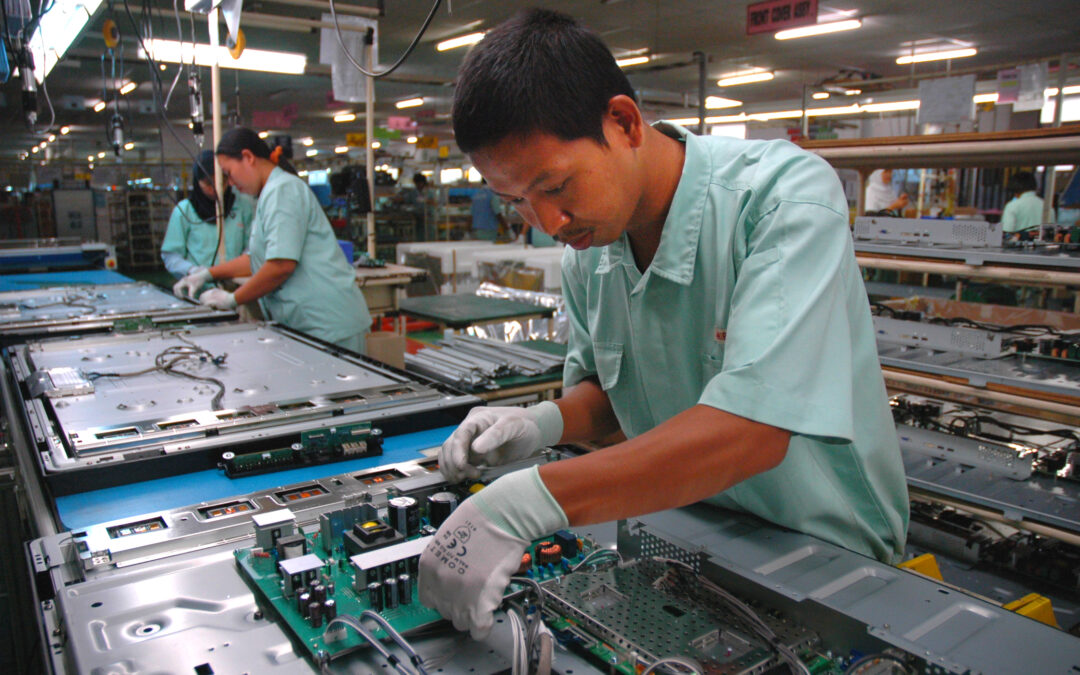
Technology manufacturing has gained momentum recently, particularly in the Tierra del Fuego province. Companies like Samsung and LG have established assembly plants, leveraging tax incentives offered by the local government. The region’s proximity to raw material sources and strategic location enhance its appeal to electronics manufacturers.

Textiles and Apparel

The textile and apparel industry is vital in Argentina’s manufacturing sector. This sector is supported by local and international companies producing everything from high-end fashion to everyday clothing. Key production centers are located in Buenos Aires and Santa Fe, benefiting from skilled labor and proximity to raw materials.

Physical and Human Infrastructure for Manufacturing

Transportation Infrastructure

Argentina’s transportation network is well-developed, comprising highways, railways, and ports that connect major industrial hubs. While undergoing modernization, the railway system remains a critical asset for moving goods across the country. Additionally, international airports in cities like Buenos Aires and Córdoba facilitate the quick transportation of high-value goods.

Energy Resources

The country’s energy sector is robust, supported by abundant natural gas reserves and increasing investments in renewable energy. Manufacturers benefit from stable and affordable energy supplies essential for cost-effective production.

Industrial Parks and Free Zones

Argentina hosts numerous industrial parks and free zones, which offer ready-made infrastructure for manufacturing activities. These zones often have additional incentives, such as reduced tariffs and streamlined administrative processes. Notable examples include the Zárate industrial park near Buenos Aires and the Tierra del Fuego free zone.

Educational and Training Institutions

Argentina’s commitment to education ensures a steady supply of skilled workers. Institutions like the University of Buenos Aires and the National Technological University offer specialized programs in engineering and industrial disciplines. Additionally, vocational training centers nationwide equip workers with the skills needed for specific manufacturing roles.

Government Incentives for Manufacturing in Argentina

Tax Incentives

The Argentine government offers various tax benefits to attract manufacturing investments. These include reductions in corporate income taxes, exemptions on import duties for capital goods, and value-added tax (VAT) refunds. Such incentives would benefit companies setting up new facilities or expanding existing operations.

Special Customs Regimes

Argentina’s special customs regimes simplify the import and export processes for manufacturers. These programs include temporary admission regimes, which allow raw materials and intermediate goods to be imported without paying duties, provided they are used for producing export-oriented goods.

Free Trade Zones

Free trade zones in Argentina offer significant advantages for manufacturers. These zones provide exemptions from national taxes and simplified customs procedures. Notable free trade zones include the La Plata zone in Buenos Aires province and the Tierra del Fuego zone, which has been instrumental in attracting electronics manufacturers.

Sector-Specific Programs

The government also implements sector-specific programs to promote manufacturing. For instance, the Renewable Energy Promotion Law incentivizes companies that produce solar panels, wind turbines, and other renewable energy equipment.

Prominent Companies Driving Manufacturing in Argentina

Arcor

Arcor is one of the largest food manufacturers in Argentina, with operations spanning multiple provinces. Its facilities produce confectionery, dairy products, and processed foods, catering to domestic and international markets.

Toyota

Toyota’s plant in Zárate is a flagship facility that produces vehicles for export to Latin America and beyond. The company has invested heavily in the plant’s modernization, emphasizing sustainability and efficiency.

Samsung

Samsung’s assembly plant in Tierra del Fuego exemplifies the success of regional manufacturing incentives. The facility produces electronics for the local market, reducing dependency on imports.

Bagó

A leader in the pharmaceutical sector, Bagó operates state-of-the-art production facilities in Buenos Aires. The company’s focus on research and development has positioned it as a key player in the global pharmaceutical market.

Tenaris

Tenaris, a subsidiary of the Techint Group, is a leading manufacturer of steel pipes used in the energy sector. Its facilities in Campana are among the most advanced in the world, and it serves clients worldwide.

Challenges and Opportunities

Challenges

While manufacturing in Argentina has many advantages, challenges remain. High inflation and fluctuating exchange rates can complicate financial planning. Additionally, bureaucratic hurdles and labor costs can deter some investors. However, the government actively addresses these issues through reforms and investment-friendly policies.

Opportunities

The growing demand for sustainable and locally produced goods presents significant opportunities for manufacturers in Argentina. The country’s focus on renewable energy and electric vehicle production aligns well with global trends, offering new avenues for growth.

Conclusion

Manufacturing in Argentina continues to evolve, driven by its strategic location, skilled workforce, and supportive government policies. From automotive and food processing to pharmaceuticals and technology, the country’s diverse industrial landscape offers something for every manufacturer. With ongoing investments in infrastructure and incentives tailored to attract global players, Argentina is well-positioned to strengthen its role as a manufacturing hub in Latin America. By leveraging its unique strengths, the country supports its domestic economy and enhances its competitiveness on the global stage.

ProInversión: 2024 Has Been a Positive Year for Private Investment in Peru

ProInversión: 2024 Has Been a Positive Year for Private Investment in Peru

ProInversión plans to promote 31 projects totaling more than $7.8 billion in 2025.

The year 2024 has posed significant challenges for the Peruvian economy. However, efforts by the government, working closely with the private sector, have yielded substantial results, according to a recent report. According to the Agency for the Promotion of Private Investment (ProInversión), the Transportation sector led the portfolio of Public-Private Partnership (PPP) awards this year, achieving a total of $4.366 billion through the awarding of three projects aimed at strengthening the country’s connectivity.

“These historic megaprojects will significantly impact the nation and have been awaiting development for many years. These include the Peripheral Ring Road, with an investment of $3.396 billion, the new San Juan de Marcona Port Terminal, involving $405 million, and the Huancayo-Huancavelica Railway—also known as the Tren Macho—with $565 million in investments,” stated José Salardi, Executive Director of ProInversión.

Impact

The official explained that the Peripheral Ring Road will benefit approximately 4.5 million residents of Lima and Callao by constructing, operating, and maintaining a modern 34.8-kilometer highway interconnecting 11 districts in the capital.

“The project, awarded to the Cintra, Acciona, and Sacyr consortium, will significantly reduce travel times, cutting the trip from Ate to Independencia to 15 minutes and from San Juan de Lurigancho to Independencia to just five minutes. Moreover, it will generate 70,000 direct and indirect jobs during construction and an additional 20,000 during operation,” Salardi affirmed.

Salardi highlighted the new San Juan de Marcona Port Terminal megaproject’s role in boosting the development of southern Peru. The multipurpose infrastructure will benefit 29 provinces in Arequipa, Ayacucho, Apurímac, Cusco, and Ica.

“In addition, it will stimulate complementary investments, such as the Andahuaylas–Marcona Railway, with an investment of $5 billion, and the revitalization of the petrochemical industry in the south, attracting over $2 billion in additional investments,” he noted.

According to ProInversión, the terminal is estimated to generate 80,000 jobs within its area of influence. Referring to the modernization of the Huancayo–Huancavelica Railway, a historic transportation infrastructure nearing its 100th year of operation, Salardi stated that the concession to the Central Railway Concessionaire Consortium will benefit 1.2 million residents in Junín and Huancavelica.

“This concession includes the design, financing, execution of works, acquisition of rolling stock, operation, and maintenance for 30 years of the 128.7-kilometer railway. It also involves constructing a new repair and maintenance workshop, improving drainage systems, protecting slopes, renewing the rail superstructure, and other enhancements,” Salardi said.

Works for Taxes

This year, another critical area that gained prominence was the Works for Taxes (OxI) initiative, with awards reaching 4.004 billion soles across 124 projects as of December 20. This initiative has helped reduce education, healthcare, transportation, sanitation, and public safety gaps, furthering private investment in Peru.

“This outcome is significant because it equals approximately what was achieved over the last seven years through OxI, demonstrating the momentum this tool has gained, now being used in 23 regions of Peru,” Salardi emphasized.

According to the agency, this result is unprecedented in the 16 years since the mechanism’s creation. It now spans 18 regions, contributing decentralized to regional and local government projects and public universities through private investment in Peru.

Improvement Plans

As part of these efforts, several projects were awarded, such as five improvement plans for the I.E Ciencias in Cusco, which required an investment of 249 million soles; the construction of a reservoir in the Yura River basin in Arequipa, which required an investment of 102 million soles; and the improvement of I.E. Javier Heraud in La Libertad, which required an investment of 68 million soles.

Additionally, bike lanes along Cutervo Avenue and Huacachina Avenue in Ica were constructed, costing 40.7 million soles, and I.E Nuestra Señora de la Natividad in Cusco was improved, costing 23 million soles.

Denisse Miralles, Director of Decentralized Investments at ProInversión, stated that the agency expects to close the year with awards exceeding 3.9 billion soles in OxI projects, surpassing the cumulative total of the past five years and highlighting the significant impact of private investment in Peru.

From 2009 to 2024, the mechanism has awarded 619 projects, amounting to more than 11.202 billion soles, benefiting over 22 million Peruvians with improved infrastructure and services.

Expectations

Prospects for 2025 are highly encouraging. The promotion agency plans to award 10 Transportation sector projects worth more than $3 billion, including nine roadworks projects totaling $2.828 billion and the Chimbote International Port Terminal, which requires an investment of $331 million.

The agency plans to award 31 projects via Public-Private Partnerships and Asset Projects in 2025, reaffirming its commitment to bridging infrastructure and essential services gaps through a collaborative public-private model that prioritizes positive impacts on the population and the environment. Private investment in Peru will play a pivotal role in achieving these goals.

ProInversión projects total investments of $7.893 billion for 31 infrastructure and service improvement projects under Public-Private Partnerships (PPP) and Asset Projects (PA).

Key Data

  • 75% of the 2025 portfolio comprises nine road projects worth $2.828 billion.
  • Three real estate projects totaling $1.827 billion.
  • Eight sanitation projects collectively amounting to $1.231 billion.
  • Five health and tourism projects totaling $1.257 billion were awarded through public-private partnerships.

Summary

The year 2024 has proven to be a milestone for private investment in Peru, with significant advancements in transportation, sanitation, education, and healthcare infrastructure. ProInversión’s strategic focus on Public-Private Partnerships and initiatives like Works for Taxes has bridged critical service gaps, setting a solid foundation for continued economic development. Looking forward to 2025, ProInversión aims to sustain this momentum, driving transformative projects and leveraging private investment in Peru to enhance connectivity and improve quality of life nationwide.

Key Factors Shaping Costa Rican Economic Growth in 2025

Key Factors Shaping Costa Rican Economic Growth in 2025

Experts anticipate that public investment will be pivotal in driving recovery in critical sectors such as agriculture and construction. In recent studies, the Organization for Economic Cooperation and Development (OECD) and the International Monetary Fund (IMF) agree that Costa Rica will experience economic growth of around 3.5% in the coming year.

This optimistic projection sets the tone for 2025, following a robust 2024 expected to close with a growth rate of nearly 4%. According to Malberth Cerdas, an economist and lecturer at Universidad Fidélitas, exports in the agricultural and technological sectors and tourism will be crucial to sustaining economic momentum over the next 12 months.

Strength in Agricultural and Technological Exports

Cerdas emphasizes the importance of consolidating growth in key export sectors. “The continued expansion of pineapple, banana, and coffee exports, as well as the growth in tourism and medical supplies, indicates a strong and stable economy. If these indicators maintain their current trajectory, we’ll see solid economic results,” he stated.

Agriculture has long been a cornerstone of Costa Rican economic growth, with pineapple, banana, and coffee as flagship exports. These products contribute significantly to the country’s GDP, support rural communities, and sustain employment. Moreover, the demand for Costa Rican coffee in niche markets, such as specialty and organic coffee, continues to rise globally.

Costa Rica is solidifying its position as a hub for innovation in the technology sector. Cerdas highlighted the potential for the country to attract more foreign direct investment (FDI) in the semiconductor industry. The country’s strategic location, skilled workforce, and favorable investment climate have made it a magnet for high-tech industries.

“This aligns with the U.S.’s nearshoring strategy, which aims to relocate supply chains closer to home rather than relying on Asia or other distant regions. Costa Rica could become a key player in this shift, attracting industries that produce these essential components,” he added.

The Role of Tourism in Costa Rican Economic Growth

Tourism remains a pillar of Costa Rican economic growth. The country’s abundant natural beauty, including its rainforests, beaches, and biodiversity, attracts millions of visitors annually. Efforts to promote eco-tourism and sustainable travel have further bolstered this sector. Additionally, infrastructure improvements, such as upgraded airports and expanded road networks, have enhanced accessibility for international travelers.

Costa Rica’s tourism industry generates significant economic linkages and drives direct revenue. Increased tourist spending benefits local businesses, such as hotels, restaurants, and tour operators. Furthermore, the sector’s success stimulates demand for local products, such as artisanal crafts and agricultural goods.

Public Investment and Debt Management: Catalysts for Growth

Public investment and effective debt management will also be instrumental in sustaining economic growth in 2025. Cerdas pointed out that infrastructure development could create significant local economic linkages, while reductions in public debt could lead to lower interest rates.

“Lower interest rates are critical for stimulating economic activity. Cheaper borrowing costs encourage factory investments, home purchases, and car sales. This, in turn, boosts overall consumption,” Cerdas explained.

Infrastructure projects, such as highway expansions and public transportation upgrades, are expected to play a key role in driving Costa Rican economic growth. These initiatives create immediate jobs and improve long-term economic efficiency by reducing logistical costs and enhancing connectivity.

Debt management remains a priority for the government, as high public debt levels can constrain economic growth. Costa Rica aims to reduce its debt-to-GDP ratio by implementing fiscal reforms and improving tax collection. This, in turn, could bolster investor confidence and attract additional foreign capital.

Challenges Ahead: Global Economic Slowdown and Domestic Sector Stagnation

Despite the positive outlook, 2025’s growth is expected to fall short of 2024’s performance. Economist and former Deputy Finance Minister Fernando Rodríguez warns of a global economic slowdown that could temper Costa Rican economic growth.

“A trend that began in 2024 is the moderation in the growth rate of companies within the free trade zone regime. These companies were a major driver of economic expansion over the past few years but are now showing signs of slowing down,” Rodríguez explained.

Additionally, specific national sectors, particularly construction and agriculture, remain stagnant. Rodríguez attributed part of this stagnation to climate emergencies that affected the agricultural industry in November, disrupting production and supply chains. Prolonged periods of drought and heavy rains have also challenged crop yields, highlighting the need for climate-resilient farming practices.

The construction sector faces hurdles, including rising material costs and regulatory bottlenecks. Addressing these challenges will be crucial for reinvigorating domestic economic activity.

Political Uncertainty and Its Economic Implications

Political uncertainty may affect economic growth as Costa Rica enters a pre-electoral year. Rodríguez noted that the lack of clear economic policies could deter investments in specific sectors.

“We need to focus on revitalizing certain economic activities to achieve higher growth in 2025 and return to a stronger growth trajectory for 2026. However, these measures don’t appear to be on the political horizon. The electoral climate leading up to the February 2026 elections could create uncertainty, further complicating economic decision-making,” Rodríguez concluded.

Political stability has traditionally been an asset for Costa Rican economic growth. However, prolonged uncertainty can disrupt planning and deter domestic and foreign investors. Clear and consistent policy signals will be essential for maintaining economic confidence.

Fostering Resilience in Key Sectors

The government and private sector must address sector-specific challenges to ensure sustainable Costa Rican economic growth. Investing in technology and climate-resilient practices in agriculture can mitigate the effects of weather-related disruptions. Streamlining permitting processes and encouraging public-private partnerships can drive new projects for the construction sector.

Policies fostering innovation and diversification will be critical in the free trade zone regime. Supporting small and medium-sized enterprises (SMEs) within this regime can also enhance their contribution to the broader economy.

A Balanced Approach to Economic Recovery

Costa Rica’s path to sustainable growth in 2025 hinges on its ability to balance public investment, export growth, and effective debt management with strategies to address sectoral stagnation and political uncertainties. The country can build a resilient economy that attracts foreign investment and fosters local development by focusing on these areas.

The government’s role in promoting Costa Rican economic growth cannot be overstated. Strategic investments in infrastructure, education, and innovation will be pivotal. Additionally, fostering international trade partnerships and leveraging the country’s reputation as a green and stable economy will open new avenues for growth.

In conclusion, while challenges remain, Costa Rica is well-positioned to achieve steady economic progress in 2025. Through coordinated efforts across sectors, the nation can ensure its growth trajectory benefits all citizens and cements its position as a regional leader.