+1 (520) 780-6269 investment@latamfdi.com
A discussion with Mauricio Claver-Carone on the America Crece Initiative and other matters related to investment in Latin America.

A discussion with Mauricio Claver-Carone on the America Crece Initiative and other matters related to investment in Latin America.

LATAM FDI: In this episode, Mauricio Claver-Carone joins us. Mauricio is the managing partner of an organization called the Lara Fund, and he is a former advisor to the First Trump Administration for the Americas. Welcome, Mauricio. You could expand on your biography. Tell us a little bit about yourself.

Mauricio Claver-Carone: Thank you so much. Thanks again for the opportunity. It’s always a pleasure to be with you. Thank you for your great work, particularly regarding foreign direct investment in Latin America. As you mentioned, I’m the managing partner of the Lara Fund, a private equity fund we set up about a year ago. It is the first and only US private equity fund focused on the middle markets of Latin America and the Caribbean. And then the last time we spoke, we spoke about those targets where the countries we look at, the high growth markets, pro-American countries in the region, moving away from Mexico, Brazil, which has been usually the biggest target for a lot of the global investors in the region. I am not saying that there are no opportunities there. Still, we’re focused on Panama, Costa Rica, Bahamas, Ecuador, Paraguay, Uruguay, Dominican Republic, and El Salvador, the countries showing great promise and a great opportunity and are fully undercapitalized. So, it’s been a great adventure. Indeed, in my previous role, I stemmed from the Treasury Department, began my career there as a lawyer, and then was eventually the Senior Director of the Western hemisphere at the National Security Council, where I was the President, President Trump’s advisor during his first term for the Americas.

We covered everything from Canada to Argentina. It was an action-packed time with great stories and anecdotes. It was a great experience.

LATAM FDI: Today, one of the things I want to touch upon was something devised during the first Trump administration. It’s called América Crece. Can you explain to the listeners what that is?

Mauricio Claver-Carone: Yeah, I’m happy that you mentioned that and that we had the opportunity to discuss América Crece because it was such a great initiative that, as everything with the government took way too long to start, it was something that was conceived as an idea when I was a senior advisor at the Department of Treasury with Secretary Mnuchin back in 2017. At that time, we were thinking about it, and I mentioned this during our last conversation: the US has an excellent toolbox for punishing bad guys, sanctions, et cetera. But we had a limited toolbox regarding economic statecraft. Basically, how do we promote or how do we unlock the comparative advantage that the United States has, which is our investors, our capital markets, really the opportunities and the knowledge and know-how of our investors, particularly in the Western hemisphere of the Americas, which is the neighborhood we live in, which is extraordinarily important and strategic to the United States across a whole different variety of factors. So, we created this concept called the América Crece, which was essentially, and people always talk about it as a counter-BRI, the Chinese Belt and Road Initiative, but an initiative for how we unlock private investment in Latin America, particularly in energy and infrastructure, in really our allies in the Americas.

Because what we’ve seen and what the most significant need is, is the reality is that Latin America and the Caribbean have the most significant infrastructure finance gap in the world, despite all these multilateral and everything that loan money to the region and projects that you see on these glossy press releases. It is by far the most significant infrastructure finance gap in the world. Okay, great. So how do you help the region find these bankable deals and opportunities across markets, which are wholly different in every country in Latin America and the Caribbean is different from each other? Even in Central America, I banned using the term Northern Triangle because El Salvador, Guatemala, and Honduras are very different. But things get bunched up because it’s just a lazy approach. But then how do we take each of these countries, find what their comparative advantages are, find what the bankable deals in those countries are, the incredible opportunities they are, and help them, put these deals together, and almost hand them off on a silver plate to investors here in the United States and in other allied countries throughout the world that are global investors as well, but mostly, obviously, here in the United States.

And so, we created this concept. It was an idea. And it just took a long time to develop. Eventually, we launched it as a treasury initiative. It began with Panama, and it took a while to set the frameworks. Okay, what are the opportunities in Panama? The energy was important. Natural gas is our huge comparative advantage from an energy perspective. How do we help lock in these deals for storage and the logistical side of the natural gas trade and supply chain? How do we unlock those opportunities? How do we unlock the opportunities for microgrids in the region? How does Panama become that center for microgrids, which can then be scaled and have these vast opportunities in the Caribbean, et cetera? And it was fascinating just how fast it started growing. For the first treasury, I may dig into a credit initiative we did with Panama and start unlocking deals there. Well, anyway, like everything in government, things take a long time. Two years later, when I was a senior director at the National Security Council of the White House, we turned this treasury initiative into a whole government initiative.

That was in December of 2019. It took two years. But ultimately, that’s when you finally get buy-in from all departments. Then the question was, how do we use financial advancing tools, etc.? Now, OPIC has long become somewhat irrelevant, if not wholly unrelated. Then, we had the idea of creating the Development Finance Corporation. Within those two years, the new International Development Finance Corporation operation, known as the DFC, was created to try to increase the ability of domestic finance. As a domestic finance institution, as a DFI from the United States for investors and deals and strategic deals outside of the United States, but to be nimbler, et cetera. We could discuss whether that worked, if it didn’t work, where we stand now, and where we’re headed, but that was the idea. Then, ultimately, when it was launched as a whole government initiative with the DFC, we started after Panama. I went to Panama, Salvador, and Ecuador, and it grew. And before you know it, between December of 2019 and the end of the first Trump administration in 2020, we had done 17 América Crece agreements throughout the region.

That’s half of the region. And by the way, we ran the scoreboard from seventeen to zero regarding the BRI. And we saw billions of dollars in deals, particularly in Panama and Ecuador. We saw Salvador and were starting to move on to the Dominican Republic. And it was a process that was very time-consuming. But that year, you started seeing that tremendous momentum, per se. And the reality And it’s that even in the transition into the Biden administration, a lot of the career staff across the agencies, state, treasury, DFC, et cetera, urged the Biden administration not to get rid of the America Crece Initiative because there was significant momentum taking place. Unfortunately, they got into this whole; if it was a Trump initiative, get rid of it. They eliminated it. Then, it took years for them to produce their initiative, which became America’s partnership, which, unfortunately, was nice. It’s excellent public relations and a nice marketing tool, but it was nothing more than photo ops rather than seeking deals. Now, can we talk about… So that’s what América Crece was, where it was headed, and obviously, we can talk about what worked, what didn’t work, what was working, what wasn’t working, and where we could be headed.

LATAM FDI: Just for the people that aren’t Spanish speakers, the translation of the America Crece Initiative is America Grows. Well, let’s look at something happening in the hemisphere that some people look at with a certain degree of preoccupation. I want to ask you for your take on Chinese investment activity in Latin America.

Mauricio Claver-Carone: Well, it’s very different than it was from, for example, when we first went, the first Trump administration started in 2017. Beginning in 2005, you started seeing a big boom in Chinese investment in the region. It reached a point in 2010 and 2012 when it was $200 billion annually. That’s decreased substantially, but the Chinese are more strategic in their investments. So, I understand that they’re in critical mineral space, logistics space, and ports in particular; they’re being very strategic about big splashy projects where they can, through perception, show that they are really like… We have a territorial staple in the region and the neighborhood where we all live. So, you’ve seen that shift per se. Are these projects particularly effective? What do we see? No. As a private investor now, one of the things that I see a lot of throughout the region is distressed Chinese assets. So many of those deals that they had invested in the energy space, et cetera, in 2010, 2012, 2014, 2016, they distress, they leave them. Then they hope nobody gets them because they prefer to see it there distressed, immobile, versus having a US investor or someone else come in and take them.

Regarding the splashy projects, it’s open to debate how effective or not they are. There’s been a lot of news lately regarding, for example, the Port of Chancay in Peru. That’s an extensive port facility in Peru. They’ve invested over $2 billion in it. Then, what I find laughable about it is the notion that what’s been marketed out there is that this will be a massive opportunity for Brazilian agricultural exports. This is the only export from the region that goes towards China. There’s not a US play there. Now, anybody who knows about intraregional commerce knows that that’s false. There is no intraregional infrastructure for Brazil, let alone any other country in the region, to be land-transporting their products over to the Port of Shanghai, which, by the way, even if you’re in Lima, to get to the Port of Shanghai is two and a half hours in a dirt road with no infrastructure, and that’s with a police escort. So this whole notion that somehow it’s going to be cheaper or even feasible to be bringing, transporting goods across the over to Shanghai to export it to China then and that it’s going to be substantially more affordable than just literally doing it through existing infrastructure in like Santos, in the Port of Santos, in Brazil, et cetera, is nonsense because anybody that knows and is involved in shipping and is done in the region knows that one of the biggest frustrations. After all, it shouldn’t be that way, but one of the biggest frustrations is that the intraregional infrastructure does not exist.

It’s not there. And in many cases, I used to use this talking point in Argentina. It’s much more expensive to transport goods domestically from the point of extraction or the end of production to the port in Argentina than it is to ship it from the Port of Buenos Aires to, let’s say, Asia to the US, et cetera. So that’s the biggest frustration. That’s not going to happen in the short term. So, what, then, is the Port of Chancay for? It’s strategic. And then one of the Chinese ministers let it slip himself. It’s for e-commerce, and he wanted to make it to an e-commerce hub. Okay, that is then for a re-export, mainly to the United States, to have some capacity. That’s what we are seeing there now with Chinese investment. Everything now, including Chinese investment in the region, is critical minerals that will continue monopolizing the alternative energy space. Yes, these logistics, but the logistics are all for re-export to the United States. That’s the big thing we’re seeing in Mexico right now. If you ask me, what concerns do I have right now?

Well, look at foreign direct investment in Mexico. For Mexico right now, a third of all foreign direct investment in the last year was from Chinese companies. It’s even higher because if you calculate new investment, the only new investment that’s going in that’s not reinvestment is mostly from Chinese investors. And why that’s? Transshipment to the United States to try to avoid duties, et cetera. The new Trump administration will focus on closing out those loopholes. But if you see one trend in Chinese investment, that is the most concerning other than this Porta Chancay, which is really for, like they said, the re-export. And also, by the way, you’ve seen it, I think there should be some issues or concerns about how it could be used by a state Chinese interest in the military, et cetera. Put that aside. But from a commercial perspective, I think the biggest issue concerning Chinese investment is the investment in Mexico to be then able to re-export transfer into the United States and circumvent, obviously, the higher tax rates that China has and will have, obviously on the Trump administration.

So that’s going to be a big issue there.

LATAM FDI: Given the present panorama, what are the principal roadblocks to attracting investment to the region right now?

Mauricio Claver-Carone: Bankable deals. Bankable deals. And I said this recently: Costa Rica, which in a lot of the indexes for most attractive places for foreign direct investment, had the number one spot. Recently, this last year went down to the number three spot. Understandably, the Emirates now has the number one spot. But why did Costa Rica go down? Is it because they’ve done something wrong on the fiscal or macro side, or have the rules changed? No, they haven’t. It’s been the current government, President Chávez, with an S. I call him Chávez the Good. President Chávez has done a great job and has continued to feed that pro-business friendly environment, and investment is still very attractive there. The reason it went down two slots is because of bankable deals. There’s not that many good bankable deals. So, what is the biggest challenge? It’s a capacity issue. It’s really about putting these good bankable deals together for investors to look at and do so. And that’s true. As I look at this, I think about América Grecia because it’s full circle here. That’s the problem that we’ve seen in the region. Because of the lack of global private investors on the US side and a private equity culture in areas other than Brazil, these bankable deals are hard to come across notionally, I mean, fully packaged.

Notionally, they’re there, but you have to package them. The reason is that it’s become a region that has become so dependent on multilateral state-pushed political lending with antiquated instruments that there’s been a setback regarding how to originate and put these deals together that will be attractive to private investors. Then that goes to the notion of, Okay, what was América Crece, and what was the comparative advantage? Okay, the capacity building to put these deals together, pass them off, etc., and the private sector. There’s nothing like private-sector financing. It ensures that deals are agile and that they get done. When I was President of the Inter-American Development Bank, the number one, the largest lender in the region by far, unfortunately, the number one thing US investors would ask me is, Can the bank get out of this deal? Why? Because the lending instruments are wholly antiquated. They do 10-year plus loans and long-term loans. The derisking is wholly not thoughtful because it hurts returns in that sense. It has a whole bunch of contingencies. It’s all lending. There’s no culture of equity to it.

It hurts the agility of creative financing or projects not only to get done but also to get done and add value—so, value-producing, value-added, value creation, and then bringing in other investors. The only people that can do that are private investors. That’s why one of the things we’re trying to do through the Lara fund is also introduced, other than Brazil, where it exists, this whole notion of private equity exists. The region is used to traditional debt financing. Debt financing is excellent, but the incentive for value creation diminishes. The culture that exists is mostly these family office structures throughout the region. Then they’ll invest in deals, and they do so. However, the notion of private equity investors coming in, taking a piece of the business, helping create value, and then bringing in other investors is part of the motor of the US economy. That’s what the region needs and needs to see more of. We’re now Lara Fund, a pioneer of this. América Crece was an initiative to incentivize private investment from the US and the region. Multilaterals, and I hear it a lot. When I was in government, I thought maybe the DFC or the multilaterals could do so and incentivize these private sector investors and private investors to come in and do so.

It is the opposite. They tend to crowd them out because they kill a lot of the incentives and then because they kill the returns. It would help if you had bankable deals with healthy returns so that these investors come in, do essentially creative financing to create value, then for the new investors to come in and then wash, rinse, repeat; that’s how investment works, and that’s how economies grow. That’s what we’re trying to innovate. If the America Crece Initiative 2.0 comes down, Lara Fund will be in a perfect place to take action. People ask me all the time, Hey, government versus private sector. Look, I’ve done it in government. I’ve had the privilege of serving in the Treasury Department. I had the privilege of serving in the White House. I was a US Representative to the IMF. I then became President of the Inter-American Development Bank. I’ve done that. I’ve talked the talk. I’ve talked about investment in the region. You put out a glossy brochure and a nice press release, you do the handshake, and the politicians love it. Oh, this bank is going to loan so much to this country. Great. But guess what? You’re not producing value in the country per se.

Now, through Lara Fund, I’m walking the walk. We’re doing everything we discussed in the countries where opportunities exist. That’s what we seek. And guess what? The goal for the other global investors is for them to come in and follow because we know how to get this done.

For the immediate future, given all that you’ve just said, what do you see in Latin America in 2025?

2025 is going to be an exciting transition year. I told you already, from the challenges part, what I see from a foreign direct investment perspective, if you look at Mexico right now, I have concerns because where you’re seeing, Mexico has done everything in the last six, seven years, has done everything to disincentivize foreign direct investors. And yet, the US investors that have gone into Mexico have done so because of proximity. Most global investors and companies have gone in because of the supply chain, proximity, etc. China has taken that in the last four years and tried to exploit it, and it’s now becoming systemic, where I think that’s a big issue that we’re going. That’s what I have to deal with, and obviously, the new Trump administration will have to deal with it. But that trend there doesn’t necessarily then people think, and this is a question I get a lot, but then I talk to a lot in regards with the institutional investors, It’s like, okay, well, if they don’t invest in Mexico, are they going to look then at another country in the region?

Are they going to look at El Salvador? Are they going to look at Costa Rica, et cetera? The answer is no. The answer is they will look right here in the United States. They’re going to go where you are, Steven, in Arizona. But they’re going to go right here in the United States. Look, in 2020, when I ran for president of the IDB, I did so on a nearshoring platform. When COVID hit, China was an irresponsible actor during that phase. Economically, they were struggling, and they still are struggling. It was an excellent opportunity to promote the whole concept of nearshoring. And instead of embracing it, they fought me on it. Mexico, the Mexican government fought me on nearshoring. The Argentine government fought me on nearshoring. They said it was geopolitics. I was carrying the US flag. It was all politics, et cetera. Now, the story I see is all these countries in the region complaining that they haven’t seen the benefits. They have yet to take advantage of the benefits of nearshoring. And guess what? They had the opportunity. And now the clock has ticked.

But what’s happening? The alternative is not nearshoring to another country. The alternative is reshoring to the United States and doing so right here. And look, that’s going to be a priority for President Trump. That just is. We want to invest right here in the United States. There are great opportunities throughout. Still, I do not believe that if an investor does not go into Mexico, they’re going to go to Costa Rica, or they’re going to go to Guatemala, or they’re going to go to El Salvador. They’re going to come right here to the United States. Each country has to figure out its comparative advantage and what those opportunities are within and not think that this is just like, ” Oh, someone has allocated so much for this emerging market, and it will flip off. The difference for 2025 is that countries compete with the United States for investment.

LATAM FDI: That’s good to hear from an American perspective.

Mauricio Claver-Carone: Absolutely. But that’s also an opportunity. That’s also an opportunity. This is why I advocate modernizing trade agreements. This is an opportunity for countries in Central America to avoid getting comfortable with their economy being based on exporting a limited number of product lines to the United States. You have to diversify. You have to seek how to create. Look, it’s no secret that the big… Look at the big growth companies in the region. Some of the largest companies in the world, public-wise, et cetera, and growing-wise, are coming from the region. But what are they? Fintech, e-commerce. Why? Because they’re skirting the government. They’re just creative. They’re innovating and creating value through the digital ecosystem. That’s great. Now, you need an infrastructure to support that, which is where, for example, our fund is and where we focus. We focus on industrial assets, we focus on data centers, and, obviously, on the energy side that is needed to power that whole ecosystem. But finding what the comparative advantages are per country, the opportunities there are not only going to make those countries stronger, but they’re going to make the commerce between those countries in the United States even stronger per se, and not rest on your laurels, not think like this is.

Real competition and competition in a free market world makes people better. So that will be the challenge, but that brings a great opportunity. In so doing, do not think that people will pour into your country, considering that this is a privilege. I will invest billions of dollars in this deal because the government tells me it’s good. No, they want to find bankable deals that are well put together, have good terms, have good partners and sponsors, and check all the boxes. You’re now competing for investment with Arizona, the state of Florida, etc. You’re now competing with investment in steep deals. For that, you have to be sharper. And that exists because I always see those deals and those things in the region. And they’re hard to find, but they exist. And when you find them, they’re great opportunities. The returns are great. You can’t deny that. That’s important. Returns are essential for investors. That’s the comparative advantage that the region has, as opposed to the greater returns in the area than they’re going to be here in the United States.

Use that to your advantage. Don’t look at, Oh, How do we derisk everything so no one wants to take risks? Well, then that’s how then you get stuck with the crappy multilateral 10-year debt financing arrangement, which crowds out any other investors—got to get out of that mindset. Innovate, create, and find those opportunities. Frankly, that’s what we’re doing. If it didn’t exist, we wouldn’t be doing it.

LATAM FDI: Given that statement, you’ve got public sector experience. You’ve alluded to your company, the Lara Fund, on several occasions in this conversation. Can you give us an overview of your company, its length, and what you’re looking to achieve ultimately?

Mauricio Claver-Carone: Yes. As I mentioned, We’re the first and only US private equity fund focused on those middle markets in the region. We see those opportunities out there, particularly in these industrial assets throughout the region, the data center field, the digital asset field, and the energy, right? That’s the key. These countries have great opportunities. They have great business environments. We’re trying to help them shine amongst the competition in emerging markets, per se, but also for the comparative advantage for US investors looking for good returns in safer countries per se. What we don’t and are trying to do in these countries differs from the Lara Fund. Lara Fund is learning from the experience of institutional investors in the region, which, if you ask them, most of it is in Mexico and Brazil. If you ask them how they lost money, they mostly have lost based on the currency, which is a considerable challenge and currency risk. We don’t take currency risk. We do dollar deals. We do them. We prioritize dollarized or pegged countries where you don’t have to take that currency risk or in countries that do dollar deals.

That’s big. That’s important because hedging currency is expensive. It’s doable, but it’s costly. As history shows, that’s usually where investors take a hit. We’re taking that off the table to reduce the risk in the countries we seek to invest in. The institutional risk is low, particularly compared to other emerging markets. Then, it’s really about operational risk. If you have a good deal, good sponsors, and good partners like Lara Fund, the opportunities exist, and they’re there. There. So, we’re focused on that, and we’ve been off to a year of growth, and it’s been fantastic. We saw that our thesis was correct. We’ve seen over $2 billion worth of deals in the region, most of which are good, and you have to decipher, but there’s a lot more. And that’s just been in a starting phase. Now, there’s a lot of momentum taking place and a lot of excitement regarding new investments. We’ve been talking a lot about the America Crece Initiative. If there is an America Crece 2.0, I would highly advocate for it. Many people who served in the first term would highly advocate for it because it was extraordinarily successful. It did give the United States a comparative advantage over the Chinese

We’re extraordinarily well-positioned to walk the walk. We’ve talked to talk. We know what works. We know what doesn’t work. We know that doing it through DFC has its limitations. There’s going to be a battle for reauthorization of the DFC now. It’s already capped. There’s going to be a battle for reauthorization. It will take a long time to fix much of the damage currently done to the DFC, where it’s become a mini USAID, and that’s no offense to USAID. It’s just that the role of DFC was never supposed to be that of USAID. So, there’s a lot of fixing that’s going to take place. That’s going to take time. The multilaterals need to be updated. Their instruments have perverse incentives and are relics of the 20th century. There, That’s limited as well. You have to walk the walk with the private sector, and we’re leading the way in that regard. I’m proud of the work we’ve done. I think we’re starting January. We’ve been in a growth phase, a high growth phase. We’re going to be in for a higher growth phase.

This is to redefine global investment in Latin America and the Caribbean and to show international investors that high-quality bankable deals with great returns and limited risk exist in these regions, and we’re leading the way.

LATAM FDI: We’ve covered a wide range of information during this short period and found that listeners who listen to our podcasts have questions after hearing them. They asked how to contact the people joining us in these sessions. Mauricio, if somebody wants to contact you to ask you a question that may have come up due to what you’ve just spoken about, how do they go about doing that?

Mauricio Claver-Carone: Our website is www.larafund.com, so L-A-R-A stands for Latin American Real Assets.

LATAM FDI: If it’s okay with you, I’ll do the same for all the other guests. If you have a LinkedIn page, I’ll link it to it on the transcript portion of the page hosting this podcast.

Mauricio Claver-Carone: Thanks, Steven. And thanks again for everything you do regarding FDI and LATAM. You’re a key voice, so we appreciate and follow you.

LATAM FDI: I appreciate the compliment. I hope you have a wonderful day. Take care of yourself, and hopefully, we’ll have you back for another conversation soon.

Mauricio Claver-Carone: I look forward to it.

The Mexican Association of the Automotive Industry (AMIA): 10 Proposals to Claudia Sheinbaum on the Automotive Industry and Electric Vehicles

The Mexican Association of the Automotive Industry (AMIA): 10 Proposals to Claudia Sheinbaum on the Automotive Industry and Electric Vehicles

Although the automotive sector has not been prominently featured in President Claudia Sheinbaum Pardo’s proposals, the Mexican Association of the Automotive Industry (AMIA) is urging the head of the Federal Executive Branch to prioritize the industry in light of the upcoming review of the Mexico-United States-Canada Agreement (USMCA or T-MEC). The AMIA recognizes the automotive sector’s pivotal role in Mexico’s economy. It emphasizes the need for targeted government policies to sustain and expand the industry’s growth, particularly in electric vehicles and electromobility.

Odracir Barquera, the director of the Mexican Association of the Automotive Industry, outlined ten comprehensive proposals to shape a robust and forward-looking automotive policy. These recommendations were unveiled after the first-ever Drive Forward Summit in Mexico, an event attended by representatives from major industry players such as Nissan, General Motors, Toyota, and BMW. These proposals address a wide range of critical issues, from sustainability and infrastructure to workforce development and regulatory frameworks, all with the objective of positioning Mexico as a global leader in the automotive industry.

Ten Proposals made by AMIA


1. A Comprehensive Policy for Electromobility

The Mexican Association of the Automotive Industry advocates for creating a public policy dedicated to electromobility to boost manufacturing and supply chains that support electric vehicles (EVs). This policy would focus on achieving carbon neutrality while developing the necessary infrastructure to encourage the adoption of green technologies. Mexico could establish itself as a regional hub for sustainable automotive solutions by fostering innovation in EV production.

  1. Enhancing Conditions for Existing Operations

The government must create conditions conducive to business growth to attract higher levels of investment and expand current operations. This includes streamlining administrative processes, providing fiscal incentives, and ensuring regulatory stability to encourage reinvestment by companies already operating in Mexico.

  1. Improving Mexico’s Energy Matrix

A key priority is enhancing the reliability and sustainability of Mexico’s energy supply. Transitioning to clean energy sources would support the environmental goals of automotive companies and align Mexico with global trends toward green energy. This includes investments in renewable energy projects and reforms to ensure energy availability meets industrial demand.

  1. Upgrading Physical and Digital Infrastructure

Modernizing infrastructure is critical to improving the efficiency of customs operations. The AMIA proposes expanding the capacity of ports, border crossings, and airports to facilitate smoother trade and logistics. Additionally, digital transformation in customs processes could reduce delays and enhance operational transparency.

  1. Leveraging International Trade Agreements

Mexico’s strategic location and participation in agreements such as the USMCA provide unique opportunities to strengthen its position in the global automotive market. The Mexica Association of the Automotive Industry suggests using these agreements to deepen integration within North America while pursuing new trade partnerships with the European Union, the United Kingdom, Brazil, and Argentina to diversify export markets and reduce dependency on any single region.

  1. Aligning Labor Supply with Industry Needs

Integrating the workforce with the evolving requirements of the automotive industry is essential. The AMIA calls for the development of academic programs and training initiatives tailored to the sector’s technological advancements and operational demands. This would ensure a steady pipeline of skilled workers ready to meet the challenges of an increasingly automated and electrified industry.

  1. Modernizing the Vehicle Registration System

A modern, functional, reliable vehicle registration system ensures transparency and regulatory compliance. The Mexican Association of the Automotive Industry proposes the creation of a new General Law for Vehicle Registration, which would facilitate better tracking of vehicles and support law enforcement efforts.

  1. Ensuring Market Transparency

The AMIA recommends implementing a transparency framework to foster fair competition within the domestic automotive market. This framework would establish clear rules for market participants, ensuring that consumers and businesses benefit from competitive practices.

  1. Updating Regulatory Frameworks

Technological advancements in the automotive sector necessitate a regulatory framework that keeps up with innovation. The AMIA advocates for updated norms and standards that reflect global best practices, enabling Mexico to stay competitive in the international market.

  1. Guaranteeing Operational Security

Security remains a pressing concern for automotive companies operating in Mexico. The Mexican Association of the Automotive Industry stresses the importance of measures to ensure the safety of operations across various sectors, including transportation, supply chains, and distribution networks. Strengthening law enforcement and implementing preventative measures would mitigate risks and create a more stable environment for investment.

The Road Ahead for the Automotive Industry

“We believe this is the moment to ensure that this momentum is harnessed from a comprehensive vision of what this transition means for Mexico,” stated Odracir Barquera. He underscored the importance of the next six years under the new administration in determining Mexico’s trajectory toward a shared future of sustainable growth and innovation in the automotive sector.

The proposals outlined by the AMIA reflect the industry’s aspirations to not only adapt to global trends but also to lead them. By prioritizing electromobility and sustainability, addressing infrastructure gaps, and aligning educational and regulatory frameworks with industry needs, Mexico has the potential to cement its status as a global automotive powerhouse. With strategic governmental support, these initiatives could pave the way for significant economic growth, job creation, and technological advancement.

Strategic Implications for Mexico’s Economy

The automotive industry is a cornerstone of Mexico’s economy, contributing significantly to GDP, exports, and employment. As global demand shifts toward electric and sustainable vehicles, countries that position themselves at the forefront of this transformation stand to reap substantial benefits. Mexico’s proximity to key markets, established manufacturing base, and skilled workforce provide a strong foundation for achieving these goals. However, the successful implementation of the AMIA’s proposals will require a collaborative effort between the government, industry stakeholders, and academia.

In conclusion, the AMIA’s proposals to President Claudia Sheinbaum represent a roadmap for the future of Mexico’s automotive industry. By addressing critical issues such as electromobility, infrastructure, energy, and workforce development, these initiatives have the potential to drive the industry’s growth while positioning Mexico as a leader in the global shift toward sustainable transportation. The next administration’s response to these recommendations will be pivotal in shaping the future of the country’s automotive sector and its role in the international market.

The Maquila Regime in Paraguay: A Program That Promotes Female Employment

The Maquila Regime in Paraguay: A Program That Promotes Female Employment

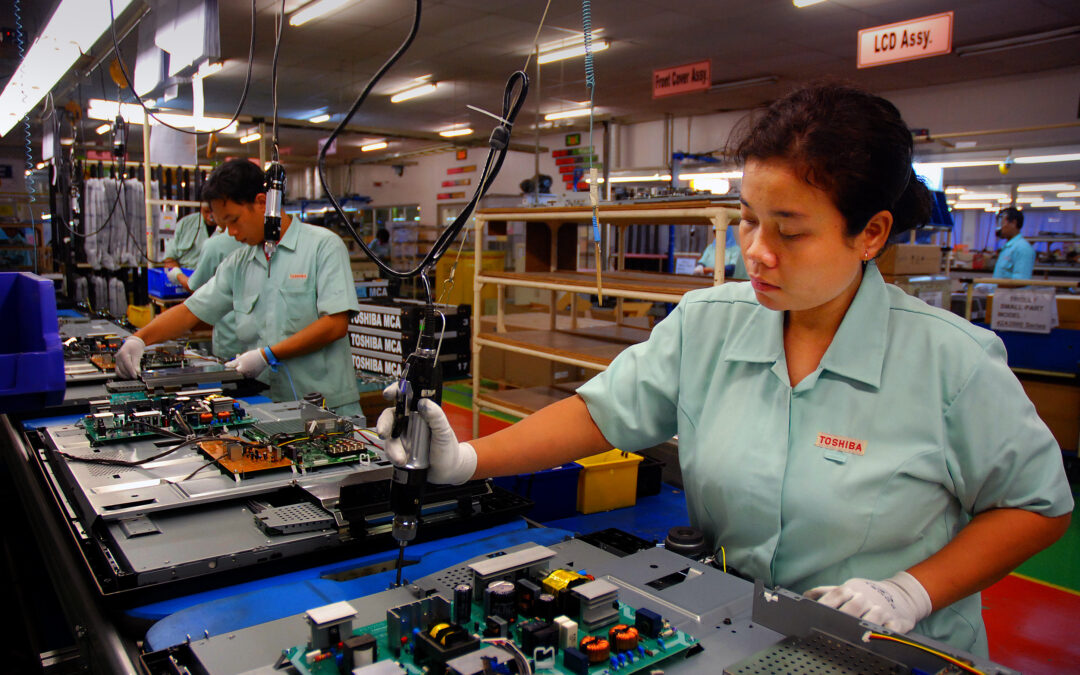
The Maquila Regime in Paraguay has emerged as a transformative program, fostering industrialization while significantly contributing to female employment. Currently, 44% of the jobs generated under this initiative are held by women, underscoring its critical role in promoting women’s economic empowerment. This remarkable achievement highlights the regime’s ability to drive job creation and expand opportunities for women, particularly in industries where they have traditionally been underrepresented.

A Catalyst for Industrial Growth and Inclusion

In recent years, the Maquila Regime in Paraguay has become a pivotal tool in the country’s industrialization efforts. Its success is measured not just in terms of economic output but also by its social impact. Natalia Cáceres, Executive Secretary of the National Council of the Maquila Export Industry (CNIME), has emphasized the program’s ability to diversify sectors and broaden employment opportunities for women. Initially concentrated on manufacturing, the Maquila Regime has expanded into services, creating technology, customer service, and logistics jobs.

One notable achievement of the program is the growing participation of women in traditionally male-dominated industries, such as auto parts and metalworking. Over the past four years, female labor participation in these sectors has risen significantly, with the auto parts industry experiencing a 17% increase and the metalworking industry seeing an astonishing 130% growth. This surge is attributed to the high demand for precision in manufacturing processes, where women’s fine motor skills contribute to the superior quality of products. “These sectors have experienced remarkable growth due to the high demand for precision in processes—a skill women excel in,” Cáceres stated.

Record-Breaking Export Growth

The Maquila Regime in Paraguay has also proven to be a powerful driver of the South American nation’s export economy. As of October 2024, maquiladora companies reported exports totaling USD 918 million. This marks a significant milestone, as exports under the program are expected to surpass the 2023 figures by USD 76 million, achieving historic levels. Such growth demonstrates the economic viability of the Maquila Regime and highlights its role in meaningfully integrating women into the workforce.

The export-driven nature of the program ensures that participants are exposed to global standards and practices, which can enhance their professional skill sets. Women employed under the regime often acquire expertise in international trade, logistics, and quality assurance, enabling them to pursue diverse career paths.

Investment in Skills Development

A key factor contributing to the success of the Maquila Regime in Paraguay is its emphasis on training and development. Companies under this program recognize the value of investing in their workforce, particularly in equipping women with skills to enhance their employability. This is particularly evident in the intangible services sector, where companies offer language training in English and Portuguese. Such programs enable women to acquire highly sought-after skills in the global marketplace, opening doors to better career opportunities.

Between 2020 and 2024, female employment in the services sector increased by 72%, reflecting the effectiveness of these initiatives. Language training, in particular, has been transformative, allowing women to access roles in customer service, international business, and remote work opportunities. These skills benefit the individuals involved and contribute to the overall competitiveness of Paraguay’s labor force on the global stage.

Empowering Women in Unique Ways

One of the most inspiring aspects of the Maquila Regime in Paraguay is its commitment to inclusive employment opportunities. Mega Plásticos, a standout participant in the program, has made headlines for its efforts to employ incarcerated women. This initiative allows these women to learn a trade, earn an income, and support their families while serving their sentences. Moreover, the program facilitates social reintegration by equipping them with skills that enhance their prospects for employment upon release. “The Maquila program has fostered inclusive employment opportunities, enabling many women to support their families and learn a trade, facilitating their social reintegration,” said the CNIME representative.

Bridging the Gender Gap in the Workforce

While the Maquila Regime’s impact on female employment is noteworthy, it also addresses broader issues of gender inequality in the workforce. The program challenges stereotypes and sets new norms for female participation in Paraguay’s labor market by creating opportunities in industries where women have been traditionally underrepresented. The growth in female employment in the auto parts and metalworking sectors is a testament to the changing landscape, where women are increasingly recognized for their skills and contributions.

The program’s focus on skill development further helps to bridge the gender gap. Women who participate in Maquila training programs often emerge with a competitive edge, making them valuable assets to employers. This, in turn, inspires other women to enter the workforce, creating a ripple effect that benefits the entire economy.

Economic Empowerment Through Export-Oriented Industries

The export-oriented nature of the Maquila Regime in Paraguay amplifies its impact on women’s economic empowerment. By engaging in industries that are deeply integrated with global supply chains, women gain exposure to international business practices and standards. This experience boosts their confidence and enhances their employability in high-demand fields. The ability to contribute to Paraguay’s export success further reinforces its value in the workforce and underscores the importance of creating equitable employment opportunities.

Looking Ahead

As the Maquila Regime expands, its potential to drive inclusive growth remains immense. By focusing on industries with high growth potential and emphasizing skill development, the program ensures that women are included in Paraguay’s industrialization journey. The projected export increase and the ongoing diversification of sectors are positive signs of sustained growth.

Moreover, the program’s emphasis on social inclusion sets it apart as a model for other countries to emulate. Initiatives like those by Mega Plásticos demonstrate that economic development and social progress can go hand in hand. The Maquila Regime proves that inclusive policies can lead to transformative outcomes by empowering women, particularly those from marginalized communities.

Conclusion

The Maquila Regime in Paraguay is more than just an economic program; it is a vehicle for social change. Promoting female employment, investing in skills development, and fostering inclusive practices have set a benchmark for other nations to follow. As the program continues to grow and evolve, it promises to create a more equitable and prosperous future for Paraguay, where women play a central role in shaping the nation’s industrial and economic landscape.

Three New Banks Will Arrive in Panama to Strengthen the Country’s International Image

Three New Banks Will Arrive in Panama to Strengthen the Country’s International Image

Panama is facing an economic crossroads that requires immediate and structural decisions. Carlos Berguido, president of the Panama Banking Association, recently addressed key issues such as the Social Security Fund (CSS) crisis, rising public debt, and the country’s risk rating outlook. Despite the challenges, there are positive signs with the potential arrival of new banks in Panama, which could strengthen the country’s international image.

The Challenge of Sustainability in the CSS

The Social Security Fund is facing a complicated situation, particularly in the Disability, Old Age, and Death (IVM) program. This system, vital for Panamanians’ social security, is undergoing a structural crisis that, if not addressed, could worsen in the coming years.

Carlos Berguido explained that, in previous decades, five workers contributed to finance the pension of one retiree. However, this ratio has drastically reduced to one contributor for each retiree. This is further compounded by an increased life expectancy, meaning beneficiaries receive pensions for extended periods.

“It is unsustainable to contribute for 25 years and receive benefits for 40,” Berguido stated, highlighting that the imbalance threatens the system’s stability. He says a viable solution is only possible with parametric reforms, including raising the retirement age and increasing contribution rates.

Additionally, the expert emphasized that credit rating agencies closely monitor government decisions regarding the CSS. The sustainability of this system is not only a local concern but also has international repercussions, as it can affect the perception of the country’s economic stability.

Public Debt and Finances Under Scrutiny

Another significant issue is Panama’s public debt, which has surpassed 60% of Gross Domestic Product (GDP). Although the country still maintains its investment-grade rating, fiscal stability is at risk. “The deficit and the level of debt are aspects that the rating agencies are closely monitoring,” warned Berguido.

One of the three major rating agencies recently downgraded Panama’s credit rating, while the other two issued negative outlooks for the country’s future. According to Berguido, this situation is partly due to the approval of national budgets, including high levels of spending financed by debt without clear signs of fiscal discipline.

The impact of a potential loss of the investment-grade rating would be significant. Panama would face higher borrowing costs, making it harder to access international markets and raising local interest rates. This, in turn, could affect foreign investment and the country’s reputation as a reliable business destination.

New Banks Will Arrive in Panama: A Positive Outlook for the Financial Sector

Amid these challenges, a positive development is emerging for the financial sector: the potential arrival of three new banks in Panama. Although Berguido did not reveal specific details, he highlighted the importance of improving the country’s international image to attract investment and strengthen its financial system.

“I don’t know if their arrival is related to Panama’s removal from gray lists, but improving our international image is key,” he noted. Panama’s inclusion on lists of countries lacking in combating money laundering and terrorism financing has been a barrier in recent years. However, progress in this area has generated optimism, and the arrival of new banks in Panama is a sign of renewed confidence in the market.

The diversification of the financial sector could also bring additional benefits, such as increased competition, more accessible services for consumers, and a stronger foundation for the country’s economy. The new banks will arrive in Panama, contributing to these advancements and offering fresh perspectives.

Interconnection Between Economic Issues

Berguido stressed that the problems with the CSS and public finances should not be considered in isolation. The pension system’s unsustainability and the high level of public debt are closely intertwined, and resolving them requires a comprehensive approach.

For example, an unsustainable CSS could increase the government’s fiscal burden, limiting its ability to meet financial commitments. Likewise, a weak fiscal environment could hinder the implementation of necessary reforms in the CSS, creating a vicious cycle of economic instability.

Opportunities and the Path Forward

Despite the challenges, Berguido expressed confidence that Panama can overcome these obstacles by making timely and structural decisions. “We can’t keep postponing fundamental decisions regarding the CSS and public finances,” he stated.

In the CSS’s case, parametric reforms are an unavoidable necessity. In addition to raising the retirement age, expanding the contributor base through policies that encourage formal employment could be considered.

Regarding public finances, Berguido emphasized the importance of sending clear signals to international markets. This includes implementing responsible fiscal policies and gradually reducing the deficit.

New Banks Will Arrive in Panama: A Path to Economic Stability

Although the challenges are significant, the potential arrival of new banks and progress in exiting gray lists offer hope for Panama’s economic future. The new banks will arrive in Panama at a crucial time, helping to stabilize the financial sector. Berguido concluded by emphasizing that the sustainability of the CSS and fiscal stability are essential for the country’s economic development and maintaining international market confidence.

With the right decisions, Panama has the potential to strengthen its position as a key financial hub in the region and ensure sustainable long-term growth. As new banks will arrive in Panama, the country’s prospects appear increasingly promising.

Mexico will be the site of the first spaceport in Latin America

Mexico will be the site of the first spaceport in Latin America

The facility will be the first spaceport in Latin America located within an airport. With the support of the United States, this ambitious project promises to create thousands of jobs and attract technological investments to the region.

The world is watching as Mexico becomes the first in Latin America to have an operational spaceport within a commercial airport. This site has been chosen as the ideal location for this ambitious initiative, which aims to position the country at the forefront of the global aerospace industry.

With technical support from NASA and financial backing from the United States, this project promises to be a turning point for the region. It represents an unprecedented technological breakthrough and has a significant economic impact on the country and its surrounding areas. Additionally, this development positions the nation as a strategic hub for aerospace operations in the region and the first spaceport in Latin America to incorporate advanced NASA-supported technology.

Mexico is set to lead with the first spaceport in an airport

The Querétaro International Airport, located in a region renowned for its industrial growth and geological stability, has been chosen as the site for the first spaceport in Latin America. This location offers exceptional features for space operations, including a runway over four kilometers long, consistent weather conditions, and a strategic position in the country’s center.

The backing of the United States Federal Aviation Administration (FAA), which has already issued an initial approval, marks a crucial step in certifying the project. This certification is expected to be finalized in the coming months, allowing construction and necessary adjustments to proceed. Furthermore, collaboration with NASA ensures that Mexico will have the technical expertise required to build a world-class aerospace port, reinforcing the significance of the first spaceport in Latin America.

How will the United States fund Latin America’s first aerospace port?

U.S. funding and support are critical to bringing this project to fruition. The collaboration includes technical and financial assistance, with NASA playing a key role in the design and operational procedures. This partnership guarantees adherence to international quality standards and positions Mexico as a vital ally in the global aerospace industry.

The FAA also provides guidance to meet regulatory requirements, while U.S. companies participating in the spaceport’s construction and operation will facilitate a technology transfer that benefits the entire region. This support underscores the U.S.’s interest in strengthening the aerospace sector in Latin America and fostering international collaboration. These efforts will solidify the region’s leadership with the first spaceport in Latin America.

How will the spaceport impact Mexico’s economy and the region?

The construction of the first spaceport in Latin America at Querétaro International Airport will directly impact the economies of Mexico and Latin America. The project is expected to generate thousands of direct and indirect jobs from the construction phase to daily operations. It will also attract technology and research companies eager to leverage the advantages of a regional aerospace hub.

Querétaro, already recognized for its thriving manufacturing industry, will become a strategic center for developing aerospace technologies. The first spaceport in Latin America will drive foreign investment and solidify Mexico’s position as a regional leader in technological innovation. Moreover, collaboration with NASA and the United States opens new scientific and educational cooperation opportunities, fostering specialized talent development.

This advancement positions Latin America as an emerging player in the aerospace industry at a regional level. Countries such as Peru and Brazil could benefit from the experience and knowledge Mexico will gain throughout this process, promoting greater integration and development in the sector.

Summary

Mexico is poised to lead Latin America by developing the region’s first spaceport in Latin America, located within Querétaro International Airport. This groundbreaking initiative, supported by the United States, promises to transform the region into a hub for the global aerospace industry. The project, funded through U.S. financial assistance and bolstered by NASA’s technical expertise, highlights international collaboration. The Federal Aviation Administration (FAA) has already granted initial approval, paving the way for construction to commence. Querétaro International Airport was strategically chosen due to its industrial growth, geological stability, central location, and infrastructure, including a runway over four kilometers long and favorable weather conditions.

The first spaceport in Latin America will generate significant economic benefits for Mexico and the broader Latin American region. Thousands of jobs will be created, both directly and indirectly, during construction and through ongoing operations. This development is set to attract advanced technology and research companies, further cementing Querétaro’s reputation as a manufacturing and innovation hub. Additionally, the collaboration with NASA and U.S. aerospace companies will foster technology transfer, adherence to international standards, and the growth of specialized talent.

This project underscores Mexico’s emergence as a strategic leader in aerospace, positioning the country as a vital ally in the global industry. The aerospace port will enhance Mexico’s economy and promote regional integration by sharing expertise with neighboring nations like Brazil and Peru. The initiative represents a monumental step forward for Latin America in aerospace, solidifying the region’s presence on the global stage while strengthening U.S.-Latin American partnerships in science, technology, and innovation.

Uruguayan Economic Growth Registers 4.1% in 2024

Uruguayan Economic Growth Registers 4.1% in 2024

Uruguay’s economy demonstrated remarkable growth in the third quarter of 2024, with a 4.1% increase in gross domestic product (GDP) compared to the same period in 2023. This performance, reported by the Central Bank of Uruguay (BCU), highlights a widespread recovery in economic activity, with key sectors such as manufacturing and commerce driving the momentum. The report indicates that Uruguayan economic growth is robust and resilient, positioning the country as a standout performer in the region.

The BCU’s National Accounts report emphasizes that the growth was fueled by a combination of factors, including increased oil refining and pulp production and a recovery in the commerce, hospitality, and food and beverage sectors. These industries have been instrumental in boosting the country’s economic output, demonstrating Uruguay’s ability to adapt to shifting global and local economic dynamics.

Broad-Based Economic Recovery

According to the BCU, economic growth in the third quarter was attributed to a “generalized increase in activity levels.” This indicates that multiple sectors of the economy experienced simultaneous improvements, reflecting a sustained recovery after recent economic challenges. The breadth of this recovery underscores the resilience and adaptability of Uruguayan economic growth, providing a solid foundation for future progress.

In particular, the manufacturing sector stood out for its positive performance, driven by two main factors:

  • Oil Refining: Refined oil production saw significant growth compared to the same quarter in 2023 when ANCAP’s refinery was closed for maintenance. This rebound has notably impacted the country’s industrial output, underscoring the importance of operational continuity in key industries.
  • Pulp Production: The commissioning of a third pulp mill in Uruguay has been a key driver of growth in this sector, solidifying its position as a pillar of the national economy. This expansion boosts exports and supports jobs and regional development, making it a cornerstone of Uruguayan economic growth.

Dynamism in Commerce and Services

The commerce, hospitality, and food and beverage supply sectors also played vital roles in economic growth during the quarter. This dynamism reflects a recovery in tourism activity and increased domestic consumption—factors supported by greater economic stability and renewed internal demand. The resurgence of these sectors highlights the critical role of tourism and consumer spending in driving Uruguayan economic growth.

The BCU report notes that improvements in these areas are crucial, as they directly impact employment and income generation for small and medium-sized enterprises (SMEs), which form an essential part of Uruguay’s economic fabric. The continued recovery of these sectors will likely provide sustained benefits for the broader economy, reinforcing the importance of fostering a supportive environment for SMEs.

In seasonally adjusted terms, Uruguay’s economy grew 0.6% between July and September 2024 compared to the previous quarter. This figure reflects a sustained positive trend, albeit more moderate, suggesting that the country is successfully consolidating its economic recovery. Such incremental growth indicates steady progress and a commitment to long-term stability, further strengthening confidence in Uruguayan economic growth.

Structural Factors Behind the Growth

Uruguay’s economic performance in 2024 is not an isolated event but the result of a combination of structural factors that have strengthened its economy in recent years. These include:

  • Investments in Productive Infrastructure: The opening of the third pulp mill exemplifies how strategic investments can significantly impact economic growth and boost the country’s exports. This facility has positioned Uruguay as a leading global player in pulp production, highlighting the value of forward-looking infrastructure projects.
  • Economic Diversification: Uruguay has successfully diversified its economy, reducing reliance on traditional sectors and focusing on industries like technology, services, and high-value-added goods. This diversification has enhanced the resilience of Uruguayan economic growth, enabling the country to weather external shocks and capitalize on emerging opportunities.
  • Macroeconomic Stability: The country’s political and economic stability has been key in attracting foreign investments and fostering confidence in international markets. Uruguay’s consistent policy environment provides a secure foundation for sustained economic development and positions it as a reliable partner in global trade.

Challenges to Sustained Growth

Despite the recorded growth, Uruguay faces significant challenges in maintaining this positive trend over the long term. Key issues include:

  • International Competitiveness: While Uruguay’s economy has shown resilience, it is essential to continue improving the competitiveness of its products and services in global markets. This involves addressing cost structures, enhancing productivity, and leveraging technological advancements to remain competitive.
  • Environmental Sustainability: Expanding sectors like pulp production pose ecological sustainability challenges, requiring a balanced approach to ensure responsible economic development. This balance will be critical for aligning economic growth with global environmental standards.
  • Social Inclusion: Ensuring that the benefits of economic growth reach all segments of society is essential for strengthening social cohesion and reducing inequalities. Policies that promote equitable access to opportunities and resources will play a vital role in sustaining Uruguayan economic growth.

Opportunities for Future Growth

Uruguay has excellent potential for continued growth in the coming years. Some factors that could drive its economy include:

  • Opening New Markets: Diversifying export destinations and pursuing strategic trade agreements could open new opportunities for Uruguayan products. Expanding access to international markets will enhance the country’s export potential and support economic growth.
  • Technological Innovation: Adopting advanced technologies in key sectors can increase the country’s productivity and competitiveness. Uruguay can strengthen its position as a regional leader in high-value-added industries by fostering innovation.
  • Tourism Promotion: With its stability and natural attractions, Uruguay has the potential to position itself as a top-tier tourist destination, generating income and employment in the process. Investments in tourism infrastructure and marketing will be essential to unlocking this potential.

The 4.1% growth recorded in the third quarter of 2024 reflects the dynamism and resilience of Uruguay’s economy. Sectors like manufacturing and commerce have been key drivers of this recovery, underscoring the positive impact of strategic investments and economic diversification. This remarkable performance exemplifies how Uruguayan economic growth can serve as a model for other nations in the region.

However, to sustain this momentum, it will be crucial to address structural challenges and capitalize on growth opportunities in emerging sectors. Uruguay has the necessary foundations to establish itself as a model of sustainable development in the region, provided it continues to prioritize innovation, inclusion, and sustainability. By doing so, the country can ensure that Uruguayan economic growth remains a hallmark of its progress for years to come.