by Editor Latam | Mar 24, 2023 | FDI Latin America
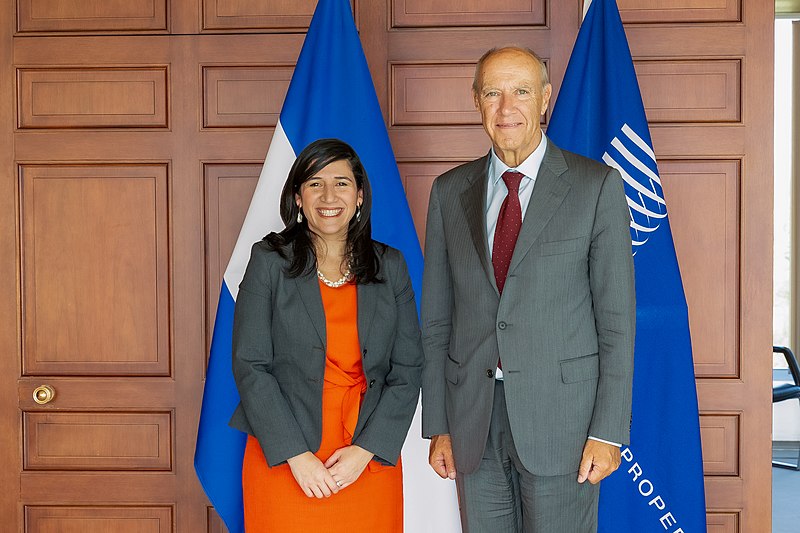
The Guatemalan Minister of Economy, Dr. Janio Rosales, and Foreign Minister Mario Búcaro, Minister of Foreign Affairs, participated in a meeting on Monday, February 14th, with the United States delegation led by Lindsey Zuluaga, Principal Advisor for Economic Affairs of the Office of the Vice President of the United States, Kamala Harris.
Also participating in the meeting were: Ryan Gwinn, Central America Strategist, Office of Central American Affairs and Office of Western Hemisphere Affairs; Jonathan Fantini Porter, Executive Director, Association for Central America; Mark Lopes, President/COO of the Partnership for Central America; Ann Marie Brouillette, Director of Programs, Alliance for Central America; Danielle Orihuela, Program Manager, Alliance for Central America, Whitney Dubinsky from USAID and John Szypula from the US Embassy in Guatemala.
The joint agreement on nearshoring and investment between the United States and Guatemala will trigger increased foreign direct investment
The joint agreement on nearshoring and investment between the United States and Guatemala will strengthen the attraction of foreign direct investment. This result will come to fruition through the new Central America Forward Plan. The plan maps out a course of action that includes a series of investment events and economic tours in the United States and Guatemala. These activities will strengthen economic and trade ties between the two nations.
Likewise, the Government of Guatemala is working together with its country’s private sector within the framework of the plan Guatemala No Se Detiene (Guatemala Does Not Stop). Guatemala No Se Detiene has prioritized attracting foreign investment to generate more opportunities for Guatemalan workers. With this program, economic officials seek to increase the country’s competitiveness.
Guatemala-based companies can reduce supply chain risk
The global economy is highly interconnected, and disruptions in one region can significantly affect businesses and economic conditions in other regions. In particular, opportunities have been identified in the joint agreement on nearshoring and investment between the United States and Guatemala for companies with a nearshoring model in the textile, mining, medical device, and food safety sectors, among others.
During his speech, the Minister of Economy thanked the attendees for their presence and the support received from the United States. Also, he highlighted the work of Ambassador William Pop for his commitment to Guatemala. Ambassador Pop commented, “all these important advances and the achievements that we are having in economic matters are of great value. We need to continue working on actions to strengthen the Guatemalan economy. This will improve the living conditions of Guatemalans and will generate more prosperity, security, and a better future”.
The United States is helping transform Guatemala
The United States government has been a crucial part of this transformation. It has contributed to the economic development of Guatemala by building walls of prosperity by attracting more foreign investment. The companies that aim to supply important markets and implement a nearshoring model are significant ones.
From this account, progress has already been made in the joint agreement on nearshoring and investment between the United States and Guatemala. But, most importantly, it promotes the creation of jobs. In addition, it addresses the fundamental causes of migration within the framework of “good governance and good jobs.” With this in mind, it seeks to increase supply chain resilience through a strategy directed by the Guatemalan Ministry of Economy and the country’s Office of the Executive.
Alliances such as the Centroamérica Adelante (Forward Central America) initiative and Vice President Harris’ Call to Action are essential to future economic growth. They aim to strengthen the commitment of companies that invest in and support the comprehensive development of people and their families in the region.
The goal is to generate stable, long-term supply chains
The nearshoring model and the diversification of sources of raw materials and components is an essential additional step in the growth of companies. Achieving this will contribute to the long-term stability of corporate supply chains by investing in local suppliers and developing local production capacities.
For example, companies such as Walmart, Pricesmart, Nestlé, Millicom, Nextil, Target, and Yazaki have trusted in the productivity of the Guatemalan workforce and have benefited from the country’s strategic location.
As indicated, strategies to attract important companies have also been developed between the Ministry of Economy through PRONACOM and the Project Creating Economic Opportunities of USAID. This alliance has led to the establishment of Guatemalan operations by companies such as Yazaki, which has pioneered the country’s move toward more sophisticated industrial sectors with trained and qualified human resources.
During the meeting on the joint agreement on nearshoring and investment between the United States and Guatemala, various American Guatemala-based companies testified to the excellent business climate they have encountered while doing business in the country.
by Editor Latam | Mar 18, 2023 | FDI Latin America
The issue is not exclusive to Mexico, but after the Covid-19 pandemic, the word “nearshoring” began to monopolize the pages of trade industry and business publications. In forums, summits, or different events where the economy was discussed, the main conversation was the reconfiguration of supply chains globally and how these companies saw nearshoring in Mexico as a manufacturing platform to export to the largest market in the world: the United States.
Three years after the “boom” of the nearshoring concept, the benefits for the Mexican economy are tangible, and the future looks promising, according to experts; however, much work must be done.
The latest Nearshoring Tracker report by Credit Suisse shows the arrival of foreign investments related to the phenomenon of nearshoring Mexico. For example, it informed that during 2022, 102 investment announcements were made that committed investments valuing 18.1 billion dollars.
Benefits for 2023 of nearshoring in Mexico
To understand what visible benefits nearshoring will bring to Mexico this year, it was necessary to consult experts in the field, such as Dr. Luz María de la Mora, former Undersecretary of Foreign Trade of the Ministry of Economy. She was a key player in approaching industrialists to make manufacturing investments in Mexico.
For 2023, the expert sees greater flows of Foreign Direct Investment (FDI) and the development of clusters of industries participating in supply chains, such as automotive, auto parts, and electric batteries. In addition to this, she sees the consolidation and strengthening of the country’s capacity through more nearshoring in Mexico.
“The strengthening of regional supply chains, the creation of quality and well-paid jobs in companies that participate in these supply chains, will also be elements that we will see in Mexico,” said de la Mora.
For his part, Jorge Molina Larrondo, a foreign trade consultant, points out that the benefits depend on the type of foreign investment that is attracted and, to a large extent, on the legal certainty that the Mexican government offers to foreign capital. In any case, and even with little legal certainty, in addition to industries such as automotive, aerospace, medical device, and general manufacturing, he foresees the arrival of investment in things like consumer products and food and food processing plants. In addition, he anticipates that many projects that do not entail large investments will benefit from nearshoring in Mexico. He also sees the transfer of state-of-the-art technology and the creation of many long-term jobs.
Some tangible benefits are already beginning to be seen, such as the growth in the capacity of industrial parks. These facilities are increasing to expand nearshoring in Mexico for companies already established in the country and house new companies seeking to enter Mexico for the first time. This translates into the generation of sources of formal employment, maintains Samantha Atayde Arellano, partner at the firm RRH Consultores.
She argues that if Mexico knows how to take advantage of the context in which it finds itself, the position it occupies as a commercial partner of the United States, and its network of treaties, nearshoring in Mexico is presented as another tool to attract new investment or reinvestments in the country.
The appeal of nearshoring in Mexico in 2023
In her experience as a former Undersecretary of Foreign Trade, Luz Maria de la Mora believes that the sector that will benefit the most will be the automotive sector since it is transitioning towards manufacturing electric vehicles. It has announced important investments in recent months, such as the case of the General Motors complex in Ramos Arizpe. This facility will become its fifth plant in the country and will produce electric vehicles.
He also sees growing interest in producing electric batteries and their components and a significant investment opportunity in the semiconductor and electronic component sector to complement new investments in semiconductor manufacturing (“fabs”) in the United States.
“In the US, at least three large fabs are being built —TSMC and Intel, in Arizona, and Samsung, in Texas— which can have multiplier effects for Mexico’s participation in some segments of the industry’s supply chain,” he says.
In the same way, Atayde Arellano is confident that the automotive sector will top the list of the most benefited sectors since it is a strategic sector for the economies of the United States – Mexico – Canada (USMCA) region. It is followed by sectors such as aerospace, electrical and electronic, pharmaceutical and medical device, transportation, storage, and agro-industrial industries, as well as industries that use nearshoring in Mexico to focus on the development of software and other technologies.
Adriana García, coordinator of economic analysis at the Mexican think tank Cómo Vamos, comments that the immediate opportunity for nearshoring in Mexico in 2023 lies in 50 import categories that it shares with China. As a result, she feels that Mexico can occupy a greater proportion of the market share. These categories are in electronics, machinery, furniture, and auto parts manufacturing.
“This could be taken advantage of and translate into more investment and quality jobs for Mexico in the short term. A second opportunity will be to explore industries where we don’t have knowledge of and experience with, which would imply a larger investment,” she asserted
Mexico’s task
Carlos Véjar, International Trade and Arbitration lawyer at the Holland & Knight consultancy, assures that Mexico’s task to benefit from nearshoring is to get involved in a coordinated manner with the private sector to promote investment attraction through greater political and economic certainty for the export sector. This is in addition to facilitating the increase of new spaces to build industrial parks or expand existing ones to create spaces for more nearshoring in Mexico.
“Among the challenges that Mexico faces is to improve the supply and costs of renewable energy and water supply; solve the difficulties of the supply chain that arise, improve times in obtaining programs for exports (IMMEX), and provide greater security in the production regions and commercial routes,” says Véjar.
Along the same lines, Molina Larrondo believes the Mexican government wants to attract capital-intensive production. Doing so implies implementing state-of-the-art technology and creating many jobs in the long term (that is, producing products in the early stages of their life cycle). The Mexican government must change its discourse of constantly attacking the private sector. It must also enforce its intellectual property protection regime and reduce piracy.
“Everything depends on the current government and its attitude concerning nearshoring in Mexico. The United States is promoting the investment of its companies in countries that it considers “friendly” and “trustworthy,” which has been called “friend-shoring.” “For this reason, the attitude of the Mexican government is key to attracting new companies to the country,” he says.
On the other hand, the expert emphasizes that legal certainty must be generated by respecting what the country’s trade treaties and agreements and the laws that govern the country indicate. He also notes that the current government of Mexico must adopt a more positive attitude toward the private sector.
He stated the importance of “Enforcing and respecting the laws for the protection of intellectual property, reducing the cost of creating new jobs, and improving security.”
Regarding investment issues, the list of pending subjects that Mexico has is long, explains De la Mora, among which is investing in infrastructure and logistics, particularly in ports, highways, railways, airports, telecommunications, and 5G. In addition, investing in clean energy generation will also be important, as companies need to meet new requirements and emission reduction goals in addition to their growing energy capacity needs.
We can add the investment in human resource development since more engineers and technicians specialized in advanced manufacturing will be needed. Also important is water availability for industrial use and human consumption. Most notably, it is of primary importance to guarantee the rule of law that gives certainty to investments resulting from nearshoring in Mexico.
Adriana García sums it up best: Legal certainty is needed for Mexico to take advantage of the benefits of nearshoring in terms of greater investment and generation of quality jobs. This is especially true in the energy sector since the country must provide sufficient and necessary energy required by the country’s growing industrial base.
For information on starting a nearshore manufacturing facility in Mexico, contact LATAM FDI.