
+1 (520) 780-6269 investment@latamfdi.com
Three Argentine satellite and aerospace industry companies set trends with unique and innovative developments

Three Argentine satellite and aerospace industry companies set trends with unique and innovative developments

The Argentine satellite and aerospace industry can be competitive in the international market. The country can position itself to be a leader in the sector.

The Argentine satellite and aerospace industry is one of the booming strategic sectors that positions the country within the international market with innovative developments.

Through public-private coordination and the support of the Knowledge Economy Secretariat of Argentina’s Ministry of Economy, small and medium-sized national companies have generated unique and disruptive products such as a specialized parachute for aircraft pilots, a space rocket with biofuels and a satellite imaging system for the mining and oil industry 4.0.

Bet on local technical capacity in the Argentine satellite and aerospace industry

In 2003, Nicolás Lopez went to live in the United States due to the economic crisis at home. He began working in parachute factories in that country as a stitcher until, a few years later, he returned to his native Córdoba to set up his own repair shop that he named Aerorigging.

He began his project to create an emergency parachute for aircraft pilots. This item still needs to be manufactured in Argentina and is currently in the process of certification by the Argentine National Civil Aviation Administration (ANAC) with flight tests.

“This is my passion, and I intend to finish the verification process to demonstrate that this can be produced in Argentina. It is an industry that does not exist today, but Argentina has the technical capacity to do it. It is one part of a legal and possible aeronautical business, and we will bet that the conditions are here to advance,” said Nicolás of Aerorigging.

“The contribution of Argentina’s Ministry of Economy was significant because it accelerates time. Otherwise, carrying out this ambitious project would be practically impossible,” he added.

The Ministry of Knowledge Economy has financed 21 projects for over US $314 million through the Enhance Satellite and Aerospace Industry Program. Meanwhile, the 2023 call has a total budget of US $950 million and will grant Non-Refundable Contributions (ANR) for  US $36 million per individual project and US $81 million for collaborative works.

Newspace: a growing market that demands new technologies

“Let’s make an analogy that a rocket is a ferry that takes satellites to a certain orbit in space, but some need to go to another planet, the Moon, or even move from orbit. For that, we develop propulsion systems, which are larger engines that are comprehensive and complex that allow them to move from the place where they are released by the rocket to the final destination,” said Dan Eterberg, CEO of LIA Aerospace.

Initially, the company, located in the City of Buenos Aires, was born in 2019 with the idea of making space launch rockets such as the Zonda 1.0, the first biofuel rocket manufactured by a private company in the Argentine satellite and aerospace industry.

However, they soon realized this was a difficult market and decided to use the core technology already developed to create a system and a product.

“It is a completely global market. The large companies that make these systems are international corporations with much experience. Still, a company with a smaller satellite cannot spend the same amount or more on a propulsion system. That is Newspace, a company doing disruptive things that manage to lower costs with greater risk. That’s why they can hire a start-up like ours at an affordable price,” said Eterberg.

As the CEO of LIA Aerospace explained, the company is already holding conversations with clients from different parts of the world, such as the United States, England, and continental Europe. “What we see is a market that is growing and that will demand our technology in the coming years; in a short time, we will access an international market with a lot of added and strategic value, such as the space market,” he concluded.

The Argentine satellite and aerospace industry takes on the world

From Santa Fe de la Vera Cruz, Ingeap began developing a very little-known technique that works with satellite images to determine movements over large areas and remotely with great precision. The company uses external satellites from the European Space Agency to obtain the information it captures and, thus, provides services to Argentine national and international oil and mining companies.

“Being part of the Satellite and Aerospace Enhancement effort was a great opportunity that allowed us to incorporate equipment and broaden our perspectives. For small companies like ours, it is a critical point of leverage because it gives us the necessary support to innovate in techniques and to develop innovative products; without “that support, it would be much more difficult to be able to dedicate this time and these resources to a research and development idea,” commented the Executive Director of Ingeap, Francisco Tibaldo.

These types of technological developments, such as those of Aerorigging, LIA Aerospace, and Ingeap, set a precedent in the Argentine satellite and aerospace industry, which, in turn, enables the nation to be competitive in the international market and position itself as a regional and global leader in the sector.

Colombia Investment Summit 2023: Showcasing the Country’s Regions as Foreign Direct Investment Destinations

Colombia Investment Summit 2023: Showcasing the Country’s Regions as Foreign Direct Investment Destinations

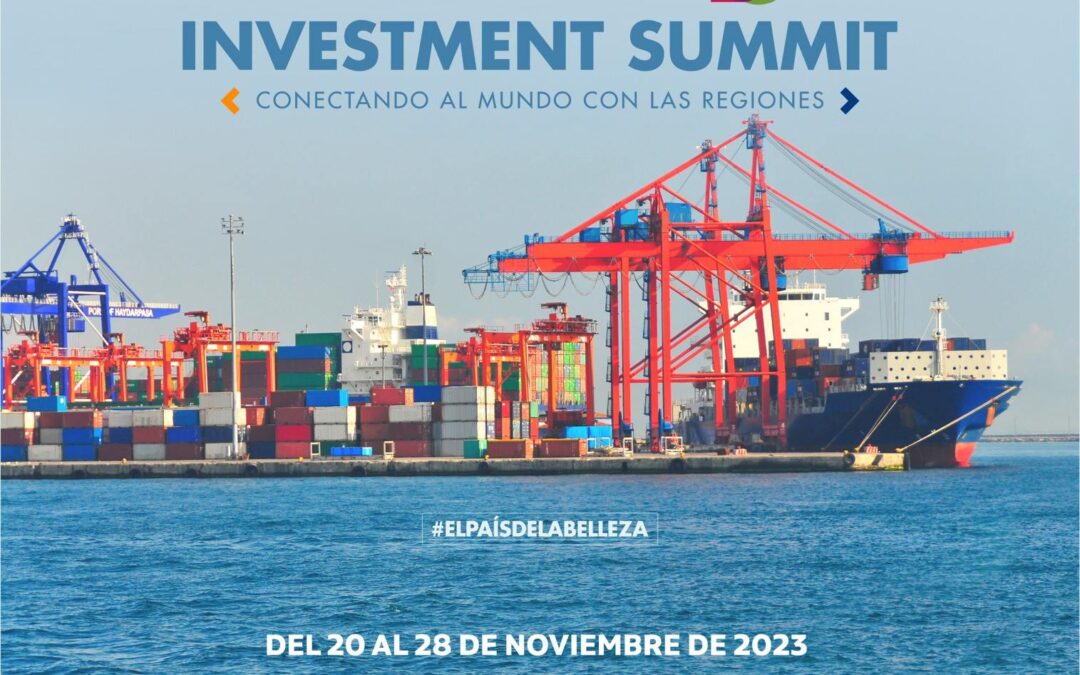
In its eighth edition, the Colombia Investment Summit 2023 will highlight the potential of various regions in the country as destinations for foreign investment.

The annual event that will take place from November 20 to November 28, 2023, is being organized by the Ministry of Commerce, Industry, and Tourism through ProColombia. ProColombia is the country’s national agency that promotes exports and foreign direct investment in the country.

Germán Umaña Mendoza, Minister of Commerce, Industry, and Tourism, emphasized, “In President Gustavo Petro’s government, we aim to attract and materialize productive and sustainable investment projects that reach all our regions and foster development. For this four-year term, we have set an ambitious goal of attracting non-mining foreign direct investment exceeding $13 billion, enabling us to create jobs and prosperity across the country.”

Informational Programs are Planned

The Summit includes an academic agenda and comprehensive information on regional and sectoral offerings for entrepreneurs from around the world who will be in attendance.

The priority sectors for attracting foreign direct investment to Colombia align with the National Government’s strategy, which seeks to promote sustainable investment and contribute to a just energy transition, competitiveness, and integrated territorial development. These sectors include technology-based services, agribusiness, auto parts, infrastructure, shipbuilding, tourism, renewable energy, hydrogen, and light manufacturing.

“In this edition of the Colombia Investment Summit, the first under the ‘Change’ government, the focus will be on Colombian regions. During the event, strategic regions of the country such as Antioquia, Valle del Cauca, Santander, Córdoba, Coffee Cultural Landscape, Magdalena, Atlántico, Bolívar, Meta, Cundinamarca, and Bogotá will host sectoral tours. These will enable investors to immerse themselves in the richness and diversity that ‘Colombia, the country of beauty,’ has to offer,” said Carmen Caballero, President of ProColombia.

Colombia Investment Summit Event Schedule

The event will kick off with a high-level academic agenda in Bogotá on November 20, featuring the participation of President Gustavo Petro Urrego, Minister of Commerce, Industry, and Tourism Germán Umaña Mendoza, and several members of the presidential cabinet.

The Colombia Investment Summit will also feature contributions from the Bogotá Chamber of Commerce, the Mayor’s Office of Bogotá, and Carmen Caballero, President of ProColombia, as the event host. Experts and analysts from the country’s investment environment will share their perspectives and knowledge with those in attendance.

Caballero added, “A key element of this edition of the Colombia Investment Summit is the strategic collaboration with Investment Promotion Agencies (IPAs) in the regions, which will play a fundamental role in presenting a strong and consolidated investment offering for Colombia as a leading foreign investment destination in Latin America.”

Foreign investors can forge strategic alliances, explore investment projects, and connect with critical entities for their entry into Colombia, including national government bodies, free trade zones, local authorities, associations, and regional promotion agencies.

Foreign Direct Investment: A Pillar of the Government Agenda

The Colombian government has reaffirmed its commitment to attracting investment that contributes to peacebuilding and benefits sectors most affected by inequality, in line with the values of social, economic, and environmental justice the country seeks to achieve.

ProColombia, as the leading entity promoting foreign direct investment in Colombia, works to drive sustainable growth in the country by facilitating the arrival of foreign investment that encourages innovation and technology transfer, generates value-added exports, and fosters human capacity development.

During the first year of President Gustavo Petro’s administration, ProColombia and regional investment promotion agencies (APRIs) facilitated the arrival of 178 new investment projects that are expected to create over 79,900 new jobs in various regions of the country over the next two to three years.

Colombia is an Attractive Destination for Foreign Direct Investment

Attendees at the Colombia Investment Summit will learn that the country has emerged as an attractive destination for foreign direct investment (FDI) due to a combination of factors that make it a compelling choice for international businesses. First and foremost, Colombia’s strategic geographic location in South America offers easy access to markets in North and South America, making it a gateway for companies looking to expand their presence in the region. Additionally, the country has made significant strides in improving its business environment by implementing economic reforms, reducing bureaucratic barriers, and enhancing legal and regulatory frameworks. These efforts have boosted investor confidence and facilitated smoother FDI processes.

Furthermore, Colombia possesses abundant natural resources, including oil, minerals, and agricultural products, which continue to attract FDI in sectors like energy, mining, and agriculture. The nation’s economic stability and steady GDP growth have also bolstered its appeal to investors seeking long-term prospects. Colombia’s youthful and increasingly skilled workforce also offers a competitive advantage, particularly in the technology and services sectors. The government’s commitment to innovation and technology-driven industries, coupled with a burgeoning startup ecosystem, has created opportunities for foreign investors looking to tap into the country’s entrepreneurial spirit. Collectively, these factors underscore Colombia’s status as a promising destination for foreign direct investment, with ample potential for sustainable growth and profitability.

Visit the Colombia Investment Summit 2023 website.

The maquiladora industry in Paraguay captures investments exceeding US$ 1 billion

The maquiladora industry in Paraguay captures investments exceeding US$ 1 billion

At the end of the first half of 2023, the total investment in the maquiladora industry in Paraguay reached just over US$ 1 billion. After more than two decades of the regime being in effect, the maquiladora sector achieved the highest level of productive capacity in its entire history.

Cnime provides export statistics

The National Council of Export Maquiladora Industries (Cnime) of Paraguay highlights in its report that, in the breakdown of exported products, it is observed that “auto parts” reached 27% of the total and the second most important item produced is that of “clothing and textiles” with 20%.

Other important items correspond to “food products” with 15%, “aluminum and its manufactures” with 13%, and “plastics and its manufactures” with 6%.

Among the main export destinations for Paraguayan maquiladora exports in the first half of 2023, Brazil stood out with 57%. Following Brazil was Argentina, 12%; USA, 7%; Netherlands, 6%; Chile, 5%; and Uruguay, 3%, according to the Ministry of Industry and Commerce (MIC) information.

Shipments corresponding to the year’s first half reached 492 million dollars, registering a slight decrease of 2% compared to the first half of 2022.

Imports of inputs destined for industrial transformation under the Maquila Regime reached a total of US$ 265 million, 14% less compared to the same period in 2022, With which the trade balance (export minus import) from January to June grew 16%, thus reaching a total of US$ 227 million.

Total employment in the maquiladora industry in Paraguay

The report highlights that the more than US$1 billion investment coincides with the highest employment levels generated in Paraguay’s history of the maquila industry. Direct employment (workers on companies’ payroll and in the Social Security Institute (IPS)) reached 22,319 workers, 6% more than the first half of 2022.

Regarding indirect employment (formal workers who provide services in companies that support the maquila industry), it is estimated that the maquiladora activity helped create 10,713 jobs.

The employment generated by the maquiladora industry in Paraguay has a “spillover effect” or “multiplier” (which is created when direct and indirect workers collect their salaries and go to markets to procure goods and services) and an estimated incidence of 32,867 workers.

The Paraguayan maquila regime has supported creating an estimated 65,899 jobs, either directly, indirectly, or through a spillover (multiplier) effect.

The largest sectors of job creation in the area of the maquila regime correspond to “auto parts” (30%), “confections” (27%), “intangible services” (11%), and “plastics and their manufacturers” ( 9%). Together, these four sectors are responsible for 77% of job creation in the maquiladora industry.

Currently, there are 278 maquiladora companies in Paraguay with approved programs, of which 48% are located in the Department of Alto Paraná. The second region that can attract maquiladora investments corresponds to the Central Department and Capital City, which comprise 36.3% of all maquiladora operations. Finally, the Department of Amambay encouraged the establishment of 6.8% of production facilities in the maquiladora industry in Paraguay.

Projections for the remainder of 2023

Referring to the projections for the remaining months in 2023, the report estimates a 9% growth in maquila exports this year, with a total of US$ 1.12 billion in shipments being achieved. These projections were based on conservative estimates, where the uncertainty of the elections in Brazil and Paraguay slowed down shipments in the first semester. However, assuming that in the remainder of the second, they will improve once the electoral uncertainty scenario is overcome.

Additionally, it is expected that this year, the goal of 23,000 direct jobs generated in the maquiladora industry in Paraguay will be reached, considering that in the first half of this year, a total of 21 new projects were approved, which contributed about US$ 40 million in new investments.

The importance of the maquiladora industry in Paraguay

The maquiladora industry in Paraguay plays a pivotal role in the country’s economic landscape, representing a cornerstone of the nation’s development and economic stability. Paraguay’s strategic location, low labor costs, and business-friendly policies have transformed it into a burgeoning hub for maquiladoras, attracting numerous foreign companies seeking cost-effective manufacturing solutions. This industry provides a significant source of employment for the Paraguayan workforce and contributes substantially to the nation’s export revenue. Maquiladoras have fostered technology transfer, skill development, and industrial diversification, elevating Paraguay’s competitiveness on the global stage.

Furthermore, the maquiladora industry bolsters Paraguay’s broader economic growth by attracting foreign direct investment, promoting the development of modern infrastructure, and fostering innovation within the manufacturing sector. The sector’s expansion has led to increased production capacities, which, in turn, have strengthened Paraguay’s position in regional and global supply chains. Moreover, the revenue generated from maquiladoras has enabled the government to invest in essential public services, education, and healthcare, ultimately improving the quality of life for its citizens. In conclusion, the maquiladora industry in Paraguay stands as a linchpin in the South American nation’s economic development, underlining its significance as a catalyst for job creation, foreign investment, and sustainable progress.

The Guatemalan economy must integrate into regional value chains

The Guatemalan economy must integrate into regional value chains

Guest Blog Post: Wendy Mena, Investment Promotion Advisor, Invest Guatemala

Small and medium-sized companies must enter the formal sector of the Guatemalan economy. By integrating themselves into Central American value chains, Guatemala and the region will become more attractive to international investors.

The Guatemalan economy benefits from regional trade

Guatemala, as one of the leading trading partners of Central American countries, has an excellent opportunity to integrate into regional value chains. Currently, Guatemala is an essential supplier to the countries of the region of inputs such as packaging, containers, agricultural and agro-industrial products, and textile materials that complement their production processes. This makes Guatemala a key partner in terms of regional value chains. The formalization and internationalization of small and medium-sized businesses and the attraction of investments in the Guatemalan economy will strengthen this complementarity and make the entire region more resilient and attractive to investors. Central American countries should focus on something other than competing among themselves but on strengthening the areas where their economies complement each other.

An event called ExpoParks was recently held in Costa Rica. This was the first gathering in the region dedicated to publicizing the offer of industrial parks and free zones in Central America and the Dominican Republic to companies looking for options to move their operations to countries closer to North American consumers. That is, it offered options to implement the nearshoring strategy. This is a strategy that is attracting historic investment flows to Latin America. It is a crucial opportunity for the Guatemalan economy and the rest of Central America.

Guatemala can benefit from its proximity to Mexico

To attract foreign direct investment, it is necessary to concentrate on different areas. On the one hand, Guatemala must formulate and implement policies to promote and modernize the supply of industrial parks. This is the case for the Guatemalan economy because the rest of the region has an advantage in industrial areas, ready for new companies to start operations and specialize in industries with greater added value. Second, because it is the closest neighbor to Mexico, Guatemala can take advantage of the opportunities that the former country can no longer absorb. On the other hand, in order to further fortify the Guatemalan economy, it is vital to strengthen the network of local suppliers to complement the value chains.

Given the significant nearshoring investment flows that its neighbor to the North generates, Guatemala’s proximity to Mexico opens the doors to opportunities. Guatemala can integrate itself into low and medium-complexity manufacturing value chains to supply clusters such as automotive, agri-food, medical devices, pharmaceuticals, and other light manufacturing activities. It can also become the logistics hub for North America for these industries thanks to Guatemala’s competitive distribution costs.

Along with the rest of Central America, the Guatemalan economy shares competitive advantages for nearshoring, such as strategic location, cultural affinity with North America, competitive operating costs, and a substantial network of free trade agreements. The industries’ specialization differentiates Guatemala, the workforce’s qualities, and the regulations for business start-ups. Like Costa Rica, Guatemala stands out for the size of its domestic market, political and economic stability, the redundancy of renewable electrical energy, and a well-organized business sector. However, those who view Central America from abroad see a region with a common foreign trade framework and economic institutions that unite its countries. A regional approach to development is vital since, in terms of population size and total production, the countries of the isthmus are very small when they act individually.

Central America has experienced strong economic growth in recent years

According to data from the World Bank, presented by one of the leading companies in corporate real estate services, Central America and the Dominican Republic represent 0.8% of the world’s population (61 million inhabitants) and 0.4 of the world’s Gross Domestic Product (GDP) in 2022. Central America is a collection of small economies. However, the region stands out for reporting the highest economic growth figures in two recent years, with 11.1% in 2021 and 4.9% in 2022. It also stands out for having a solid export structure, in which exports of goods and services represent 34.1% of GDP and by attracting foreign investment flows that have averaged 4.3% with respect to GDP.

This shows that, as a region, Central America offers more than a strategic location for nearshoring. As purely exporting countries, the region has the potential to integrate into global value chains with higher value-added products to the extent that it can also take advantage of the complementarity of the region’s economies. This will enable Central American countries to work together to face challenges that limit more investment from reaching the region, such as the availability of qualified labor, development of adequate productive infrastructure, modern investment attraction regimes, and promoting the digitalization and simplification of procedures that multinationals must comply with to start operations.

This is why, to take advantage of the nearshoring strategy better, Guatemala must focus on developing a network of suppliers to integrate into the region’s value chains that help create an ecosystem to form new economic clusters in the country. Micro, small, and medium-sized companies in the Guatemalan economy have an excellent opportunity to be part of this network of suppliers and thus grow their businesses or start new ones. This will also allow exports to grow, attract investment to more sophisticated sectors, and generate the more than 2.5 million good-quality jobs that the country needs

This post is a translated and edited version of an opinion piece that was originally published at PrensaLibre.com


The Production of Lithium in Bolivia: Opportunities and Challenges

The Production of Lithium in Bolivia: Opportunities and Challenges

Introduction

Lithium, often referred to as “white gold,” has emerged as a critical resource in the 21st century, owing to its vital role in the global transition to clean energy and the proliferation of high-tech devices. As the demand for lithium-ion batteries soars, countries with substantial lithium reserves are poised to play a pivotal role in the global supply chain. Bolivia, known for its vast lithium deposits in the Salar de Uyuni, has garnered significant attention for its potential to become a major player in lithium production. This blog post explores lithium production in Bolivia, highlighting the opportunities it presents and the challenges that must be overcome to harness this valuable resource.

Lithium in Bolivia: A Precious Commodity in the Modern World

Lithium’s significance in contemporary society cannot be overstated. It is a critical component of lithium-ion batteries, which power many devices, from smartphones to electric vehicles (EVs) and even grid-scale energy storage systems. The global shift towards renewable energy sources and the electrification of transport has created an insatiable demand for lithium, making it a critical resource for a sustainable future.

The Lithium-ion Battery Revolution

Lithium-ion batteries have revolutionized several industries, most notably the automotive sector. EVs are rapidly gaining popularity as a cleaner and more efficient alternative to traditional gasoline-powered vehicles. These batteries are also integral to renewable energy systems, allowing for the efficient storage of energy generated from sources like wind and solar power, ultimately reducing dependence on fossil fuels. As a result, lithium has become indispensable in the transition towards a low-carbon economy.

The Global Lithium Market

The global lithium market has experienced exponential growth in recent years. This growth can be attributed to a surge in demand for EVs, government incentives promoting clean energy technologies, and an increased focus on reducing greenhouse gas emissions. Consequently, the price of lithium has seen fluctuations, attracting the attention of countries with significant lithium reserves.

Reserves of Lithium in Bolivia Reserves: The Salar de Uyuni

Bolivia’s Salar de Uyuni is home to the world’s largest known lithium reserves in Bolivia. It is estimated at around 9 million tons. This vast salt flat of over 10,000 square kilometers contains lithium-rich brine beneath its surface. The sheer scale of these reserves places Bolivia in a unique position to become a significant player in the global lithium market.

Advantages of the Salar de Uyuni

The Salar de Uyuni’s lithium-rich brine offers several advantages for lithium production:

  1. Abundant Resource: The sheer size of the Salar de Uyuni’s lithium reserves dwarfs those of other lithium-producing nations, giving Bolivia a competitive edge.
  2. Low-Cost Extraction: The brine extraction process used in the Salar de Uyuni is generally considered cost-effective compared to traditional hard-rock mining methods.
  3. Lower Environmental Impact: Brine extraction typically has a smaller environmental footprint than mining, aligning with the global push for sustainable resource extraction.
  4. Adjacency to Neighboring Markets: Bolivia’s proximity to major lithium-consuming markets, such as the United States and Europe, reduces transportation costs and logistical challenges.

Bolivia’s Ambitions in the Lithium Market

Bolivia’s government has recognized the potential of its lithium resources and has taken steps to harness this opportunity. The state-owned company Yacimientos de Litio Bolivianos (YLB) was established to oversee lithium production in the country. Bolivia aims to export lithium carbonate and other derivatives and develop its battery manufacturing industry, thus adding more value to its lithium resources.

Challenges to Lithium Production in Bolivia

While Bolivia possesses substantial advantages for lithium production, several challenges must be addressed to realize its full potential in the global lithium market.

Technological and Infrastructural Constraints

The country faces technological and infrastructural limitations that hinder the development of lithium in Bolivia. Establishing lithium extraction and processing facilities requires significant investment in advanced technology and infrastructure. Moreover, the need for domestic expertise in lithium production necessitates collaboration with international partners.

Economic Viability

The economic viability of lithium production in Bolivia depends on several factors, including market prices, production costs, and economies of scale. The volatility of lithium prices can make long-term planning and investment challenging, especially for a nation seeking to compete with established lithium producers like Australia and Chile.

Environmental Concerns

Even from brine sources, lithium extraction in Bolivia can have environmental consequences if not appropriately managed. Excessive water consumption, potential contamination of groundwater, and the release of greenhouse gases during processing are significant environmental concerns. Bolivia must develop sustainable and eco-friendly practices to mitigate these issues and meet international environmental standards.

Market Dynamics and Competition

The global lithium market is highly competitive, with established players dominating production and supply chains. Bolivia must compete with countries like Australia, Chile, and China, which have extensive experience and infrastructure in lithium production. Establishing a foothold in the market requires strategic planning and partnerships to secure a share of global lithium demand.

Geopolitical Factors

The geopolitics surrounding lithium production can present both opportunities and challenges. Bolivia’s lithium reserves have attracted the interest of international investors and nations looking to secure their supply chains. Balancing foreign investments and protecting national interests can be a delicate task for Bolivia’s government.

Opportunities for Bolivia in the Lithium Market

Despite the challenges, Bolivia has several opportunities to become a prominent lithium producer on the global stage.

Collaboration with International Partners

Bolivia can leverage its lithium resources by collaborating with international companies and governments with expertise in lithium production. Joint ventures and partnerships can provide access to capital, technology, and knowledge, accelerating the development of Bolivia’s lithium industry.

Sustainable Practices to Develop Lithium in Bolivia

Bolivia can position itself as a leader in sustainable lithium production. Implementing environmentally responsible practices can attract environmentally conscious consumers and investors who prioritize eco-friendly products and supply chains.

Vertical Integration

Bolivia’s goal of developing its battery manufacturing industry represents a significant opportunity to capture more value from its lithium resources. Vertical integration would allow the country to produce high-value battery components, creating jobs and boosting the economy.

Diversification of Products

Rather than solely exporting raw lithium materials, Bolivia can explore the production of lithium-based products, such as batteries, cathodes, and electrolytes. Diversifying its product range can increase profitability and reduce vulnerability to market fluctuations.

Geopolitical Leverage

Lithium resources in Bolivia can be used as leverage in international negotiations and partnerships. By strategically managing its lithium assets, Bolivia can secure favorable deals and investments that benefit its economy and development projects.

Conclusion: The Path Forward for Bolivia’s Lithium Industry

Bolivia’s lithium reserves in the Salar de Uyuni hold the potential to transform the nation’s economy and contribute to the global transition to clean energy. However, realizing this potential requires careful planning, collaboration, and adherence to sustainable practices. Bolivia must address technological, infrastructural, economic, and environmental challenges while seizing opportunities for collaboration and diversification.

The future of Bolivia’s lithium industry hinges on its ability to balance economic interests with environmental stewardship, navigate the competitive global market, and leverage its unique position in the geopolitics of lithium production. With the right strategies and investments, Bolivia can emerge as a significant player in the global lithium market, securing its place in the clean energy revolution and driving economic growth for years to come.

The United States-Panama Free Trade Agreement: A Comprehensive Analysis and Review

The United States-Panama Free Trade Agreement: A Comprehensive Analysis and Review

Introduction

The United States-Panama Free Trade Agreement (FTA) is a testament to the enduring importance of international trade in the modern global economy. Signed on June 28, 2007, and implemented on October 31, 2012, this agreement has significantly shaped the economic relations between the United States and Panama. In this blog, we will delve into the historical context, key provisions, economic impact, and geopolitical implications of the U.S.-Panama FTA, as well as recent calls by the Panamanian President, Laurentino Cortizo Cohen, to review the accord. By examining these aspects, we aim to comprehensively understand the agreement’s significance and assess its outcomes over the years.

Historical Context

To appreciate the importance of the United States-Panama Free Trade Agreement, one must first understand the historical context that led to its negotiation and eventual implementation. Panama’s historical ties with the United States can be traced back to the early 20th century when the U.S. supported Panama’s secession from Colombia and signed the Hay-Bunau-Varilla Treaty in 1903, granting the U.S. control over the Panama Canal Zone.

The Panama Canal, completed in 1914, became a crucial maritime route connecting the Atlantic and Pacific Oceans. For decades, the U.S. maintained a strong military and economic presence in Panama due to its strategic interest in controlling this vital waterway. However, as the 20th century progressed, anti-American sentiment grew in Panama, and calls for the return of the Canal Zone to Panamanian control intensified.

The Torrijos-Carter Treaties of 1977 marked a significant turning point in U.S.-Panama relations. These treaties set the stage for the eventual transfer of the Panama Canal to Panama in 1999. With the canal’s return, Panama gained control over one of the world’s most important trade routes, positioning itself as a critical player in global commerce. This shift in the geopolitical landscape created an opportunity for both countries to deepen their economic ties through a free trade agreement.

Key Provisions of the U.S.-Panama Free Trade Agreement

The U.S.-Panama FTA is a comprehensive trade agreement that covers a wide range of economic sectors. Some of its key provisions include:

Tariff Elimination: The agreement provided for the gradual elimination of tariffs on goods traded between the two countries. This provision of the United States-Panama Free Trade Agreement has benefited American and Panamanian businesses by reducing the cost of imports and exports.

Services and Investment: The FTA promotes trade liberalization in services and encourages foreign investment. It provides a framework for protecting intellectual property rights, which is crucial for innovation and economic development.

Agricultural Trade: The FTA addresses various agricultural issues, including removing trade barriers and establishing quotas for certain agricultural products. This has expanded market access for American farmers and agribusinesses in Panama.

Labor and Environmental Standards: The United States-Panama Free Trade Agreement includes provisions to improve both countries’ labor rights and environmental protections. This reflects a growing recognition of the importance of sustainable and socially responsible trade practices.

Dispute Resolution: The FTA establishes mechanisms for resolving trade disputes between the two countries, ensuring that trade issues are addressed through a structured and transparent process.

Economic Impact

Since the implementation of the U.S.-Panama FTA in 2012, both countries have experienced significant economic benefits.

For the United States, the agreement has opened up new opportunities for American businesses. U.S. exports to Panama have increased substantially, with sectors like machinery, agriculture, and manufacturing benefiting the most. American farmers, in particular, have seen a surge in exports of products such as wheat, soybeans, and poultry. Panama has become a key market for U.S. agricultural goods, significantly boosting the American agricultural sector.

In Panama, the FTA has also positively impacted the economy. The agreement has facilitated increased foreign investment, providing a stable and predictable framework for conducting business. Panama’s regional financial and logistical hub status has attracted American companies seeking to expand their presence in Central and South America. Additionally, eliminating tariffs has made American products more affordable for Panamanian consumers, improving living standards.

Furthermore, the U.S.-Panama FTA has encouraged economic diversification in Panama. The country has expanded its exports beyond traditional sectors like agriculture, including financial services, information technology, and logistics. This diversification has made Panama’s economy more resilient to external shocks and less reliant on a single sector.

Geopolitical Implications

Beyond the economic impact, the United States-Panama Free Trade Agreement has significant geopolitical implications. It underscores the United States’ commitment to strengthening its ties with its neighbors in the Western Hemisphere. By fostering economic integration and cooperation, the agreement promotes stability and prosperity in the region, which is in the interest of both countries.

Moreover, the United States-Panama Free Trade Agreement has bolstered Panama’s regional trade and logistics hub role. Its strategic location at the crossroads of North and South America, coupled with the expanded Panama Canal, has made the country a linchpin in global trade routes. As Panama continues to develop its infrastructure and logistics capabilities, it becomes an increasingly important partner for the United States in facilitating the flow of goods between the Atlantic and Pacific Oceans.

The FTA has also helped to strengthen diplomatic ties between the two countries. By engaging in a mutually beneficial economic partnership, the United States and Panama have built a foundation for cooperation in other areas, such as security, counterterrorism, and environmental conservation.

Challenges and Future Prospects

While the U.S.-Panama FTA has delivered numerous benefits, it has been challenging. One of the key challenges has been ensuring that trade benefits are distributed equitably within both countries. Critics argue that the agreement has primarily benefited large corporations and multinational firms, while smaller businesses and workers may not have reaped the same rewards. Addressing these disparities and promoting inclusive economic growth remains an ongoing challenge for both governments.

The FTA’s success is also contingent on maintaining a stable and predictable trade environment. Changes in political leadership, shifts in public opinion, or alterations to trade policies could disrupt the gains achieved through the agreement. Therefore, both countries must continue to commit to free trade and open markets to ensure the agreement’s longevity.

Looking to the future, there are opportunities to expand and deepen the U.S.-Panama economic relationship. One potential growth area is the digital economy, where both countries could work together to facilitate e-commerce and digital trade. Panama’s strong financial and technological infrastructure positions make it an attractive partner for American tech companies looking to expand in the region.

Furthermore, the United States and Panama can collaborate on addressing common challenges such as climate change and environmental conservation. By incorporating sustainable practices into their trade relationship, they can demonstrate leadership in promoting environmentally responsible trade.

Calls to review the United States-Panama Free Trade Agreement

The President of the Republic, Laurentino Cortizo Cohen, recently announced that the Panamanian Government formally requested the United States ( USA ) to review five sensitive products covered under the free trade agreement with that country.

Cortizo Cohen, who announced before hundreds of producers gathered at the National Livestock Congress held in La Villa de Los Santos, announced that this review was requested during a recent visit of the U.S. Secretary of Commerce, Gina Raimondo.

He highlighted that in that meeting, he expressed to the U.S. Government official his interest in engaging with the Secretary of Agriculture of that nation and other authorities of the U.S. Government to discuss this request from the Panamanian Government.

Cortizo Cohen reported that Panama has made progress in efforts to expedite health equivalence with the U.S., which would facilitate the export of Panamanian meat to the U.S. market.

Cortizo met on July 20 with the United States Secretary of Commerce, Gina Raimondo, to strengthen the ties of collaboration between both countries.

Raimondo’s visit came after the announcement made by the United States Department of State, in which the selection of Panama was announced as one of the seven countries worldwide with which a collaboration will be established to strengthen the semiconductor global value chain.

The Government of Panama requests a specific review of the terms and conditions of the Tariff Reduction Program agreed upon in the United States-Panama Free Trade Agreement for certain agricultural products sensitive to Panama, specifically rice, milk and dairy derivatives, beef, chicken, and pork.

Panama maintains that “the current TPC is not a rigid instrument, since in addition to establishing an institutional framework to monitor and ensure faithful compliance with the established standards and commitments, it also provides for spaces and mechanisms to make adjustments, taking into account conditions that were unforeseen at the time of its negotiation.”

Conclusion

The United States-Panama Free Trade Agreement represents a significant milestone in the economic and diplomatic relations between the two countries. Over the years, it has delivered substantial economic benefits, facilitated the diversification of Panama’s economy, and solidified Panama’s position as a regional trade hub. Furthermore, it has strengthened diplomatic ties and promoted stability in the Western Hemisphere.

However, challenges remain in ensuring that trade benefits are distributed equitably and maintaining a stable trade environment. To build on the successes of the FTA, both the United States and Panama must continue to work together, foster innovation, and explore new avenues.