
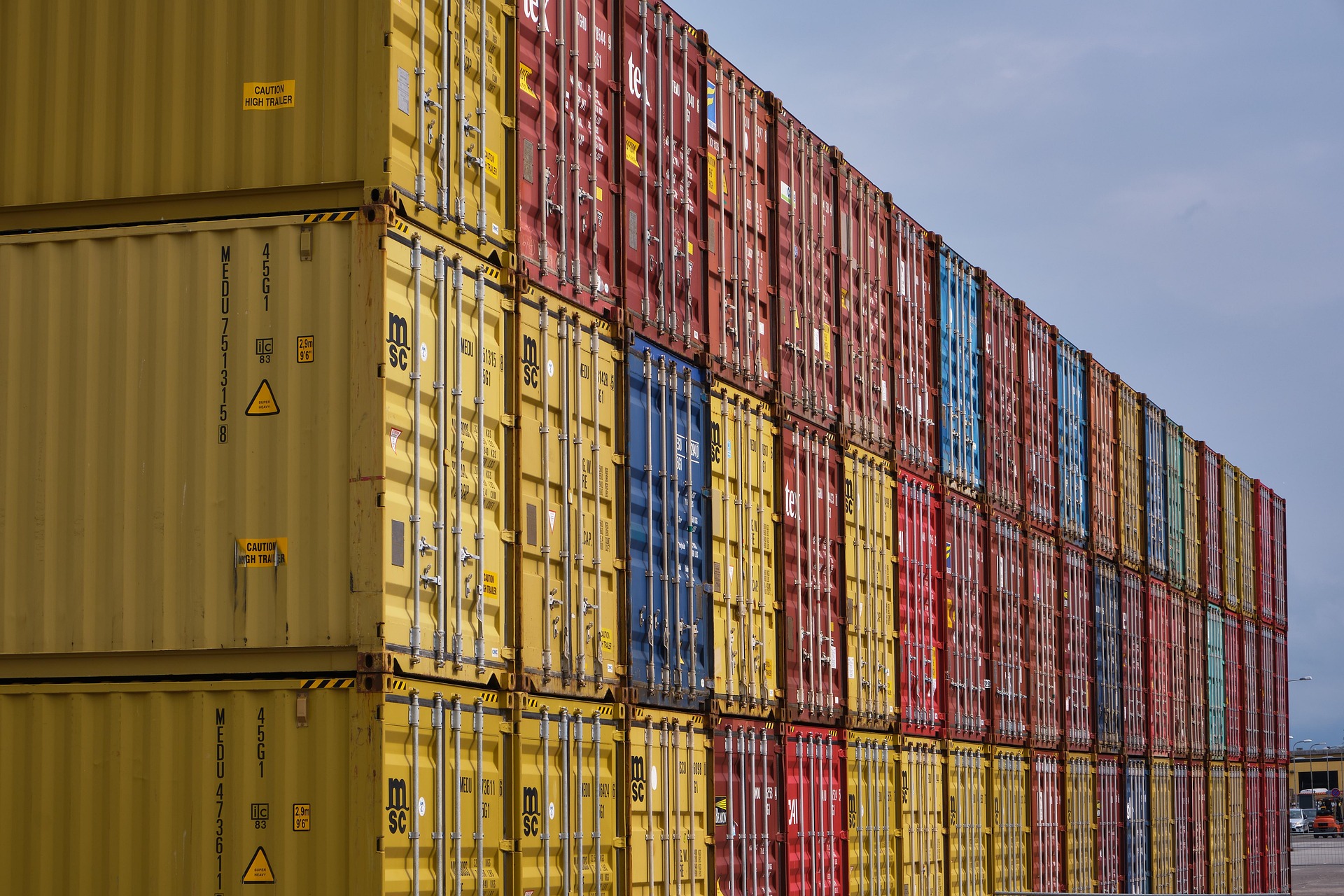
The trade agreement between the United States and El Salvador provides new opportunities for foreign investors by eliminating barriers and granting better access for Salvadoran exporters in priority sectors.
A trade agreement between the United States and El Salvador, signed on January 29, elevates key sectors for investment in El Salvador by eliminating barriers and providing preferential treatment to Salvadoran exporters, signaling an openness to productive economic integration between the two countries, a new report by the Inter-American Dialogue said.
Trade pact sends clear signal to markets
Under the terms of the trade agreement between the United States and El Salvador, markets received a clear signal that both countries were willing to increase productive economic integration by eliminating barriers and increasing predictability between trade partners.
But beyond providing certainty on tariffs and improving the investment climate through deregulation, the pact acts as a key turning point in Salvadoran economic policy.
Entering into force at a critical time for El Salvador’s economic development agenda, this deal is expected to stimulate economic growth by improving macroeconomic conditions.
Investment enhanced by macroeconomic growth
El Salvador expects its economy to grow by approximately 3% over the next two years, helped by fiscal policies seeking to consolidate the budget, multilateral assistance, and increased dynamism of exports to the United States markets, as well as the possibility of attracting new foreign direct investment.
Signed during a period of renewed openness to foreign investment in sectors like critical minerals, this trade agreement between the United States and El Salvador couldn’t have arrived at a better time.
Signed after El Salvador ended a nationwide moratorium on metallic mining in 2024, the deal lifts barriers for U.S. companies seeking to capitalize on El Salvador’s mining potential, while the country’s full dollarization presents an added layer of stability by minimizing exchange-rate risk.
Sarah Phillips, northern Latin America manager at McLarty Associates, told the Dialogue:
“By eliminating tariffs, the agreement increases the competitiveness of Salvadoran exports vs. other agreement members, such as Nicaragua.”
Senior Policy Analyst Samuel George details how the pact positions El Salvador as a reliable investment destination:
“The deal stands to benefit El Salvador by lowering costs for importers in the United States, introducing greater predictability and transparency around customs procedures, and modernizing import licensing requirements.”
Trade agreement supports sectors like infrastructure, mining, and more
U.S. allies like El Salvador will benefit from stronger trade cooperation in key areas, such as critical minerals and sectors identified by the United States government as priorities in its national security strategy, including telecommunications and infrastructure.
Importantly, sectors such as critical minerals development are also seen by President Nayib Bukele’s government as urgent economic needs for the Central American nation.
Beyond granting immediate benefits to exporters as summarized by Dialogue’s Samuel George, the trade agreement between the United States and El Salvador:
- Eliminates tariffs of up to 10% on goods such as textiles and apparel
- Restores duty-free access under the CAFTA-DR trade agreement
- Boosts competitiveness of El Salvador’s maquila industry relative to competitor countries
- Updates sanitary and phytosanitary regulations
- Promotes digitalization of customs processes
Exports gain an opportunity for improvement, FDI stands to increase
Industry experts said the deal also affords the opportunity for greater improvements for exporters and capital inflows into the small Central American nation.
“This is meaningful because over 30% of Salvadoran exports go to the United States, so any improvement in access can have macroeconomic impacts,” said Victoria Chonn Ching, a fellow at the Atlantic Council.
Among the sectors that could stand to benefit the most from the United States and El Salvador trade agreement are telecommunications, infrastructure, critical minerals development, and advanced manufacturing.
Mining attracts U.S. investors but creates environmental liabilities
However, metallic mining is perhaps the sector with highest near-term potential for growth.
With local reserves lying idle for the last seven years due to President Bukele’s moratorium on the sector, foreign mining companies — particularly from the United States — now have a chance to reinvigorate an entire industry.
Mining returns to El Salvador amid economic reopening. Gustavo Flores-Macias, dean of the University of Maryland School of Public Policy and Dialogue visiting fellow, told the Dialogue:
“There are significant reserves, but…the requirement of public-private partnership and outright state ownership of resources complicates matters.”
Gustavo also highlighted other difficulties associated with mining development in El Salvador. They include:
- Skill worker shortages
- Deficiencies in energy and transport infrastructure
- Undefined regulatory frameworks
- Strict environmental regulations
- Community opposition
The biggest challenge: Environmental protection and social opposition
Social opposition to reopening the mining sector could hamper El Salvador’s ability to capitalize on new investments coming as a result of the trade agreement between the United States and El Salvador.
A poll conducted by the Institute for Politics and Democracy in El Salvador (IUDOP) and cited by Rose J. Spalding, associate professor in DePaul University’s Environmental Studies Program, provides insights into American attitudes toward mining development:
- 59% believe mining development is “inappropriate.”
- 23% believe it’s “appropriate.”
- The remainder were uncertain
“In terms of climate risk, El Salvador is in a very vulnerable place,” Rose said.
Community tensions over mining expansion will play a central role in determining how foreign investors approach the opportunity.
Not only will miners have to contend with domestic communities downriver affected by accidents or pollution, but El Salvador also promised to clean up the Lempa River as part of a $1 billion debt swap approved in 2024. This debt deal obligates El Salvador to fund prevention and cleanup operations along the Lempa River for the next 20 years.
Prospects for growth tempered by geopolitical and social realities
While industrial sectors like mining represent key pillars of President Bukele’s strategy to court foreign investment, El Salvador’s business climate still ranks below regional standards in several areas that affect its competitiveness, such as:
- Small domestic consumer market
- High informal labor market
- Lack of skilled human capital
- Perceived lack of regulatory certainty
Ms. Phillips told the Dialogue that despite improvements afforded by the United States trade agreement, El Salvador still faces headwinds associated with structural challenges.
Containing costs and environmental liabilities associated with sectors like mining will be essential if El Salvador hopes to maintain an appetite for foreign investment while keeping growth stable.
Ms. Ching pointed out that FDI alone will not be enough to sustain growth if El Salvador cannot properly manage environmental debt left by sectors such as mining.
Both investors and policymakers will be looking to El Salvador’s government to continue building upon the momentum created by ratifying the United States trade agreement. Only by embracing transparency, improving administrative capacities, and developing stable regulation will El Salvador become a truly competitive player in the region.