
Colombia has long discussed competitiveness, integration into global markets, and the need to fortify its supply chains. However, few regions have the geographic, economic, and infrastructural conditions to become the undisputed heart of logistics at the national level.
The Valle del Cauca does. Not because of regional egotism or a rhetorical opportunity out of touch with reality, but because of its geoeconomic positioning and geographic advantage.
The Valle is the only region in the country that has direct access to the Pacific Ocean, an international airport in a privileged location, and a mature ecosystem of high-performance free trade zones that is the envy of other Colombian regions.
In short, the Valle has a privileged position that unites Colombia with the main commercial arteries of the Americas and Asia.
Undeniable advantage
Despite these advantages, however, one fact is incontrovertible: Valle del Cauca has not yet taken the necessary steps to be the logistics hub of the country. It has the tools, the geography, the business community, and even an industrial tradition and know-how. What it lacks is a long-term, unified project and a vision of a logistics platform with scope and scale.
Here is where the Valle must become more ambitious. Because if Colombia is serious about taking on that future, that projection must be given by the region that has all the competitive advantages to offer it.
Valle del Cauca’s geographical position and logistics potential make it one of the country’s most competitive, connected, dynamic, and supply-chain-capable regions.
It has the conditions to be the central axis of national exports and a reference in Latin America in terms of logistics.
Airport: the starting point of a new era
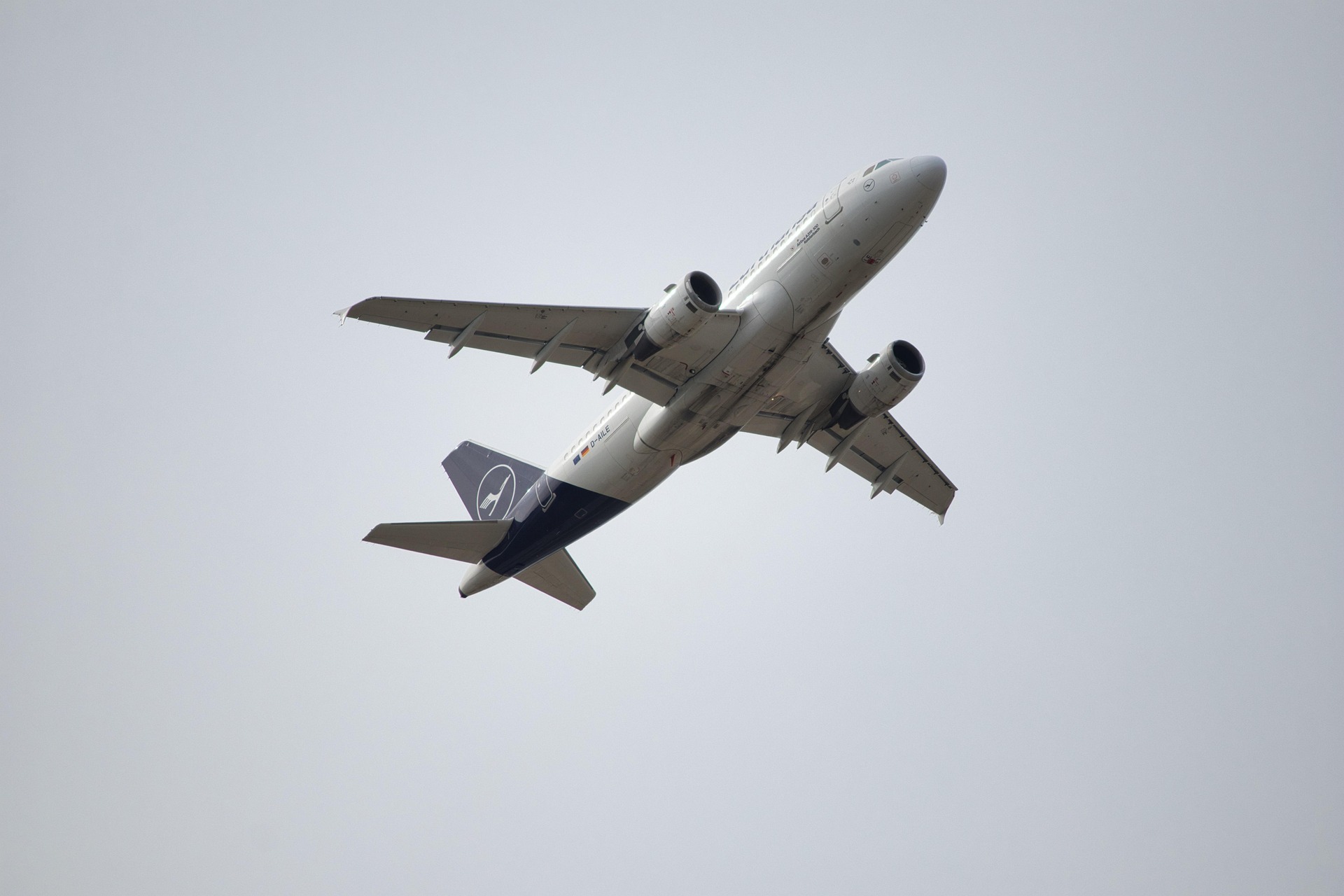
The airport will be the best starting point to think of this new logistics era. The Alfonso Bonilla Aragón International Airport was built almost by accident as a passenger terminal and has been mutating over the years into an airport with increasing importance in the cargo sector.
However, its current physical and operational infrastructure does not meet either current demand or the region’s growth projections.
Expanding the cargo terminal, generating a specialized logistics airport, and designing an uninterrupted connection with the distribution centers in northern Cali and the free trade zones of Palmira are tasks that are not on the drawing board. They are pending points on the to-do list.
The airport must be seen today not only as a terminal of connection and transit for passengers, but as a full-fledged logistical node that is capable of servicing air cargo, supporting international supply chains, and facilitating the movement of high-value goods.
The region’s airport must, in the coming years, be a natural complement to what is proposed for the port of Buenaventura. If the Valle del Cauca aspires to be the logistics hub of Colombia, the airport must be modernized, expanded, and synchronized with all the industrial and commercial corridors and freeways. It must become a truly attractive platform for air logistics operations. A platform that, in addition to attracting new investment, would also stimulate export activity and would even reduce congestion on the land corridors already saturated in the region.
Buenaventura: the gateway that must be reinvented
A modern and digitized airport is not enough. Buenaventura Port must also be a must for the region to develop a modern logistics platform. Buenaventura is the main gateway of Colombian foreign trade. It moves more than 40% of the total volume of containers entering and leaving the country.
However, in reality, it is a port operating with structural conditions that hamper its potential and the country’s competitiveness.
The first thing to do, in this case, would be to bring the port into the 21st century through a broad structural modernization of its physical and digital infrastructure. This would also involve accelerating the dredging process so as not to be left behind in the race for depth competitiveness, shortening transit times, inspections, and bureaucratic processes, and above all, endowing it with the attributes of a multimodal logistics node fully integrated with its hinterland.
Without a modern, efficient, and strong Buenaventura, Valle del Cauca does not have the conditions to become the logistics hub of Colombia. However, if the port was reformed and, in addition, joined by other infrastructure, such as a more efficient and specialized airport, and integrated with improved rail, road, and air corridors, Colombia would have a strategic platform with which to better connect with the global value chains.
Connectivity: the basis for greater competitiveness
Logistics does not work without connectivity. The region is virtually forced today to depend on a single corridor of the Cali–Palmira highway that has shown on repeated occasions that it is more than saturated and that regularly collapses in periods of high demand.
A modern logistics strategy should place the development of the regional rail network at its center, not only for passenger transport, but also for cargo and logistics. The commuter rail system Cali–Jamundí–Palmira–Yumbo must be understood today not only as an urban transport service but also as a multimodal connector that allows the efficient movement of goods and people to and from Buenaventura.
At the same time, the much-delayed highway Mulaló–Loboguerrero must stop being seen as a simple public works project and become an infrastructure of national strategic scope. This road could become a vital corridor to significantly reduce travel times, reduce the cost of cargo, and strengthen and modernize the Pacific access route to the country.
Ports, roads, railways, and intermodal connectors must, in the short term, be connected to free trade zones, industrial parks, and logistics platforms to form a true multimodal network that is able to support the strategic vision of the region to be the logistics hub of Colombia.
Free trade zones: a powerful ecosystem to unify
One of the great advantages that Valle del Cauca has with respect to other regions of the country, and which should not be underestimated today, is precisely its dynamic ecosystem of free trade zones. Palmaseca, the Zona Franca del Pacífico, CELPA, Zonamérica, CLIP, and many others are all logistical platforms that are today already an international showcase for the Valle del Cauca.
The challenge in this sense is not so much today to seek to generate more free trade zones, but rather to integrate them into a regional model that enables digital synchronization of roads, railways, air, and even port connectivity.
Homogeneity, interoperability, and shared systems of traceability between operators and nodes are a must. In the logistics and free zone systems of the most developed economies, each zone functions not as an independent territory but as a synchronized node within a chain.
A unique and shared free trade zone system would bring many advantages, in addition to greater efficiency and greater attractiveness for private investment. It would create a seamless business environment for all types of productive activities related to logistics, assembly, distribution, and high-value-added international trade.
New strategic polygons
As demand increases, the Valle will have to be prepared to generate new logistics corridors and industrial and distribution zones.
The northern region of Cali, along with the approach routes to Palmira and Yumbo, should be transformed into strategic polygons of the department with new high-capacity warehouses, automated distribution centers, and large-scale logistics platforms directly connected to the airport and even the port.
This expansion is not a luxury. It is the only way to be able to absorb the economic and logistical growth that is expected in the region in the next two decades.
If these axes are not planned as strategic industrial and logistics land developments, rising demand will quickly saturate the existing infrastructure, and will once again lose competitiveness.
Addressing the institutional framework
Even with better and more modern infrastructure, Colombia cannot advance if the actual structural bottleneck is not reformed: its institutional framework.
The customs regime should be drastically simplified and rationalized. This must involve the digitization of all processes, the drastic reduction of inspection times, the real unification of service windows, and a facilitation of cargo movement in coordination with the business community and private operators.
Countries that today have logistics hubs recognized at a global level (Singapore, Dubai, the Netherlands, Luxembourg, Ireland, etc.) did not have it because they built enormous infrastructure.
They were capable, efficient, agile states that, far from slowing down, coordinated and accompanied the private sector.
The way forward: a long-term and visionary master plan
If the Valle del Cauca has what it takes to assume a leadership role in this process of change and reinvention of the logistics platform, it is time to have a single, consolidated vision and to outline a master logistics plan for the region with a minimum horizon of 20 to 30 years.
Rigorous, technical, ambitious, and safe from political pressures, this plan must articulate the development of airports, ports, free trade zones, strategic highways, rail connectivity, new industrial development, tax incentives, technological innovation, and multimodal logistics systems.
Planning with a long-term vision is incompatible with current political thinking. A short-term vision condemns the region to inertia. Long term planning is what will allow the Valle del Cauca to be the logistics hub of Colombia.
Technology that will mark the future
Finally, in all of the above, a call of the twenty-first century must also be taken into account: the adoption of technological standards and the most advanced in terms of automation, digitization, and operational efficiency.
This encompasses the need to implement automated systems in ports and airports, blockchain systems of traceability and cargo tracking, real-time cargo monitoring technologies, platforms of connection between operators and authority in the cloud and in a continuous manner, and intelligent and technologized transportation networks.
The logistics of the future will be technological. Or they will not exist. The great logistics hubs that have developed around the world have done so with vision, discipline, and coordination.
Vision to define a clear and long-term destination; discipline to build it and coordinate all the elements that it comprises. Vision, discipline, and coordination. These are the factors that will determine the success of the places where the future will be. The same formula may also hold the key to success for the Valle del Cauca in finally becoming Colombia’s logistics hub.